Balcones Canyonlands Preserve: Assessing 30 years of Austin conservation
Thirty years after Austin set aside thousands of acres for endangered birds, we examine the results of the Balcones Canyonlands Preserve initiative.
Editorial disclaimer: Opinions and analysis on Keep TX Red are editorial content — not statements of fact. See our editorial standards.
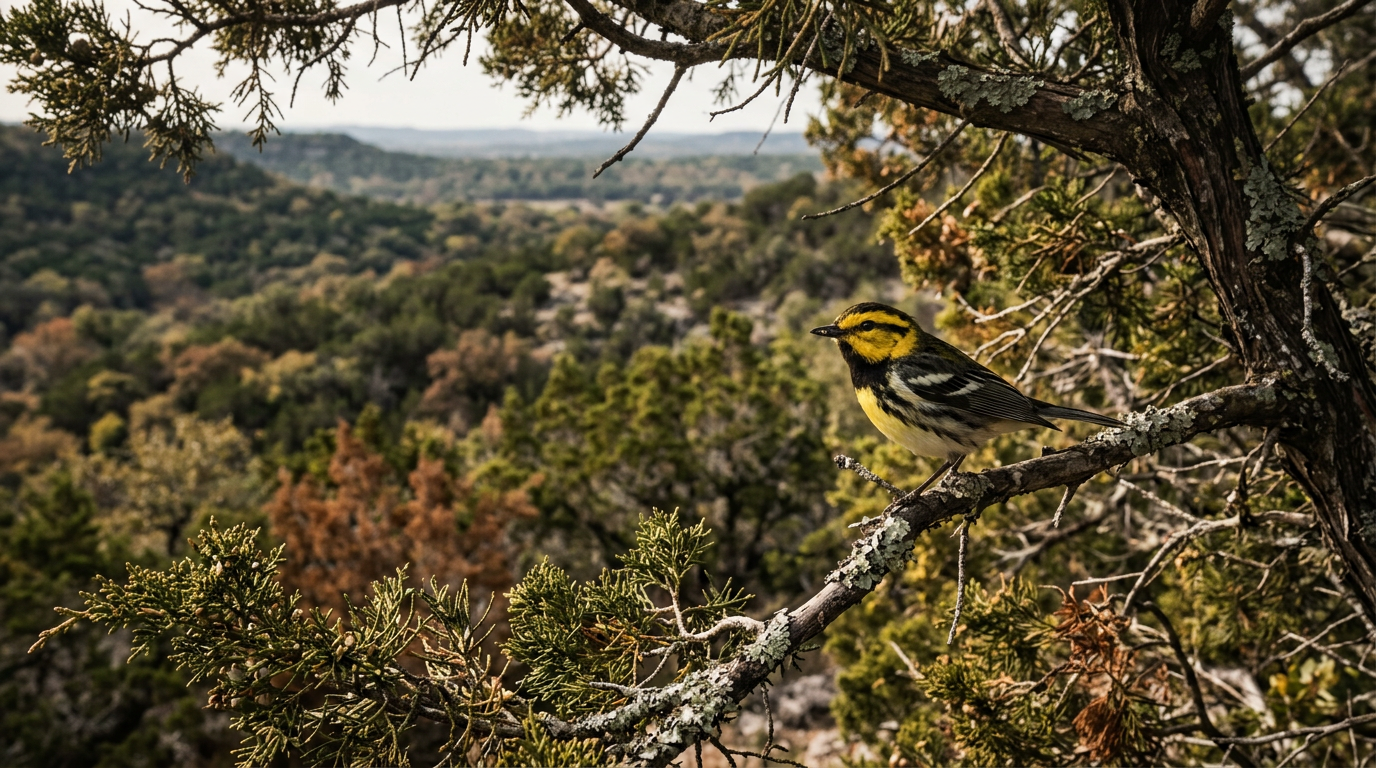
In the early 1990s, the City of Austin and Travis County entered into a historic agreement that would fundamentally change the development trajectory of the Texas Hill Country. This pact resulted in the creation of the Balcones Canyonlands Preserve (BCP), a massive multi-agency effort to protect the habitat of the golden-cheeked warbler and the black-capped vireo. For thirty years, this experiment in municipal-led conservation has served as a barrier against the rapid urban sprawl that has otherwise defined Central Texas. The preserve now encompasses roughly 33,000 acres of rugged limestone canyons and old-growth woodlands, serving as a biological sanctuary amidst one of the fastest-growing metropolitan areas in the United States. Historically, this initiative was born out of intense legal conflict between environmentalists and developers, leading to a regional permit that allowed for progress while ensuring the survival of local avian species. As the preserve hits its thirty-year milestone, state and local officials are looking closely at the ecological data to determine the program's ultimate efficacy. Prior to this arrangement, the Central Texas region faced a gridlock over federal Endangered Species Act enforcement, which threatened to halt all residential and commercial building in the western portion of the county. The BCP was the solution—a large-scale habitat conservation plan that transferred the burden of species protection from individual private landowners to a centralized public preserve system. Over the decades, researchers have monitored nesting success rates and population density to see if these birds can truly thrive within a fractured landscape surrounded by highways and luxury housing developments.
Texas relevance
The Balcones Canyonlands Preserve is a uniquely Texan solution to federal mandates, representing a massive land-management experiment within Travis County. It directly impacts property values, regional water quality for the Edwards Aquifer, and the long-term viability of the Hill Country’s signature wildlife. For Texans, the BCP serves as the primary example of how local government can balance the pressure of a booming real estate market with the legal requirements of federal environmental statutes. The success or failure of this preserve dictates future land-use policy across the Western Austin outskirts and serves as a blueprint for other growing Texas metros like San Antonio and Dallas.
The Evolution of the Golden-Cheeked Warbler Habitat
The golden-cheeked warbler is the only bird species that nests exclusively within the state of Texas, specifically relying on the bark of older Ashe juniper trees found in the Hill Country. When the BCP was first proposed, skeptics doubted that such a specific habitat could be maintained through public management. Over the last three decades, the BCP has successfully protected the dense canopy layers required for these birds to fledge their young away from predators like blue jays and cowbirds.
Managing this land is a labor-intensive process that involves more than just leaving the trees alone. Staff must actively manage invasive species, control deer populations to prevent overbrowsing of the understory, and mitigate the risk of catastrophic wildfires that could wipe out decades of growth. The survival of the warbler in these specific canyons serves as a benchmark for the health of the entire Central Texas ecosystem, as these birds are considered an 'indicator species' for the overall biodiversity of the region.
Despite the growth of Austin, the preserve has managed to maintain a level of connectivity between different parcels of land. While the preserve is not one contiguous block, the strategic acquisition of land has created 'corridors' that allow wildlife to move between habitats. This connectivity is vital for genetic diversity and prevents population bottlenecks that often occur in urban-adjacent wilderness areas.
From Crisis to Conservation: The 1996 Permit
The legal foundation of the BCP rests on a 1996 permit issued by the U.S. Fish and Wildlife Service. This 30-year regional permit allowed for the 'incidental take' of endangered species in exchange for the creation of the preserve system. This was a landmark moment for Texas governance, as it marked one of the first times a county-level government took the lead on habitat conservation at this scale. It effectively ended the 'war on the woods' that had pitted local homeowners against federal agents for years.
The permit required the City of Austin and Travis County to acquire and manage at least 30,428 acres. To date, they have exceeded that goal, with the various partners managing close to 33,000 acres. This achievement was funded through a combination of public bonds, land swaps, and mitigation fees paid by developers who wanted to build elsewhere in the county. It created a marketplace for conservation that allowed the Austin tech boom of the 1990s and 2000s to proceed without violating federal law.
As the original permit period approaches its conclusion, the debate over its renewal has become a focal point for planners. The question is no longer whether the birds are present, but whether the current level of land management is sustainable in the face of rising climate volatility and the intense heat islands created by Austin’s urban expansion. The original visionaries of the 1990s could not have predicted the scale of development that now borders the preserve on all sides.
Economic Impact of Large-Scale Land Preservation
While critics initially feared that locking away thousands of acres would stifle Austin’s growth, the opposite has arguably occurred. Properties that border the Balcones Canyonlands Preserve have become some of the most valuable real estate in the city. Homeowners are willing to pay a premium for permanent 'green space' views that are guaranteed never to be developed. This has resulted in a significant increase in property tax revenue from the luxury developments surrounding the preserve, partially offsetting the loss of taxable land within the preserve itself.
However, the sheer size of the BCP has contributed to the eastward shift of Austin’s affordable housing market. Because development is restricted in the west to protect the karst topography and avian habitats, the supply of new homes was squeezed, driving prices upward. This has forced working-class families further into the suburbs, creating longer commutes and increased traffic congestion on major arteries like MoPac and Highway 360.
The expense of maintaining the preserve also falls on the taxpayers. The City of Austin and Travis County spend millions of dollars annually on biologists, park rangers, and land maintenance crews. While many residents view this as a necessary investment in the quality of life, the long-term fiscal commitment remains a point of discussion during annual budget hearings, especially as the city faces growing infrastructure needs in other departments.
The Delisting Debate: Success or Premature Action?
One of the most controversial aspects of the BCP’s history involves the legal status of the birds it was designed to protect. In 2018, the black-capped vireo was officially removed from the endangered species list. Proponents of the delisting argued that conservation efforts, including those in Texas, had successfully stabilized the population. Critics, however, worried that removing protections would lead to a roll-back of the very management practices that allowed the bird to recover in the first place.
A similar battle is currently being waged over the golden-cheeked warbler. Several Texas-based entities, including the Texas Public Policy Foundation and various agricultural interests, have petitioned the federal government to delist the warbler, citing scientific studies that suggest the population is much larger than originally estimated. They argue that the BCP and other habitat protections are an unnecessary burden on private property rights if the species is no longer at risk of extinction.
The outcome of this debate will determine the future of the BCP. If the warbler is delisted, the legal mandate for the preserve could be challenged in court. This creates a strange paradox: if the preserve works too well, it might eventually be viewed as unnecessary by those who wish to see the land repurposed for high-density development or public infrastructure projects.
The Role of the Karst Species
While the birds get most of the headlines, the Balcones Canyonlands Preserve also protects a series of deep caves and underground aquifers home to 'karst' species. These include specialized spiders, beetles, and salamanders that exist nowhere else on Earth. These tiny creatures are just as important to the preserve’s mission as the warblers, as they indicate the health of the groundwater that millions of Texans rely on for drinking.
The limestone geology of the Hill Country acts like a sponge, filtering rainwater into the Edwards Aquifer. By preserving the land above these caves, the BCP helps prevent pollutants from leaking into the water supply. This 'ecosystem service' is often overlooked in the debate over bird habitats, but it provides a tangible health benefit to the human residents of the region. Without the BCP, the recharge zones for Austin’s famous springs would be covered in asphalt and concrete.
Managing these subterranean habitats requires specialized expertise. Biologists must frequently descend into the cave systems to monitor moisture levels and check for signs of contamination. The protection of these species is actually one of the strictest requirements of the federal permit, as their limited geographic range makes them incredibly vulnerable to even minor environmental changes.
Public Access and the 'Look but Don't Touch' Policy
Unlike a traditional city park, much of the Balcones Canyonlands Preserve is restricted from public access. This 'protected wilderness' model is designed to minimize human disturbance during the critical spring nesting season. For many Austinites, the BCP is a landscape they see from their car windows but can never actually set foot on. This has led to occasional tension between the city's outdoor-recreation community and conservation biologists.
To bridge this gap, the BCP has implemented a series of guided hikes and educational programs that allow a limited number of citizens to experience the interior of the preserve. There are also specific 'multi-use' parcels, such as the Wild Basin Wilderness Preserve, which offer public trails while still adhering to habitat protection guidelines. These compromise zones are essential for maintaining public support for the preserve's mission.
As Austin’s population continues to skyrocket, the demand for more hiking trails and mountain biking paths increases. The BCP management faces the constant challenge of saying 'no' to new recreational infrastructure in order to fulfill their federal obligations. The next decade will likely see continued pressure to open more parts of the preserve to the public, even as biologists warn that increased human presence could drive the sensitive bird populations away.
Analysis
The 30-year legacy of the BCP is a complex mixture of environmental victory and economic pragmatism. From a conservative land-use perspective, the preserve acted as a necessary pressure valve that allowed Austin's economy to continue expanding without being permanently derailed by federal lawsuits. However, the cost has been a permanent removal of prime real estate from the tax rolls and a shift in how infrastructure is planned in Central Texas. While the black-capped vireo was recently removed from the federal endangered species list—a sign of recovery—the golden-cheeked warbler remains a target of political debate, with some Texas leaders arguing it no longer requires such stringent protections. The BCP is no longer just a bird sanctuary; it is a permanent fixture in the battle between local control and federal oversight.
Source attribution
This story was reported using a public release from the Texas Monthly. Keep TX Red rewrote the coverage independently and links to the official statement for verification.
Frequently Asked Questions
- Can I hike in the Balcones Canyonlands Preserve?
- Access is highly restricted to protect nesting habitats. While some areas like Wild Basin and Mount Bonnell are open, much of the 33,000 acres is only accessible through pre-registered guided tours led by staff or authorized volunteers.
- Why is the golden-cheeked warbler special to Texas?
- It is the only bird species that breeds exclusively in Texas. It requires the shredding bark of mature Ashe juniper (cedar) trees to build its nests, making the specific ecology of the Hill Country essential for its survival.
- Who pays for the maintenance of the preserve?
- The preserve is funded through a partnership between the City of Austin, Travis County, the Lower Colorado River Authority (LCRA), and various private conservation organizations. Funding comes from property taxes, bond initiatives, and developer mitigation fees.
- Will the preserve ever be developed in the future?
- The land is protected under a long-term federal permit and various conservation easements. While legal challenges exist, currently the land is legally required to remain a habitat to compensate for development that has occurred elsewhere in the region.
Official Sources
Take the next step
Browse the Newsroom →Read more about Keep Texas Red → Our full guide to what Keep Texas Red means and why Texans support it.
Related Articles
Get Texas updates delivered weekly.
Independent Texas reporting on politics, policy, and daily life. One email a week. Unsubscribe anytime.
Keep TX Red Newsroom
The Keep Texas Red Editorial Staff produces nonpartisan explainers, policy breakdowns, and educational resources to help Texans understand how their government works. All content is reviewed for accuracy and updated regularly.
About Keep TX Red →