Inside the House of Lights: A Guadalupe County folk art hidden gem
Artist John Dilandro has transformed his family acreage in rural Seguin into a sprawling folk art environment known as the House of Lights.
Editorial disclaimer: Opinions and analysis on Keep TX Red are editorial content — not statements of fact. See our editorial standards.
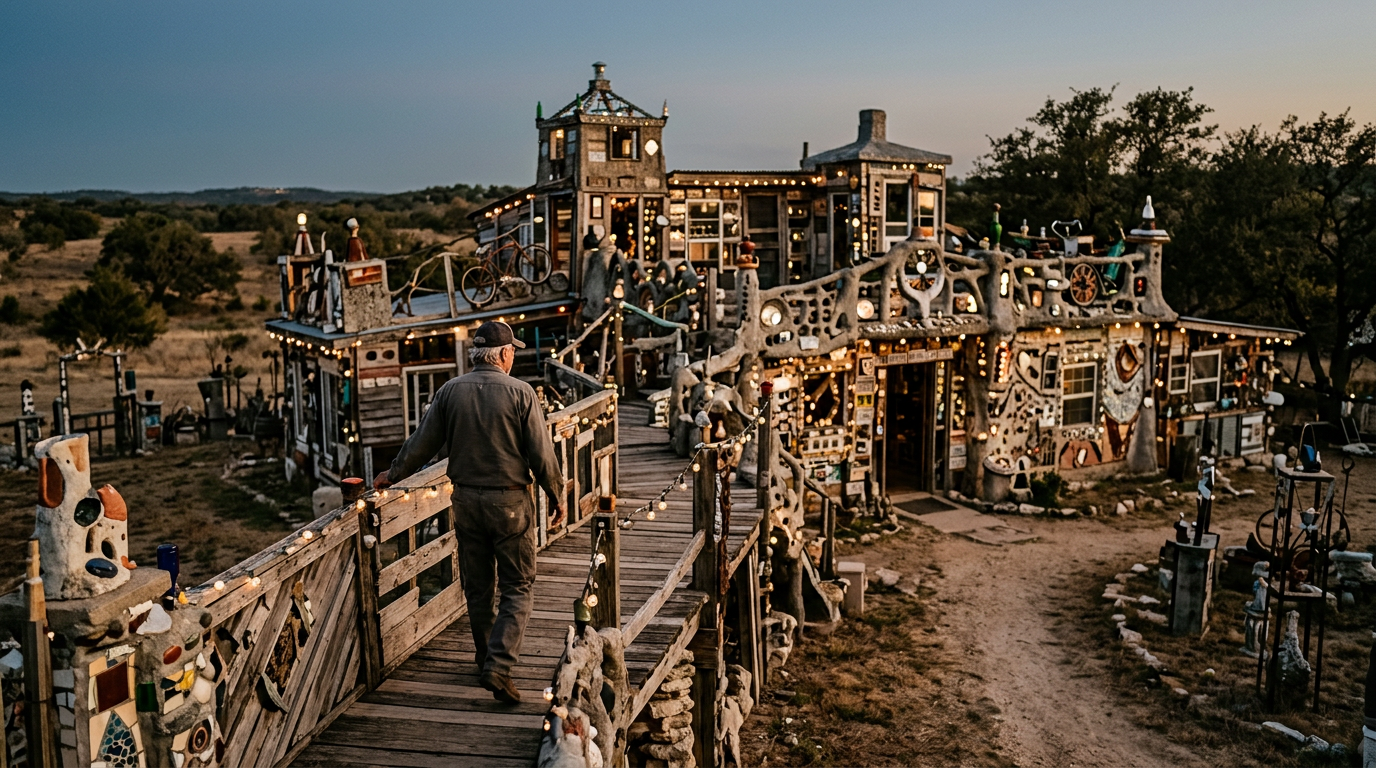
Deep within the rural landscape of Guadalupe County, a unique architectural and artistic project continues to evolve under the vision of creator John Dilandro. Known by those who travel the backroads near Seguin as the House of Lights, this installation serves as a living memoir and a massive folk art destination. Unlike traditional galleries, the site is an ever-expanding collection of repurposed materials, personal artifacts, and structural experiments that reflect the life experiences of its builder. Historically, Texas has a long tradition of self-taught 'outsider' artists who transform private land into public spectacles, such as the Orange Show in Houston or the Cathedral of Junk in Austin. Dilandro’s work follows this lineage, turning common junk and family heirlooms into a cohesive, if chaotic, sanctuary of personal expression. The site is notable not only for its visual scale but for the performance elements involved, including the occasional firing of cannons and the integration of local snakes into the property’s ecosystem. It is a testament to the rugged individualism often celebrated in the Texas interior, where private property rights provide the literal foundation for massive, eccentric creative endeavors.
Texas relevance
The House of Lights is located in Guadalupe County, Texas, just outside of Seguin. In a state that is rapidly urbanizing, these types of rural folk art sites represent a vanishing form of Texan cultural independence. The project highlights how Texas landowners utilize their acreage as a canvas for legacy-building. Furthermore, it serves as a local landmark for the South Texas community, contributing to the regional identity of the San Antonio-New Braunfels corridor. As tourism to the Texas Hill Country and surrounding rural areas continues to grow, unconventional sites like Dilandro's property offer a counter-narrative to traditional historical markers, showcasing the contemporary creative spirit within the Lone Star State.
The Origins of a Rural Masterpiece
John Dilandro did not set out to build a world-renowned art site overnight. The project began on land that has been in his family for generations, located in the quiet stretches of Guadalupe County. Initially, the modifications were small, born out of a desire to find a use for materials that most people would consider scrap. Over the decades, these small changes coalesced into a multi-layered environment that includes towers, walkways, and lighting displays.
The evolution of the House of Lights is tied closely to Dilandro's own biography. Having spent years in various trades and traversing different paths in life, he viewed the site as a way to anchor his legacy. Every beam placed and every object hung has a specific meaning connected to his family history or personal trials. This deep connection to the soil makes the art inseparable from the geography of Seguin and the surrounding agricultural lifestyle.
The construction methods are purely intuitive. Without formal blueprints or architectural training, Dilandro relies on structural instincts and the durability of his materials. In the harsh central Texas climate, where heat and wind can degrade flimsy structures, the House of Lights has been built to endure. The use of heavy metals, concrete, and thick timber ensures that the shrine remains a permanent fixture on the horizon for those driving the nearby county roads.
Materiality and the Art of the Found Object
A central theme of the House of Lights is the transformation of the mundane into the sacred. Dilandro utilizes a wide array of found objects, including old tools, reflective glass, historical signage, and industrial components. By repositioning these items within his artistic framework, he strips them of their original utility and grants them aesthetic power. This practice is a staple of Texas folk art, where the scarcity of urban resources often drives rural residents to innovate with what is on hand.
The 'Lights' in the name are not merely decorative. At night, the installation takes on a different character, with illumination highlighting specific corridors and sculptures. This nocturnal aspect of the work creates a beacon in the dark Texas night, visible from a distance across the flat brushland. It serves as a visual invitation to those who appreciate the unconventional, signaling that there is something exceptional hidden among the ranches and farms.
Beyond the physical structures, Dilandro incorporates sensory experiences into the site. The presence of cannons, which he occasionally fires, adds an auditory dimension that is rare in the visual arts. This choice emphasizes the boldness of the project. It is not meant to be a quiet museum experience; it is a loud, vibrant, and unapologetic declaration of presence. The noise and the light combine to create a comprehensive environment that engages all the senses of a visitor.
Coexisting with the South Texas Wildlife
Unlike urban exhibits, the House of Lights is fully integrated into the natural environment of Guadalupe County. Dilandro has a unique relationship with the local wildlife, particularly the snakes that frequent his property. Rather than seeing them as pests to be removed, he views them as part of the ecosystem of his wonderland. This acceptance of nature’s more dangerous elements reflects a specific type of Texas toughness and a desire to live in harmony with the land as it exists.
The integration of snakes into his narrative adds a layer of mysticism to the folk art shrine. It reinforces the idea that this is a untamed space where the standard rules of society and domesticity do not fully apply. The presence of these creatures acts as a natural guardian of the space, keeping it rooted in the reality of the Texas outdoors. Visitors are often struck by Dilandro's nonchalance regarding the wildlife, which further hammers home his identity as an outsider who has built his own kingdom.
The interaction between the rigid metal structures and the organic, shifting patterns of the wildlife creates a dynamic tension on the property. As the seasons change, the art reacts to the environment—the metal patinas under the rain, the sun fades the painted surfaces, and the tall grass grows around the foundations. This cycle of decay and growth is a deliberate part of the House of Lights' charm. It is an art piece that is never finished because its environment is constantly in flux.
The Legacy of Texas Outsider Artists
Texas has long been a fertile ground for artists like Dilandro who operate outside the traditional gallery system. From the iconic Cadillac Ranch in the Panhandle to the smaller, private shrines found in East Texas, the state's vastness provides the physical and psychological space necessary for such grand projects. These artists are often driven by a singular obsession, pouring decades of labor and personal funds into their creations without the expectation of financial return.
The House of Lights fits into this historical context by challenging the idea of what constitutes 'important' art. While academic institutions may overlook rural folk art, the local communities often embrace it as a point of pride. In Seguin, Dilandro's work is a known quantities—a place that locals point to as evidence of the area's unique character. It represents a form of cultural heritage that is passed down through word of mouth and local sightings rather than through textbooks.
Preserving these sites is a challenge. Because they are often built on private land without the backing of non-profit foundations, they are subject to the whims of inheritance and land development. However, the current vitality of the House of Lights suggests that it will remain a significant landmark for the foreseeable future. The dedication required to maintain such a massive installation is immense, but for Dilandro, the work is its own reward, providing a sense of purpose and a way to communicate with the world.
Impact on the Local Seguin Community
While the House of Lights is a intensely personal project, it has undeniable effects on the local community in Guadalupe County. It acts as an informal tourist draw, bringing curious visitors who might not otherwise visit the smaller backroads of the county. These tourists often frequent local businesses in Seguin, providing a minor but notable economic boost to the area. The site has become a conversation starter, a place where people from different walks of life can marvel at one man's dedication.
Local perception of the site varies, which is common for outsider art. Some see it as a mechanical marvel, while others view it as a curious anomaly. Regardless of opinion, Dilandro has earned a level of respect for his work ethic and his commitment to his property. In rural Texas, where showing up and doing the work is the highest form of currency, Dilandro's decades-long construction project serves as an inspiration to others who may have their own unconventional dreams.
The House of Lights also serves as a reminder of the importance of protecting the rural character of the San Antonio outskirts. As housing developments creep closer to Seguin, these large-scale private art sites act as a buffered zone of creativity and history. They represent a time when land was used for more than just residential density, serving instead as a place for individual legacy and cultural eccentricity.
Analysis
The House of Lights represents more than just a collection of oddities; it is a manifestation of the Texas 'Keep it Weird' ethos applied to a rural setting. In a political and social climate where land use is often heavily regulated, Dilandro’s ability to create a massive, noisy, and visually striking monument on his own terms reflects the core Texan value of autonomy. From an artistic perspective, this 'outsider art' status is crucial because it remains untouched by the commercial pressures of the mainstream art world. The fact that the site is partially constructed from the debris of the past suggests a deeply conservative approach to preservation—recycling history into something that can withstand the passage of time and the elements of the Texas plains.
Source attribution
This story was reported using a public release from the Texas Monthly. Keep TX Red rewrote the coverage independently and links to the official statement for verification.
Frequently Asked Questions
- Where is the House of Lights located?
- The House of Lights is situated on private property in rural Guadalupe County, near the city of Seguin, Texas. It is visible from several back-road highways in the area.
- Can the public visit the House of Lights?
- The site is located on private family land. While it is a well-known landmark and often visible to passersby, it is generally considered a private residence and shrine rather than a public museum with set hours. Visitors should respect the owner's privacy and private property boundaries.
- What materials did John Dilandro use to build the installation?
- Dilandro used a variety of found and salvaged materials, including scrap metal, historical family artifacts, lights, and structural components. The project is an ongoing labor of love that has evolved over several decades.
- Why is this considered 'outsider art'?
- Outersider art refers to works created by self-taught artists who have little or no formal contact with the mainstream art world or institutions. Dilandro's work is driven by personal vision and intuition rather than academic theory or commercial interest.
Official Sources
Take the next step
Browse the Newsroom →Read more about Keep Texas Red → Our full guide to what Keep Texas Red means and why Texans support it.
Related Articles
Get Texas updates delivered weekly.
Independent Texas reporting on politics, policy, and daily life. One email a week. Unsubscribe anytime.
Keep TX Red Newsroom
The Keep Texas Red Editorial Staff produces nonpartisan explainers, policy breakdowns, and educational resources to help Texans understand how their government works. All content is reviewed for accuracy and updated regularly.
About Keep TX Red →