Texas Health Officials Monitor Cyclosporiasis Outbreak Linked to Contaminated Lettuce
Health authorities trace a Cyclosporiasis outbreak to lettuce served at select Taco Bell locations, prompting a statewide food safety alert.
Editorial disclaimer: Opinions and analysis on Keep TX Red are editorial content — not statements of fact. See our editorial standards.
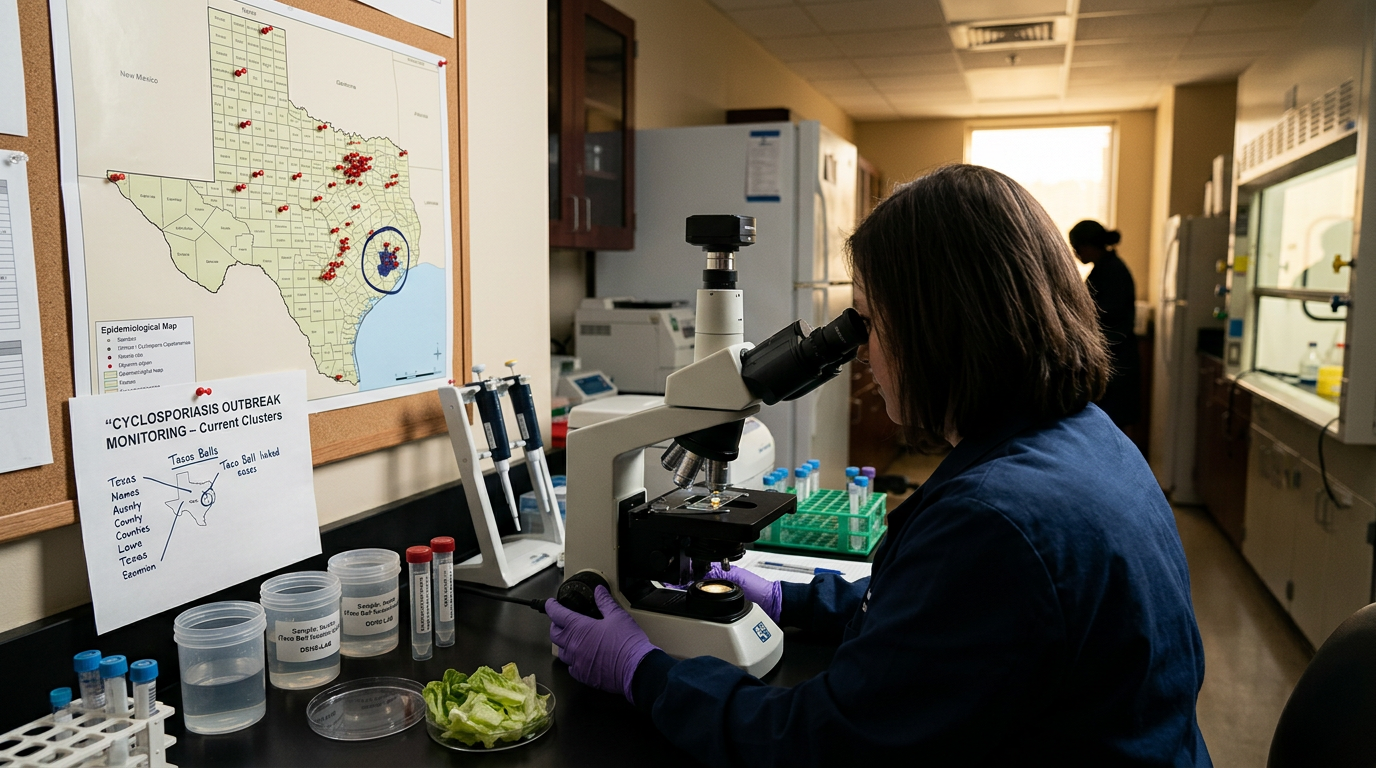
Health officials in Texas and neighboring regions have identified a cluster of Cyclosporiasis infections linked to lettuce products served at specific Taco Bell restaurants. Cyclosporiasis is a parasitic intestinal illness caused by the Cyclospora cayetanensis parasite, which is typically transmitted through feces-contaminated water or soil used in the cultivation of fresh produce. This current outbreak has triggered a multi-agency investigation involving state health departments and federal food regulators to pinpoint the exact origin of the tainted greens within the commercial supply chain. Historically, Texas has been a frequent site for such outbreaks due to its large-scale imports of fresh produce from subtropical regions where the parasite is more prevalent in the environment. In previous years, Texas has dealt with similar spikes in cyclosporiasis cases, often peaking during the late spring and summer months. These historical incidents have led the Texas Department of State Health Services (DSHS) to heighten surveillance during this window. Unlike bacterial infections like E. coli or Salmonella, Cyclospora requires specific testing protocols that are not always included in standard stool cultures, making early detection a challenge for local clinics. Health providers across the state are now being advised to specifically test symptomatic patients for this parasite to ensure accurate reporting and effective treatment with appropriate antibiotics.
Texas relevance
The impact of this outbreak is particularly significant in Texas due to the state's massive network of fast-food franchises and its role as a major hub for produce distribution. With hundreds of Taco Bell locations operating from El Paso to the Gulf Coast, the potential for exposure among the Texas population is substantial. Furthermore, Texas often serves as the primary entry point for agricultural products crossing the southern border, placing state inspectors on the front lines of identifying contaminated shipments before they reach the consumer market. Residents are encouraged to stay informed through local health districts as the investigation identifies specific batches of affected lettuce.
Understanding the Cyclospora Parasite
Cyclospora cayetanensis is a microscopic parasite that migrates through the digestive system, causing an infection known as cyclosporiasis. It is unique because it is not transmitted directly from person to person. Instead, the parasite requires time outside of a host to become infectious, which typically happens in moist, warm environments. This delay explains why outbreaks are almost exclusively linked to fresh produce that has been irrigated or washed with contaminated water sources.
Symptoms of the infection can be quite debilitating if left untreated. Patients typically experience frequent, watery diarrhea, along with loss of appetite, weight loss, stomach cramps, bloating, and increased gas. Nausea and fatigue are also common. Without medical intervention, the illness can last for several weeks or even months, often appearing to resolve only to return in a cyclical pattern that wears down the patient's immune system.
Because the symptoms mimic other common gastrointestinal issues, many Texans may not initially realize they have contracted a parasitic infection. Health officials stress that if diarrhea lasts longer than a few days, especially after consuming prepared salads or tacos, a visit to a healthcare professional is necessary. Standard over-the-counter treatments for diarrhea are often ineffective against the Cyclospora parasite, requiring a specific course of sulfa-based antibiotics.
The Supply Chain Investigation
The current investigation is focusing heavily on the 'pre-cut' lettuce supply chain used by corporate food chains. Lettuce is particularly susceptible to contamination because it is grown close to the ground and possesses many folds and crevices where parasites can lodge. Once the lettuce is harvested and moved into a large-scale processing facility, the shredding and mixing process can cross-contaminate large batches of product that were originally clean.
Investigators are currently working backward from the affected Taco Bell locations to identify the common processing plant or farm. This process involves reviewing shipping manifests, invoices, and distribution logs to find the point of convergence. In many past instances, the contamination was traced back to a specific field or a regional distribution center that handled produce for multiple restaurant brands, not just a single entity.
Modern food safety protocols require these large chains to maintain detailed records of their suppliers. However, the complexity of the global produce market means that a single bag of shredded lettuce could contain greens from multiple farms across different states or countries. This complexity often slows down the 'traceback' process, during which more consumers may inadvertently be exposed to the tainted product.
Action Taken by Restaurant Management
In response to the initial reports of illness, affected locations have reportedly discarded the suspect lettuce shipments. Taco Bell corporate has stated they are cooperating fully with federal and state health departments to ensure their food safety standards are met. Part of this response involves a deep cleaning of food preparation surfaces and a temporary switch to alternative produce suppliers for the impacted regions until the investigation concludes.
The company is also working to reinforce safety training among its staff members. While the contamination likely occurred before the food reached the restaurant, maintaining strict hygiene at the store level prevents further spread. This includes ensuring that employees follow rigorous handwashing schedules and that cold storage temperatures are maintained to prevent the proliferation of any pathogens that might be present.
Transparency is a key component of the corporate response. By acknowledging the link to their lettuce supply, the company allows health officials to more accurately identify the scope of the problem. For franchisees in Texas, the focus is now on restoring consumer confidence by demonstrating that the contaminated batches have been removed from the system entirely.
Public Health Recommendations for Texans
The Texas Department of State Health Services is urging anyone who has eaten at the locations in question and is experiencing prolonged digestive distress to seek medical attention. It is also helpful for patients to keep a record of what they ate and when, as this data is invaluable to epidemiologists trying to map the spread of the outbreak. Early intervention not only helps the individual but also aids in stopping the wider spread of the infection.
Household food safety also plays a role during these outbreaks. While this specific event is linked to a commercial source, the general advice for Texans is to always wash fresh produce under running water. However, health experts note that washing may not always remove Cyclospora because it can be quite 'sticky.' This is why commercial-scale prevention at the farm and processing level is so critical for public safety.
Local health departments in major Texas metros like Dallas, Houston, and San Antonio are on high alert. These cities often see a higher concentration of cases due to their dense populations and high volume of commercial dining. Local officials are monitoring hospital admission data for any unusual spikes in gastrointestinal complaints that could signal a widening of the current outbreak.
Long-Term Impact on Food Policy
Recurring outbreaks of this nature often lead to renewed calls for legislative action regarding food safety standards. In the Texas Legislature, discussions regarding agricultural oversight frequently balance the need for safety with the economic interests of the state's massive farming industry. This outbreak may serve as a catalyst for new state-level initiatives aimed at better monitoring of imported produce and more frequent inspections of processing facilities.
Nationally, the Food and Drug Administration (FDA) is already implementing the Food Safety Modernization Act (FSMA), which requires more rigorous record-keeping for high-risk foods like leafy greens. The current Taco Bell incident may accelerate the adoption of digital 'blockchain' tracking systems that allow for nearly instantaneous tracing of a specific head of lettuce from the grocery store shelf back to the exact row in the field where it was grown.
For the consumer, these events serve as a reminder of the hidden complexities of the modern diet. As Texas continues to grow, its reliance on specialized, high-volume food networks will only increase. Ensuring these networks are resilient against both natural and man-made contamination remains a top priority for state leaders and public health experts alike.
Analysis
This outbreak highlights a recurring vulnerability in the highly centralized American food supply chain. When a single supplier or processing facility experiences a contamination event, the results are distributed rapidly across hundreds of miles and multiple jurisdictions. For Texas consumers, this situation underscores the difficulty of tracing 'farm-to-table' paths in the fast-food industry. While the immediate focus remains on public health safety and treating the sick, the long-term discussion will likely shift toward stricter traceability requirements for leafy greens and more rigorous testing at the point of entry for imported produce. The economic impact on franchisees can be severe, even if the contamination occurred at a third-party processing plant far from the restaurant itself.
Source attribution
This story was reported using a public release from the Texas Food Stories (Google News). Keep TX Red rewrote the coverage independently and links to the official statement for verification.
Frequently Asked Questions
- What are the common symptoms of a Cyclospora infection?
- Symptoms usually include watery diarrhea, loss of appetite, weight loss, cramping, bloating, and fatigue. These symptoms can last from several days to several weeks and may recur if not treated with antibiotics.
- Can I prevent Cyclospora by washing my lettuce at home?
- While washing produce is always recommended, the Cyclospora parasite is difficult to remove through washing alone because it can stick to the surface of leaves. The best prevention is a safe supply chain and avoiding products that are known to be part of a recall.
- How does someone get infected with this parasite?
- Infection occurs when a person consumes food or water contaminated with the parasite. It is not spread directly from person to person; the parasite must spend time in the environment to become infectious.
- Is this outbreak limited only to Taco Bell restaurants?
- While the current cluster has been linked to Taco Bell, the investigation is ongoing to determine if other restaurants or grocery stores received the same contaminated lettuce from the same supplier.
Official Sources
Take the next step
Browse the Newsroom →Read more about Keep Texas Red → Our full guide to what Keep Texas Red means and why Texans support it.
Related Articles



Get Texas updates delivered weekly.
Independent Texas reporting on politics, policy, and daily life. One email a week. Unsubscribe anytime.
Keep TX Red Newsroom
The Keep Texas Red Editorial Staff produces nonpartisan explainers, policy breakdowns, and educational resources to help Texans understand how their government works. All content is reviewed for accuracy and updated regularly.
About Keep TX Red →