Texas Barbecue Exported: Assessing the Rise of Central Texas Smoked Meats in Portland
Portland maintains its status as a premier hub for Lone Star-style smoked meats, proving the enduring legacy of Texas culinary traditions far from home.
Editorial disclaimer: Opinions and analysis on Keep TX Red are editorial content — not statements of fact. See our editorial standards.
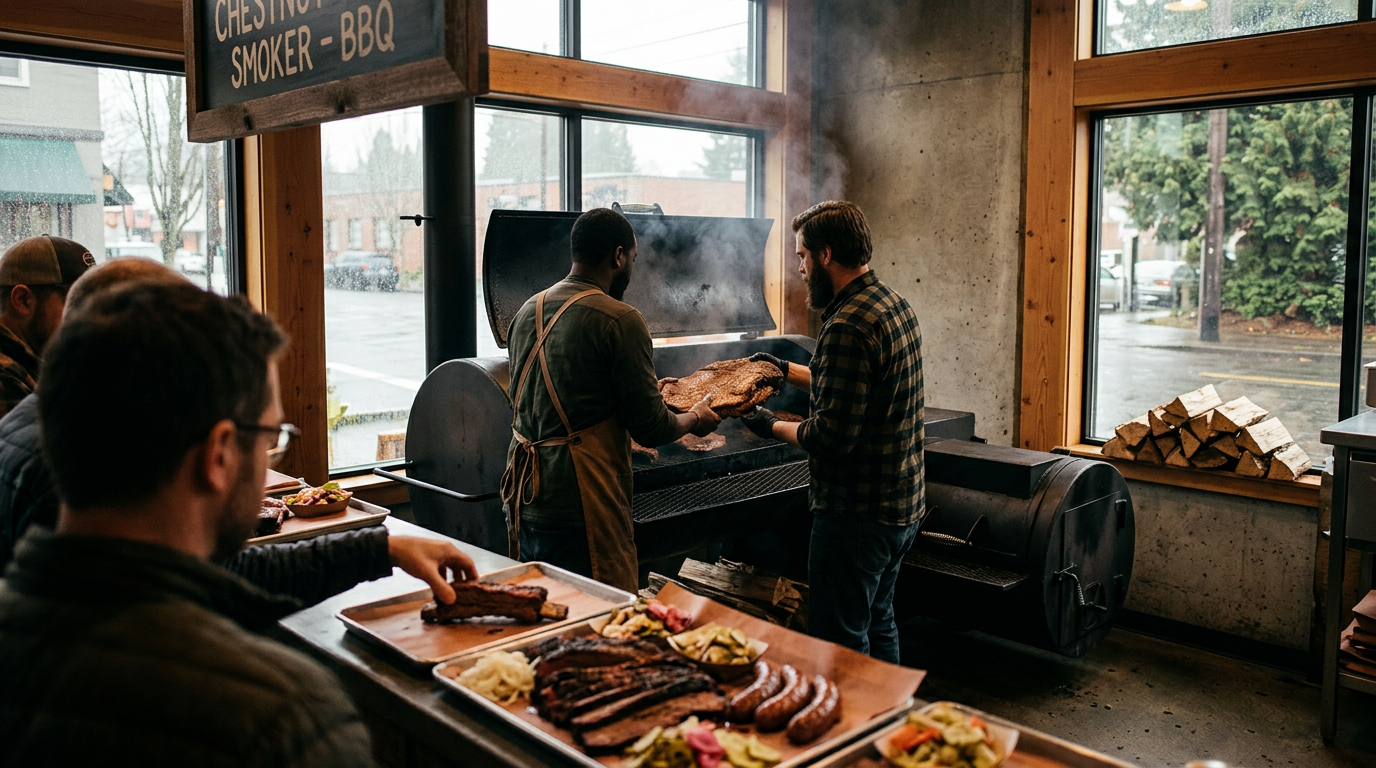
The expansion of Texas-style barbecue beyond the borders of the Lone Star State has transformed from a niche culinary trend into a global standard for smoked meats. This phenomenon is most observable in the Pacific Northwest, where Portland, Oregon, has established a reputation for housing the most authentic replica of the Central Texas barbecue scene found anywhere outside of Texas. The cornerstone of this movement is an unwavering commitment to the traditional methods pioneered in the 'Cattle Kingdom'—the use of simple salt-and-pepper rubs, long-range smoking sessions over hardwood, and the rejection of thick, sugary sauces that characterize other regional styles like Kansas City or Memphis. This culinary migration reflects a broader cultural appreciation for the technical precision and artisanal labor required to produce a perfect brisket, a craft that remains the definitive test for any pitmaster tracing their roots back to the Hill Country. History shows that Texas barbecue was born out of the meat markets of the late 19th century, particularly in communities like Lockhart and Luling. These German and Czech butchers utilized smoke to preserve excess inventory, inadvertently creating a flavor profile that would eventually define a state's identity. Today, those same principles are being applied thousands of miles away, as chefs in Portland source post oak and invest in custom-built offset smokers to emulate the specific thermodynamics found in iconic Texas smokehouses. This cross-country evolution demonstrates that while the geography changes, the rigid standards of the Texas pit remain the gold standard.
Texas relevance
While this news originates from the Pacific Northwest, it serves as a powerful testament to the cultural dominance and economic influence of the Texas livestock and culinary industries. Texas remains the epicenter of the barbecue world, and the fact that other major metropolitan areas measure their successes by how closely they can mimic Texas traditions reinforces our state's status as a global food leader. For Texans, this validates the exportability of our heritage and the high value placed on the 'Texas Brand.' Furthermore, the demand for authentic Texas-style barbecue in places like Oregon creates unique secondary markets for Texas-made goods, including custom smokers fabricated by Texas welders and, in some high-end cases, the shipment of Texas-grown hardwoods and beef. The proliferation of our culture ensures that the artistry developed on the ranches and in the small towns of Texas continues to be the blueprint for excellence in the American culinary landscape.
The Anatomy of the Central Texas Style
To understand why Portland is often cited as the top destination for remote Texas barbecue, one must first identify the rigid criteria of the Central Texas style. Unlike the sweet, vinegar-based profiles found in the Carolinas, the Texas method relies almost exclusively on fire management and the quality of the protein. The process begins with a heavy dry rub consisting primarily of coarse black pepper and kosher salt. This simple seasoning is designed to highlight the natural flavor of the beef rather than masking it. The meat is then placed in an offset smoker, where indirect heat and clean-burning smoke from hardwoods like post oak or hickory work to tenderize the connective tissue over a period of 12 to 16 hours.
In Portland, the most celebrated establishments have abandoned the modern convenience of gas-assisted ovens or pellet grills in favor of the manual labor inherent in offset smoking. This requires a pitmaster to remain present throughout the night, monitoring airflow and wood consumption to maintain a consistent temperature. The result is 'the bark'—a dark, savory crust that provides a textural contrast to the rendered fat and moist muscle underneath. When Northwest critics praise their local scene, they are specifically acknowledging that their pitmasters have mastered this difficult, labor-intensive Texas balancing act.
Sourcing and the Wood-Fire Connection
A critical component of the Texas flavor profile is the type of wood used in the smoking process. In the heart of Texas, post oak is the preferred fuel due to its mild, sweet flavor and steady burn rate. One of the challenges for pitmasters in the Pacific Northwest has traditionally been the availability of these specific hardwoods, as the region is dominated by coniferous trees like Douglas Fir, which are unsuitable for food preparation due to their resinous smoke.
However, the maturation of the Portland barbecue scene has led to sophisticated supply lines where authentic hardwoods are often imported or substituted with local white oak, which shares similar properties with Texas post oak. This dedication to fuel source is what separates casual barbecue from the elite tier. By investing in the correct thermal energy sources, Portland establishments are able to replicate the specific chemical reactions—such as the formation of the 'smoke ring'—that are the hallmarks of a traditional Texas cookout. This logistical commitment highlights the lengths to which outsiders will go to capture the soul of Lone Star cooking.
The Economic Impact of Culinary Exportation
The popularity of Texas-style barbecue in Oregon has created a ripple effect in the local economy, mirroring the artisan-led growth seen in Texas cities like Austin and Lockhart. Barbecue joints in Portland often serve as anchor tenants in developing neighborhoods, driving foot traffic and supporting local craft breweries that pair well with heavy smoked meats. This economic model is a direct transplant from the Texas 'meat market' tradition, where the butcher shop serves as a community hub.
Moreover, the demand for high-end smokers and pits has benefited Texas-based manufacturers who specialize in large-scale offset equipment. Many of the most successful Portland pits are custom-ordered from Texas craftsmen, shipping thousands of miles to ensure the thermodynamics are exactly right. This symbiotic relationship between Texas industry and the Oregon food scene demonstrates the tangible value of the Texas brand. When Portland succeeds in barbecue, it is often because they have invested in Texas equipment and Texas methodologies.
Bridging Cultural Gaps Through Brisket
Barbecue has long been more than just food; it is a cultural artifact that tells the story of Texas's diverse history. The techniques being utilized in Portland today are a direct lineage of the ranching culture and European immigrant influence that defined early Texas. By adopting these methods, the Pacific Northwest is participating in a shared American narrative, albeit one that is distinctly owned by the Lone Star State.
Interestingly, the Portland scene often incorporates local ingredients into side dishes, but the meat remains strictly 'Texas.' This creates a unique fusion where the secondary elements reflect the local terroir while the main course remains a faithful reproduction of Texan heritage. This dynamic ensures that while the flavors are familiar to a Texan traveler, they are presented with a local nuance that keeps the culinary scene evolving without disrespecting its roots.
The Future of the Portland-Texas Connection
As the culinary landscape continues to shift, the benchmark for barbecue excellence remains firmly planted in Texas. The ongoing recognition of Portland as a top-tier hub suggests that the 'Texas style' has reached a level of permanence in the American diet. It is no longer a passing fad; it is a fundamental category of fine dining that requires years of apprenticeship to master.
In the coming years, we can expect to see even more cross-pollination between the two regions. Pitmasters from the Northwest frequently travel to Texas for pilgrimages to institutions like Snow's BBQ or Franklin Barbecue to hone their skills. This cycle of education and implementation ensures that the high standards of the Texas pit are preserved, even as they are exported to new environments. For Texans, this is a point of pride, knowing that our local traditions have become the standard by which the rest of the country is measured.
Analysis
Opinion: While critics may argue that barbecue can never truly be 'Texas-style' unless the smoke is rising from Texas soil, the success of the Portland scene proves that the craft is about technique, discipline, and respect for tradition rather than mere geography. The rise of high-quality imitators actually strengthens the Texas original; by elevating the standards of brisket and ribs across the country, these pitmasters educate the public on what 'real' barbecue should taste like. This eventually leads curious foodies back to the source—Texas itself—to experience the origins of the craft. Portland's dedication to the Central Texas method isn't just a trend; it's a sophisticated tribute to the rigorous standards set by generations of Lone Star pitmasters.
Source attribution
This story was reported using a public release from the Texas Food Stories (Google News). Keep TX Red rewrote the coverage independently and links to the official statement for verification.
Frequently Asked Questions
- What defines 'Texas-style' barbecue in this context?
- In the context of the Portland scene, 'Texas-style' specifically refers to the Central Texas tradition. This involves using offset smokers, burning hardwoods (primarily oak), and focusing on beef brisket seasoned with a simple dry rub. It emphasizes the quality of the meat and the skill of the pitmaster over sauces or marinades.
- Why is Portland considered better for Texas BBQ than other cities?
- Portland has fostered a high concentration of pitmasters who are dedicated to the traditional, labor-intensive methods of Central Texas. Unlike other cities that might use gas or electricity to speed up the process, Portland's top spots tend to use wood-fired pits and high-quality beef, mirroring the artisanal approach found in the Texas Hill Country.
- Do these out-of-state restaurants use Texas beef?
- Many high-end barbecue establishments across the country, including those in Portland, source their beef from the same premium suppliers used by top Texas pits, such as Creekstone Farms or specialized Texas ranches, to ensure the fat content and quality match the original standards.
Official Sources
Take the next step
Browse the Newsroom →Read more about Keep Texas Red → Our full guide to what Keep Texas Red means and why Texans support it.
Related Articles

Get Texas updates delivered weekly.
Independent Texas reporting on politics, policy, and daily life. One email a week. Unsubscribe anytime.
Keep TX Red Newsroom
The Keep Texas Red Editorial Staff produces nonpartisan explainers, policy breakdowns, and educational resources to help Texans understand how their government works. All content is reviewed for accuracy and updated regularly.
About Keep TX Red →