North Texas Culinary Scene Prepares for DFW Restaurant Week 2026 Dining Deals
Fort Worth and Dallas diners can access specialty multi-course menus ranging from $29 to $99 during the annual DFW Restaurant Week event this summer.
Editorial disclaimer: Opinions and analysis on Keep TX Red are editorial content — not statements of fact. See our editorial standards.
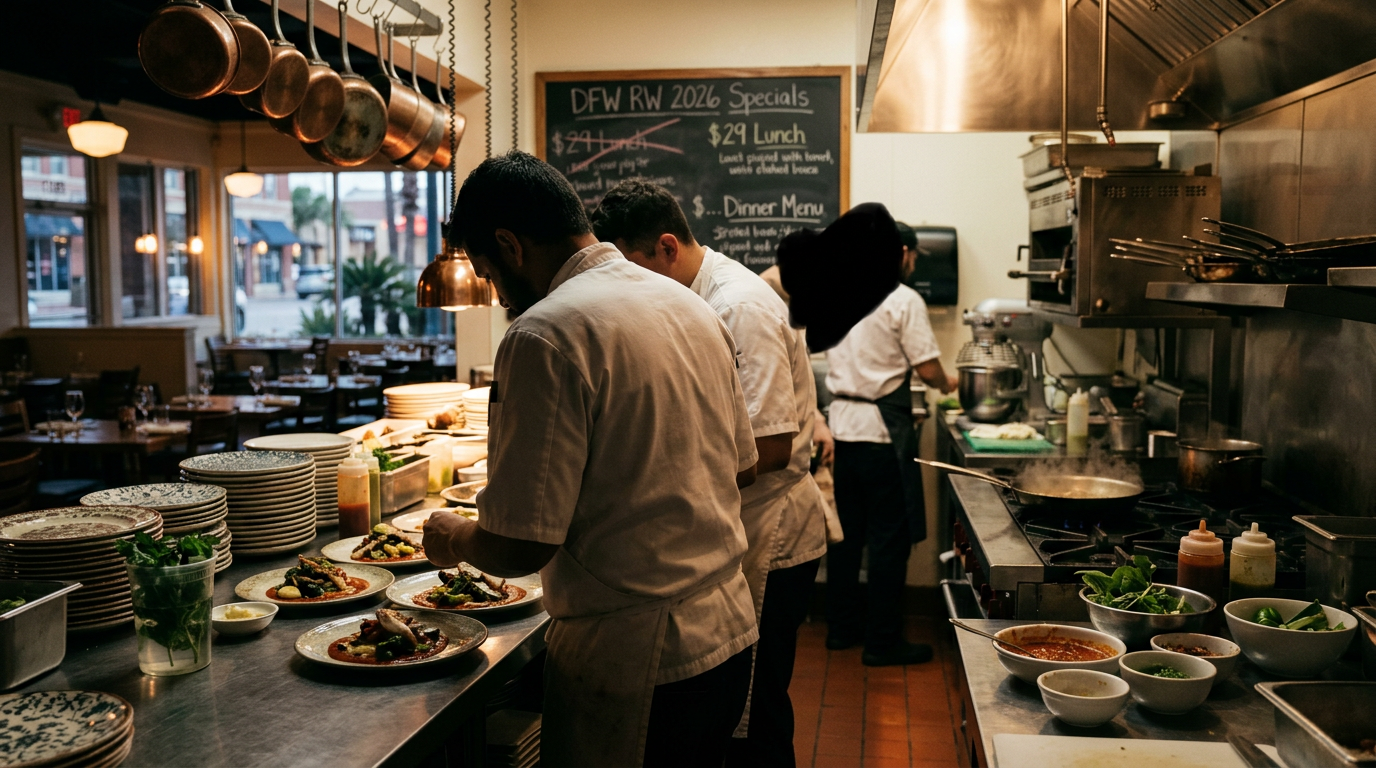
The DFW Restaurant Week event remains one of the largest culinary celebrations in the Southern United States, providing a structured way for residents to experience high-end dining at a fraction of standard costs. For the 2026 season, participating establishments across Fort Worth and the wider Dallas-Fort Worth Metroplex have introduced tiered pricing structures designed to accommodate a variety of budgets. Diners can expect two-course lunches or brunches priced at roughly $29, while three-course dinner options are categorized at $49 or $59 price points, with elite 'Signature Experience' menus reaching up to $99. This event historical serves a dual purpose: stimulating the local hospitality economy during the typically slower summer months and generating significant charitable contributions for regional food banks. Historically, this event grew from a small collection of Dallas steakhouses into a massive regional initiative encompassing hundreds of different venues. Over the years, the program has Expanded to include international cuisines beyond the traditional Texas steakhouse model, reflecting the diversifying demographics of North Texas. The current framework allows restaurants to showcase their culinary identity while committing a percentage of every meal sold to local hunger relief efforts. By late July and early August, the reservation rush typically peaks, making it essential for local patrons to plan their dining schedules several weeks in advance to secure spots at high-demand venues in Tarrant, Dallas, and Collin Counties.
Texas relevance
This event serves as a critical economic driver for the North Texas hospitality sector, particularly for independently owned establishments in Fort Worth, Arlington, and Southlake. Beyond the direct revenue generated for these businesses, the initiative funnels millions of dollars into the North Texas Food Bank and the Lena Pope Home in Fort Worth. In a state where food insecurity remains a pressing issue despite economic growth, these financial injections provide essential services for vulnerable families. The participation of local Fort Worth staples ensures that Tarrant County residents have local access to the benefits of the program without traveling to the Dallas side of the Metroplex, highlighting the distinct and growing culinary identity of the western half of the DFW area.
Tiered Pricing and Menu Options
The 2026 iteration of DFW Restaurant Week utilizes a multi-tiered pricing model to give consumers more flexibility in their dining choices. The basic lunch and brunch packages are set at $29, which typically includes a two-course meal. This tier is often favored by workers in downtown Fort Worth or the Uptown Dallas area who are looking for a more formal midday meal than a standard fast-casual stop. These menus are curated to provide a snapshot of the restaurant's signature style while maintaining a pace suitable for a lunch hour.
Moving into the evening, the dinner tiers are split between $49 and $59 for three-course meals. These options usually include an appetizer, a main entry, and a dessert. Many participating venues offer specialized 'off-menu' items during this week to entice food enthusiasts. The $99 Signature Experience is the highest tier, often including premium pairings or exclusive ingredients like Wagyu beef or rare seafood, catering to the luxury market that has expanded significantly across the North Texas region in recent years.
Economic Impact on the Hospitality Sector
The timing of DFW Restaurant Week is a strategic choice meant to combat the 'summer slump' experienced by many Texas restaurateurs. During the hottest months of the year, foot traffic often declines as residents stay indoors or travel out of state for vacations. By creating a high-profile event with fixed pricing, the initiative encourages residents to brave the heat and support local establishments. This surge in traffic helps restaurants maintain staffing levels and steady revenue during a period that might otherwise be financially difficult.
Furthermore, the event serves as a marketing platform for new or smaller restaurants that may not have the advertising budget to reach a wide audience. Being featured on the official DFW Restaurant Week list provides these businesses with visibility across the entire Metroplex. Many diners use the event as a 'trial run' for new venues, often returning as regular customers later in the year, which provides long-term stability for the local culinary ecosystem.
Charitable Contributions to North Texas
One of the most defining characteristics of this event is its commitment to philanthropy. Approximately 20 percent of the cost of each meal is donated to charity. For establishments located in Tarrant County, the proceeds typically benefit Lena Pope, an organization based in Fort Worth that provides counseling, education, and behavioral health services for children and families. This ensures that the money spent by Fort Worth diners stays within their own community to support local social infrastructure.
For restaurants located in Dallas and surrounding counties, the proceeds generally go to the North Texas Food Bank (NTFB). The NTFB uses these funds to distribute millions of meals to those facing food insecurity. This partnership has turned DFW Restaurant Week into one of the largest annual fundraisers for these organizations. It transforms a leisure activity—dining out—into a significant move toward social responsibility, allowing the Texas private sector to address local needs through consumer activity.
Reservation Strategies and Planning
Due to the popularity of the event, securing a table at the most prestigious venues requires early action. Many restaurants open their reservation books weeks before the actual start date, utilizing platforms like OpenTable or their own proprietary systems. Experts recommend that diners look for 'preview weekend' options, as some establishments begin offering their special menus early to build momentum. Additionally, some restaurants extend their participation for several weeks beyond the official timeframe to accommodate the high volume of requests.
Diners should also be aware that the advertised prices do not include taxes, gratuity, or beverages unless specifically stated. It is standard practice in Texas to tip on the full value of the meal, not just the discounted price, to ensure that the service staff is fairly compensated during these high-volume shifts. Planning ahead also allows diners to check for dietary accommodations, as the fixed-price menus are often set in advance with limited substitutions.
Diversity of Participating Cuisines
While North Texas is famous for its steakhouses and Tex-Mex, DFW Restaurant Week 2026 highlights the massive variety of global cuisines now available in the region. Participants include high-end French bistros, modern Japanese sushi houses, traditional Italian trattorias, and innovative fusion kitchens. This variety reflects the international growth of cities like Plano, Frisco, and Fort Worth, which have become hubs for global business and, consequently, global food culture.
The inclusion of diverse culinary styles ensures that the event appeals to a broad demographic of Texans. It also challenges the outdated stereotype that the Texas food scene is one-dimensional. By showcasing everything from plant-based fine dining to authentic Mediterranean dishes, the event reinforces North Texas's status as a top-tier national food destination. This diversity not only attracts locals but also draws in tourists from neighboring states who travel to the Metroplex specifically for this event.
The Future of Texas Dining Events
The success of DFW Restaurant Week has prompted other Texas cities to refine their own culinary events. Houston and Austin have similar programs, but the scale of the North Texas event remains a benchmark for the state. As the population of the Metroplex continues to surge, the number of participating restaurants is expected to grow, potentially incorporating suburban areas that were previously overlooked. This expansion brings high-quality dining experiences closer to residential neighborhoods, reducing the need for long commutes to downtown cores.
Looking forward, there is a trend toward integrating more technology into the event, such as digital passports and loyalty programs that reward diners for visiting multiple locations. This evolution will likely continue to drive engagement among younger generations of Texans who prioritize both convenience and social impact. The continued growth of these programs is a testament to the resilience and creativity of the Texas business community in the face of changing economic landscapes.
Analysis
The expansion of the pricing tiers up to $99 reflects a broader trend in the Texas economy toward high-end experiential dining. While the $29 lunch options keep the event accessible to middle-class families, the introduction of premium tiers allows luxury restaurants to participate without devaluing their brand or compromising on the quality of expensive cuts of meat and imported ingredients. From a political and economic standpoint, this event demonstrates the power of private-sector charity. Rather than relying solely on government subsidies, the DFW hospitality industry uses a market-driven approach to fund social services, proving that local business growth and community welfare can be successfully intertwined through structured seasonal events.
Source attribution
This story was reported using a public release from the Texas Food Stories (Google News). Keep TX Red rewrote the coverage independently and links to the official statement for verification.
Frequently Asked Questions
- What is the typical menu structure for these deals?
- Most restaurants offer a three-course menu for dinner and a two-course menu for lunch or brunch. These are fixed-price menus featuring a selection of appetizers, entrees, and desserts chosen by the chef to represent the restaurant's best work.
- Do I need a special coupon or code to get the deal?
- No, you simply need to request the DFW Restaurant Week menu when making your reservation or when you are seated at the restaurant. It is always best to mention it during the booking process to ensure availability.
- Are drinks and tips included in the price?
- No, the $29–$99 prices only cover the food courses. Taxes, beverages, and gratuity are extra. It is customary in Texas to tip based on what the meal would have cost at its full market value.
Official Sources
Take the next step
Browse the Newsroom →Read more about Keep Texas Red → Our full guide to what Keep Texas Red means and why Texans support it.
Related Articles

Get Texas updates delivered weekly.
Independent Texas reporting on politics, policy, and daily life. One email a week. Unsubscribe anytime.
Keep TX Red Newsroom
The Keep Texas Red Editorial Staff produces nonpartisan explainers, policy breakdowns, and educational resources to help Texans understand how their government works. All content is reviewed for accuracy and updated regularly.
About Keep TX Red →