Governor Greg Abbott Issues State Disaster Declaration Amid Severe Texas Flash Flooding
Governor Abbott activates emergency resources as flash flooding hits Texas regions, highlighting the state's ongoing commitment to disaster preparedness.
Editorial disclaimer: Opinions and analysis on Keep TX Red are editorial content — not statements of fact. See our editorial standards.
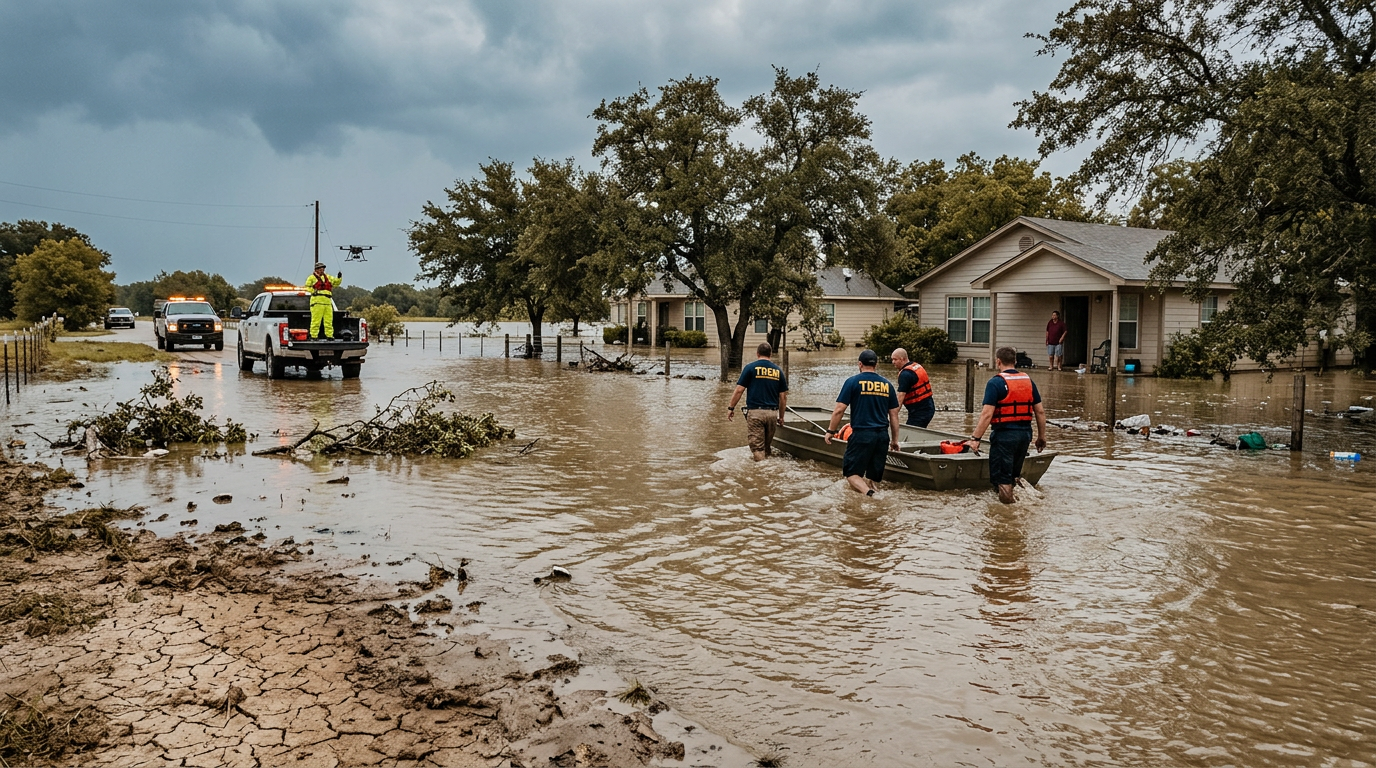
Governor Greg Abbott has officially responded to a surge in volatile weather patterns across the state by convening a press briefing to address flash flooding emergencies. Following a period of intense atmospheric instability, several Texas regions faced rapid water accumulation, leading the Governor to mobilize the Texas Division of Emergency Management (TDEM). This action ensures that state-level resources, including rescue equipment and logistical support, are ready to assist local jurisdictions that might be overwhelmed by the sudden deluge. Historically, Texas has refined its emergency response protocols through major events like Hurricane Harvey and the 2015 Memorial Day floods, creating a blueprint for the proactive measures seen in this latest directive. The current weather event was characterized by high-intensity rainfall concentrated over short periods, a phenomenon that frequently tests the drainage infrastructure of both urban centers and rural valleys. By addressing the public directly, Abbott emphasized the necessity of 'Turn Around, Don't Drown' protocols and confirmed that the state is monitoring river gauges and soil saturation levels in real-time. This primary response phase is designed to minimize loss of life and property while providing a clear channel of communication between the Governor’s office and local emergency coordinators. The state's strategy focuses on pre-positioning assets before the peak of the storm to ensure a rapid reaction time as flooding conditions evolve.
Texas relevance
Flash flooding remains one of the most consistent and deadly natural threats to residents in the Lone Star State, particularly in regions like Flash Flood Alley in Central Texas. This specific emergency declaration directly impacts Texas counties where local infrastructure is under significant strain, necessitating the deployment of Texas Game Wardens and Texas Department of Public Safety (DPS) personnel. The state’s ability to manage these crises without relying solely on federal intervention serves as a testament to the robust self-sufficiency and resource allocation strategies prioritized by the current administration. For Texans living in flood-prone zones, this state-led response provides the critical manpower and equipment needed for water rescues and road closures that local municipalities often lack.
Mobilization of State Emergency Assets
The declaration by Governor Abbott triggers the activation of the State Operations Center to a higher readiness level. This allows for the integration of multiple state agencies, including the Texas Department of Transportation (TxDOT) and the Texas Military Department. These entities are tasked with clearing debris from vital transit arteries and ensuring that high-water vehicles are stationed in areas with the highest risk of inundation.
Furthermore, the Texas Division of Emergency Management works to coordinate with the National Weather Service to provide localized alerts. This multi-agency approach is a hallmark of the Texas Model of disaster relief, which prioritizes local control supported by state-funded muscle. The mobilization includes the deployment of search and rescue teams that are specialized in swift-water environments, ensuring that help is available even in the most treacherous conditions.
In addition to physical assets, the state has activated its financial contingency plans to provide immediate funding for emergency repairs. This ensures that even before a federal disaster declaration is sought, Texas has the liquid capital to keep its people safe. This financial autonomy is a key pillar of the state's governance, allowing for a swift pivot from normal operations to emergency status without administrative delays.
Impact on Local Infrastructure and Transport
Flash flooding in Texas is not merely a threat to personal safety but a significant disruptor of the state's economic engines. Rising waters frequently cut off major trucking routes and damage regional rail lines, necessitating rapid intervention by state engineers. During his briefing, the Governor highlighted the vulnerability of low-water crossings, which remain a primary site for automotive fatalities during heavy rain events.
TxDOT crews have been placed on 24-hour standby to stage barricades and monitor bridge integrity. Roadway closures are being updated live on state-managed platforms to assist commuters in navigating around submerged areas. The state is also assessing the long-term impact on drainage systems, many of which were designed for less frequent high-volume events than what the state currently experiences.
The coordination between state and local transportation officials is vital for maintaining the supply chain during these crises. By managing traffic flow and providing alternative routes, the state minimizes the economic impact of the weather. Local businesses are encouraged to follow state guidance on closures, ensuring that employees are not put at risk during their daily commutes.
Public Safety Advocacy and Education
A recurring theme in the Governor's emergency address is the role of individual responsibility in disaster mitigation. The state’s 'Turn Around, Don't Drown' campaign is more than a slogan; it is a vital public health directive. State data suggests that a significant majority of flood-related deaths occur when drivers underestimate the depth and velocity of water over a roadway.
To combat this, the state is increasing its investment in public education campaigns that utilize social media and local news broadcasts to reach citizens in real-time. These efforts are designed to complement the physical response by reducing the number of avoidable rescue operations that emergency personnel must perform. When citizens heed these warnings, it frees up first responders to focus on unavoidable emergencies.
Education efforts also extend to property owners, with the state providing guides on how to flood-proof homes and the importance of having an emergency go-bag. By fostering a culture of preparedness, Texas aims to reduce the overall trauma and financial burden associated with these recurring weather events.
Environmental and Geological Factors
The geography of Texas contributes significantly to the severity of these flash flood events. In areas with thin topsoil and limestone bedrock, such as the Hill Country, rain has little opportunity to soak into the ground, leading to immediate runoff into creeks and rivers. Governor Abbott’s briefing touched upon the hydrological complexities that make predicting the exact height of floodwaters a difficult task.
State geologists and hydrologists are working alongside meteorologists to map how current rainfall will move through different basins. This data-driven approach allows the state to issue warnings several hours before the water actually reaches downstream communities. This 'look-ahead' capability is essential for evacuations and protecting livestock in rural counties.
The state is also monitoring the impact of the flooding on the local environment, including potential contamination of water supplies. State agencies are prepared to issue boil-water notices and assist local utilities in protecting water treatment plants from rising floodwaters, ensuring that the health of the public is maintained after the rain stops.
Long-Term Mitigation and Future Planning
While the immediate focus is on the current emergency, the Governor also alluded to the ongoing work of the Texas Water Development Board. The state has committed billions of dollars toward flood mitigation projects, including the construction of detention ponds and the widening of channels. These long-term projects are designed to reduce the state's vulnerability to flash flooding over the next several decades.
The current emergency serves as a real-world test for these new infrastructures. Post-event analysis will be conducted to see how well recently completed projects performed under pressure. This feedback loop ensures that future taxpayer investments are directed toward the most effective engineering solutions.
The overarching goal of the administration is to create a 'Weather-Ready Texas.' This involves a combination of hardened infrastructure, advanced technology for monitoring, and a populace that is well-informed and resilient. The Governor’s frequent updates and hands-on approach during these crises are intended to build public confidence in the state's ability to handle whatever nature throws its way.
Analysis
From a policy standpoint, the Governor's immediate move to a high-profile press briefing serves two purposes: ensuring public safety through visibility and reinforcing the state's jurisdictional authority over disaster management. By taking a lead role in the messaging, the administration avoids the chaotic communication gaps that often plague disaster responses in other states. The shift toward proactive rather than reactive declarations suggests a maturing of the Texas emergency framework, where the cost of pre-positioning resources is viewed as a necessary investment to prevent the exponentially higher costs of post-disaster recovery. This approach also signals to local leaders that the state is a willing partner in infrastructure resilience, though it places the immediate burden of compliance on individual citizens to follow evacuation and safety warnings.
Source attribution
This story was reported using a public release from the Governor Abbott — Video Moments (Google News). Keep TX Red rewrote the coverage independently and links to the official statement for verification.
Frequently Asked Questions
- What should I do if I encounter a flooded road?
- Always follow the directive to 'Turn Around, Don't Drown.' Even six inches of moving water can knock a person off their feet, and twelve inches of rushing water can carry away most small cars. Do not attempt to drive through or walk into floodwaters where you cannot see the ground.
- How can I check if my area is under a disaster declaration?
- Residents can visit the official website of the Texas Division of Emergency Management (TDEM) or the Governor’s newsroom. Local news outlets and county official social media pages also provide real-time updates on local declaration statuses.
- What state resources are available during a flood?
- The state provides a variety of resources including the Texas Game Wardens for water rescues, TxDOT for road monitoring and clearing, and the Texas Military Department for logistical support. These are triggered through the State Operations Center upon a request from local officials.
Official Sources
Take the next step
Browse the Newsroom →Read more about Keep Texas Red → Our full guide to what Keep Texas Red means and why Texans support it.
Related Articles
Get Texas updates delivered weekly.
Independent Texas reporting on politics, policy, and daily life. One email a week. Unsubscribe anytime.
Keep TX Red Newsroom
The Keep Texas Red Editorial Staff produces nonpartisan explainers, policy breakdowns, and educational resources to help Texans understand how their government works. All content is reviewed for accuracy and updated regularly.
About Keep TX Red →