Governor Greg Abbott Deploys Heavy State Assets to Combat Severe Hill Country Flooding
Governor Abbott activates state emergency resources to support the Texas Hill Country and central regions facing historic rainfall and rising floodwaters.
Editorial disclaimer: Opinions and analysis on Keep TX Red are editorial content — not statements of fact. See our editorial standards.
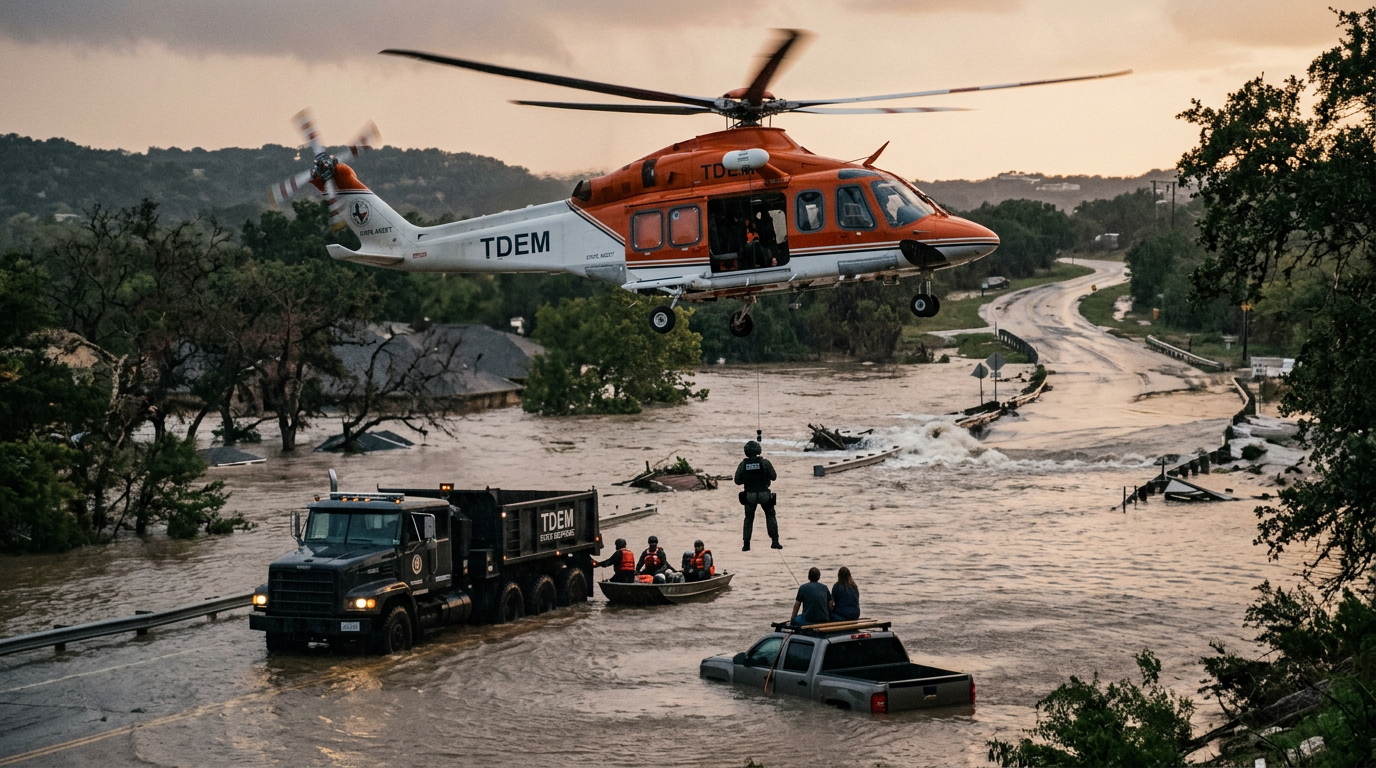
Governor Greg Abbott has activated a comprehensive state emergency response following torrential rainfall that has inundated the Texas Hill Country and surrounding central regions. This executive action involves the deployment of various state agencies to assist local municipalities that are currently overwhelmed by rising debris and submerged roadways. According to the Governor's address, the state is prioritizing life-saving search and rescue operations while simultaneously positioning infrastructure repair teams to address bridge and highway washouts. Historically, the Texas Hill Country is part of 'Flash Flood Alley,' a region where the unique limestone geography and steep terrain cause rapid runoff, making it one of the most flood-prone areas in the United States. This current weather pattern mirrors previous historic events in 1998 and 2015, prompting the Governor to utilize the Texas Division of Emergency Management (TDEM) at a heightened operational level. The state's strategy focuses on a tiered response, starting with immediate water rescues followed by long-term debris removal and federal assistance coordination.
Texas relevance
The current flooding crisis directly impacts residents from San Antonio through the Highland Lakes region and up to the Austin metropolitan area. Because Texas relies heavily on its inland road network for interstate commerce, the closure of major thoroughfares in the Hill Country creates a ripple effect throughout the state’s economy. This situation tests the efficacy of the Texas flood mitigation plans funded by the legislature in recent sessions, highlighting the state's ongoing commitment to protecting rural and suburban infrastructure from extreme weather events.
Mobilization of State Agencies
In response to the escalating threat, the Texas Division of Emergency Management has moved several task forces into the field. This includes specialized boat crews from the Texas Parks and Wildlife Department and high-profile vehicles from the Texas National Guard. These assets are specifically designed to navigate the rugged and often unstable terrain found in the Edwards Plateau, where traditional rescue vehicles cannot operate safely due to unpredictable water surges.
The Governor noted that the Texas Department of Transportation (TxDOT) is also on high alert, monitoring hundreds of low-water crossings. TxDOT crews are working to place barricades at known danger zones, or 'kill zones,' where water depth can increase by several feet in a matter of minutes. The state is urging residents to respect these barriers, as the majority of flood-related fatalities in Texas occur when drivers attempt to cross flooded roadways.
Additionally, the Texas Department of State Health Services is coordinating with local hospitals to ensure that emergency rooms remain accessible. If a facility becomes isolated by floodwaters, the state has prepared aeromedical assets to evacuate patients if necessary. This multi-agency approach is intended to create a safety net for smaller communities that lack the massive infrastructure of cities like San Francisco or Houston.
Infrastructure Challenges in Flash Flood Alley
The Hill Country’s unique geography creates a significant challenge for even the most prepared emergency services. The thin soil layers over solid limestone mean that heavy rains do not soak into the ground; instead, they flow immediately into gullies and creek beds. This results in 'wall of water' events that can catch residents off guard, even those who live miles away from the epicenter of the storm.
Governor Abbott emphasized that the current surge is putting stress on existing levee and dam systems along the Guadalupe and Colorado River basins. While these structures are designed to manage moderate overflow, the sheer volume of water currently moving through the system is testing their structural limits. State engineers are monitoring these sites 24/7 to provide early warnings to downstream communities.
Repairing the damage will be a multi-month endeavor. Beyond the immediate rescue phase, the state must assess the integrity of secondary bridges and roads that may have been undermined by fast-moving currents. The economic cost of these repairs often runs into the hundreds of millions, requiring a combination of state 'rainy day' funds and federal disaster declarations.
Public Safety Protocols and Evacuations
Local officials in several counties have issued voluntary and mandatory evacuation orders for low-lying areas near riverbanks. The Governor’s office is supporting these efforts by providing resources for temporary shelters and ensuring that the Texas Department of Public Safety (DPS) is available to assist with traffic control. The goal is to move populations out of harm's way before roads become impassable.
State leaders are also focusing on the 'Turn Around, Don't Drown' campaign, which has been a staple of Texas safety education for decades. Despite these efforts, emergency responders still find themselves performing dozens of high-water rescues each day. Each rescue puts the lives of first responders at risk, making public cooperation a critical component of the state's management strategy.
For those who are displaced, the state is facilitating the setup of 'Recovery Centers' where individuals can receive immediate aid, including food, water, and basic medical supplies. These centers serve as the first point of contact for residents who have lost their homes or vehicles to the floodwaters.
Coordination with Federal Partners
While the response is currently state-led, Governor Abbott is in communication with the Federal Emergency Management Agency (FEMA) to prepare for a possible Major Disaster Declaration. Such a declaration would unlock federal funding for individual assistance and public infrastructure repair. Documenting the damage in real-time is a high priority for state evaluators who must prove the severity of the event to meet federal thresholds.
The coordination involves detailed mapping of the affected areas using drone technology and satellite imagery. By identifying the hardest-hit zones early, the state can prioritize where to send damage assessment teams once the water recedes. This data-driven approach is intended to speed up the recovery process and get people back into their homes as quickly as possible.
Despite the availability of federal help, the state remains the primary actor in the initial 72 to 96 hours of the crisis. Texas has built one of the most robust state-level emergency response systems in the country specifically to handle these types of recurring natural disasters without waiting for a federal green light.
The Role of the Texas National Guard
The deployment of the Texas National Guard provides a surge capacity that local law enforcement cannot match. These guardsmen are trained for domestic response missions, including logistics, search and rescue, and security. Their presence in the Hill Country provides a sense of stability and ensures that looting and other secondary crimes are kept to a minimum in evacuated towns.
Guardsmen are also assisting with the transport of potable water to areas where municipal water systems have been compromised. Flooding often leads to the contamination of well water and the failure of small-scale treatment plants, making clean water a primary concern for public health officials. This logistical support is essential for maintaining order during the height of the crisis.
As the storm front moves east, the Guard will likely be repositioned to follow the threat. The Governor’s office has the authority to move these units rapidly across the state, ensuring that the response is always where it is needed most. This fluidity is a hallmark of the Texas emergency management philosophy.
Long-Term Watershed Management Analysis
This event has renewed calls for a more permanent solution to watershed management in Central Texas. While the state has invested in flood control projects, the rapid population growth in the Hill Country has led to increased urban runoff. More paved surfaces mean more water enters the river systems faster than it did twenty years ago, exacerbating the flood threat.
Legislators are expected to look at new zoning and building codes that could mitigate runoff in the future. However, balancing property rights with public safety is always a contentious issue in the Texas Legislature. The Governor’s briefing touched on the need for 'resilient infrastructure,' a term that suggests future state funding may be tied to smarter building practices in flood-prone zones.
Ultimately, the success of the current response will be measured by the speed of the recovery and the lessons learned for the next storm. As climate patterns shift and Texas continues to grow, the demands on state emergency services will only increase. This current flooding serves as a stark reminder of the power of nature and the necessity of a well-funded, well-rehearsed state response mechanism.
Analysis
The Governor’s swift mobilization reflects a political and pragmatic necessity to demonstrate state-level competence in disaster management. By positioning TDEM assets ahead of the cresting rivers, the administration aims to mitigate the loss of life that often accompanies rapid-onset flooding in central Texas. However, the long-term challenge remains the aging dam infrastructure in the Hill Country, which may require further legislative intervention and significant capital investment during the next session to prevent future catastrophic failures during similar weather cycles.
Source attribution
This story was reported using a public release from the Governor Abbott — Video Moments (Google News). Keep TX Red rewrote the coverage independently and links to the official statement for verification.
Frequently Asked Questions
- What should residents do if their home is at risk of flooding?
- Residents should follow all evacuation orders from local officials immediately. If you choose to stay, ensure you have a way to receive weather alerts and be prepared to move to the highest point of your home. Do not enter floodwaters, as they can contain debris, chemicals, and electrical hazards.
- Where can residents find information on road closures?
- The best source for real-time road conditions in Texas is DriveTexas.org, which is maintained by the Texas Department of Transportation. It provides up-to-the-minute data on closures due to high water or damage.
- Will the state provide financial help for property damage?
- Once the initial emergency phase is over, state and federal agencies will conduct damage assessments. If the damage meets certain thresholds, a disaster declaration may be issued, allowing residents to apply for grants or low-interest loans through FEMA and the Small Business Administration.
Official Sources
Take the next step
Browse the Newsroom →Read more about Keep Texas Red → Our full guide to what Keep Texas Red means and why Texans support it.
Related Articles

Get Texas updates delivered weekly.
Independent Texas reporting on politics, policy, and daily life. One email a week. Unsubscribe anytime.
Keep TX Red Newsroom
The Keep Texas Red Editorial Staff produces nonpartisan explainers, policy breakdowns, and educational resources to help Texans understand how their government works. All content is reviewed for accuracy and updated regularly.
About Keep TX Red →