Governor Abbott Reports Fatalities Following Historic Texas Flood Events
Texas Governor Greg Abbott confirms two deaths as record rainfall triggers widespread flooding and emergency response efforts across the state.
Editorial disclaimer: Opinions and analysis on Keep TX Red are editorial content — not statements of fact. See our editorial standards.
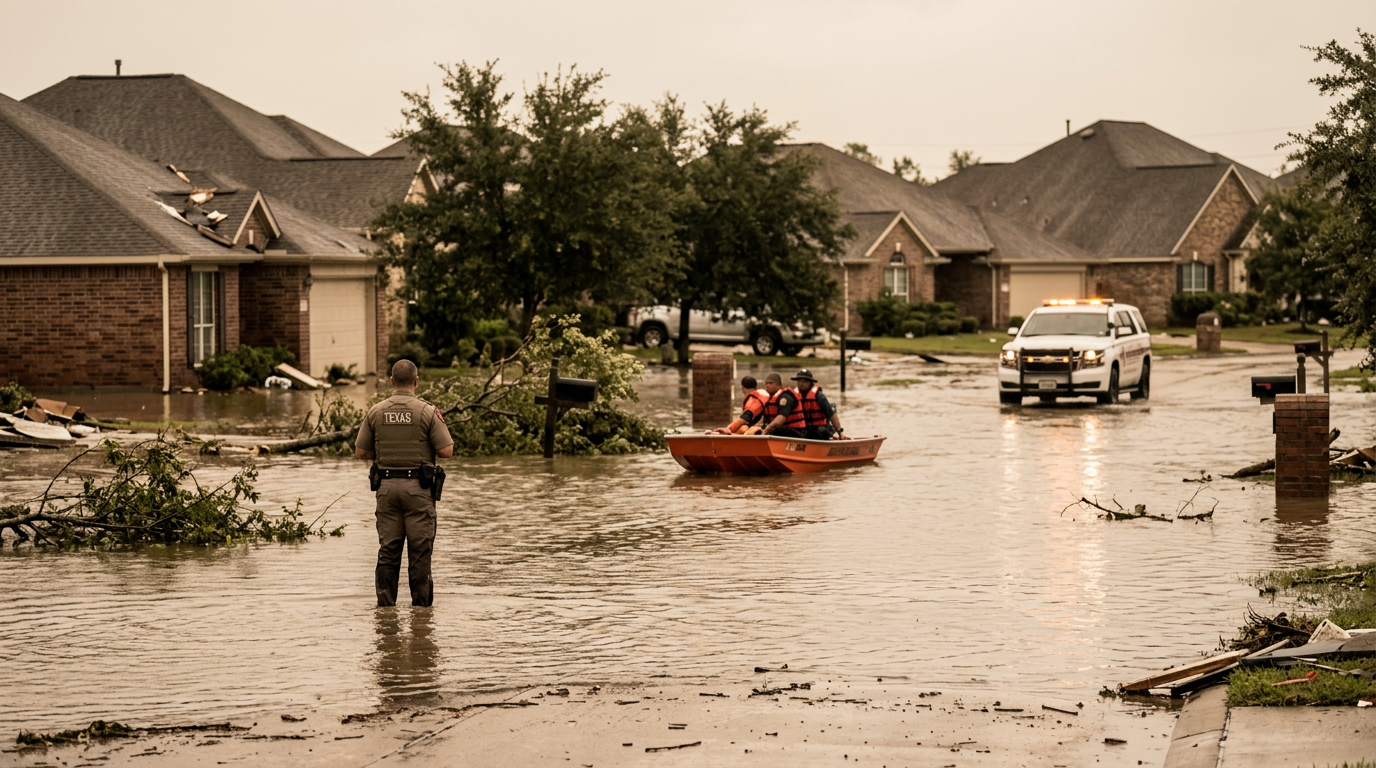
Governor Greg Abbott has confirmed that at least two individuals have lost their lives in the massive flooding events currently sweeping across various regions of Texas. The Governor’s announcement comes after days of relentless precipitation that has pushed local infrastructure to its breaking point and prompted a massive mobilization of state resources. Emergency response teams have been working around the clock to mitigate the damage caused by rising river levels and saturated soil that has led to life-threatening conditions in both urban and rural corridors. Historically, Texas has faced significant flood challenges, notably during events like Hurricane Harvey and the Tax Day floods of 2016, which prompted the state to bolster its flood mitigation strategy through the Texas Water Development Board. This current weather pattern reflects a recurring vulnerability in the state's geography where rapid-onset rainfall can overwhelm drainage systems in a matter of hours. The Governor emphasized the gravity of the situation, noting that the loss of life underscores the unpredictable and dangerous nature of these high-water events. While specific details regarding the identities of the deceased have been withheld pending family notifications, the incidents occurred in areas heavily impacted by flash flooding. State officials are urging residents to remain vigilant, as water levels in many areas are expected to stay above flood stage for several days. This weather system has brought record-breaking totals to several counties, resulting in submerged roadways and the necessity for high-water rescues by the Texas Division of Emergency Management (TDEM) and the Texas National Guard. The state is currently coordinating with local municipalities to assess the full extent of the damage as the rain continues to move across the region.
Texas relevance
This crisis directly impacts millions of Texans living in low-lying areas and flood plains, particularly those in the Central and Coastal regions who have seen water levels rise faster than at any point in the last decade. Texas infrastructure, including the massive network of Farm-to-Market roads and interstate highways, faces significant closures that disrupt the state’s economy and daily life for residents. The state's response, spearheaded by Governor Abbott and TDEM, serves as a critical test of the disaster preparedness protocols established by the Texas Legislature in recent sessions. With major metropolitan hubs like Houston, Austin, and San Antonio often in the crosshairs of these weather patterns, the ability of state agencies to deploy resources rapidly is a matter of life and death for constituents across all 254 counties.
Public Safety Warnings and Official Guidance
The tragic deaths reported by the Governor serve as a somber reminder of the dangers of driving through flooded areas. Most flood-related deaths in Texas occur in vehicles, as drivers underestimate the depth and velocity of moving water. State officials continue to reiterate the 'Turn Around, Don't Drown' campaign, emphasizing that just six inches of fast-moving water can knock an adult off their feet and two feet can carry away most vehicles.
Residents are encouraged to monitor the Texas Division of Emergency Management website for real-time updates and to sign up for local emergency alerts. As the threat transitions from active rainfall to river flooding, staying informed of crest levels and evacuation orders is essential. The Governor’s office has pledged that no resource will be spared in the ongoing recovery and rescue missions across the state.
Mobilization of State Assets and High-Water Rescues
In response to the escalating crisis, Governor Abbott has activated several state agencies to assist local communities. The Texas Division of Emergency Management is coordinating the deployment of high-water vehicles, helicopters, and swift-water rescue teams. Members of the Texas National Guard have been stationed in high-risk zones to provide immediate support should conditions worsen. These assets are vital in reaching residents stranded in rural areas where roads have become impassable.
The coordination involves a sophisticated network of emergency operations centers (EOCs) located throughout the state. By utilizing satellite imagery and ground reports, state planners can redirect personnel to the areas with the highest risk of catastrophic failure. This proactive stance is designed to prevent further loss of life as the weather system remains stationary over a large portion of the state, dumping additional inches of rain on already saturated ground.
Impact on Texas Infrastructure and Transportation
The flooding has caused significant disruptions to the Texas transportation network. Major thoroughfares and hundreds of local roads have been shuttered due to water covering the pavement. Texas Department of Transportation (TxDOT) crews are working to clear debris and assess the structural integrity of bridges that have been subjected to high-velocity water flows. In many cases, the damage to roadbeds may take weeks or months to fully repair once the water recedes.
Beyond the highways, the flooding has affected public utilities and local commerce. Several communities have reported power outages as rising water reached electrical substations, and boil water notices have been issued where treatment plants were compromised. This cascading effect on infrastructure emphasizes the need for continued investment in resilient utility designs as part of the broader Texas flood mitigation strategy.
Timeline of the Weather Event and Future Outlook
The current event began with a large moisture-rich system that moved inland from the Gulf of Mexico, stalling over the Central Texas corridor. Over the course of 72 hours, some regions saw rainfall totals exceeding annual averages for the entire summer season. This rapid accumulation quickly filled local reservoirs and sent creeks over their banks, leading into the major river systems that are now nearing record crest levels.
Meteorologists suggest that while the heaviest rain may be subsiding in some areas, the threat is far from over. Downstream flooding remains a major concern as the water moves through the state’s primary basins toward the coast. Local officials are keeping a close eye on dam releases, which are necessary to manage lake levels but can exacerbate flooding for properties located immediately below those structures.
Stakeholder Reaction and Community Resilience
Local mayors and county judges have been the primary point of contact for many citizens in the affected regions. Many have praised the state's rapid response but also noted the emotional toll on their communities. Neighborhoods that had only recently recovered from previous storm events are once again facing the prospect of rebuilding. Volunteer organizations and local food banks are already preparing for a long recovery phase to assist those whose homes have been damaged.
Agricultural stakeholders are also counting the costs. Texas farmers and ranchers in the flood zones are facing significant losses to crops and livestock. The saturated fields may prevent replanting for the remainder of the season, creating a significant economic ripple effect through the state’s agricultural sector. State agencies are expected to provide guidance on disaster relief loans and assistance programs for those impacted by these environmental losses.
The Evolution of Texas Flood Management Policy
Since the catastrophic flooding of the mid-2010s, Texas has shifted its approach toward a more regionalized flood planning model. This strategy acknowledges that water does not respect county lines and that upstream actions have direct consequences downstream. The current event serves as a live-test for the flood maps and mitigation projects that have been developed under the most recent state mandates.
Advocates for infrastructure development point out that while progress has been made, the rapid growth of Texas cities has changed the way water moves across the land. The increase in impervious surfaces, such as asphalt and concrete, means that water runs off more quickly than it did in previous decades. Future policy will likely need to address land use and drainage requirements even more aggressively to protect growing populations from the inherent risks of living in the Lone Star State.
Analysis
The confirmation of fatalities suggests that despite significant investments in early warning systems and infrastructure, the sheer volume of water delivered by modern weather patterns remains a primary threat to Texas public safety. This event likely will lead to renewed calls in the next legislative session for expanded funding toward the State Flood Plan. From a policy perspective, the state is forced into a reactive mode during these crises, highlighting the ongoing tension between rapid urban sprawl and the natural drainage requirements of the Texas landscape. Observationally, the leadership's focus on 'Turn Around, Don't Drown' messaging indicates a continued struggle with public compliance during flash flood events, as many vehicles are lost to preventable crossings each year.
Source attribution
This story was reported using a public release from the Governor Abbott — Video Moments (Google News). Keep TX Red rewrote the coverage independently and links to the official statement for verification.
Frequently Asked Questions
- Where did the fatalities occur?
- While the Governor confirmed two deaths, the specific locations and identities have not been publicly released yet to ensure families are notified first. The deaths are linked to the flash flooding events that have impacted multiple counties.
- What should residents do if their home is flooding?
- Residents should move to the highest floor possible but avoid enclosed attics where they might become trapped. They should call 911 for life-threatening emergencies and follow all evacuation orders from local officials immediately.
- How can I check if a road is closed in Texas?
- Texans can use the DriveTexas.org website, which is maintained by TxDOT. It provides a real-time map of road closures, construction, and weather-related hazards across the state highway system.
Official Sources
Take the next step
Browse the Newsroom →Read more about Keep Texas Red → Our full guide to what Keep Texas Red means and why Texans support it.
Related Articles
Get Texas updates delivered weekly.
Independent Texas reporting on politics, policy, and daily life. One email a week. Unsubscribe anytime.
Keep TX Red Newsroom
The Keep Texas Red Editorial Staff produces nonpartisan explainers, policy breakdowns, and educational resources to help Texans understand how their government works. All content is reviewed for accuracy and updated regularly.
About Keep TX Red →