Governor Abbott Activates State Emergency Response Units Amid Severe Flash Flooding Alert
Governor Greg Abbott has mobilized state resources to assist communities facing life-threatening flash floods across various Texas regions.
Editorial disclaimer: Opinions and analysis on Keep TX Red are editorial content — not statements of fact. See our editorial standards.
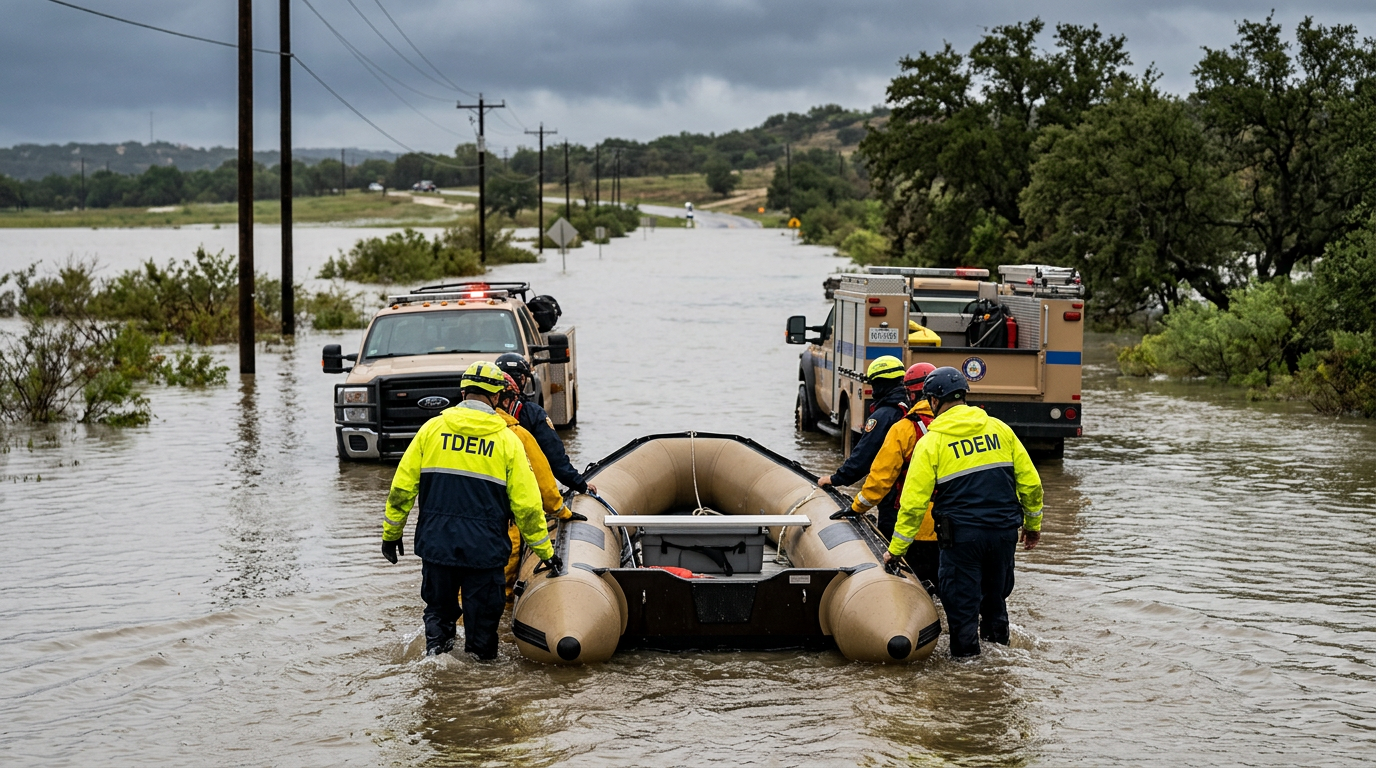
Governor Greg Abbott has officially mobilized the Texas Division of Emergency Management (TDEM) and several state agencies to address a critical flash flooding threat currently impacting multiple regions across the state. This move comes as meteorological projections indicate sustained heavy rainfall could overwhelm local drainage systems and cause rivers to swell beyond their banks. State leaders are prioritizing the deployment of high-water rescue vehicles and personnel to areas identified as high-risk zones, particularly where low-water crossings are prevalent. This emergency posture is consistent with the state's proactive disaster management framework, which seeks to position resources before residents are isolated by rising waters. Texas has a long history of managing sudden, intense meteorological shifts known as 'flash floods,' which characteristically occur within six hours of heavy rainfall. Historically, regions such as the Concho Valley and the Hill Country have been particularly susceptible due to their unique topography and limestone-heavy soil, which prevents rapid absorption of water. By issuing this alert and activating state resources, the Governor is leaning on precedents set during previous weather events where early intervention significantly reduced the loss of life and property damage. The coordination involves not just TDEM, but also the Texas Parks and Wildlife Department and the Texas Department of Transportation to ensure that roads are monitored and water rescues can be executed swiftly.
Texas relevance
This emergency activation is directly relevant to residents of the Concho Valley, Central Texas, and North Texas, where the rainfall totals are expected to be most significant. Texas leads the nation in many categories of weather-related incidents, and flash flooding remains one of the most consistent threats to public safety in the state. Local municipalities often find their resources stretched thin during wide-scale events, making the Governor's decision to provide state-level support a vital safety net for rural and suburban communities alike. The infrastructure in these regions is being tested, and the state's involvement ensures that technical expertise and heavy equipment are available to prevent the catastrophic failure of local flood control measures.
State Agencies Mobilized for Rapid Response
The primary agency involved in this directive is the Texas Division of Emergency Management, which serves as the hub for all logistical coordination during state emergencies. Under the Governor's orders, TDEM has increased its readiness level to ensure that assets like boat squads and aerial reconnaissance units are fueled and manned. This preparation is designed to ensure that the moment a local county judge declares an emergency, the state is already positioned to provide relief without the delays typically associated with administrative paperwork.
Furthermore, the Texas Department of Public Safety (DPS) has been tasked with increasing patrols along major highways known for flooding. State troopers are working in tandem with local law enforcement to close down bridges and underpasses that have historically become traps for unsuspecting drivers. The goal is to provide a visible deterrent to residents who might otherwise attempt to cross flooded roadways, which remains the leading cause of flood-related fatalities in the state of Texas.
The Hydrology of the Current Weather Crisis
Meteorological experts serving the state have noted that the current atmospheric conditions are ripe for 'training' storms, where multiple cells follow the same path over the same geographic area. This leads to an accumulation of water that the ground simply cannot process, particularly in the Concho Valley where the soil saturation levels are already high from previous seasonal rains. When the ground is over-saturated, 100% of additional rainfall becomes runoff, flowing directly into creeks and residential streets.
The state’s hydrologists are monitoring river gauges in real-time to predict which downstream communities may face flooding even after the rain has stopped. This 'delayed flooding' often catches residents off guard, as they believe the danger has passed once the sun comes out. State officials are emphasizing that the threat persists until the runoff has cleared the major river systems and moved toward the Gulf of Mexico, a process that can take several days depending on the volume of the storm.
Infrastructure Vulnerabilities and Public Safety
Texas possesses thousands of low-water crossings, many of which are located in rapidly growing counties where infrastructure has not yet caught up with the population boom. Governor Abbott’s press briefing highlighted the specific danger these crossings pose to commuters. The state is utilizing digital signage on major turnpikes and interstates to warn drivers of upcoming hazards, leveraging the 'Turn Around, Don't Drown' campaign which has been a staple of Texas safety messaging for over a decade.
In addition to road safety, the state is investigating the integrity of small-scale dams and levees in rural areas. While the major dam systems managed by the Army Corps of Engineers are robust, many smaller, privately owned or municipal water retention ponds are at risk of overflowing. State engineers are providing technical assistance to local water districts to manage controlled releases where possible, aiming to prevent sudden breaches that could cause catastrophic surges in residential neighborhoods.
Coordination with Local Stakeholders
The Governor stressed that the state government is not acting in a vacuum but is working in constant communication with mayors and county officials. This 'bottom-up' approach to emergency management is a hallmark of the Texas Disaster Act of 1975, which grants the Governor broad powers while ensuring local authorities remain the primary point of contact for their citizens. By providing state resources now, Abbott is effectively subsidizing the emergency budgets of smaller counties that might otherwise be bankrupt by a major flood event.
Volunteer organizations, such as the Texas Baptist Men and the American Red Cross, are also being integrated into the state’s response plan. These groups provide the 'human' side of disaster relief, including mobile kitchens and temporary shelters, while the government handles the heavy lifting of rescue and infrastructure repair. This public-private partnership is a key component of why Texas is often cited as a leader in disaster resilience and recovery.
Future Outlook and Recovery Efforts
While the immediate focus is on life safety, the state is already looking toward the recovery phase. The Governor’s office has hinted at the possibility of a disaster declaration if damage assessments meet the federal thresholds. Such a declaration would open the door for FEMA assistance and low-interest loans for homeowners and businesses affected by the rising waters. This forward-looking planning is intended to reassure the business community that the state is committed to a rapid return to normalcy.
Long-term, this event will likely reignite discussions in the Texas Legislature regarding the Flood Infrastructure Fund (FIF). Created to provide a permanent source of funding for flood mitigation projects, the FIF is essential for hardening the state against future weather extremes. Each event like this provides valuable data that state planners use to refine flood maps and determine which areas require new drainage channels or larger culverts to protect the burgeoning Texas population.
Technological Advancements in State Monitoring
One notable aspect of the current response is the use of high-tech drone surveillance. The Texas Military Department has deployed unmanned aerial vehicles (UAVs) to monitor levee integrity and to scout for stranded individuals in areas where manned helicopters might face visibility issues. This technology allows the state to gather intelligence without risking additional lives, providing a real-time feed to the State Operations Center in Austin.
Furthermore, the integration of social media monitoring tools allows state officials to identify 'hot spots' where residents are posting about rising water before traditional sensors might pick up the change. This crowdsourced data is becoming an increasingly important part of the state's situational awareness, allowing for more nimble deployments of rescue teams to specific neighborhoods that are in the direct path of the floodwaters.
Analysis
The Governor's decision to hold a public press conference and activate state assets early suggests a shift toward a more aggressive stance on communicative disaster readiness. While Texas is often criticized for its aging drainage infrastructure in growing urban centers, the current administration is focusing heavily on the response side of the equation. This political and operational strategy emphasizes the 'boots on the ground' approach, showcasing a visible and rapid government response to natural phenomena. By centralizing the communication through the Texas Division of Emergency Management, the state is also attempting to mitigate the spread of misinformation that often accompanies social media reports during severe weather events.
Source attribution
This story was reported using a public release from the Governor Abbott — Video Moments (Google News). Keep TX Red rewrote the coverage independently and links to the official statement for verification.
Frequently Asked Questions
- What areas of Texas are currently at the highest risk for flash flooding?
- While the entire state sees varying degrees of risk, the Governor specifically highlighted the Concho Valley, Central Texas, and North Texas regions due to current weather patterns and soil saturation levels. Residents in the Hill Country should also remain vigilant due to the region's history of rapid river rises.
- What should I do if I encounter a flooded road?
- The official state guidance is 'Turn Around, Don't Drown.' It is impossible to judge the depth of water or the condition of the road underneath. Most flood deaths in Texas occur when vehicles are swept away by as little as six inches of moving water.
- How can I stay informed about road closures in my area?
- The Texas Department of Transportation (TxDOT) maintains an active map at DriveTexas.org, which provides real-time updates on road conditions, flooding, and closures. Residents are encouraged to check this resource before traveling during severe weather.
- Is there state assistance available for property damage?
- Currently, the state is in the 'response' phase. If the damage is widespread, the Governor may issue a disaster declaration, which is the first step toward unlocking state and federal financial assistance for residents and business owners.
Official Sources
Take the next step
Browse the Newsroom →Read more about Keep Texas Red → Our full guide to what Keep Texas Red means and why Texans support it.
Related Articles
Get Texas updates delivered weekly.
Independent Texas reporting on politics, policy, and daily life. One email a week. Unsubscribe anytime.
Keep TX Red Newsroom
The Keep Texas Red Editorial Staff produces nonpartisan explainers, policy breakdowns, and educational resources to help Texans understand how their government works. All content is reviewed for accuracy and updated regularly.
About Keep TX Red →