Chronicles of Faith: New Literary Research Explores the Evolution of Religion in the Lone Star State
A new historical study examines how diverse religious traditions shaped the political and social landscape of Texas from the mission era to modern day.
Editorial disclaimer: Opinions and analysis on Keep TX Red are editorial content — not statements of fact. See our editorial standards.
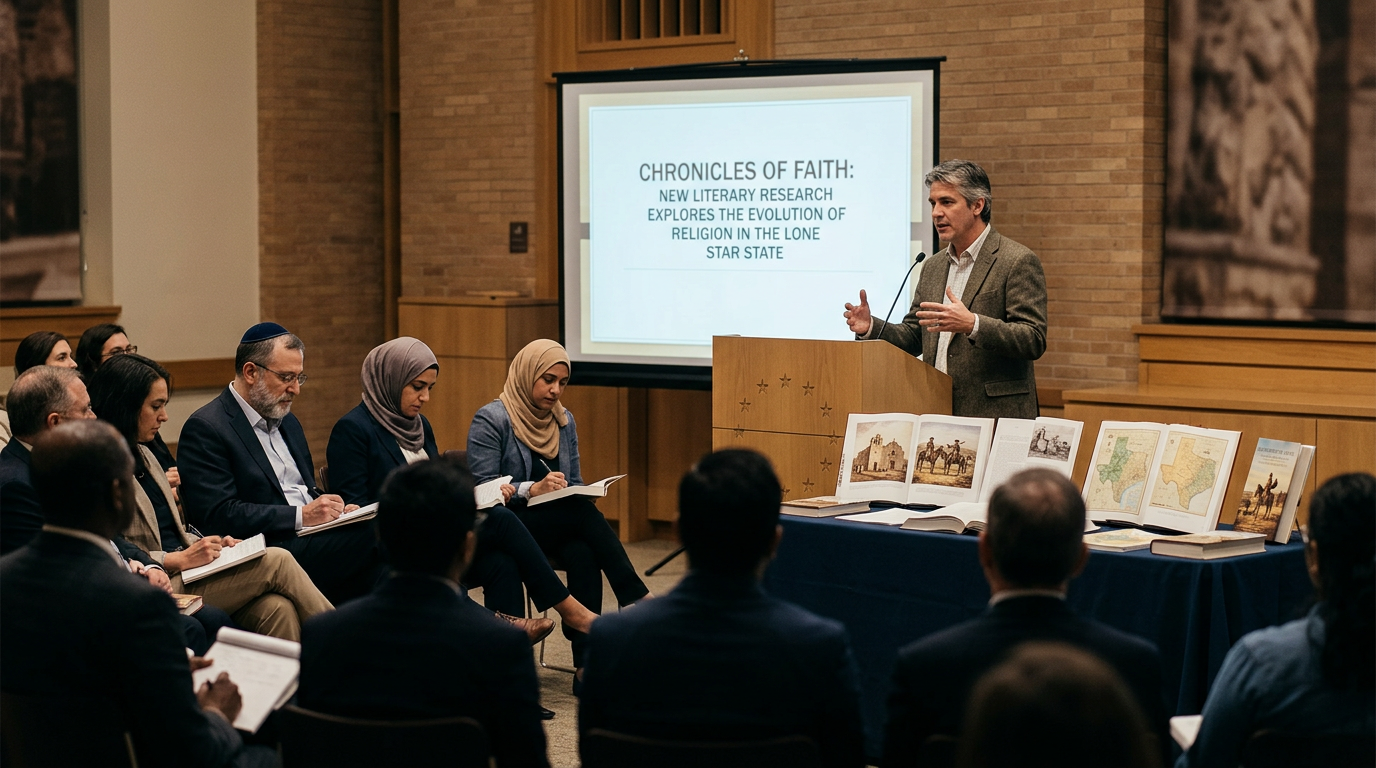
A comprehensive new historical study has been released, detailing the complex and influential history of religious institutions and faith traditions across Texas. This latest research moves through several centuries, beginning with the Spanish colonial period and the establishment of Catholic missions, which served as the early spiritual and administrative hubs of the region. The book meticulously documents how these early foundations eventually gave way to the arrival of circuit-riding Methodist preachers, Baptist congregations, and the eventual rise of the modern megachurch movement that characterizes many of the state's urban centers today. The work contextualizes faith not as a static element of the past, but as a dynamic force that has continuously redefined what it means to be a Texan. Historically, the intersection of religion and civic life in Texas has influenced everything from early land grants to the formation of the state's educational systems and social safety nets. This narrative seeks to bridge the gap between academic research and public knowledge, offering a deep dive into how various denominations—including the growth of Jewish communities, Islamic centers, and the historic Black church—have built the modern demographic profile of the state. By examining primary sources from the 18th and 19th centuries alongside contemporary sociological data, the text provides a roadmap for understanding the current cultural and social climate of the southern United States. It highlights the shift from rural, frontier-style worship to the sophisticated, politically active religious organizations found in modern Austin, Dallas, and Houston.
Texas relevance
Texas serves as the primary setting and central subject of this research, which highlights how the state's unique 'frontier' identity was largely forged through religious expansion. From the historic missions of San Antonio to the influential pulpits of the Piney Woods and the sprawling suburbs of North Texas, the state's geography is inextricably linked to its spiritual development. Understanding this history is critical for Texans today because religious institutions remain some of the largest private owners of real estate and significant providers of social services, healthcare, and education throughout the state. The growth of these institutions mirrors the population booms of major Texas metros, making the book a vital resource for understanding the state's current socio-political environment and its projected demographic shifts.
The Mission System and Early Colonial Roots
The religious journey of Texas began long before it was a republic or a state, rooted deeply in the Spanish mission system. These outposts were designed not only for spiritual conversion but as tools for territorial expansion and cultural synchronization. The architecture of the Alamo and other San Antonio missions stands as a physical testament to this era, where the Catholic Church acted as the primary bridge between the Spanish Crown and the indigenous populations.
This period established a blueprint for community building that would persist for generations. The missions were self-sustaining economies that introduced new agricultural techniques and social hierarchies to the region. The legacy of this era remains visible today in the naming of Texas rivers, cities, and landmarks, as well as the deep-seated presence of the Catholic faith in South Texas and along the Rio Grande Valley. Understanding these roots is essential for recognizing the long-standing influence of Hispanic culture on the state's fundamental identity.
The Era of the Circuit Riders and Frontier Faith
Following the Texas Revolution and the influx of Anglo settlers, the religious landscape shifted toward Protestantism. Methodists, Baptists, and Presbyterians brought a different form of organization to the frontier. Circuit riders, who were travelling preachers, moved across the vast and often dangerous terrain to serve remote settlements where permanent churches were yet to be built. These figures were instrumental in maintaining social order in areas where government presence was minimal.
The camp meetings of the 19th century became major social events, bringing together isolated families for several days of worship, commerce, and community building. This 'frontier faith' emphasized individual responsibility and communal support, traits that many historians argue are still hallmarks of the Texas character today. The institutionalization of these groups led to the founding of iconic Texas universities and the establishment of moral codes that influenced early state lawmaking and juvenile reform efforts.
Urbanization and the Rise of the Megachurch
As the 20th century progressed, the discovery of oil and the rapid growth of cities like Houston and Dallas transformed how Texans practiced faith. Large urban congregations began to replace the small-town parish as the centers of influence. This era saw the birth of the modern megachurch, a phenomenon that combined religious teaching with professional media production, large-scale social services, and political advocacy. Figures like George W. Truett in Dallas helped set the stage for these massive institutions, which became cities within themselves.
The evolution into the 21st century has seen these churches leverage technology and broadcast media to reach global audiences, while remaining headquartered in the Texas suburbs. These organizations now play significant roles in local governance, often partnering with the state to provide disaster relief, foster care support, and educational programs. The scale of these operations reflects the broader 'everything is bigger in Texas' philosophy, fundamentally altering the visual and social landscape of the state's fastest-growing counties.
Diversity and the Modern Theological Landscape
Modern Texas is home to some of the largest and most diverse religious communities in the United States. Beyond the historical Catholic and Protestant dominance, the state has seen a significant rise in its Jewish, Muslim, Hindu, and Buddhist populations, particularly in the multi-cultural hubs of Fort Worth and Houston. This diversification has added new layers to the state's history, as these communities build their own institutions and contribute to the civic fabric.
This shifting demographic has forced a re-evaluation of the 'Bible Belt' label often applied to the state. While faith remains a central pillar for many Texans, the expressions of that faith have become more varied. The interaction between these different groups has led to unique interfaith dialogues and sometimes tensions, all of which are documented in this new historical overview. This diversity ensures that the future of Texas will be shaped by a broad spectrum of spiritual viewpoints rather than a single tradition.
The Link Between Faith and the Republic’s Governance
The influence of faith in Texas has never been confined to the pulpit; it has historically permeated the halls of government. From the earliest days of the Republic, debates over religious freedom and the role of the church in public life have been constant. Early Texas leaders often used religious rhetoric to justify independence and to frame the mission of the new nation as one of divine purpose. This connection between providence and politics remains a potent force in contemporary Texas campaigns and policy debates.
The research explores how specific legislative actions, from blue laws to education reform, have been steered by the moral consensus of the state's predominant religious groups. By tracing these patterns, the author shows that the political culture of Texas is not just a product of partisanship, but of deep-seated theological convictions that vary by region and denomination. This historical perspective allows readers to see current policy shifts not as outliers, but as part of a long-standing tradition of moral governance in the Southwest.
The Future of Texas Religious Institutions
Looking forward, the new study addresses the challenges facing religious institutions in an era of rapid technological and social change. While traditional attendance trends in some denominations are shifting, the influence of faith-based non-profits and community groups continues to expand. The 'Texas model' of using religious organizations to help address societal needs—such as homelessness and mental health—appears to be a permanent fixture of the state's administrative strategy.
The transformation of older church properties into community centers or the adaptation of faith messages for a digital-native generation are also covered. As Texas continues to attract newcomers from across the country and the globe, its religious history provides a vital context for how these new residents will integrate into the local culture. The book concludes that while the specific forms of worship may change, the underlying impact of religion on the Texas psyche remains as strong as it was during the mission era.
Analysis
This new examination of Texas religious history arrives at a pivotal moment when the state's identity is under national scrutiny. While the research remains grounded in historical fact, it subtly suggests that the future of Texas may be defined by how its traditional religious roots interact with an increasingly diverse and urbanized population. The move from small-town congregationalism to global-facing megachurches represents more than just a change in scale; it signals a shift in how Texas power structures operate. By documenting the rise of minority faiths alongside the dominant Protestant narrative, the research underscores that Texas has always been more of a theological melting pot than a monolithic block, a fact that could have profound implications for future legislative and social trends in the Lone Star State.
Source attribution
This story was reported using a public release from the Texas History Stories (Google News). Keep TX Red rewrote the coverage independently and links to the official statement for verification.
Frequently Asked Questions
- Who are the primary subjects of this new Texas history book?
- The book covers a wide range of subjects, including early Spanish missionaries, frontier circuit riders, founders of major Baptist and Methodist institutions, and leaders of the modern megachurch movement in Texas urban centers.
- How did religion influence the early government of Texas?
- Religion played a key role in the formation of the Texas Republic, providing a moral framework for leadership and influencing early laws regarding education, social behavior, and the relationship between the state and its citizens.
- Which Texas cities are featured most prominently in the religious history narrative?
- San Antonio is central to the mission era history, while Dallas and Houston are highlighted for their roles in the development of 20th-century megachurches and the diversification of faith in the modern era.
- Does the research address the impact of minority faiths in Texas?
- Yes, the study significantly examines the historical growth and contributions of Jewish, Muslim, Hindu, and Black church communities, ensuring a comprehensive look at the state's pluralistic history.
Official Sources
Take the next step
Browse the Newsroom →Read more about Keep Texas Red → Our full guide to what Keep Texas Red means and why Texans support it.
Related Articles
Get Texas updates delivered weekly.
Independent Texas reporting on politics, policy, and daily life. One email a week. Unsubscribe anytime.
Keep TX Red Newsroom
The Keep Texas Red Editorial Staff produces nonpartisan explainers, policy breakdowns, and educational resources to help Texans understand how their government works. All content is reviewed for accuracy and updated regularly.
About Keep TX Red →