Texas Hill Country: Residents Face Severe Flooding and Recovery Efforts
Severe storms and rising river levels test the resilience of the Texas Hill Country as residents deal with new flood threats during ongoing recovery.
Editorial disclaimer: Opinions and analysis on Keep TX Red are editorial content — not statements of fact. See our editorial standards.
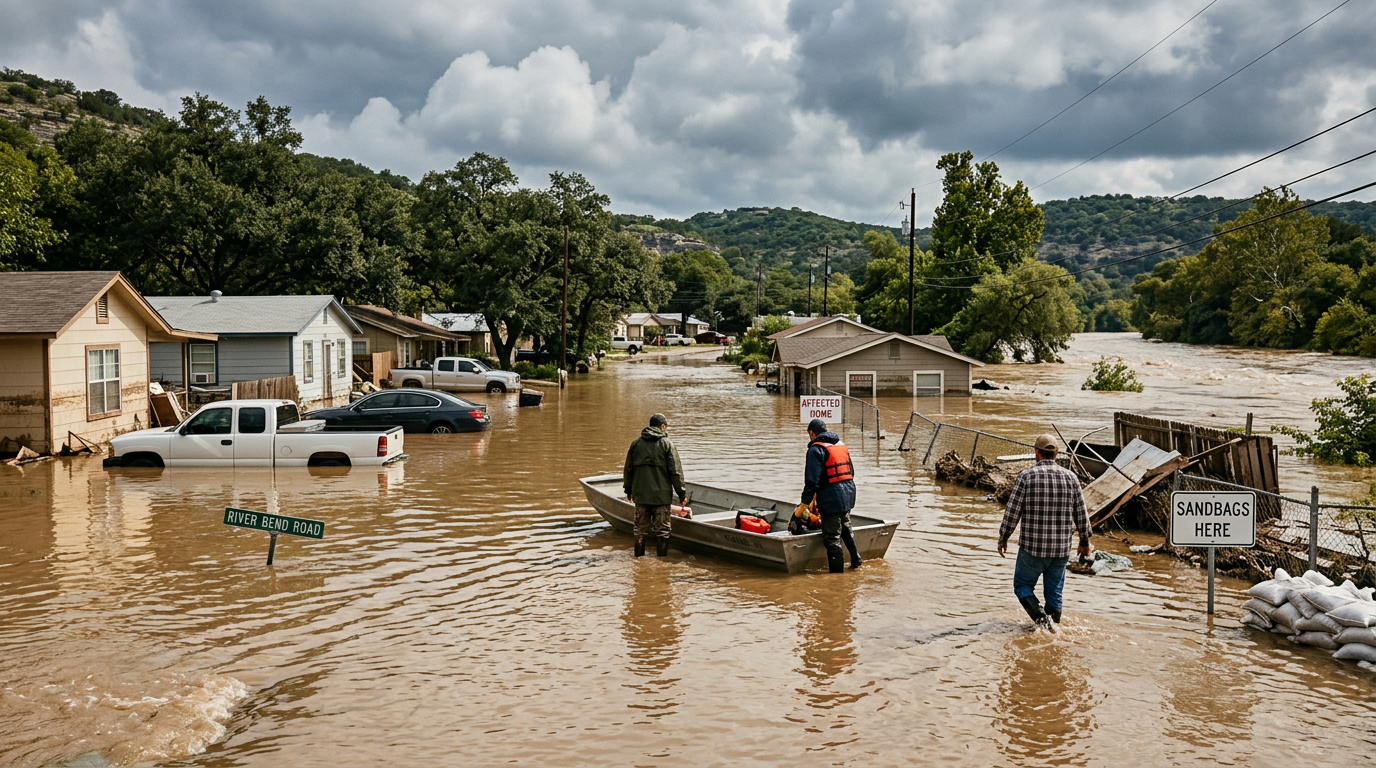
The Texas Hill Country is once again navigating the dangers of rapid-onset flooding as heavy precipitation forces river levels to climb, threatening residential properties and public infrastructure across the region. This latest weather event evokes memories of historical flash floods that have defined the geography and safety protocols of Central Texas for decades. Historically, this region is known as 'Flash Flood Alley' due to its unique limestone topography and thin topsoil, which prevent the ground from absorbing sudden downpours, leading to immediate and dangerous runoff into local tributaries. Prior major flood events in the 1990s and the mid-2010s set the precedent for current emergency response strategies, yet the frequency of these incidents continues to challenge local resources. Emergency management teams have been deployed to monitor critical checkpoints along the Guadalupe and Llano rivers, where water levels have reached stages that require road closures and mandatory evacuations in low-lying areas. The current situation is particularly taxing for local municipalities that are still working to repair damage from the previous year’s weather cycles. While Texas is no stranger to the feast-or-famine nature of its water cycle, the current saturation points suggest a prolonged period of vigilance for homeowners. State officials are emphasizing the importance of staying informed through local alerts as the weather patterns remain unpredictable through the summer months.
Texas relevance
This situation directly impacts multiple Texas counties including Comal, Hays, Llano, and Gillespie, where the economy is heavily tied to river tourism and agricultural stability. Historically, the Hill Country has served as a testing ground for Texas state flood planning and the development of the State Flood Plan by the Texas Water Development Board. The current rise in water levels puts enormous pressure on local emergency services and highlights the ongoing need for state-level infrastructure investment to protect fast-growing communities in these high-risk areas. For Texans living in these corridors, the threat is not just a seasonal inconvenience but a recurring risk to many families' primary investments and small business operations.
The Geographic Reality of Flash Flood Alley
The Hill Country sits atop an area known as the Balcones Escarpment, a geological feature that acts as a ramp for warm, moist air from the Gulf of Mexico. When this air hits the cooler heights of the plateau, it often stalls and dumps massive amounts of water in a short window of time. Because the region is composed largely of karst limestone with very little permeable soil, the water has nowhere to go but down into the canyons and creek beds.
This geological setup means that even a moderate storm ten miles upstream can result in a wall of water hitting a downstream community in less than an hour. Local residents have adapted by building homes on stilts or further back from the banks, but many historic properties and older developments remain vulnerable. The rapid rise of these waters often catches tourists and newcomers off guard, leading to a high volume of swift-water rescues that strain local fire and police departments.
Urbanization has further complicated this natural dynamic. As ranch lands are converted into residential subdivisions, the natural 'sponge' effect of the landscape is reduced. Even with modern detention ponds and drainage requirements, the sheer volume of water generated by Central Texas storms can overwhelm engineered systems designed for average conditions.
Economic Strains on Tourism and Agriculture
The economy of the Hill Country is deeply integrated with its waterways. From tubing on the Comal to fishing on the Llano, water is a primary driver of the region's multibillion-dollar tourism industry. When flooding occurs, these businesses are forced to shutter, often for weeks at a time, to clear debris and repair docks. This causes a ripple effect through the local economy, impacting hotels, restaurants, and retail shops that rely on seasonal visitors.
Agriculture also faces a double-edged sword during these events. While the rain is often desperately needed to end periods of drought, the violence of flash flooding can wash away topsoil, destroy fencing, and drown livestock. Farmers and ranchers in Gillespie and Mason counties often find themselves spending months recovering from a single afternoon of extreme weather, highlighting the volatile nature of rural life in the heart of Texas.
Furthermore, the cost of repairing public infrastructure after these floods is a significant burden on county budgets. Bridges that are washed out or undermined by rushing water require engineering assessments and expensive reconstructions that can take years to fund and complete. This creates a long-term backlog of infrastructure projects that can hinder the overall growth and connectivity of the region.
Emergency Response and Technological Integration
In response to past tragedies, Texas has significantly upgraded its monitoring technology. Automated rain gauges and stream sensors now provide real-time data to the National Weather Service and local emergency coordinators. This 'early warning' system is critical for giving residents the precious minutes needed to move to higher ground before roads become impassable.
The use of social media and localized text alerts has transformed how evacuation orders are disseminated. However, the 'dead zones' in rural portions of the Hill Country where cellular service is spotty still pose a significant challenge. Emergency responders often have to rely on high-water vehicles and helicopter support to reach isolated residents when digital communications fail.
Training for swift-water rescue has become a mandatory standard for many regional departments. These teams spend hundreds of hours practicing in controlled environments so they are prepared for the chaotic reality of a surging river. The coordination between state agencies like the Texas Division of Emergency Management (TDEM) and local volunteers remains the backbone of the region's survival strategy during major deluges.
The Mental Toll of Recurring Natural Disasters
Beyond the physical and economic damage, there is a profound psychological impact on communities that live under the constant threat of flooding. For many residents, the sound of heavy rain on a tin roof no longer brings a sense of peace but rather a sense of dread. This collective trauma is particularly sharp in towns that have seen loss of life in recent years.
Community groups and local non-profits have stepped up to provide post-disaster counseling and support, recognizing that recovery is as much about mental health as it is about rebuilding structures. The uncertainty of when the next 'hundred-year flood' will occur—especially when they seem to happen every few years—creates a state of chronic stress for those whose livelihoods are tied to the land.
This environment has led to a shift in how these communities interact. There is a strong sense of 'Texas hospitality' and mutual aid that emerges during crises, with neighbors often being the first on the scene to help one another. While this strengthens the social fabric, it also underscores the gaps in formal government support systems that are often slow to mobilize in the immediate aftermath of a flash flood.
Future Outlook and Mitigation Strategies
Looking forward, the state is exploring more aggressive mitigation strategies, including the construction of more sophisticated dam systems and the expansion of floodplain buy-out programs. These programs allow the government to purchase homes in high-risk areas and return the land to its natural state, reducing the potential for future property damage and loss of life.
However, these solutions are often met with resistance due to property rights concerns and the high cost of implementation. The debate over how to manage Texas' water future is ongoing, with various stakeholders advocating for different balances of development and conservation. The Hill Country serves as the frontline for these debates, as the immediate consequences of policy decisions are visible with every rising tide.
Ultimately, the resilience of the Texas Hill Country will depend on a combination of individual preparedness and collective investment. As the region continues to grow, the lessons learned from the current flooding will be vital in shaping a safer and more stable environment for the millions of Texans who call this area home.
Analysis
The recurring nature of these floods raises significant questions about the long-term sustainability of rapid development in the Hill Country. As more people migrate to Central Texas, the amount of impervious cover—such as concrete and asphalt—increases, which naturally exacerbates runoff issues during storm events. Policy makers are caught between the desire for economic expansion and the physical reality of the region's watershed. While the state has made strides in better warning systems, the physical infrastructure of bridges and culverts often lags behind the current reality of storm intensity. This creates a cycle of reactive spending rather than proactive mitigation, a trend that local taxpayers are increasingly beginning to scrutinize as insurance premiums in these zones climb.
Source attribution
This story was reported using a public release from the Texas Monthly. Keep TX Red rewrote the coverage independently and links to the official statement for verification.
Frequently Asked Questions
- Why is the Texas Hill Country so prone to flash flooding?
- The region features a combination of steep terrain and hard limestone bedrock. When heavy rain falls, the ground cannot absorb the moisture, resulting in immediate runoff into rivers and streams. This creates 'walls of water' that can rise several feet in a matter of minutes.
- What should residents do when a flash flood warning is issued?
- Residents are advised to move to higher ground immediately and avoid driving. Most flood-related fatalities in Texas occur in vehicles. The phrase 'Turn Around, Don't Drown' is the standard safety advice for anyone encountering water on a roadway.
- How does this flooding affect the local economy?
- Flooding leads to the closure of state parks, river access points, and local businesses. This halts tourism revenue, which is a major source of income for Hill Country towns like Gruene, Wimberley, and Fredericksburg.
- Are there state programs to help with flood recovery?
- Yes, agencies like the Texas Division of Emergency Management (TDEM) and the Texas Water Development Board provide resources for recovery and future mitigation grants. Federal assistance through FEMA may also be available if a disaster declaration is made.
Official Sources
Take the next step
Browse the Newsroom →Read more about Keep Texas Red → Our full guide to what Keep Texas Red means and why Texans support it.
Related Articles


Get Texas updates delivered weekly.
Independent Texas reporting on politics, policy, and daily life. One email a week. Unsubscribe anytime.
Keep TX Red Newsroom
The Keep Texas Red Editorial Staff produces nonpartisan explainers, policy breakdowns, and educational resources to help Texans understand how their government works. All content is reviewed for accuracy and updated regularly.
About Keep TX Red →