Cascading Weather Disasters Slam Texas Infrastructure as Flooding and Smoke Trends Collide
Extreme flooding in Texas combined with transcontinental smoke and heatwaves create a record-breaking disaster profile for the Lone Star State.
Editorial disclaimer: Opinions and analysis on Keep TX Red are editorial content — not statements of fact. See our editorial standards.
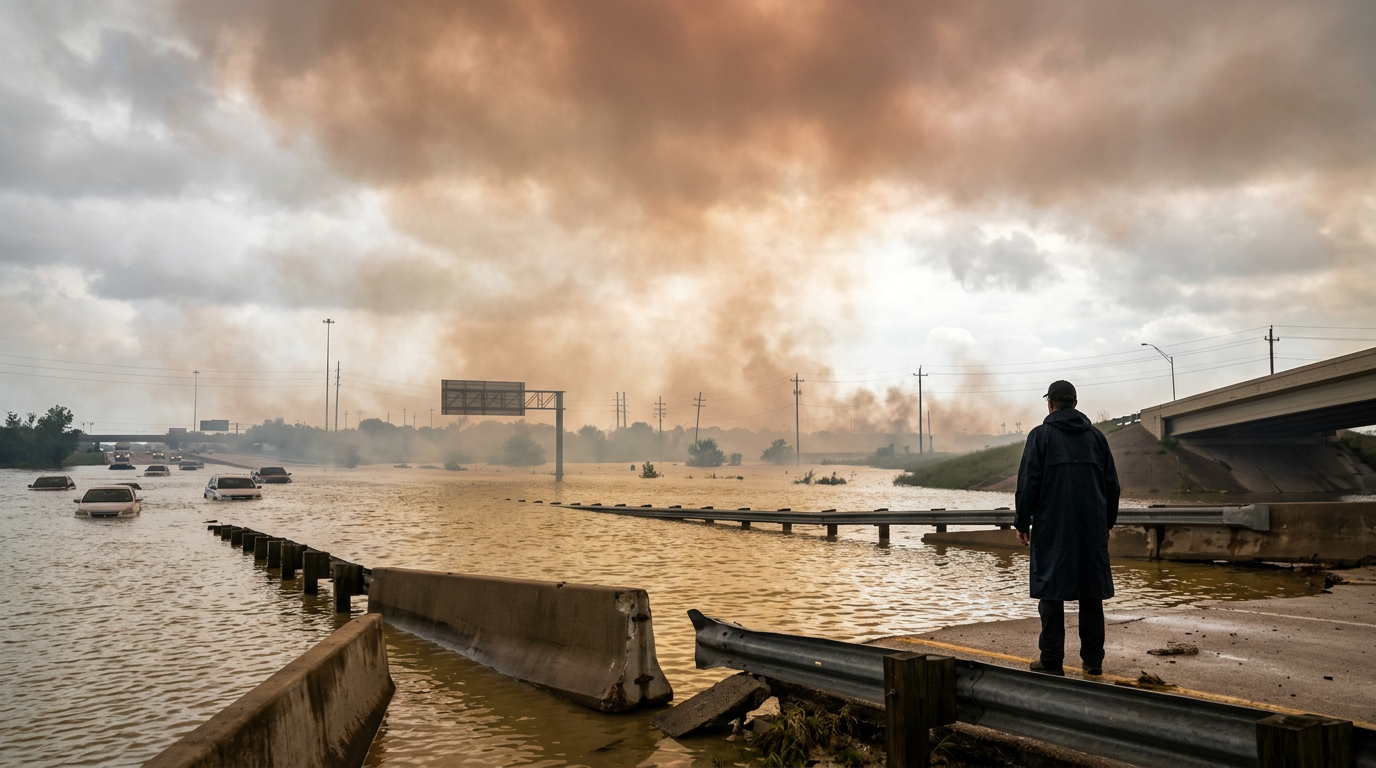
The state of Texas is currently grappling with a rare intersection of natural disasters that has stretched emergency resources from the Red River to the Rio Grande. While heavy rainfall has triggered widespread flooding across eastern and coastal regions, a secondary atmospheric threat has emerged in the form of dense wildfire smoke drifting southward from Canadian provinces. This phenomenon is further complicated by a localized high-pressure ridge that has trapped record-breaking heat over West Texas, creating a 'triple-threat' scenario for public health and infrastructure. Historically, Texas has dealt with these events in isolation, but the convergence of flooding, compromised air quality, and extreme thermal stress represents a significant departure from typical seasonal patterns. The current situation echoes the historic weather anomalies of the mid-20th century but with the added modern strain on an increasingly populated urban corridor. State officials are monitoring the integrity of levee systems and the stability of the ERCOT power grid as residents navigate these overlapping crises.
Texas relevance
Texas remains the primary epicenter for these converging weather events due to its unique geography which acts as a mixing bowl for Gulf moisture and continental air masses. Cities like Houston and Beaumont are currently managing the immediate impacts of inundation, while the entire state workforce faces the economic consequences of slowed logistics and increased cooling costs. Texas leads the nation in annual weather-related insurance claims, and this multi-faceted event is expected to set new records for residential and commercial payouts. Local municipal leaders are particularly concerned about the long-term resilience of drainage projects funded after previous major storms, as the current rainfall rates test the limits of recently upgraded infrastructure.
The Hydrological Impact on East Texas Communities
The primary threat to life and property remains the persistent rainfall that has saturated the soil across the Piney Woods and the Gulf Coast. In many areas, monthly rainfall totals have been surpassed in less than forty-eight hours, leading to the rapid rise of tributary rivers. Local drainage systems, designed for standard seasonal shifts, are struggling to move the volume of water toward the Gulf, resulting in street-level flooding in major metro areas.
Emergency responders have been deployed to assist with high-water rescues and to establish temporary shelters for displaced families. The saturation has also led to concerns regarding the stability of rural roads, where washouts have isolated some smaller communities. Unlike fast-moving tropical storms, this slow-moving system continues to drop moisture, ensuring that the flood threat will persist for several days even after the heaviest clouds pass.
Agriculture in the region is also facing significant setbacks. Grain and cotton farmers, particularly those in the lower river basins, are seeing fields submerged during critical growth phases. The economic ripple effects of these lost yields will likely be felt in the coming months as supply chains adjust to the diminished output from one of the nation's most productive agricultural zones.
Smoke Inhalation Risks and Atmospheric Stagnation
While the water rises below, the air above has become increasingly hazardous as smoke from northern wildfires migrates into the Texas atmosphere. This particulate matter has a characteristic hazy appearance and a distinct odor, but the real danger lies in the PM2.5 particles that can penetrate deep into the lungs. Health departments in Dallas and Austin have issued warnings for sensitive groups, including the elderly and those with preexisting respiratory conditions.
The smoke is being held in place by an atmospheric inversion, which occurs when a layer of warm air traps cooler, dirtier air near the ground. This prevents the smoke from dispersing and exacerbates the effects of urban smog. In many Texas cities, visibility has dropped to levels usually seen during heavy fog, affecting local airport operations and increasing the risk of traffic accidents on major interstates like I-35.
Outdoor workers, particularly those in the construction and energy sectors, are being encouraged to limit their exposure. The combination of high humidity from the floods and the lower air quality from the smoke creates a taxing environment for the human body, leading to an uptick in emergency room visits for respiratory distress. Local officials are emphasizing the importance of high-quality air filters in residential HVAC systems to mitigate these indoor air quality risks.
Infrastructure Under Strain: Power and Transport
The Texas power grid, managed by ERCOT, is facing a unique test of its capabilities. High temperatures in West Texas are driving up the demand for air conditioning, while the flooding in East Texas threatens several key power generation facilities and transmission lines. To date, the grid has remained stable, but the margin for error is narrowing as the heat index continues to climb into the triple digits across much of the state.
Logistics and transportation have also taken a hit. Major rail lines that move goods from the Port of Houston to the rest of the country have seen delays due to submerged tracks and debris. Trucking routes are similarly impacted, as state troopers are redirecting heavy loads away from flooded bypasses, which adds time and cost to every delivery. This intersection of events is a reminder of how interconnected the state's economic health is with its physical environment.
Maintenance crews from the Texas Department of Transportation are working around the clock to clear drains and assess bridge integrity. However, the sheer scale of the flooding means that many repairs will have to wait until the water recedes. The prioritization of these projects will be a major focus for the state legislature as they look at future infrastructure appropriations and emergency fund management.
Local Emergency Management Responses
From the panhandle to the coast, local emergency management coordinators are in a state of high alert. The multi-hazard nature of this event has required cross-jurisdictional cooperation that is typically reserved for major hurricanes. In Houston, the Office of Emergency Management is coordinating with the National Weather Service to provide real-time updates on bayou levels, while inland counties are focusing on smoke-related health advisories.
Volunteers and non-profit organizations have also mobilised to provide relief. Organizations like the Texas Baptist Men and local food banks are preparing for a long-term recovery effort, recognizing that most flood damage takes weeks to fully assess. The coordination of these private-sector efforts with state resources is a hallmark of the Texas response model, emphasizing community resilience over top-down mandates.
Communication has become a vital tool in this crisis. The 'Ready Texas' initiatives and various local alert systems are pushing out notifications to mobile devices, ensuring that even those in remote areas are aware of changing conditions. The goal is to prevent a lack of information from turning a manageable weather event into a preventable tragedy, especially regarding the dangers of driving through flooded roadways.
Long-Term Economic and Insurance Implications
The financial cost of this 'batter' of weather events is expected to be significant. Actuaries for major insurance firms are already beginning to model the potential losses, which include not only property damage from water but also crop loss and business interruption. Texas policyholders may see further adjustments to their rates as the risk profile for the state continues to be redefined by these complex, multi-variable weather events.
Small businesses in affected areas are particularly vulnerable. Many lack the capital reserves to survive a prolonged closure, and federal disaster assistance often takes months to arrive. The state is looking at ways to expedite aid through the Texas Division of Emergency Management, but the sheer volume of claims across so many different counties may slow the process.
On a broader scale, these events are prompting a conversation about the diversification of the Texas economy. While the energy sector remains dominant, the disruption of tech hubs in Austin and logistics centers in North Texas due to air quality and flooding shows that no industry is entirely immune to the forces of nature. Future urban planning will likely have to account for these overlapping risks to ensure the state remains a viable destination for global investment.
Analysis
The simultaneous arrival of Canadian wildfire smoke and Gulf-driven flooding highlights a growing vulnerability in the state's disaster preparedness framework. Analysis suggests that while Texas has mastered the 'single-threat' response—such as preparing for a hurricane—the logistical complexity of managing a public health crisis (smoke) alongside a physical infrastructure crisis (floods) requires a more integrated approach. There is also a political dimension to consider: as insurance premiums continue to climb across the state, the frequency of these multi-event disasters may trigger legislative discussions regarding the sustainability of current development patterns in flood-prone zones. The resilience of the Texas energy sector will be the ultimate barometer for how well the state handles this period, as the grid must remain stable despite both extreme heat demands and the physical threats posed by rising waters to coastal substations.
Source attribution
This story was reported using a public release from the Texas History Stories (Google News). Keep TX Red rewrote the coverage independently and links to the official statement for verification.
Frequently Asked Questions
- How can residents protect themselves from the wildfire smoke?
- Health officials recommend staying indoors as much as possible, using high-efficiency HEPA air filters, and wearing N95 masks if outdoor activity is necessary. It is also important to keep windows and doors closed to prevent particulate matter from entering the home.
- What should I do if my road is flooded?
- The Texas Department of Transportation reminds everyone: 'Turn Around, Don't Drown.' Most flood-related deaths occur in vehicles. Even a few inches of moving water can sweep a car off the road. Residents should use official apps or websites to check for road closures before traveling.
- Is the Texas power grid at risk of failure?
- While the grid is under significant stress due to heat and flooding, ERCOT currently reports sufficient capacity. However, residents are always encouraged to have a backup plan for power outages and to monitor official ERCOT communications for any changes in grid status or requests for conservation.
Official Sources
Take the next step
Browse the Newsroom →Read more about Keep Texas Red → Our full guide to what Keep Texas Red means and why Texans support it.
Related Articles
Get Texas updates delivered weekly.
Independent Texas reporting on politics, policy, and daily life. One email a week. Unsubscribe anytime.
Keep TX Red Newsroom
The Keep Texas Red Editorial Staff produces nonpartisan explainers, policy breakdowns, and educational resources to help Texans understand how their government works. All content is reviewed for accuracy and updated regularly.
About Keep TX Red →