Abbott Issues Disaster Declaration as Severe Flood Waters Inundate Texas Hill Country and South Texas Regions
Governor Greg Abbott activates state resources and waives regulations to assist recovery efforts following massive rain events in Central and South Texas.
Editorial disclaimer: Opinions and analysis on Keep TX Red are editorial content — not statements of fact. See our editorial standards.
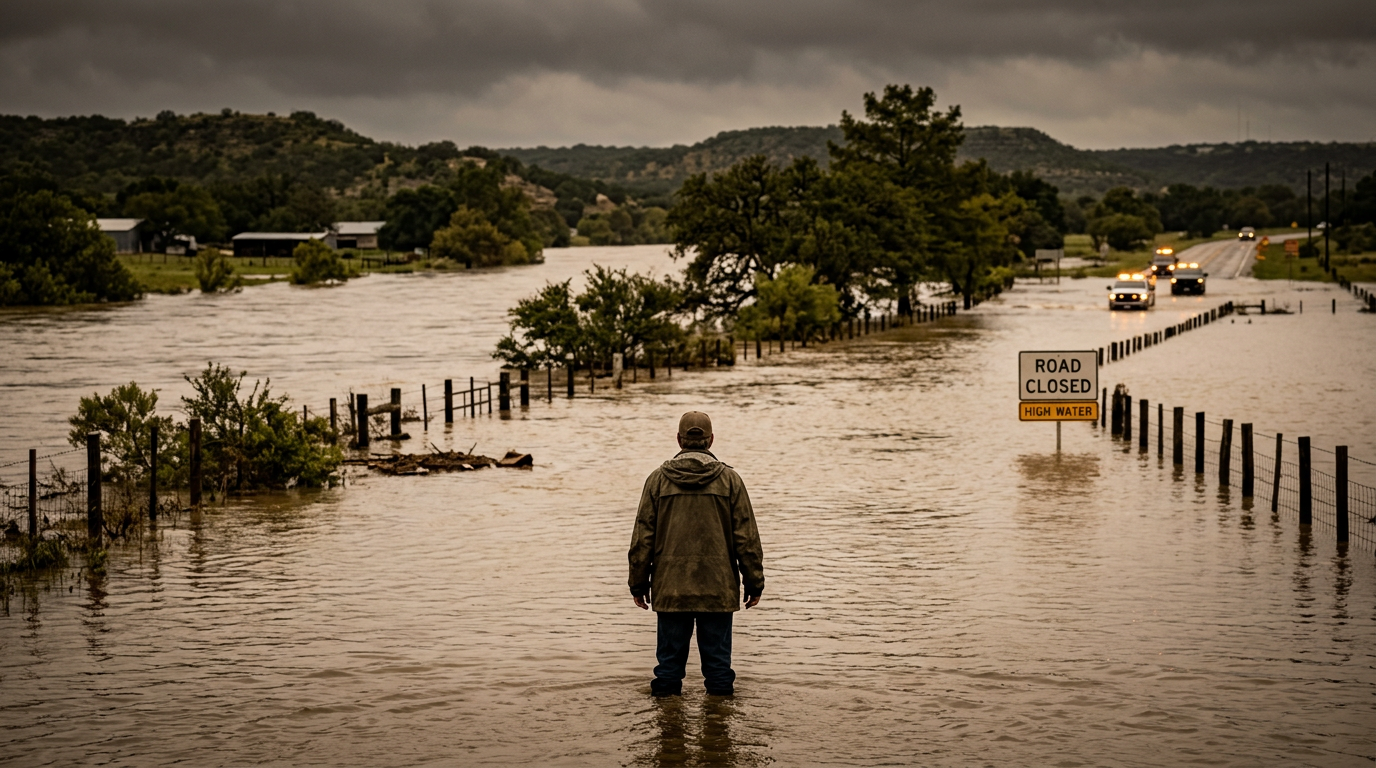
In response to catastrophic rain events that have saturated the Texas Hill Country and South Texas, Governor Greg Abbott officially issued a state disaster declaration to facilitate rapid recovery efforts. Historically, Texas governors use these declarations to suspend certain statutes that might hinder emergency response and to activate the full breadth of the state's logistical assets. This latest executive action follows days of torrential downpours that have overwhelmed local drainage systems, triggered river crests beyond safety levels, and forced domestic evacuations in several low-lying precincts. State weather agencies had previously warned of a slow-moving atmospheric disturbance that stalled over the Balcones Escarpment, a geographic feature known for funneling water into rapid-rise flooding scenarios. The context of this disaster is rooted in the unique geography of Central Texas, a region often referred to by meteorologists as "Flash Flood Alley." Because the soil is often shallow and sits atop limestone, heavy rains quickly turn into dangerous runoff rather than soaking into the ground. Previous landmark flooding events, such as those in 2015 and 2018, have set a precedent for rapid executive intervention. Governor Abbott’s decision to issue a formal declaration early in the event's progression is designed to minimize the delay between the local impact and the arrival of state-funded relief. This proactive approach allows the state to pre-position equipment before roads become impassable, ensuring that those in the path of the storm are not left isolated as water levels continue to rise throughout the river basins.
Texas relevance
This declaration is specifically targeted at residents within the Texas Hill Country and the southern reaches of the state, where localized flooding has caused significant structural damage to infrastructure and private property. For Texans living in these regions, the declaration means that state-level resources—including the Texas Division of Emergency Management (TDEM) and the Texas National Guard—can be deployed more easily to assist local city and county officials. Historically, this region has faced 'flash flood alley' conditions, and this executive move ensures that state funding and personnel are prioritized for these specific jurisdictions rather than waiting for federal coordination. The relevance extends beyond immediate safety, as the state’s involvement helps to stabilize local economies in rural areas. By declaring a disaster, the Governor signals to the Texas Department of Transportation that immediate funding is available for fixing state highways and bridges that serve as vital lifelines for these communities. Without this declaration, many small Texas towns would be forced to deplete their limited municipal budgets on emergency response alone, leaving little for the actual restoration of services. This action essentially serves as a financial and logistical backstop for the impacted counties, ensuring that the burden of recovery does not fall solely on local property taxpayers.
The Geographic Scope of the Emergency
The disaster declaration covers a wide swath of territory, primarily focusing on counties where rainfall totals exceeded double-digit inches in a 48-hour period. The Hill Country, with its rocky soil and steep grades, is particularly prone to what meteorologists call 'training,' where storms follow the same path repeatedly, leading to rapid accumulation in creek beds and rivers. This geographic funneling effect often leads to rivers like the Guadalupe and Blanco rising several feet in a matter of hours, threatening homes that are positioned along the banks.
In South Texas, the situation is compounded by flatter terrain that allows water to pool for extended periods, threatening agricultural yields and residential foundations. The Governor's office monitored these conditions through the State Operations Center before determining that the capacity of local municipalities to manage the debris and restoration had been exceeded. The slow-moving nature of the water in these southern counties means that the emergency persists long after the rain has stopped, as stagnant water presents ongoing health and safety risks to residents.
Deployment of State Assistance and Personnel
As part of the declaration, the Texas Division of Emergency Management has been instructed to move equipment such as high-water rescue vehicles and mobile communication units into the affected zones. These assets are critical for reaching stranded residents in rural areas where roads may have been washed away or submerged under several feet of moving water. By positioning these units in strategic hubs across the Hill Country, the state ensures that local first responders have the heavy-duty backup required for life-saving missions.
Furthermore, the Texas Department of Transportation (TxDOT) is now authorized to bypass certain procurement hurdles to begin emergency road repairs. This is essential for restoring the supply chain, as many of these flooded routes are primary arteries for moving goods between industrial hubs and the coastal regions. The rapid clearing of debris from culverts and bridges is also a priority to prevent secondary flooding caused by blocked drainage pathways, which can cause local streets to back up even during light subsequent showers.
The Legal Implications of a Disaster Declaration
Issuing a formal disaster declaration is more than a symbolic gesture; it carries significant legal weight under the Texas Government Code. It allows the Governor to waive various regulations related to trucking hours, licensing for out-of-state contractors who arrive to assist, and certain environmental restrictions that might slow down the removal of hazardous debris from waterways. This flexibility is vital during the first 72 hours of a crisis when speed is the most important factor in preventing further loss of life or property.
This legal framework also activates anti-price gouging laws across the designated counties. Under the declaration, businesses are prohibited from charging exorbitant prices for necessities such as fuel, food, water, and lodging, providing a layer of consumer protection during the period of peak vulnerability. The Texas Attorney General’s office typically monitors these reports closely during declared disasters, ensuring that unscrupulous actors do not take advantage of displaced families seeking shelter or basic supplies.
Infrastructure Challenges and Future Proofing
This flooding event has once again put the spotlight on the aging infrastructure in many of Texas’s fastest-growing regions. As more concrete and asphalt are laid to accommodate the state's population boom, natural drainage patterns are disrupted, leading to more frequent and more severe flooding events in areas that were previously considered safe. The increased runoff from residential developments in the Hill Country often flows downstream into South Texas, creating a cumulative effect that strains regional drainage basins.
State legislators are expected to use the data gathered from this disaster to advocate for increased funding for the Texas Water Development Board’s flood mitigation projects. The goal is to move beyond reactive declarations toward a more permanent system of detention ponds and diverted waterways that can handle the modern reality of the South Texas plains. By analyzing the flow patterns from this specific event, engineers can better design future bridges and highways that are capable of withstanding the '100-year floods' that seem to be occurring with much greater frequency.
Public Safety Warnings and Evacuation Protocols
Local sheriffs and emergency coordinators continue to urge residents to respect 'Turn Around, Don't Drown' protocols, noting that a significant portion of flood-related fatalities occur when drivers underestimate the depth of water on low-water crossings. The disaster declaration provides additional state troopers to help enforce these closures and prevent motorists from bypassing barricades. Current reports indicate that even six inches of fast-moving water can knock an adult off their feet, and eighteen inches can carry away most vehicles.
Emergency shelters have been established in high-ground areas, supported by the American Red Cross and local volunteer organizations. The state's declaration ensures that these facilities can remain operational by providing a streamlined path for reimbursement of costs incurred by the hosting cities and non-profit groups. Residents are encouraged to register with local emergency alert systems to receive real-time updates on river levels and potential evacuation orders, as conditions in the Hill Country can change drastically within just a few minutes.
Economic Impact on the Texas Agricultural Sector
The impact of the flooding on the South Texas agricultural sector is a major concern for state officials. Farmers and ranchers in the region are currently dealing with submerged grazing lands and potential crop losses that could affect food supplies and local economies for months. The disaster declaration helps these agricultural producers by potentially opening up access to state-level agricultural relief programs and allowing for the emergency movement of livestock to higher ground using state-sanctioned transportation routes.
Long-term recovery for the agricultural sector often depends on the speed at which fences can be repaired and soil quality can be assessed following a major deluge. The state’s involvement ensures that agricultural extension agents and soil experts can be deployed to help ranchers assess the damage and begin the restoration process. Protecting the economic viability of these rural counties is a key pillar of the state's disaster management strategy, as these regions are vital to the overall success of the Texas economy.
Analysis
While disaster declarations are common during the Texas hurricane and storm seasons, this specific order highlights the recurring vulnerability of the Hill Country's karst topography, which does not absorb water as efficiently as other regions. By acting before the floodwaters have fully receded, the Abbott administration is attempting to mitigate the long-term economic impact on local small businesses and ranchers who are often the hardest hit by sudden loss of stock or property access. This proactive stance also serves as a political signal that the state government is prioritizing internal resilience and rapid response over external dependencies. Furthermore, the timing of this declaration emphasizes the administration's reliance on the Texas Division of Emergency Management, which has seen its role expanded in recent years as a primary vehicle for state-led disaster response, reducing the wait time for federal FEMA intervention which can often take weeks to materialize.
Source attribution
This story was reported using a public release from the Governor Abbott — Video Moments (Google News). Keep TX Red rewrote the coverage independently and links to the official statement for verification.
Frequently Asked Questions
- What counties are included in the disaster declaration?
- The declaration typically lists specific counties based on rainfall data and damage reports provided by the Texas Division of Emergency Management. Residents should check the official list from the Governor's office or their local county judge's social media pages for the most up-to-date inclusion status, as counties are often added as the situation evolves and more damage is reported.
- How does this declaration help individual residents?
- The declaration speeds up the arrival of state aid, such as food, water, and debris removal. While it doesn't immediately grant cash to individuals, it is the first step required to eventually unlock federal assistance if the damage meets the thresholds set by the Federal Emergency Management Agency (FEMA). It also ensures state resources like the National Guard are available for immediate rescue needs.
- Does the disaster declaration affect my insurance claim?
- A state declaration serves as official documentation that a significant weather event occurred, which can be helpful when providing evidence for an insurance adjuster. However, it does not change the terms of private insurance policies, and residents are still encouraged to document all damages with photos and receipts immediately to facilitate their individual claims process.
Official Sources
Take the next step
Browse the Newsroom →Read more about Keep Texas Red → Our full guide to what Keep Texas Red means and why Texans support it.
Related Articles
Get Texas updates delivered weekly.
Independent Texas reporting on politics, policy, and daily life. One email a week. Unsubscribe anytime.
Keep TX Red Newsroom
The Keep Texas Red Editorial Staff produces nonpartisan explainers, policy breakdowns, and educational resources to help Texans understand how their government works. All content is reviewed for accuracy and updated regularly.
About Keep TX Red →