Investigative Exposé Catch the Devil Examines Criminal Justice Reform and False Testimony in Texas
Pamela Colloff reveals how a former Austin officer manipulated the Texas legal system to secure a false conviction on the Gulf Coast.
Editorial disclaimer: Opinions and analysis on Keep TX Red are editorial content — not statements of fact. See our editorial standards.
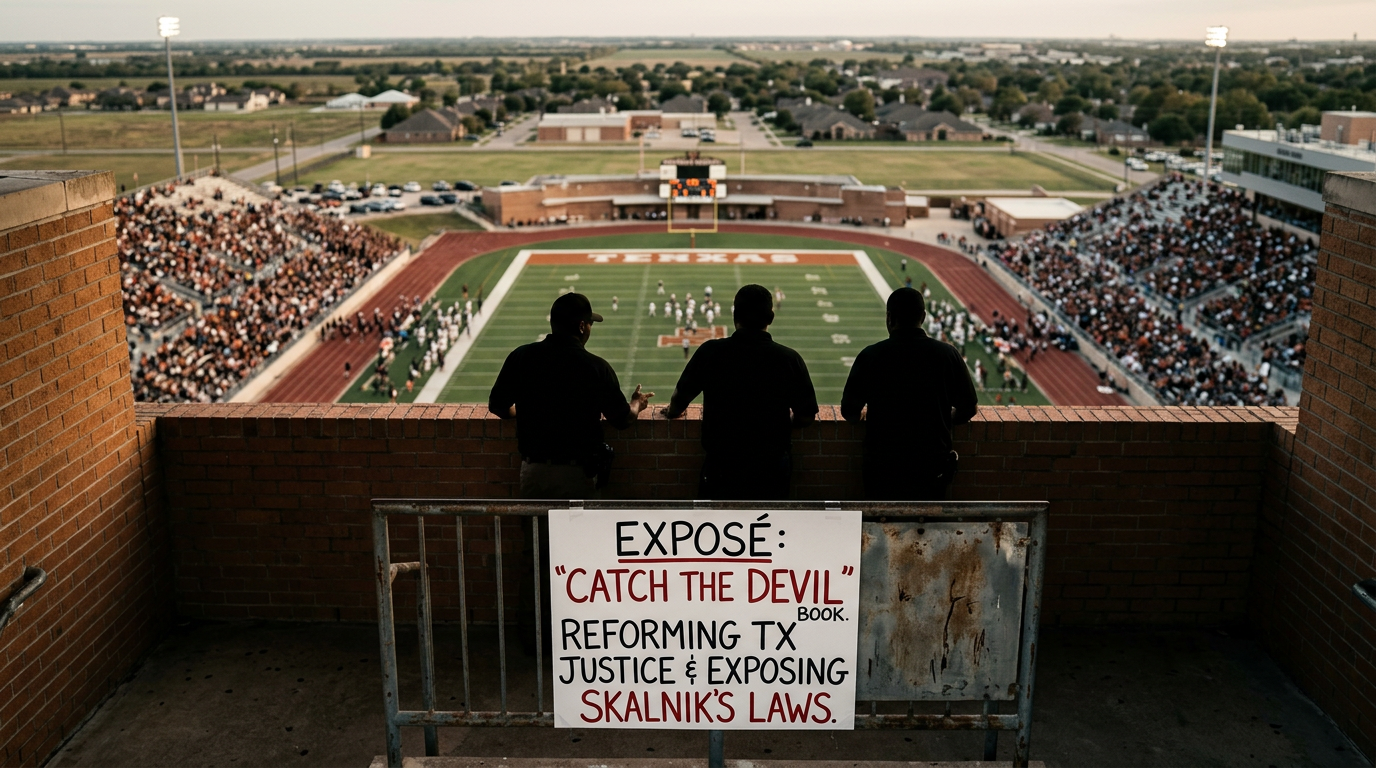
The intersection of investigative journalism and legal reform takes center stage with the release of Pamela Colloff’s new book, 'Catch the Devil.' The work meticulously reconstructs a harrowing saga of deception centered on the Texas Gulf Coast, involving a former Austin police officer turned professional con artist. This individual, Paul Skalnik, is depicted as a master manipulator who utilized his law enforcement background and proximity to the legal system to fabricate testimony. His actions were instrumental in placing an innocent man on death row, raising significant questions about the reliability of jailhouse informants in the Lone Star State. Texas has a long and complex history with wrongful convictions, often rooted in the testimony of incentivized witnesses. Historical precedents like the Willingham and Graves cases have previously forced the state to reckon with the fallibility of its capital punishment system. Colloff’s reporting serves as a new pillar in this ongoing dialogue, focusing on how a single deceptive actor could bypass the safeguards intended to protect the accused. The book highlights the vulnerability of the judicial process when the desire for a conviction outweighs the pursuit of objective truth, particularly in high-stakes capital cases.
Texas relevance
This story is deeply rooted in the heart of the Texas judicial infrastructure, spanning from the state capital in Austin to the courtrooms of the Gulf Coast. It touches upon the integrity of the Austin Police Department and the broader prosecutorial standards used by District Attorneys across the state. Texans have a high stake in these revelations as they impact public trust in local law enforcement and the state's highest courts. The narrative underscores the need for legislative scrutiny in Austin regarding how 'jailhouse snitch' testimony is regulated and disclosed to defense teams. As Texas continues to lead the nation in both the number of executions and the number of exonerations, the details provided in Colloff’s work offer a case study for future policy changes in the Texas Legislature. The geographic focus on the Gulf Coast further identifies regional disparities in legal resources and oversight, making this a critical local issue for millions of residents in Southeast Texas.
The Rise of a Professional Manipulator
Paul Skalnik represents a unique and terrifying anomaly within the Texas criminal justice landscape. Before becoming a notorious jailhouse informant, he served as a police officer in Austin, a role that provided him with an insider's understanding of how investigators build cases. This background gave his later personas a veneer of credibility that proved difficult for juries to see through.
Skalnik’s career as a con artist was not limited to the courtroom. He spent decades weaving intricate lies, often posing as someone of high social standing or professional authority to exploit victims. His ability to mimic the language of law enforcement allowed him to build a rapport with prosecutors who were eager for the 'silver bullet' evidence needed to secure convictions in difficult murder trials.
The tragedy of this case lies in how easily Skalnik was able to integrate himself into the machinery of the Gulf Coast legal system. By claiming he had received confessions from fellow inmates, he became the star witness in multiple cases, despite a long track record of dishonesty that should have disqualified him from appearing before a judge.
The Life of the Accused on Death Row
At the center of the narrative is the man whose life was nearly forfeit due to Skalnik’s fabrications. The book details the grueling psychological toll of spending decades on death row for a crime he did not commit. In Texas, the process of appealing a capital conviction is notoriously difficult, requiring an overwhelming amount of new evidence to overturn a jury’s original verdict.
The defendant’s journey through the Texas prison system reflects the broader challenges faced by those without the financial means to hire top-tier legal defense. For years, his cries of innocence were drowned out by the official transcript of the trial, which labeled him a cold-blooded killer based largely on Skalnik's perjured testimony.
Colloff’s narrative brings the reader into the claustrophobic reality of Polunsky Unit, where death row inmates await their fate. It serves as a stark reminder that the finality of the death penalty leaves no room for the types of errors and deceptions orchestrated by individuals like Skalnik.
Failures in Prosecutorial Oversight
One of the most damning aspects of the story is the apparent willingness of certain Texas prosecutors to overlook Skalnik’s checkered past. The book investigates why the red flags regarding his character were ignored or suppressed during the discovery phase of the trial. This raises questions about the ethical obligations of District Attorneys to vet their witnesses thoroughly.
In several instances, Skalnik was given preferential treatment or reduced sentences in exchange for his testimony. This 'quid pro quo' arrangement is a common feature of the American legal system, but in this case, it appears to have incentivized perjury. The lack of transparency regarding these deals prevented the defense from properly impeaching Skalnik’s credibility on the stand.
The failure of oversight extends to the judicial bench as well. Judges in these cases were often unaware of the extent of Skalnik’s history of fraud, allowing him to present himself as a reformed citizen doing his civic duty rather than a career criminal looking for a way out of his own legal troubles.
The Role of Investigative Journalism in Texas
Pamela Colloff has long been recognized as one of the preeminent voices in Texas long-form journalism, particularly regarding criminal justice. Her work on 'Catch the Devil' follows a tradition of deep-dive reporting that has previously led to stays of execution and exonerations in the state. By meticulously digging through court records and conducting hundreds of interviews, she has uncovered facts that the state’s own investigators missed.
This type of journalism acts as an unofficial fourth branch of government in Texas, providing a level of scrutiny that the busy and often underfunded public defender offices cannot maintain. Colloff’s ability to humanize the victims of systemic failure while remaining focused on the technicalities of the law is a hallmark of her writing style.
The release of this book is expected to spark a new wave of interest in the cases Skalnik touched. It highlights the power of the written word to challenge established narratives and to provide a voice for those who have been silenced by the state’s legal bureaucracy.
Legislative Echoes and Future Reforms
In response to cases like the one described in the book, the Texas Legislature has previously debated and passed bills aimed at curbing the abuse of informant testimony. However, 'Catch the Devil' suggests that these reforms may not go far enough. The ease with which Skalnik operated across multiple decades suggests that institutional memory in the legal system is short.
Potential future reforms could include more stringent pretrial hearings to determine the reliability of jailhouse witnesses before they are allowed to testify. There is also a push for a statewide database of informants to prevent the same individual from testifying in dozens of unrelated cases without the defense’s knowledge.
As the 89th Legislative Session approaches, advocates for justice reform are likely to use the findings in this book as a blueprint for new statutory protections. The goal is to ensure that the Texas motto of 'Liberty and Justice for All' is not undermined by the deceptive practices of a few career criminals.
An Architectural View of Small-Town Justice
The setting of the Gulf Coast plays a vital role in the story’s development. In smaller Texas counties, the legal community is often tightly knit, which can lead to a 'closed-loop' system where dissenting voices are discouraged. Colloff captures the atmospheric tension of these coastal courtrooms where the stakes are life and death.
The book also explores the cultural landscape of the region during the time of the original trials. It examines how local politics and public sentiment can influence the aggressive pursuit of a conviction, sometimes at the expense of traditional legal safeguards. This regional context is essential for understanding how Skalnik could navigate different jurisdictions with such success.
Ultimately, the story is a testament to the resilience of those who fight for the truth in the face of overwhelming institutional resistance. It is a quintessentially Texas story—one of grit, corruption, and the slow, painful march toward redemption.
Analysis
The implications of Colloff’s work suggest that the Texas legal system remains susceptible to bad actors who understand the internal pressure prosecutors face to close cases. While recent years have seen the Texas Legislature pass laws requiring the tracking of jailhouse informant testimony, this book argues that systemic blind spots still exist. From a conservative perspective, ensuring the integrity of the law means that only the truly guilty are punished; when the system is manipulated by a con artist, it represents a failure of state authority and a waste of taxpayer resources. The central figure’s transition from a sworn officer of the law to a professional liar illustrates a breakdown in accountability that should concern all supporters of law and order.
Source attribution
This story was reported using a public release from the Texas Standard. Keep TX Red rewrote the coverage independently and links to the official statement for verification.
Frequently Asked Questions
- Who is Paul Skalnik?
- Paul Skalnik is a former Austin police officer who became one of the most prolific and deceptive jailhouse informants in Texas history. He utilized his knowledge of law enforcement and his skill as a con artist to provide false testimony in numerous high-profile criminal cases across the state.
- What is the main focus of 'Catch the Devil'?
- The book focuses on the true story of how Skalnik’s lies led to an innocent man being sent to death row. It provides a detailed investigation into the crimes, the subsequent trials, and the decades-long struggle to uncover the truth about Skalnik’s history of fraud.
- Why is this story important for Texas residents?
- It is important because it reveals significant flaws in the Texas criminal justice system, particularly regarding the use of incentivized witnesses. It serves as a call for greater transparency and reform within the state's legal framework to prevent future wrongful convictions.
- Has Texas taken any steps to prevent this kind of witness fraud?
- Yes, Texas has passed laws requiring prosecutors to track and disclose the benefits given to jailhouse informants. However, critics and authors like Colloff argue that current protections may not be sufficient to stop sophisticated liars who know how to exploit the system.
Official Sources
Take the next step
Browse the Newsroom →Read more about Keep Texas Red → Our full guide to what Keep Texas Red means and why Texans support it.
Related Articles



Get Texas updates delivered weekly.
Independent Texas reporting on politics, policy, and daily life. One email a week. Unsubscribe anytime.
Keep TX Red Newsroom
The Keep Texas Red Editorial Staff produces nonpartisan explainers, policy breakdowns, and educational resources to help Texans understand how their government works. All content is reviewed for accuracy and updated regularly.
About Keep TX Red →