Governor Issues Disaster Proclamations as Severe Rainfall Threatens Multiple Texas Counties
Governor Abbott issues disaster declarations for Texas counties facing extreme flooding risks through Thursday as heavy storms move across the state.
Editorial disclaimer: Opinions and analysis on Keep TX Red are editorial content — not statements of fact. See our editorial standards.
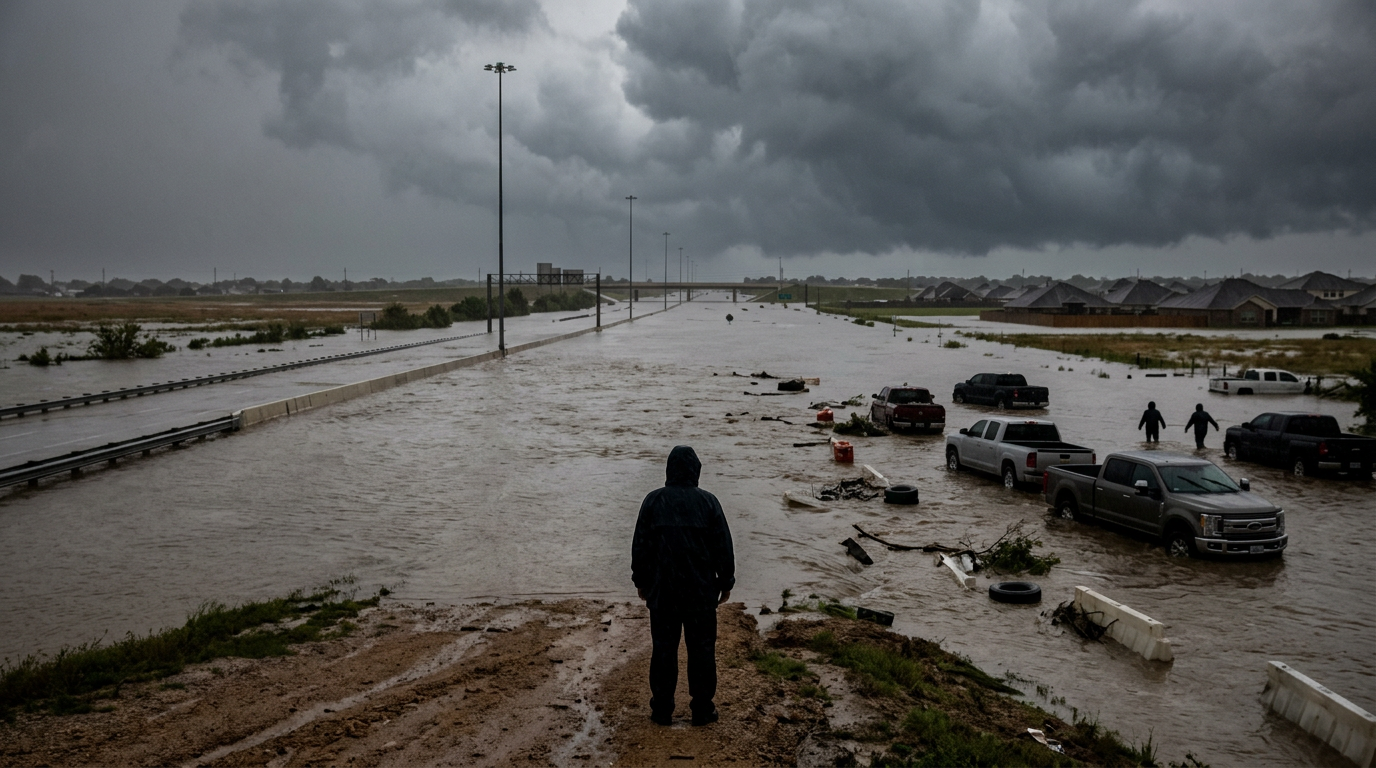
State officials have activated emergency protocols and issued formal disaster declarations across a wide swath of Texas in response to a stalled weather system bringing historic rainfall totals. Projections indicate that heavy precipitation will persist through Thursday, creating a high risk of flash flooding and river overflows. Governor Greg Abbott’s office moved to stage resources in the coastal and eastern regions, where the saturation of the soil has already reached critical levels from previous seasonal cycles. Unlike typical fast-moving summer storms, this system is characterized by its slow crawl, which allows localized rainfall to accumulate into several inches per hour, overwhelming municipal drainage systems and rural infrastructure alike. Historical context for these declarations stems from the state's aggressive stance on disaster mitigation following the catastrophic impacts of Hurricane Harvey and the Tax Day floods in previous decades. The Texas Division of Emergency Management (TDEM) has evolved its predictive modeling to trigger these declarations before the peak of a storm to ensure that state funds and local resources are legally indemnified and ready for immediate deployment. By issuing these orders now, the state bypasses many of the bureaucratic hurdles that typically slow down debris removal and road repairs in the immediate aftermath of a crisis. This proactive stance is designed to protect both permanent residents and the transient population traveling along the state's major interstate corridors.
Texas relevance
Texas serves as the primary epicenter for this weather event, with the impact felt most acutely in the Gulf Coast, Central Texas, and East Texas regions. The state’s unique geography—ranging from the rocky terrain of the Hill Country to the low-lying wetlands of the coast—means that different areas must prepare for distinct types of flooding hazards. In the Hill Country, officials are monitoring low-water crossings that are notorious for trapping motorists, while in urban centers like Houston or Dallas, the focus remains on the capacity of concrete bayous and drainage canals. The economic relevance is substantial, as these declarations allow for the mobilization of the Texas National Guard and the suspension of certain transport regulations to facilitate the movement of emergency supplies and livestock across the state.
Mobilization of State Emergency Resources
The Texas Division of Emergency Management has increased its readiness levels at the State Operations Center. This escalation involves coordinating with various agencies, including the Texas A&M Forest Service and the Texas Department of Transportation, to ensure that high-water rescue vehicles and heavy equipment are stationed in strategic areas. Localities under the disaster proclamation now have the authority to implement mandatory evacuations if river gauges hit certain thresholds, and the state provides the logistical backbone for those operations.
Resource staging is especially critical in rural counties where local emergency budgets are often limited. By providing state-level assets, the Governor’s office ensures that a resident’s safety is not dictated by their county’s tax base. Rescue boat teams and air assets have been put on standby, ready to deploy should the rainfall totals exceed the capacity of local first responders to handle multiple distress calls simultaneously.
Furthermore, the Texas Department of State Health Services is monitoring the situation to assist with any medical needs that might arise from power outages or displacement. Coordination with utility companies like Oncor and CenterPoint is also a priority, as saturated ground can lead to uprooted trees taking down power lines, a common secondary hazard during prolonged rainfall events.
Meteorological Drivers of the Deluge
The current weather pattern is the result of a lingering low-pressure system interacting with high levels of moisture from the Gulf of Mexico. This moisture creates an atmospheric condition known as 'training,' where storms move over the same geographical area repeatedly like cars on a train track. This phenomenon is largely responsible for the extreme rainfall totals being reported, as it prevents the ground from absorbing water between individual storm cells.
Forecasters have noted that while some areas may see only moderate rain, others could experience double-digit inch counts within a 24-hour window. This variability makes it difficult for residents to gauge their personal risk, leading officials to urge caution across all counties mentioned in the declaration. The lack of upper-level winds to push the system out of the state is what necessitates the warning period extending through at least Thursday afternoon.
Soil saturation levels are already near 90% in many East Texas counties due to recent spring showers. When the soil can no longer hold water, even moderate rainfall contributes directly to runoff, filling creeks and streams faster than they can drain into larger river basins. This 'runoff effect' is the primary reason why flash flood watches were upgraded to disaster threats so quickly by the state meteorology team.
Impact on Transportation and Infrastructure
Texas road networks, particularly farm-to-market roads and interstate frontage lanes, are highly susceptible to sudden inundation. The Texas Department of Transportation (TxDOT) has begun placing barricades near known flood zones and using digital signage to warn travelers of standing water. State officials strongly discourage 'sightseeing' or non-essential travel in the affected zones until the system has completely cleared the region.
The infrastructure concern extends deep into the energy sector. Many of the state's petrochemical facilities along the coast are located in areas prone to storm surges and heavy rain. While these facilities have their own weather protocols, the state's disaster declaration ensures that any industrial accidents caused by the weather can be handled with the full support of state environmental and safety agencies. This includes monitoring for potential spills or leaks resulting from record-breaking water levels overtopping containment ponds.
Inland, the focus remains on dam stability and levee integrity. The Texas Water Development Board and local river authorities have been managing release schedules to create as much 'buffer' as possible in reservoirs. However, once the rains begin in earnest, these authorities must balance the need to release water to protect the dam structures against the risk of flooding downstream communities already saturated by local rainfall.
Economic Implications for the Lone Star State
The financial cost of these weather events can be measured in the billions when including lost productivity and infrastructure repair. By declaring a disaster early, the state allows businesses to begin the process of documenting losses for insurance and federal assistance programs. This is a critical step for the agricultural sector, where flooded fields can lead to total crop loss and the displacement of valuable livestock herds.
Ranchers in Central and East Texas are being advised to move cattle to higher ground immediately. The disaster declaration streamlines the process for livestock haulers to bypass certain weight and hour-of-service restrictions, ensuring animals can be moved to safety before roads become impassable. This flexibility is a hallmark of the Texas regulatory approach to emergency management, prioritizing the preservation of the agricultural economy during crises.
Additionally, the hospitality and tourism sectors along the coast are seeing significant cancellations as the weather warnings discourage visitors. The state's quick action in declaring a disaster helps these small businesses by providing a legal framework for insurance claims related to business interruption. It also signals to the federal government that Texas is taking the threat seriously, laying the groundwork for potential FEMA assistance if the damage exceeds state thresholds.
Long-Term Mitigation and Risk Assessment
Episodes like this underscore the ongoing debate regarding Texas’ infrastructure resilience. Since 2019, the state has invested significantly in the Flood Infrastructure Fund, but many of the large-scale drainage projects are still in the engineering or early construction phases. These storms serve as a real-time 'stress test' for existing systems, providing engineers with data that will inform future levee reinforcements and drainage canal expansions.
Public education remains a pillar of the state's response. The 'Turn Around, Don't Drown' campaign is being amplified across social media and local news outlets. Statistics show that the majority of flood-related fatalities in Texas occur in vehicles, highlighting the need for continued public awareness regarding the power of moving water. State leaders hope that early and frequent communication through disaster proclamations will reduce the number of citizens taking unnecessary risks on the road.
As the storm system peaks between Wednesday and Thursday, state officials will continue to evaluate whether the disaster declaration needs to be expanded to include additional counties. The response is a dynamic process, with the State Operations Center maintaining 24-hour staffing until the threat has moved out of Texas and into neighboring states. The focus will then shift from rescue and stabilization to recovery and long-term assessment of the damage.
Analysis
The decision to issue disaster declarations ahead of the heaviest rainfall highlights a shift in Texas governance toward preemptive disaster management. While some might view early declarations as overly cautious, they serve a vital logistical purpose by unlocking the rainy-day fund and streamlining coordination between the Texas Department of Public Safety and local sheriff offices. Critics of rapid urbanization often point to these events as evidence that Texas must balance its booming population growth with more robust drainage requirements for new developments. However, the immediate priority remains the preservation of life and property, as the state’s meteorologists warn that even minor deviations in the storm's path could lead to catastrophic results for unprepared communities along the Brazos and Colorado Rivers.
Source attribution
This story was reported using a public release from the Texas Standard. Keep TX Red rewrote the coverage independently and links to the official statement for verification.
Frequently Asked Questions
- Which areas of Texas are most at risk?
- Currently, the highest risk zones include the Gulf Coast, East Texas, and parts of Central Texas. Low-lying areas and counties with poor drainage or saturated soil are under the most immediate threat of flash flooding.
- What does a disaster declaration actually do?
- It legally allows the state to deploy emergency resources, suspend certain regulations to speed up response times, and unlocks emergency funding to assist local governments with the costs of rescue and repair.
- How long will the heavy rainfall last?
- Meteorologists expect the most dangerous periods of rainfall to last through Thursday afternoon, though some runoff and river flooding may persist for several days after the rain stops.
- Is it safe to drive during a flash flood warning?
- No. State officials advise against driving in any area under a flash flood warning. Six inches of water can knock an adult off their feet, and 12-18 inches can carry away most vehicles.
Official Sources
Take the next step
Browse the Newsroom →Read more about Keep Texas Red → Our full guide to what Keep Texas Red means and why Texans support it.
Related Articles

Get Texas updates delivered weekly.
Independent Texas reporting on politics, policy, and daily life. One email a week. Unsubscribe anytime.
Keep TX Red Newsroom
The Keep Texas Red Editorial Staff produces nonpartisan explainers, policy breakdowns, and educational resources to help Texans understand how their government works. All content is reviewed for accuracy and updated regularly.
About Keep TX Red →