Governor Abbott Declares State of Disaster for Bexar and Surrounding Counties Following Severe Weather
Governor Greg Abbott issues a disaster declaration for Bexar County and other regions after severe storms caused widespread damage across South Texas.
Editorial disclaimer: Opinions and analysis on Keep TX Red are editorial content — not statements of fact. See our editorial standards.
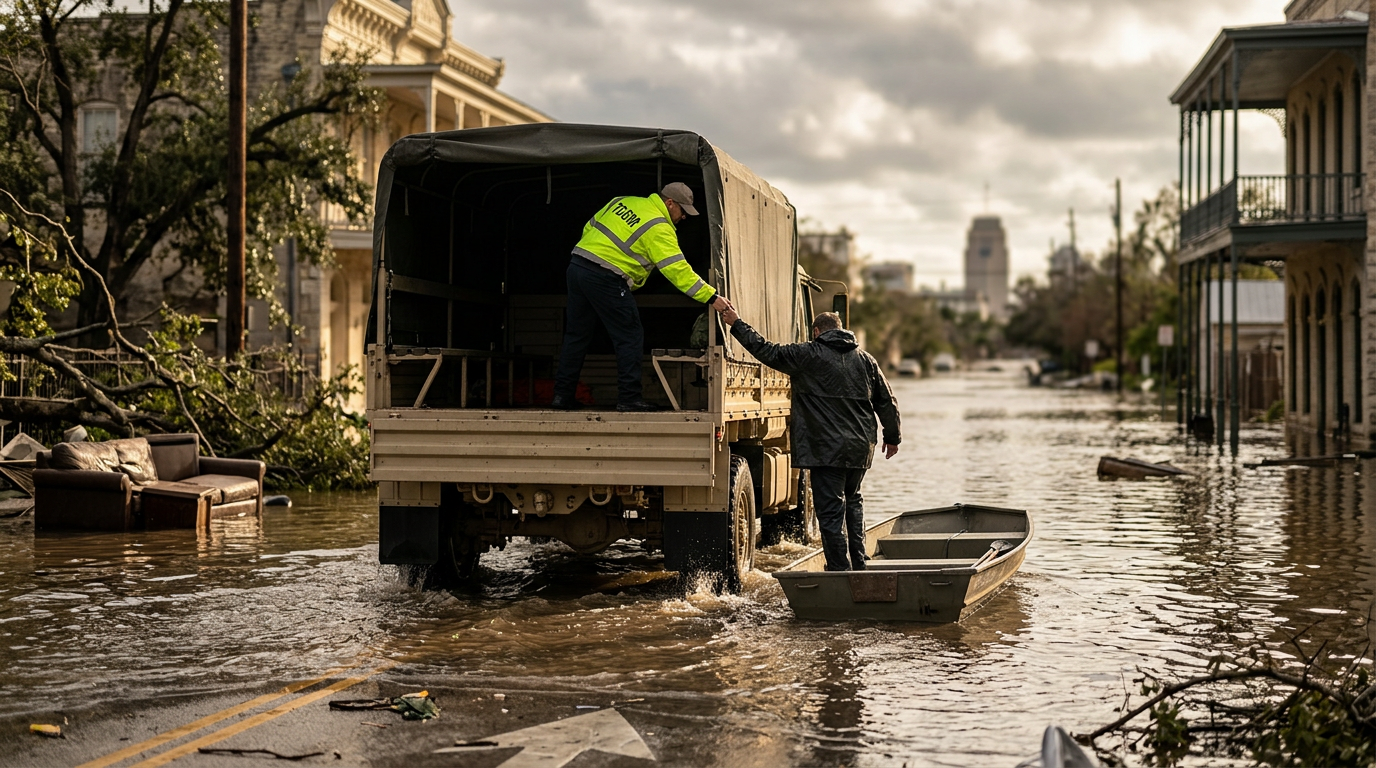
In response to a series of devastating weather patterns that swept across South Texas, Governor Greg Abbott has officially signed a disaster declaration targeting several high-impact areas, most notably Bexar County. This executive action is designed to unlock state resources and streamline the coordination of recovery efforts following significant structural damage and infrastructure failures. Historically, Texas governors use these declarations to activate the State Emergency Management Plan, allowing for a more flexible and rapid deployment of personnel and equipment to zones where local resources have been exhausted. The declaration comes after local officials reported extensive flooding, wind damage, and utility outages that paralyzed portions of the San Antonio metropolitan area. By formally recognizing the situation as a state-level disaster, the Governor enables the Texas Division of Emergency Management (TDEM) to take a leading role in debris removal and the restoration of essential services. This move follows the precedent set during previous hurricane and tornado seasons where state intervention was the primary catalyst for long-term economic and infrastructural stability in storm-damaged communities.
Texas relevance
The heart of this declaration lies in its impact on Bexar County and the greater San Antonio region, one of the most populous and economically significant areas in the state. For Texans, these declarations are the legal mechanism that allows the Texas Department of Public Safety and the Texas National Guard to mobilize if necessary. Furthermore, this specific declaration sets the stage for potential federal assistance, as state-level recognition is often a prerequisite for FEMA involvement. Residents in South and Central Texas should expect an increased presence of department of transportation crews and emergency response vehicles along major corridors like I-10 and I-35 as repair work intensifies.
The Legal Framework of Texas Disaster Proclamations
Under the Texas Government Code, specifically Chapter 418, the Governor holds the authority to declare a state of disaster if a threat is imminent or has already occurred. This power is not merely symbolic; it suspends certain statutes and rules that could hinder a quick response. For example, it allows for the temporary suspension of some transportation regulations to ensure that trucks carrying food, water, and building supplies can reach the affected counties without standard weight or hour-limit restrictions.
The declaration also triggers the use of the Disaster Contingency Fund. This provides a financial safety net for local governments in Bexar County and surrounding districts that might otherwise struggle to cover the sudden increase in overtime pay for police, fire, and public works employees. It is a critical fiscal tool that prevents a natural catastrophe from becoming a long-term municipal debt crisis.
Furthermore, these proclamations are typically issued for a 30-day period. The Governor has the discretion to renew the declaration if the recovery process proves to be extensive. Given the reported damage to power grids and local drainage systems, officials are already preparing for the possibility of an extended state of emergency to ensure that no community is left behind during the rebuilding phase.
Operational Impact in Bexar County
In Bexar County, the local emergency management teams had been working around the clock prior to the Governor's intervention. The inclusion of the San Antonio area in the state declaration means that local leaders now have a direct line to the State Operations Center in Austin. This coordination is essential for managing the sheer volume of debris caused by high winds and torrential rains that saturated the limestone-heavy terrain of the Texas Hill Country.
One of the primary concerns for Bexar County officials is the protection of the Edwards Aquifer recharge zone, which can be sensitive to runoff during major flood events. State environmental agencies are now authorized to work alongside local utilities to monitor water quality and ensure that the storm damage does not lead to long-term contamination of the primary water source for millions of Texans.
Schools and public buildings in the San Antonio area are also undergoing rapid assessments. The disaster declaration facilitates emergency grants for school districts that may have suffered roof damage or interior flooding. By centralizing the reporting process through the state, these districts can obtain the necessary documentation for insurance and reimbursement claims much faster than through standard channels.
Infrastructure and Utility Restoration
The recent weather events exposed vulnerabilities in the aging infrastructure of several smaller counties surrounding the San Antonio hub. With the Governor's declaration in place, the Texas Department of Transportation (TxDOT) can prioritize the repair of secondary roads and bridges that serve rural communities. These areas often lack the tax base to fund massive reconstruction projects independently, making state intervention a lifeline for local commerce and agricultural logistics.
Utility companies, including CPS Energy and regional cooperatives, are expected to utilize mutual aid agreements that are easier to facilitate under a formal disaster status. This allows crews from across the state of Texas to travel into the disaster zone to help restring power lines and replace damaged transformers. The goal is to minimize the duration of blackouts, which can be life-threatening during the humid Texas summer months.
Beyond power, the declaration addresses telecommunications. State officials are working with private carriers to deploy mobile cell towers in areas where the storms knocked out landline and cellular infrastructure. Maintaining a logic-based communication network is vital for first responders who need real-time data to coordinate water rescues and wellness checks in isolated parts of the affected counties.
Economic Implications for South Texas
Disasters of this scale often have a ripple effect on the local economy, particularly for small businesses that may not have the capital to survive a prolonged closure. The disaster declaration often opens the door for the Small Business Administration (SBA) to offer low-interest loans specifically for disaster recovery. This is a vital component of the Governor's strategy to ensure that the economic engine of South Texas continues to hum despite the environmental setbacks.
Agriculture in the counties surrounding Bexar is another major concern. Heavy rains can wash away topsoil and destroy seasonal crops, impacting the livelihoods of Texas farmers. The Texas Department of Agriculture will likely play a role in assessing these losses, using the Governor's declaration as the basis for seeking disaster relief funds from both state and federal agricultural programs.
The tourism industry in San Antonio, which relies heavily on the River Walk and historic sites, also monitors these declarations closely. Ensuring that the city remains safe and navigable for visitors is a high priority for state officials. Quick restoration of services and clear communication about the state of the city's infrastructure help prevent a prolonged downturn in the local hospitality sector.
Statewide Disaster Preparedness and Future Outlook
This latest move by the Governor is part of a broader trend of enhancing Texas’s resilience against extreme weather. Since the 2021 winter storm, there has been a significant shift in how the state handles emergency proclamations. The current administration has favored a more aggressive, early-intervention approach, aimed at stabilizing the situation before it escalates into a multi-week crisis.
As part of the disaster recovery phase, the state will likely conduct a standard ‘After Action Report.’ This document will detail what worked and what didn’t during the storm response. Such reports are instrumental in shaping future legislation regarding building codes, flood mitigation investments, and the hardening of the Texas power grid. The information gathered from Bexar County’s experience will be invaluable for other Texas metros facing similar threats.
The focus now shifts from immediate response to long-term mitigation. State legislators may use the data from this disaster declaration to justify further funding for the Texas Infrastructure Resilience Fund (TIRF). For the residents of South Texas, the declaration is the first step in a long journey toward rebuilding, but with the full backing of the state government, that path is now significantly more clear.
Analysis
While the immediate focus of this declaration is public safety and infrastructure repair, it also underscores the recurring challenge of Texas’s volatile climate. Governor Abbott’s prompt signing of the order suggests a desire to avoid the bureaucratic delays that often plague disaster recovery. By including a large metropolitan hub like Bexar County, the administration is prioritizing the protection of major economic centers. This proactive stance serves both a logistical and political purpose, demonstrating the state's capacity to handle internal crises without initially relying on federal directives. However, the true test will be the speed at which utility providers and local municipalities can utilize these state resources to restore normalcy for affected taxpayers.
Source attribution
This story was reported using a public release from the Governor Abbott — Video Moments (Google News). Keep TX Red rewrote the coverage independently and links to the official statement for verification.
Frequently Asked Questions
- What counties are included in the disaster declaration?
- While Bexar County (including San Antonio) is the primary focus of the recent reports, the Governor's declaration often encompasses a cluster of neighboring counties that experienced similar storm damage. Residents should check the official proclamation on the Governor’s website for the full list of jurisdictions authorized for state aid.
- How does this declaration help individual homeowners?
- A state-level disaster declaration is a necessary step that allows the state to document the total damage. If that damage exceeds certain thresholds, the Governor can request a Major Disaster Declaration from the President, which would then unlock individual assistance programs like FEMA grants for home repairs and temporary housing.
- Will this declaration speed up power restoration?
- Yes. By declaring a disaster, the Governor allows utility companies to more easily move crews across county and state lines and waives certain transportation restrictions. This ensures that the necessary parts and personnel can reach damaged power grids in Bexar County without the typical bureaucratic delays.
- Is the Texas National Guard being deployed?
- The declaration grants the Governor the authority to mobilize the Texas National Guard if local law enforcement or rescue teams become overwhelmed. Currently, the focus is on logistical support and damage assessment, but the Guard remains on standby as part of the state’s emergency response framework.
Official Sources
Take the next step
Browse the Newsroom →Read more about Keep Texas Red → Our full guide to what Keep Texas Red means and why Texans support it.
Related Articles

Get Texas updates delivered weekly.
Independent Texas reporting on politics, policy, and daily life. One email a week. Unsubscribe anytime.
Keep TX Red Newsroom
The Keep Texas Red Editorial Staff produces nonpartisan explainers, policy breakdowns, and educational resources to help Texans understand how their government works. All content is reviewed for accuracy and updated regularly.
About Keep TX Red →