End of an Era: Historic Central Texas Roadside Barbecue Institution Announces Final Closure After Decades of Service
A legendary Central Texas pit-stop staple is closing its doors after fifty years, marking a shift in the state's storied culinary landscape.
Editorial disclaimer: Opinions and analysis on Keep TX Red are editorial content — not statements of fact. See our editorial standards.
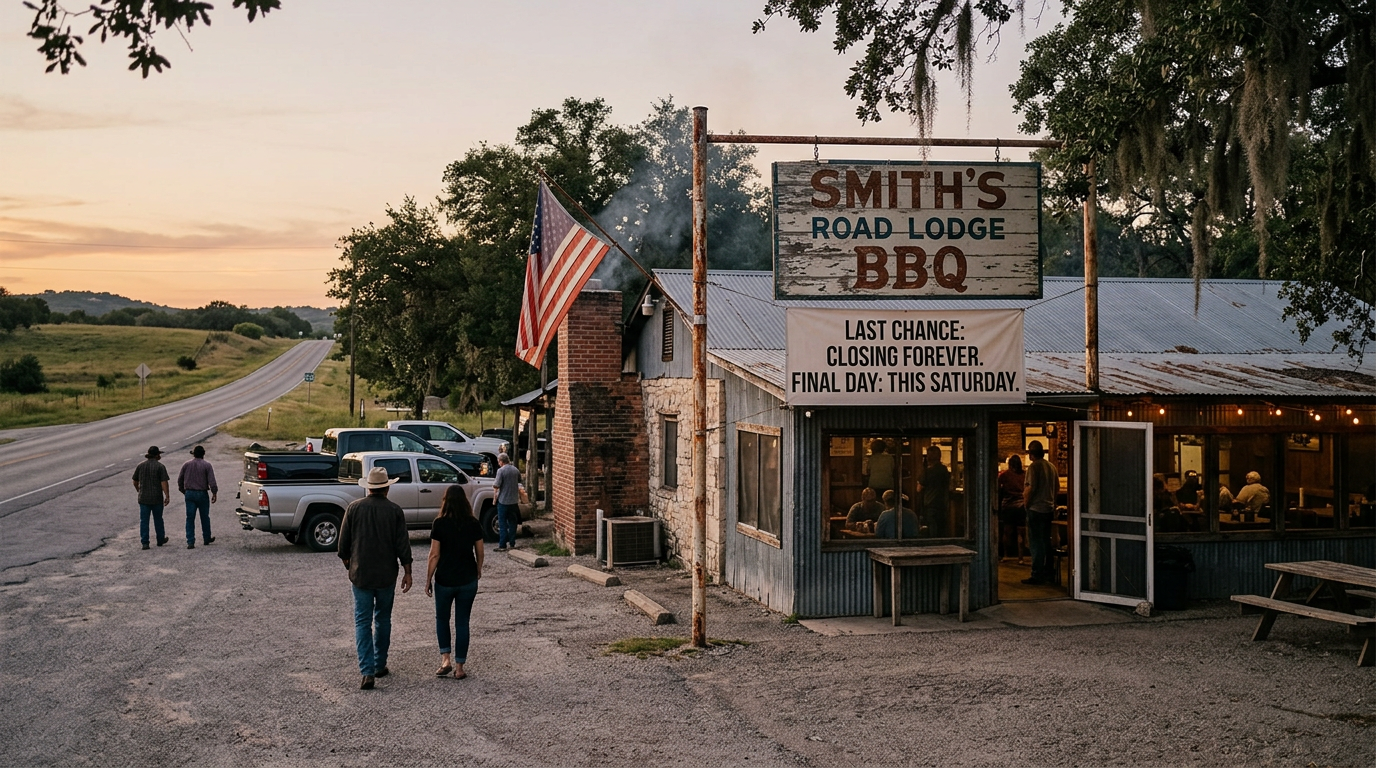
A multi-generational pillar of the Texas barbecue scene has officially announced its upcoming closure, signaling the end of a fifty-year run that helped define roadside dining for travelers and locals alike. For over half a century, this establishment has served as a landmark for those traversing the Texas highways, offering a traditional approach to smoked meats that predates the modern 'craft barbecue' movement. The decision to shutter the doors stems from a combination of family transitions and changing market pressures that have impacted long-standing culinary institutions across the Lone Star State. Historically, Texas roadside barbecue began as an evolution of meat markets, where surplus cattle were smoked to prevent spoilage and sold to travelers. This business was a direct descendant of that culture, maintaining an unpretentious atmosphere and time-tested recipes that rarely wavered in the face of evolving food trends. Its departure leaves a significant void in the regional community and marks the loss of one of the few remaining authentic 'smoke palace' experiences that flourished during the mid-20th century expansion of the state’s highway system. The closure follow-up reflects a broader pattern seen in Texas, where historic family-run enterprises face unique challenges in balancing heritage with modern economic demands.
Texas relevance
The closure is a significant moment for Texas culture, particularly for the community surrounding the restaurant and the thousands of Texans who included this stop in their annual travel rituals. In the context of the state's economic identity, the loss of a legacy barbecue joint is equivalent to the loss of a historical museum, as these pits often hold the collective memory of their respective counties. Texas has seen a wave of comparable closures in recent years as rising property taxes and the increasing cost of high-quality beef put immense pressure on traditional business models. This specific institution was not just a provider of food but a key contributor to local tourism and an employer for decades of area residents. The departure of such a long-standing brand often triggers a local economic ripple effect, impacting local meat suppliers and auxiliary businesses that rely on the foot traffic generated by famous barbecue destinations. For Texas, preserving these culinary landmarks is a constant battle against the encroachment of standardized chain restaurants and the inevitable march of urban development into rural corridor spaces.
The Fifty-Year Legacy of Pit-Smoked Excellence
For five decades, this establishment served as a reliable anchor for the regional economy, utilizing traditional offset smokers and local hardwoods to produce a consistent flavor profile. The facility was known for its expansive dining area and its ability to handle large crowds during peak travel seasons, earning it a reputation as a destination rather than just a convenience stop.
The methods used by the pitmasters remained largely unchanged since the mid-1970s, prioritizing long smoke times and simple salt-and-pepper rubs. This dedication to simplicity allowed the restaurant to survive numerous economic downturns and shifts in dietary fads, solidifying its place as a 'palace' of the Texas smoking tradition.
The business was more than a restaurant; it served as a social hub where ranchers, politicians, and families gathered. Its walls were often lined with memorabilia that told the story of the local county, making the dining experience an immersive lesson in Texas history that resonated with patrons from across the country.
Challenges Facing Traditional BBQ Operations in Texas
The decision to close was not made lightly and reflects the broader challenges facing the independent restaurant industry in Texas today. Escalating costs for raw materials, particularly briskets and ribs, have forced many owners to choose between raising prices to uncomfortable levels or operating on razor-thin margins.
Labor shortages in rural districts have also played a role. Finding staff willing to endure the physical demands of high-heat pit work is increasingly difficult in a competitive job market. Legacy businesses that rely on a specific skill set often find it impossible to replace retiring veterans who have managed the fires for decades.
Furthermore, the regulatory environment for smokehouses has evolved. Newer environmental and zoning codes can sometimes make maintaining older, traditional pits an expensive endeavor, requiring upgrades that small, family-owned operations may not be able to justify in terms of long-term return on investment.
The Evolution of the Texas Roadside Experience
The roadside diner has long been an icon of Texas travel, originating in a time when the journey across the state was slower and required frequent intervals for rest and refueling. This 'palace' was a byproduct of that era, designed to accommodate the heavy traffic of a developing interstate and highway network.
As vehicles have become more efficient and highway speeds have increased, the nature of the road trip has changed. Many travelers now opt for quick-service chains at major travel centers rather than stopping at independent landmarks, which has shifted the consumer base for historic roadside eateries.
Despite these changes, there has been a recent resurgence in 'foodie' tourism, but this often focuses on new, trendy venues featured on social media. Established locations that do not engage in aggressive digital marketing can find themselves overlooked by the new generation of travelers looking for a curated experience rather than a traditional one.
Impact on the Local Community and Workforce
The closure will have a significant impact on the local community, as the restaurant was a primary employer and a major draw for weekend visitors. The loss of such a business can lead to a decrease in overall tourism revenue for the surrounding town, as visitors who once stopped for a meal might now bypass the area entirely.
Many of the employees have spent decades at the establishment, forming a tight-knit family unit that extended beyond the workplace. The owner’s commitment to providing a stable environment for these workers was a hallmark of the business, making the announcement of the closure a poignant moment for the local labor force.
Local charities and civic organizations will also feel the absence. Historic restaurants like this one often serve as sponsors for local livestock shows, school events, and community festivals, deeply embedding themselves into the social fabric of the Texas towns they inhabit.
Preserving the Memory of Texas Smokehouse Culture
As the final days of operation approach, fans and longtime customers are expected to make a final pilgrimage to pay their respects to the pit. These final gatherings serve as a testament to the emotional connection Texans have with their favorite barbecue spots, noting that these locations often host the milestones of life, from birthdays to reunions.
While the physical location may close, the influence of its techniques and the memories of its flavors will likely persist through the stories of its patrons and the former employees who may carry the traditions to new ventures. There is a frequent pattern in Texas where the closing of one legendary pit inspires a new generation to keep those specific recipes alive in smaller pop-ups or home-smoking communities.
Documenting the history of these establishments is becoming a priority for state historians and culinary enthusiasts. Recording the oral histories of the owners and the specific layouts of the smokehouses ensures that the architectural and cultural significance of the Texas BBQ palace is not entirely lost to time.
Future Outlook for Texas Independent Restaurants
The story of this closure serves as a cautionary tale and a call to action for those who value the independent spirit of Texas commerce. To survive the next fifty years, traditional businesses may need to find a balance between their historic identity and the digital demands of the modern marketplace.
Support for local small businesses remains a core value for many Texans, yet the economic realities are stark. Industry analysts suggest that more community-driven efforts and perhaps regional preservation grants might be necessary to protect these 'living fossils' of the culinary world from total disappearance.
For now, the closing of this roadside palace represents a shift in the guard. As the smoke clears for the final time, it reminds the public that even the most enduring institutions are susceptible to the passage of time and the changing tides of the Texas economy.
Analysis
The shuttering of a fifty-year-old barbecue institution is rarely just about the food; it is a symptom of the changing nature of Texas heritage in an era of rapid modernization. While Texas remains the undisputed capital of global smoked meats, the divide between 'heritage' barbecue and 'destination' barbecue is widening. This closure suggests that the older, roadside model—which relied on volume and accessibility rather than high-margin artisan branding—is becoming increasingly difficult to sustain. One could argue that the state’s massive population growth and the resulting real estate boom have made the ground beneath these old pits more valuable as developed land than as a smokehouse. This creates a difficult choice for legacy families: continue a labor-intensive tradition or capitalize on the astronomical rise in Texas property values. It also highlights the generational shift in work-life balance; the grueling schedule of a pitmaster is a difficult torch to pass to younger generations who may seek different paths. Ultimately, while new barbecue spots open daily in Austin, Dallas, and Houston, the loss of an authentic roadside treasure indicates that a specific, soulful chapter of Texas highway history is slowly being written to a close.
Source attribution
This story was reported using a public release from the Texas Food Stories (Google News). Keep TX Red rewrote the coverage independently and links to the official statement for verification.
Frequently Asked Questions
- Why is this historic Texas barbecue restaurant closing?
- The closure is primarily due to a combination of family transitions and the mounting economic pressures that face long-term, independent culinary operations in the state, including rising meat costs and labor challenges.
- When is the restaurant's final day of operation?
- Specific final dates were handled through community announcements, but the transition is expected to conclude this season as the owners prepare for the final chapter of the business.
- Will the recipes or the brand continue in another form?
- While there are currently no official plans to relocate or reopen under a different name, the legacy of the restaurant's specific smoking style is expected to be carried on by the community and the former staff who were trained there.
Official Sources
Take the next step
Browse the Newsroom →Read more about Keep Texas Red → Our full guide to what Keep Texas Red means and why Texans support it.
Related Articles

Get Texas updates delivered weekly.
Independent Texas reporting on politics, policy, and daily life. One email a week. Unsubscribe anytime.
Keep TX Red Newsroom
The Keep Texas Red Editorial Staff produces nonpartisan explainers, policy breakdowns, and educational resources to help Texans understand how their government works. All content is reviewed for accuracy and updated regularly.
About Keep TX Red →