East Texas Ocelot Births Offer Critical Lifeline for Endangered State Wildcat
Two rare ocelot kittens born at a Texas zoo represent a major victory for conservation efforts to bring back the state's most endangered wild cat species.
Editorial disclaimer: Opinions and analysis on Keep TX Red are editorial content — not statements of fact. See our editorial standards.
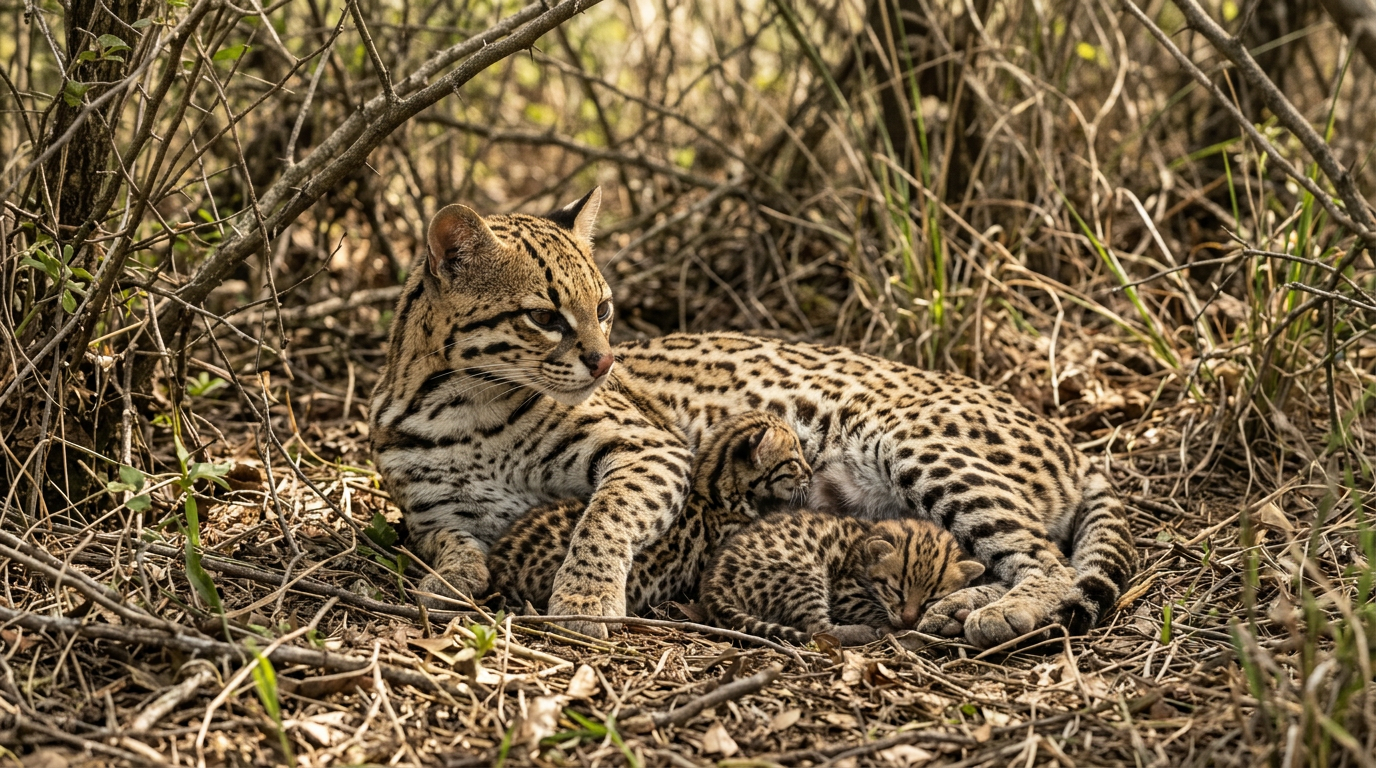
The struggle to preserve one of the Lone Star State's most elusive and beautiful predators recently reached a significant milestone in East Texas. Officials at the Caldwell Zoo in Tyler have announced the successful birth of twin ocelot kittens, a rare event that underscores the high-stakes effort to save the species from total extirpation within state borders. Historically, ocelots were not merely a curiosity but a widespread component of the Texas ecosystem, ranging across the entire state and even into neighboring Louisiana and Arkansas. However, over the last century, these 'leopardus pardalis' populations have dwindled to fewer than 100 individuals remaining in the wild, confined mostly to isolated pockets of dense brush in the Rio Grande Valley. The arrival of these two kittens represents months of specialized veterinary care and a coordinated breeding program designed to ensure the genetic viability of the species in North America. This preservation effort is anchored in the context of decades of habitat loss and fragmentation. In the mid-20th century, the expansion of agriculture and urban development across Texas decimated the 'thornscrub' habitat that ocelots require for hunting and cover. While some protections were established in the 1970s and 80s, the population has struggled to rebound due to a limited gene pool and the constant threat of vehicle strikes on Texas highways. By witnessing a successful birth in a controlled environment like the Caldwell Zoo, researchers can gather essential data on maternal behavior and kitten development that would be impossible to observe in the dense, private ranch lands of Deep South Texas where the few remaining wild cats hide. This birth isn't just about two new animals; it is a proof of concept for a multi-agency strategy to prevent the ocelot from becoming a memory in Texas biology.
Texas relevance
Texas is the only state in the lower 48 with a resident, breeding population of ocelots, making its conservation a uniquely Texan responsibility. While the kittens were born in Tyler, their genetic lineage is vital for the recovery teams working in the Willacy and Cameron counties of South Texas. The state’s involvement includes a complex partnership between private landowners, the Texas Parks and Wildlife Department, and the U.S. Fish and Wildlife Service. The survival of the ocelot is intrinsically tied to Texas land-use policies and the willingness of the state's residents to support wildlife corridors. Because 95 percent of Texas land is privately owned, the success of the ocelot relies on the cooperation of Texas ranchers and the educational outreach provided by institutions like the Caldwell Zoo and the Gladys Porter Zoo in Brownsville.
The Biological Significance of the Tyler Twins
The birth of twins is particularly noteworthy because ocelots typically have small litters, often consisting of just a single kitten every two years. This slow reproductive rate makes every successful birth a significant percentage increase for the overall captive population. The Caldwell Zoo staff utilized advanced monitoring systems to ensure the mother remained undisturbed during the critical early days of the kittens' lives, allowing for natural bonding and nursing without human intervention.
Genetics play a foundational role in this program. The kittens are part of the Species Survival Plan (SSP), a highly regulated breeding program that matches pairs based on their genetic diversity. This prevents inbreeding, which is a major risk for the wild Texas population. By diversifying the gene pool in East Texas, these kittens could eventually father or mother future generations that might be reintroduced into protected state lands or private ranches in the southern coastal plains.
Zoo officials emphasize that the early health checks for the kittens have been positive. For several weeks, the neonates were kept in a secluded den, away from public view, to allow their immune systems to develop. This period is also crucial for the mother to establish her maternal instincts. The success of this specific pair at the Caldwell Zoo provides a roadmap for other Texas-based zoological parks to follow, proving that the climate and conditions in East Texas are suitable for supporting these sensitive subtropical cats.
Habitat Fragmentation: The Greatest Barrier
The primary reason ocelots are currently confined to a tiny sliver of South Texas is the loss of 95% of their original thornscrub habitat. This thick, nearly impenetrable brush—consisting of ebony, mesquite, and granjeno—provides the cover ocelots need to hunt and avoid predators. As this land was cleared for citrus groves and housing developments, the cats became trapped in small islands of vegetation, unable to find mates from other populations.
This isolation leads to 'genetic bottlenecks,' where the health of the population declines because they are too closely related. The kittens born in Tyler are a direct response to this crisis. By maintaining a healthy 'insurance population' in zoos, conservationists ensure that if a localized disease or natural disaster were to wipe out the wild population in the Rio Grande Valley, the species would not go extinct in Texas entirely.
Moving forward, the focus is shifting toward 'reconnecting' the Texas landscape. Environmental groups are working with the Texas Department of Transportation to build specialized tunnels under highways. These tunnels allow ocelots to navigate their territory without risking death on the asphalt. The publicity generated by these two new kittens is expected to bolster public support for these infrastructure projects, which benefit a wide range of Texas wildlife beyond just the feline population.
A History of the Ocelot in the Lone Star State
To understand the importance of this birth, one must look back at the historical range of the ocelot. In the 1800s, these cats were found as far north as the Red River. They were a common sight in the Piney Woods and along the central river bottoms. They were eventually pushed south as the state’s human population exploded and hunting for their prized pelts became common in the early 1900s.
By the time the ocelot was listed as endangered in 1982, they had already disappeared from the majority of their native Texas range. The species became a ghost in the woods, with only a few dozen cats remaining in the Laguna Atascosa National Wildlife Refuge and on a few large private ranches. The Caldwell Zoo’s success is a full-circle moment, bringing the cat back to a prominent position in East Texas, even if only in a protected facility for now.
The cultural significance of the ocelot cannot be overstated. Often called the 'leopard of the Rio Grande,' it is a symbol of the wild, untamable spirit of the Texas borderlands. Efforts to save the cat have united diverse groups, from conservative ranchers who value their land's heritage to urban school children who participate in naming contests for zoo animals. This unifying nature of ocelot conservation is a rare bright spot in environmental policy.
Public Education and the Zoo’s Role
Institutions like the Caldwell Zoo serve a dual purpose: active biological preservation and public education. Most Texans will never see an ocelot in the wild due to their nocturnal nature and preference for thick brush. The zoo provides a rare opportunity for the public to connect with a species that is part of their state’s natural identity. This connection is vital for securing the future funding needed for more ambitious reintroduction programs.
Educational programs attached to the new kittens will focus on 'coexistence.' This teaches livestock owners that ocelots pose no threat to cattle and very little threat to small livestock, unlike larger predators such as mountain lions or coyotes. By dispelling myths, the zoo helps create a more welcoming environment for the cats should they ever be expanded back into their historical range in the northern and eastern parts of the state.
The zoo is also a hub for scientific research. Behaviorists observe the kittens to understand the 'play-learning' phase of ocelot development. This data is shared with the ocelot recovery team, a group of scientists who meet regularly to update the state’s recovery plan. The Tyler kittens are essentially tiny ambassadors for the data-driven science happening behind the scenes to save their cousins in the wild.
Future Outlook for Ocelot Reintroduction
The ultimate goal of the Texas ocelot recovery plan is to establish a second wild population. Currently, having all wild ocelots in one geographic area makes them vulnerable to localized disasters like hurricanes. Experts are looking at sites in the coastal prairies and the ranch lands of the Coastal Bend as potential locations for a new, managed wild population. Successes in captive breeding at places like the Caldwell Zoo are the prerequisite for this bold step.
Technological advancements are also playing a role. Conservationists are using drones and remote camera traps to monitor the wild populations more effectively. When combined with the genetic data from captive kittens, this creates a comprehensive 'studbook' for the entire Texas population. It allows scientists to decide which cats are the best candidates for relocation or breeding, based on their health and genetic diversity.
While the path to a full recovery is long, the twin kittens in Tyler provide a moment of optimism. Their birth proves that despite the challenges of the 21st century, the Texas environment—and the people who manage it—retains the capacity to foster new life for its most ancient residents. The next decade will be critical as these kittens grow and the state decides how much of its wild landscape it is willing to preserve for future generations.
Analysis
The conservation of the ocelot serves as a barometer for the overall health of the Texas wilderness. From a policy perspective, the birth of these kittens provides a non-confrontational win for environmentalists and landowners alike. By focusing on captive breeding and voluntary habitat easements rather than heavy-handed federal land seizures, Texas is demonstrating a model where economic growth and the preservation of iconic native species can coexist. However, the long-term challenge remains the 'Ocelot Corridor.' Without a way to safely move the cats between existing brush segments, the genetic benefits of zoo-born kittens cannot be fully realized in the wild. This event may put pressure on state legislators to increase funding for 'wildlife underpasses' on South Texas roads, which currently account for the highest percentage of ocelot mortality.
Source attribution
This story was reported using a public release from the Texas Standard. Keep TX Red rewrote the coverage independently and links to the official statement for verification.
Frequently Asked Questions
- Why is the ocelot population in Texas so low?
- The population has declined primarily due to the loss of over 95% of their native thornscrub habitat. Urbanization and agriculture have fragmented the land, leaving the cats with nowhere to hide or hunt. Additionally, many are killed annually in vehicle collisions on South Texas highways.
- Where can ocelots still be found in the wild in Texas?
- Wild ocelots are currently found in only two small, isolated populations in Deep South Texas. One is located at the Laguna Atascosa National Wildlife Refuge, and the other is found on private ranch lands in Willacy and Cameron counties.
- What makes the ocelot different from other Texas wild cats?
- Ocelots are mid-sized cats, larger than a house cat but smaller than a bobcat. They are distinguished by their unique coat of spots and strips (rosettes) and their extreme reliance on very thick brush for survival. Unlike bobcats, which are adaptable to many environments, ocelots are specialized to the native Rio Grande Valley scrub.
- Can the public see the new kittens at the Caldwell Zoo?
- Generally, kittens are kept in a secluded area for several weeks or months to ensure their health and safety. Once they are older and have received their necessary vaccinations, the zoo typically allows them to enter a public-facing habitat, though this depends on the mother's comfort level.
Official Sources
Take the next step
Browse the Newsroom →Read more about Keep Texas Red → Our full guide to what Keep Texas Red means and why Texans support it.
Related Articles

Get Texas updates delivered weekly.
Independent Texas reporting on politics, policy, and daily life. One email a week. Unsubscribe anytime.
Keep TX Red Newsroom
The Keep Texas Red Editorial Staff produces nonpartisan explainers, policy breakdowns, and educational resources to help Texans understand how their government works. All content is reviewed for accuracy and updated regularly.
About Keep TX Red →