Country Music Heritage: Exploring the Cities of the Classic Texas Travelog
Discover the historical and musical significance of the Texas cities featured in the classic country hit Fort Worth, Dallas or Houston.
Editorial disclaimer: Opinions and analysis on Keep TX Red are editorial content — not statements of fact. See our editorial standards.
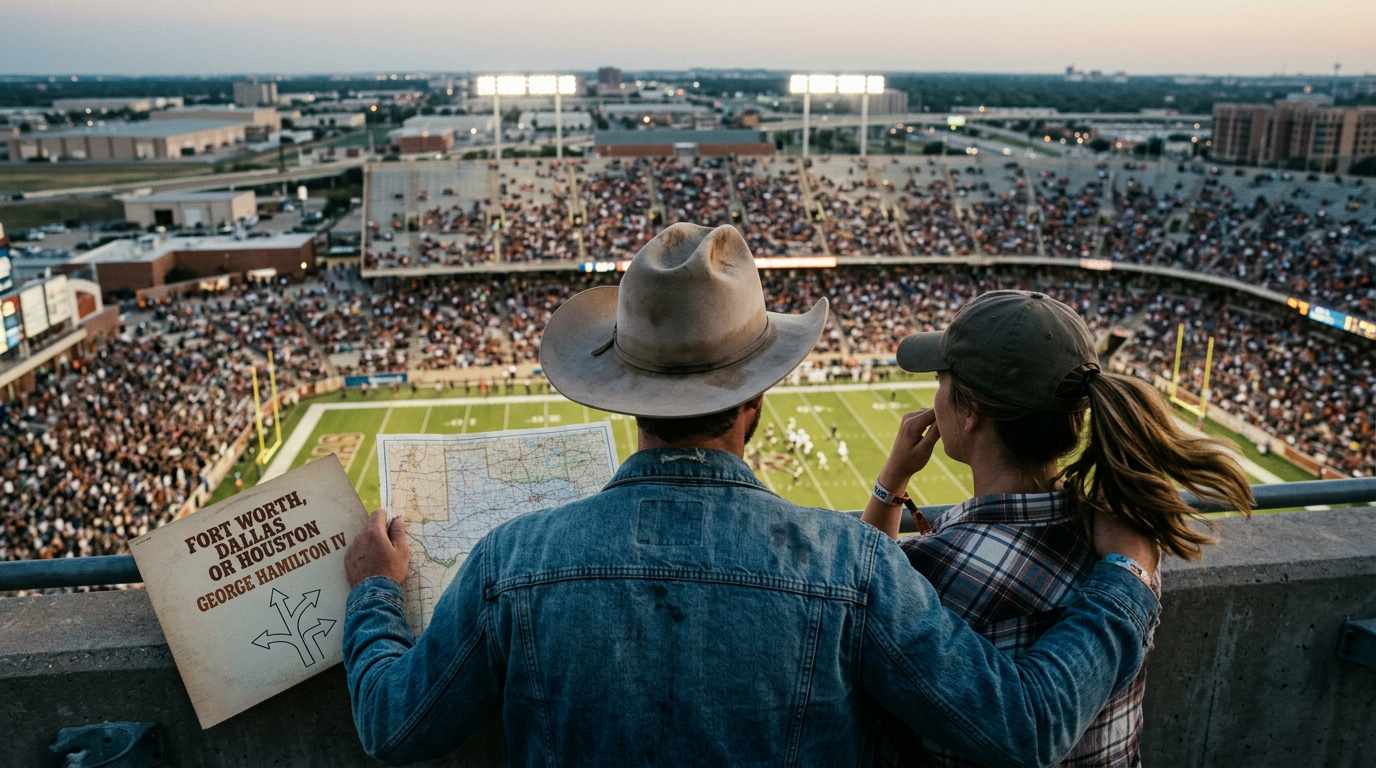
Long before digital maps and instant global connectivity, the heartbeat of the Lone Star State was often captured through the lens of country music lyrics. One of the most enduring examples of this cultural cartography is the song 'Fort Worth, Dallas or Houston,' popularized by George Hamilton IV. This musical travelog does more than just list locations; it serves as a snapshot of a mid-century Texas where the open road symbolized both opportunity and the search for personal connection. Historically, these types of songs played a vital role in nationalizing the image of Texas as a vast, interconnected landscape of distinct urban hubs, each with its own character and allure. The song follows a protagonist navigating the 'Golden Triangle' and beyond, seeking companionship while showcasing the state’s regional diversity. Today, the legacy of such music continues to influence how both residents and visitors perceive the physical and social geography of Texas. By revisiting the specific municipalities mentioned in this classic track, we can trace the evolution of the state from its post-war development boom to its current status as a cultural and economic powerhouse. The song serves as a reminder that the identity of Texas is not found in a single city, but in the transit between them. As urban sprawl continues to bridge the gaps between major metropolitan areas, the lyrical distinctions made by Hamilton IV offer a nostalgic look back at a time when traveling from the Gulf Coast to the North Texas plains was a more distinct and arduous journey than the highway treks of the modern era.
Texas relevance
This story is deeply rooted in the identity of North and Southeast Texas, specifically focusing on the massive metropolises of Dallas, Fort Worth, and Houston. For Texans, these cities represent more than just economic engines; they are the anchors of regional culture. In the context of music history, Texas has always maintained a proprietary claim over the 'outlaw' and 'storyteller' genres of country music. By examining the routes taken in this historical song, we see the early foundations of the I-45 and I-35 corridors that now define the daily lives of millions of Texans. The relevance of this particular musical journey lies in its recognition of the unique 'vibes' assigned to each Texas city—a debate about which city is best that remains a popular pastime among residents to this day.
The Cultural Significance of the Golden Triangle
The areas described in George Hamilton IV’s work encompass what many now refer to as the Texas Triangle. During the era when this music was most popular, the distinction between Dallas and Fort Worth was much sharper than the blended Metroplex we recognize today. Fort Worth was still deeply tied to its 'Where the West Begins' moniker, serving as a primary hub for livestock and western heritage, while Dallas was positioning itself as a more metropolitan center for commerce and fashion.
Houston, meanwhile, represented the industrial and maritime strength of the South. The song captures the protagonist's indecision as he bounces between these hubs, reflecting the reality of many young men during the mid-20th century who moved to Texas seeking work in the oil, gas, or shipping industries. The lyrical journey provides a window into an era where these cities were separate worlds, not yet fully connected by the high-speed transit and suburban sprawl that we experience in the 21st century.
Fort Worth: The Gateway to the West
When the song mentions Fort Worth, it evokes the spirit of the historic Stockyards and a town that prides itself on being the literal edge of the Western frontier. In the 1960s, a traveler arriving in Fort Worth would have encountered a city that felt distinct from its neighbor to the east. It was a place where cowboy culture was not a marketing gimmick but a lifestyle, and the music that came out of the area reflected a grittier, more traditional country sound.
In the context of the song's narrative, Fort Worth represents a potential landing spot for someone looking for a life rooted in legacy. The city has managed to preserve this atmosphere through modern times, ensuring that even as it grows into a major tech and logistics hub, the 'old school' Texas charm described in 20th-century lyrics remains accessible to tourists and residents alike.
Dallas: The Emerging Metropolitan Center
The Dallas of Hamilton IV’s tour was a city in rapid transition. As the song suggests a search for love and a future, Dallas was the place where those dreams often met the reality of a burgeoning executive and retail class. It was the home of luxury department stores like Neiman Marcus and was already establishing itself as a sophisticated urban center that challenged the gritty stereotypes of the frontier.
By including Dallas in the rotation of potential stops, the lyrics acknowledge the city's role as a magnetic force for those seeking a more fast-paced life. Even decades ago, Dallas represented the 'Big D'—a city of lights and social high-climbing that stood in contrast to the more down-to-earth reputations of its neighbors. This duality between cities is what makes the song a quintessential Texas anthem.
Houston: Bayou City and Global Hub
Houston offers a different atmospheric backdrop in the song, characterized by its proximity to the Gulf and its humid, bustling environment. At the time of the song's popularity, Houston was booming due to the space race and the massive expansion of the petrochemical industry. If the narrator was looking for a fresh start, Houston was arguably the place with the most economic upward mobility.
The cultural landscape of Houston has always been more eclectic than North Texas, influenced by its status as a port city. The song recognizes that a traveler in Houston is in a different 'Texas' than someone in the Panhandle or the Hill Country. This geographical diversity is a recurring theme in classic Texas ballads, where the vast distances between cities are treated as both a hardship and an adventure.
Stops Along the Way: Small Town Intersections
While the headline cities get the most attention, the song also touches on the reality of the small towns that exist between these titans. traveling by car in the 1960s meant passing through dozens of smaller communities that were the lifeblood of rural Texas. These stops provide the narrative tension in the protagonist's journey, illustrating that the distance between Dallas and Houston is more than just miles; it is a transition through changing landscapes and social circles.
These 'in-between' spaces are where much of the state’s character was forged. The local diners, highway motels, and small-town bars mentioned or implied in these travel songs highlight a side of Texas that was often overlooked by traditional historians. For the songwriter, these stops were opportunities to find the very thing he was looking for before ever reaching the next major city limits.
Musical Legacy and Modern Interpretation
George Hamilton IV, known as the 'International Ambassador of Country Music,' used this song to export the idea of Texas to a global audience. The song’s structure—moving from city to city—is a common trope in the genre, but few executed it with the sincerity found in this track. It helped solidify the idea of Texas as a land of endless destinations, where constant movement is a way of life.
For modern listeners, the song acts as a historical record. When we listen to the lyrics today, we can compare the romanticized version of these cities with our current reality. While the buildings are taller and the roads are wider, the fundamental desire for companionship and a place to call home—the core themes of the song—remains as relevant to a modern Texan as it was fifty years ago.
Analysis
From an editorial perspective, the preservation of Texas music history is essential for maintaining the state's unique cultural sovereignty. While modern pop culture often homogenizes the American experience, the specific geography of Texas country music reinforces a localized pride. Songs like these acted as the earliest forms of 'influencer' content, highlighting specific locales and cementing their status in the national consciousness. There is an inherent value in recognizing that the 'Fort Worth' of the 1960s was a drastically different landscape than the modern 'Cowtown' we see today. Studying these lyrics allows us to appreciate how much infrastructure and urban planning has changed the physical reality of the journeys described by artists like George Hamilton IV.
Source attribution
This story was reported using a public release from the Texas Monthly. Keep TX Red rewrote the coverage independently and links to the official statement for verification.
Frequently Asked Questions
- Who was George Hamilton IV?
- George Hamilton IV was an American country singer who rose to fame in the late 1950s. Known as the 'International Ambassador of Country Music,' he was instrumental in bringing the Nashville sound to a global audience, often performing in the UK and Europe. His music frequently touched on themes of travel and regional pride.
- What is the historical significance of the song 'Fort Worth, Dallas or Houston'?
- The song is significant because it maps out the major urban centers of Texas during a period of massive growth. It reflects the cultural and economic shifts of the time, highlighting how people moved across the state in search of better opportunities and personal connections.
- How did these Texas cities differ in the mid-1960s?
- During that era, Fort Worth was more focused on western heritage and ranching, Dallas was becoming a hub for fashion and finance, and Houston was rapidly expanding as a center for the oil industry and the space program. The cities felt more geographically and culturally isolated from one another than they do today.
Official Sources
Take the next step
Browse the Newsroom →Read more about Keep Texas Red → Our full guide to what Keep Texas Red means and why Texans support it.
Related Articles
Get Texas updates delivered weekly.
Independent Texas reporting on politics, policy, and daily life. One email a week. Unsubscribe anytime.
Keep TX Red Newsroom
The Keep Texas Red Editorial Staff produces nonpartisan explainers, policy breakdowns, and educational resources to help Texans understand how their government works. All content is reviewed for accuracy and updated regularly.
About Keep TX Red →