Conquering the Ring: How Berry Porter Revolutionized English Equestrian Training in Texas
Discover how Texas trainer Berry Porter defied Western traditions to dominate the elite world of English hunter-jumpers from his Conroe-based Brookside Far
Editorial disclaimer: Opinions and analysis on Keep TX Red are editorial content — not statements of fact. See our editorial standards.
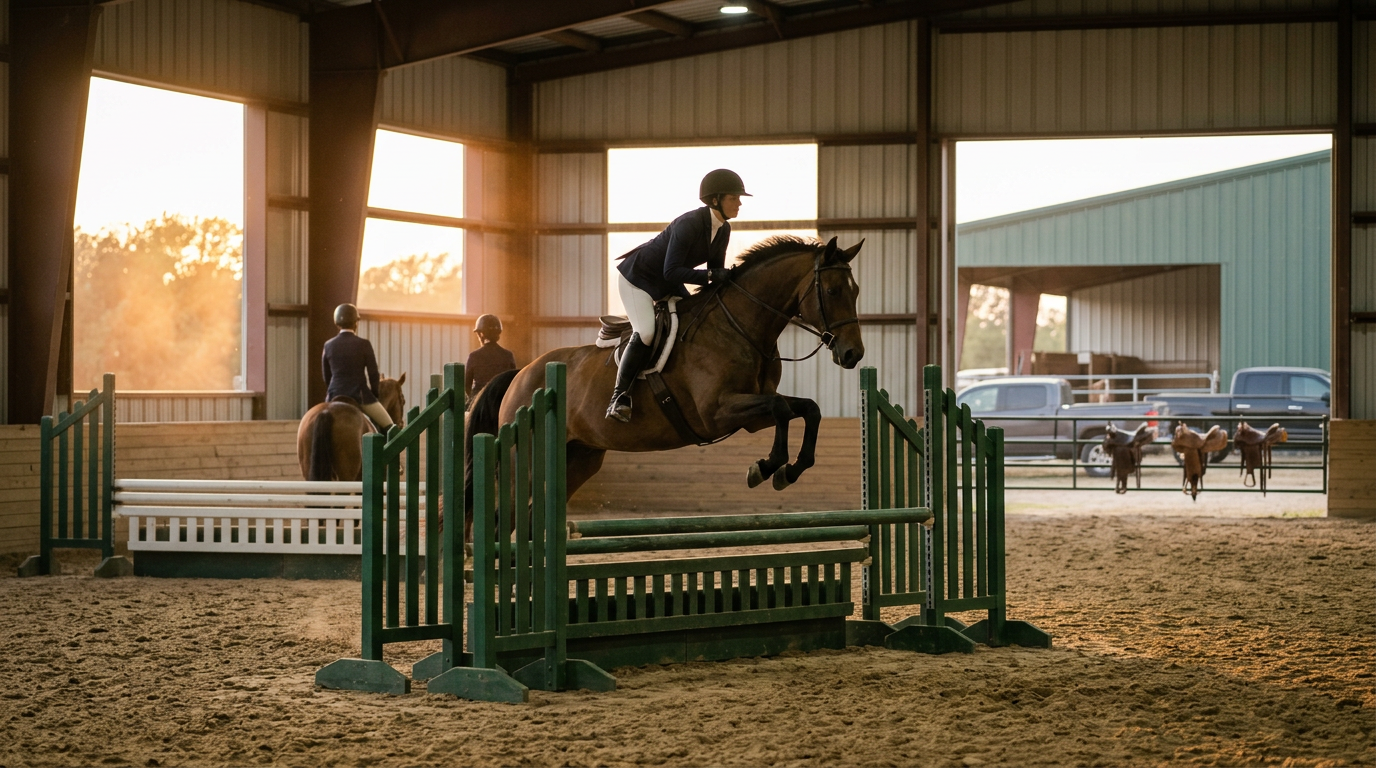
Historically, the Texas equestrian landscape has been dominated by the imagery of the cowboy, focusing on Western disciplines like rodeo, cutting, and reining. However, a significant shift in the competitive landscape has been catalyzed by individuals like Berry Porter, who has successfully challenged the geographical monopoly of the East Coast in English hunter-jumper competitions. The rise of English riding in the Lone Star State represents a departure from traditional ranching roots, signaling a diversification of the state's agricultural identity. Operating out of his Brookside Farm in Conroe, Porter has developed a reputation for an unorthodox approach focusing on the psychological well-being of the horse over rigid, traditional methods. This transition marks a broader evolution in the Texas agricultural and sports economy, where high-stakes English riding is finding a permanent and profitable home within the state's borders. Porter's rise is not merely a story of individual success but a case study in how Texas trainers are dismantling long-standing industry prejudices that previously suggested elite-level English riding could only flourish in states like Florida or New York. The physical infrastructure required for these operations—climate-controlled barns, imported footing for arenas, and specialized turn-out paddocks—has turned portions of the Texas countryside into premier athletic training grounds that rival any in the world. As Porter continues to secure blue ribbons at the nation's most prestigious shows, he proves that the Texas spirit of independence is just as effective in a velvet helmet as it is in a Stetson.
Texas relevance
This story is deeply rooted in the changing cultural and economic fabric of Southeast Texas, specifically the Conroe and greater Houston area. While Texas has always been 'horse country,' the specific growth of the English riding sector brings significant capital and prestigious national events to the Lone Star State. Texas currently boasts one of the largest horse populations in the United States, and the shift toward high-value performance horses in the English sector provides a massive boost to the local economy. Porter’s Brookside Farm serves as a hub for this growth, proving that Texas can produce world-class athletes in a discipline often associated with the East Coast elite. The expansion of these facilities contributes to local land value, specialized veterinary services, and the high-end agricultural supply chain unique to the Texas Montgomery County region. Furthermore, the success of Texas-based trainers encourages local youth to pursue diverse equestrian paths, ensuring the state remains at the forefront of all equine disciplines for generations to come.
Challenging the East Coast Hegemony
For decades, the world of hunter-jumpers was centered around a predictable circuit involving Wellington, Florida, and the Hamptons. These locations offered the social prestige and historical infrastructure that investors and riders demanded. Texas was often viewed as a secondary location, suitable for Western riders but lacking the finesse required for the delicate art of English equitation and jumping. Berry Porter’s emergence has fundamentally disrupted this narrative by demonstrating that the environment in Southeast Texas is perfectly suitable for breeding and training top-tier English horses.
The logistics of competing at the highest level from a Texas base are daunting. It requires shipping horses thousands of miles to reach the 'A-Circuit' shows that determine national rankings. Porter has turned this potential disadvantage into a strength, creating a training program that builds mental toughness and adaptability in his horses. Rather than being sheltered in the mild, controlled climates of coastal enclaves, Porter’s horses are products of a rigorous and authentic Texas upbringing, which he argues makes them more resilient when the pressure of the national stage mounts.
This shift has also caught the attention of major sponsors and breeders who previously overlooked Texas. The financial footprint of a high-end show barn like Brookside Farm extends far beyond the arena. It supports a network of farriers, hay producers, and specialized equine therapists. By proving that a Texas barn can consistently out-jump the best that New York has to offer, Porter is inviting a new wave of investment into the state's rural and suburban agricultural corridors.
The Philosophy of Equine Psychology
In traditional English riding, training often focuses on mechanical repetition and strict adherence to form. Porter’s 'unorthodox' label stems from his willingness to prioritize the horse's perspective. He operates under the belief that a happy horse is a winning horse, a philosophy that leads him to discard common training tools or methods that might cause unnecessary stress. This empathetic approach is a hallmark of the modern Texas trainer, blending the grit of the old-school horseman with a contemporary understanding of animal behavior.
Porter’s methods include allowing horses more turnout time and diverse environments, rather than keeping them confined to stalls to protect their physical appearance. He understands that the mental fatigue of a high-pressure competition season can break even the most talented horse. By providing a more balanced life back in Conroe, he ensures that his athletes return to the ring with a fresh mindset. This focus on long-term sustainability over short-term gains is a strategy that has paid off in the form of multiple championships and a stable full of healthy, high-performing animals.
Critics within the industry once whispered that Porter’s lack of traditional rigidity would lead to inconsistency. However, the scoreboard tells a different story. His horses frequently showcase a level of relaxation and flow that is often missing from more strictly schooled competitors. This 'relaxed efficiency' has become his signature, and it serves as a powerful reminder that there is more than one way to reach the pinnacle of professional sports.
Economic Impact on Montgomery County
The success of Brookside Farm has real-world implications for the economy of Montgomery County and the surrounding areas. As the reputation of Texas-grown English horses rises, so does the demand for premium land suitable for equestrian estates. The influx of high-net-worth individuals moving to Texas to train with Porter or similar professionals has led to a boom in luxury agricultural development. This trend helps preserve open spaces while contributing significantly to the local tax base through high-value property improvements.
Furthermore, the specialized needs of the hunter-jumper industry have fostered a boutique agricultural sector. Local farmers are finding new markets for high-quality alfalfa and specialized grain mixes that meet the exacting nutritional standards of million-dollar athletes. The service industry has also adapted, with local veterinarians investing in regenerative medicine and advanced imaging technology to cater to these high-performance clients. Porter’s success is a catalyst for a sophisticated professional ecosystem that benefits the entire region.
The rise of this industry also provides new career paths for young Texans. Programs are emerging to train the next generation of grooms, barn managers, and trainers who can serve a global market. By keeping these skills and revenues within the state, Porter is helping to ensure that Texas remains the undisputed horse capital of the world, regardless of the saddle being used.
Overcoming Adversity in the Arena
Success in the hunter-jumper world is rarely linear. Porter has faced his share of setbacks, from injuries to horses to the inherent volatility of the judging system. However, his resilience has become a hallmark of his career. He maintains a 'never-quit' attitude that is quintessentially Texan, refusing to be intimidated by the deep pockets and long histories of his competitors. Every loss is viewed as a learning opportunity, and every victory is a validation of the hours spent in the humidity of the Texas summer.
His ability to consistently produce winners despite these challenges has earned him the respect of his peers. Even those who initially mocked his 'unconventional' Texas ways now study his rounds to see what they can learn. Porter’s story is a reminder that in the competitive world of sports, results are the ultimate equalizer, and a talented outsider with a clear vision can eventually become the new standard-bearer. The grit required to maintain a top-tier barn in the heart of Texas serves as a natural selection process, producing trainers who are as tough as the animals they ride.
Porter’s journey also highlights the importance of the owner-trainer relationship. In the high-stakes world of equestrianism, trust is the primary currency. Owners from across the country now send their most valuable prospects to Conroe, trusting that the Texas environment and Porter's unique touch will unlock their full potential. This trust has been hard-earned through years of consistent performance and an unwavering commitment to the welfare of the horses.
The Future of Texas Equestrianism
Looking ahead, the influence of trainers like Berry Porter is expected to grow. As more major competitions are hosted at facilities like the Katy Equestrian Center or the various venues around Fort Worth and Dallas, the 'home field advantage' for Texas riders will only increase. The state is currently seeing a migration of talent from both coasts, as trainers look for lower taxes, more space, and a more favorable regulatory environment. Porter was a pioneer in this movement, and he now finds himself at the center of a thriving community.
The integration of technology into training is another area where Texas barns are leading. From data-driven fitness tracking to advanced biomechanical analysis, the modern Texas stable is as much a laboratory as it is a farm. Porter’s willingness to experiment with these tools, while resting on a foundation of traditional horsemanship, positions him at the vanguard of the sport's future. The blend of high-tech and high-touch is what defines the next era of competition.
Ultimately, Berry Porter’s legacy will not just be measured in ribbons or trophies. It will be found in the changing perception of what a Texas horseman can be. By excelling in a sport that was once considered 'foreign' to the Texas way of life, he has expanded the boundaries of the state's culture. He has shown that whether you are roping a steer or clearing a six-foot oxer, the character traits of a true Texan—hard work, innovation, and a deep love for the land—remain the most important ingredients for success.
Analysis
Berry Porter’s success highlights a broader Texas trend of disruption. In industries ranging from tech to equestrian sports, Texans are taking traditional frameworks and applying a results-oriented, independent mindset that often clashes with established 'establishment' norms. Porter’s refusal to adhere to the strict, sometimes punitive training regimens of the past mirrors a larger cultural move toward meritocracy over pedigree. By winning consistently on the national stage, he is effectively rebranding the Texas horseman as a versatile global competitor rather than a localized archetype. This shift is not just about the horses; it reflects the 'Texas Way' of doing business—valuing results, efficiency, and individual intuition over centuries of stale tradition. As the coastal elites lose their grip on these traditionally exclusive sports, the Lone Star State stands ready to claim the top of the podium.
Source attribution
This story was reported using a public release from the Texas Monthly. Keep TX Red rewrote the coverage independently and links to the official statement for verification.
Frequently Asked Questions
- What makes Berry Porter's training style 'unorthodox'?
- Porter avoids the ‘one-size-fits-all’ approach common in traditional English riding. He focuses on the mental health and comfort of the horse, often utilizing non-traditional exercises and allowing animals more freedom than typical elite stables. This results in horses that are more relaxed and responsive during high-pressure competitions.
- Where is Berry Porter's training facility located?
- His primary operation, Brookside Farm, is located in Conroe, Texas. This location allows him to utilize the specific climate and land of Southeast Texas to develop hardy, resilient competitive horses while remaining close to the major equestrian hubs of Houston.
- How has Porter changed the perception of Texas in the horse world?
- By consistently winning national titles from a Texas base, he has proven that elite English riding is not exclusive to the East Coast. He has shown that Texas trainers can compete with—and beat—the established barns of Florida and New York, bringing a new level of prestige to the state’s equestrian scene.
- Does Porter's success impact the local economy beyond the farm?
- Yes, significantly. His operation supports high-end agricultural suppliers, specialized veterinarians, farriers, and local luxury real estate growth. It also brings national-level equestrian event spending to the Houston and Conroe areas, benefiting the broader hospitality and service sectors in Southeast Texas.
Official Sources
Take the next step
Browse the Newsroom →Read more about Keep Texas Red → Our full guide to what Keep Texas Red means and why Texans support it.
Related Articles

Get Texas updates delivered weekly.
Independent Texas reporting on politics, policy, and daily life. One email a week. Unsubscribe anytime.
Keep TX Red Newsroom
The Keep Texas Red Editorial Staff produces nonpartisan explainers, policy breakdowns, and educational resources to help Texans understand how their government works. All content is reviewed for accuracy and updated regularly.
About Keep TX Red →