Skyrocketing Texas Beef Prices Strain Local Businesses Amid Herd Shortages and Biological Threats
Texas ranchers and restaurateurs face rising beef costs due to long-term droughts and the emerging threat of the New World screwworm.
Editorial disclaimer: Opinions and analysis on Keep TX Red are editorial content — not statements of fact. See our editorial standards.
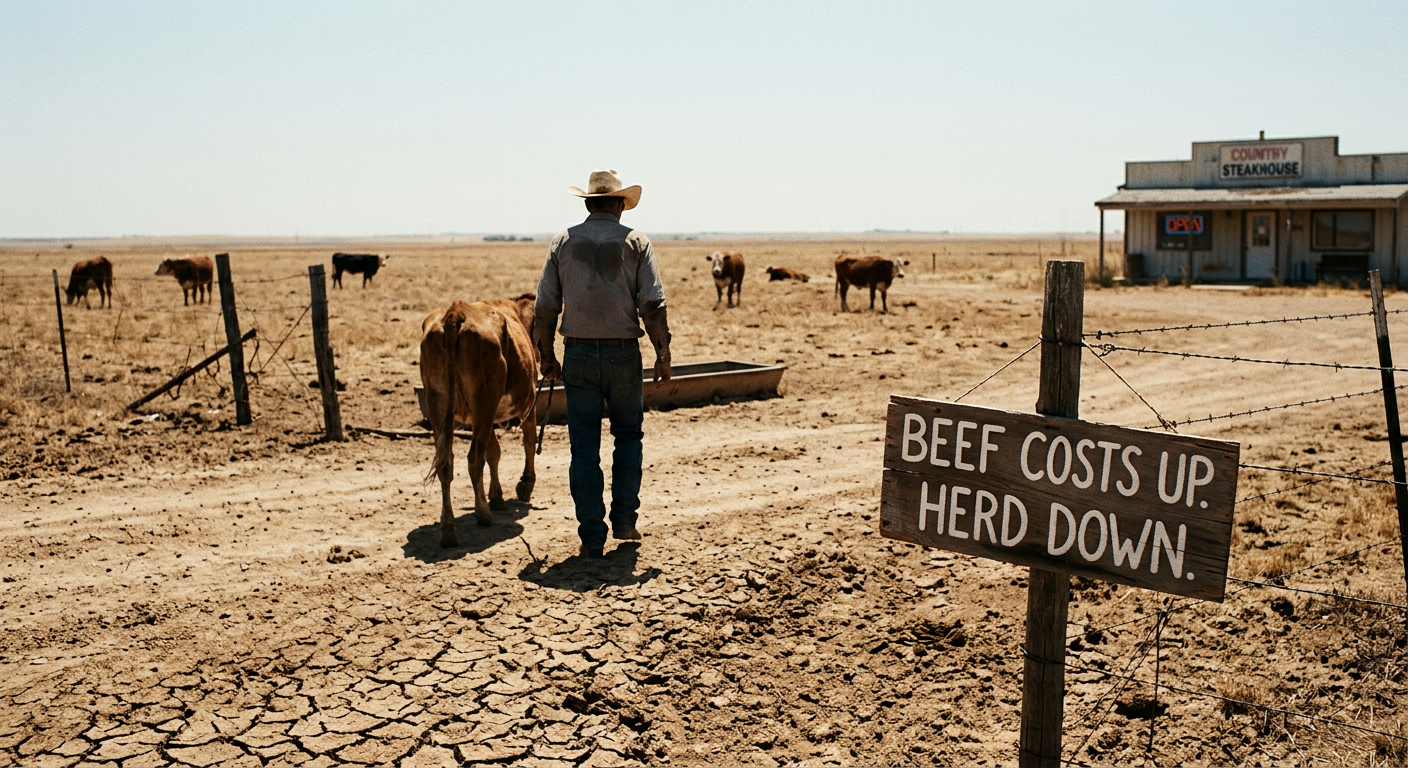
The price of beef in Texas is reaching new heights as a combination of environmental and biological factors constrains the state's iconic cattle industry. For years, the Lone Star State has served as a primary hub for American beef production, but recent data indicates that consumer impacts are becoming unavoidable at the grocery store and the dinner table. Historic trends show that while beef prices fluctuate seasonally, the current surge is tied to structural issues within the supply chain, including a multi-year reduction in total herd sizes. Historically, Texas has managed several cycles of extreme weather and market volatility, yet the specific combination of lingering drought conditions and new biological alerts has created a unique economic bottleneck that is forcing small business owners to rethink their pricing models. Inland Texas communities that rely on ranching are seeing some of the lowest cattle inventory levels in decades. This scarcity is a direct result of ranchers being forced to liquidate their herds during previous dry spells when grazing land became unsustainable and water sources dried up. Now, as demand remains high, the lack of available livestock is driving up the market value of every pound of meat. This price hike is filtering down from the auction house to the processing plant and finally to the retail market, where everyday snacks and meals—including the traditional Texas taco—are seeing significant price adjustments. Analysts suggest that unless herd replenishment begins in earnest soon, these elevated costs may become a semi-permanent fixture of the Texas landscape.
Texas relevance
As the top cattle producer in the United States, Texas occupies a central role in the national beef supply chain, making these price hikes a local crisis for both producers and consumers. Across the state, from the Panhandle to the Gulf Coast, the cattle industry accounts for a massive portion of the agricultural economy. When supply drops or costs rise, it impacts thousands of Texas families who earn their living through ranching and millions more who count beef as a staple of their diet. Furthermore, the cultural identity of Texas is closely linked to beef consumption, with major metropolitan areas like Austin, Dallas, and San Antonio hosting world-class barbecue and Mexican cuisine restaurants that are now finding it difficult to maintain affordable margins.
The Biological Threat of the New World Screwworm
One of the newest and most alarming factors contributing to market uncertainty is the detection of the New World screwworm in North America. This parasite, which was largely eradicated in the United States decades ago, poses a lethal threat to livestock. If the screwworm were to establish a presence in Texas, the economic fallout would be catastrophic, as the larvae feed on the living tissue of warm-blooded animals, leading to severe injury or death for cattle.
Preventative measures to keep the screwworm out of Texas borders are already being discussed by agricultural officials. These measures often involve stricter inspections and potential quarantines of animals moving across state or international lines. Such restrictions typically slow down the speed of commerce and increase the overhead for ranchers, costs which are inevitably reflected in the final retail price of beef products.
Drought-Driven Herd Liquidation
For several consecutive seasons, Texas has grappled with intense heat and a lack of rainfall, particularly in the western and central regions. When grazing grass fails to grow and stock ponds disappear, ranchers have no choice but to sell off their cattle earlier than planned. This mass liquidation temporarily floods the market with meat but leads to a long-term shortage as the breeding pool of cows is diminished.
Rebuilding a herd is not an overnight process; it takes years of favorable weather and significant capital investment to return to peak production levels. Because Texas is currently in the 'rebuilding' phase while still facing intermittent dry spells, the supply of high-grade beef remains tight. This structural deficit is the primary engine behind the rising numbers seen on restaurant menus and supermarket labels across the state.
Small Businesses and the 'Taco Tuesday' Struggle
Local eateries, such as the numerous taco stands and small-town diners that define the Texas food scene, are being pushed to the brink. These businesses operate on thin margins, and beef is often their most expensive ingredient. When the cost of ground beef or skirt steak doubles, the owner must decide whether to absorb the loss or risk losing customers by raising prices. Some owners have reported that their weekly meat invoices have nearly tripled compared to just a few years ago.
To combat this, some Texas restaurants are diversifying their menus by promoting chicken or pork options more aggressively. However, the demand for beef remains high, particularly for traditional dishes like carne asada or brisket. The struggle to keep 'Taco Tuesday' affordable is more than an inconvenience; it is a signal of the broader inflationary pressures hitting the working-class families who frequent these local institutions.
The Role of Processing and Logistics
Beyond the ranch, the cost of processing beef in Texas has also risen. Labor shortages at meatpacking plants and the increased cost of fuel for transporting livestock have added layers of expense to the supply chain. In a state as large as Texas, where cattle might be raised in one region and processed hundreds of miles away, transportation costs are a significant factor in the final price of the product.
Furthermore, large-scale processors have faced their own set of challenges, from energy costs to regulatory compliance. While some smaller, independent processing facilities have opened across Texas recently to provide local ranchers with more options, the sheer volume required to stabilize market prices is still dominated by major facilities that are susceptible to global economic trends. This keeps local Texas prices tethered to national and even international market fluctuations.
Consumer Response and Market Shifts
Shoppers in Houston, Dallas, and beyond are starting to change their buying habits in response to the price tags. Premium cuts like ribeye and tenderloin are seeing a drop in volume sales as consumers pivot toward more affordable options like ground beef or cross-utilizing cheaper cuts for slow-cooking. This shift in demand can sometimes create its own imbalances, as the excess of expensive cuts must eventually be discounted while the 'budget' cuts see even higher price spikes due to demand.
In addition to changing what they buy, some Texans are turning back to local meat lockers and buying whole or half cows directly from ranchers. This 'farm-to-table' approach allows some consumers to bypass the retail markup, though it requires a significant upfront investment and ample freezer space. This trend highlights a growing desire among Texans to maintain their beef-heavy lifestyles while circumventing the volatility of the traditional grocery market.
Future Outlook for the Texas Cattle Industry
Looking ahead, the recovery of the Texas beef market will depend heavily on the weather. A series of wet seasons would allow for better forage growth and encourage ranchers to keep more heifers for breeding rather than sending them to slaughter. State and federal agencies are also monitoring the screwworm situation closely to ensure that any potential outbreaks are contained before they can cause widespread damage to the national herd.
While technology and better ranch management practices have made the industry more efficient, the basic laws of supply and demand remain the dominant force. Texans should prepare for beef prices to remain elevated for the foreseeable future. The resilience of the Texas rancher is well-documented, but the current economic environment serves as a stark reminder of how closely the Texas dinner table is connected to the health of the state's pastures and the security of its borders.
Analysis
The current state of the beef industry in Texas reflects a broader vulnerability to climate and external biological shocks. While the market is resilient, the 'screwworm' threat introduces a variable that could lead to federal restrictions on livestock movement, further isolating Texas producers if not managed correctly. There is a delicate balance between passing costs to consumers and maintaining the volume of sales necessary to keep family-owned restaurants afloat. If prices continue to climb, we may see a temporary shift in Texas consumer behavior toward alternative proteins, which could have long-term effects on the cattle market's dominance in the state's cultural and economic sectors.
Source attribution
This story was reported using a public release from the Texas Standard. Keep TX Red rewrote the coverage independently and links to the official statement for verification.
Frequently Asked Questions
- Why are beef prices specifically high in Texas right now?
- Texas is the largest beef producer in the U.S., meaning local prices are heavily influenced by the state's environmental conditions. Recent droughts led ranchers to sell off their cattle because they couldn't afford to feed or water them, resulting in a shortage of animals ready for market now.
- What is the New World screwworm and how does it affect the market?
- The screwworm is a parasitic fly that lays eggs in the wounds of warm-blooded animals. The larvae then eat the animal's flesh. Its presence creates fear of a massive livestock die-off or strict federal quarantines, both of which drive up prices due to risk and restricted supply.
- When can Texans expect beef prices to go back down?
- Price relief depends on 'herd rebuilding,' which involves ranchers keeping more young female cattle for breeding rather than meat. This process takes several years. Unless there is a sustained period of rain and lower feed costs, prices are expected to remain high through at least the next few production cycles.
Official Sources
Take the next step
Browse the Newsroom →Read more about Keep Texas Red → Our full guide to what Keep Texas Red means and why Texans support it.
Related Articles
Get Texas updates delivered weekly.
Independent Texas reporting on politics, policy, and daily life. One email a week. Unsubscribe anytime.
Keep TX Red Newsroom
The Keep Texas Red Editorial Staff produces nonpartisan explainers, policy breakdowns, and educational resources to help Texans understand how their government works. All content is reviewed for accuracy and updated regularly.
About Keep TX Red →