Wes Anderson: Houston Honors the Cultural Legacy of Filmmaker's Music
A spectacular Houston concert celebrates decades of filmmaker Wes Anderson’s unique musical influence on modern American cinema and Texas culture.
Editorial disclaimer: Opinions and analysis on Keep TX Red are editorial content — not statements of fact. See our editorial standards.
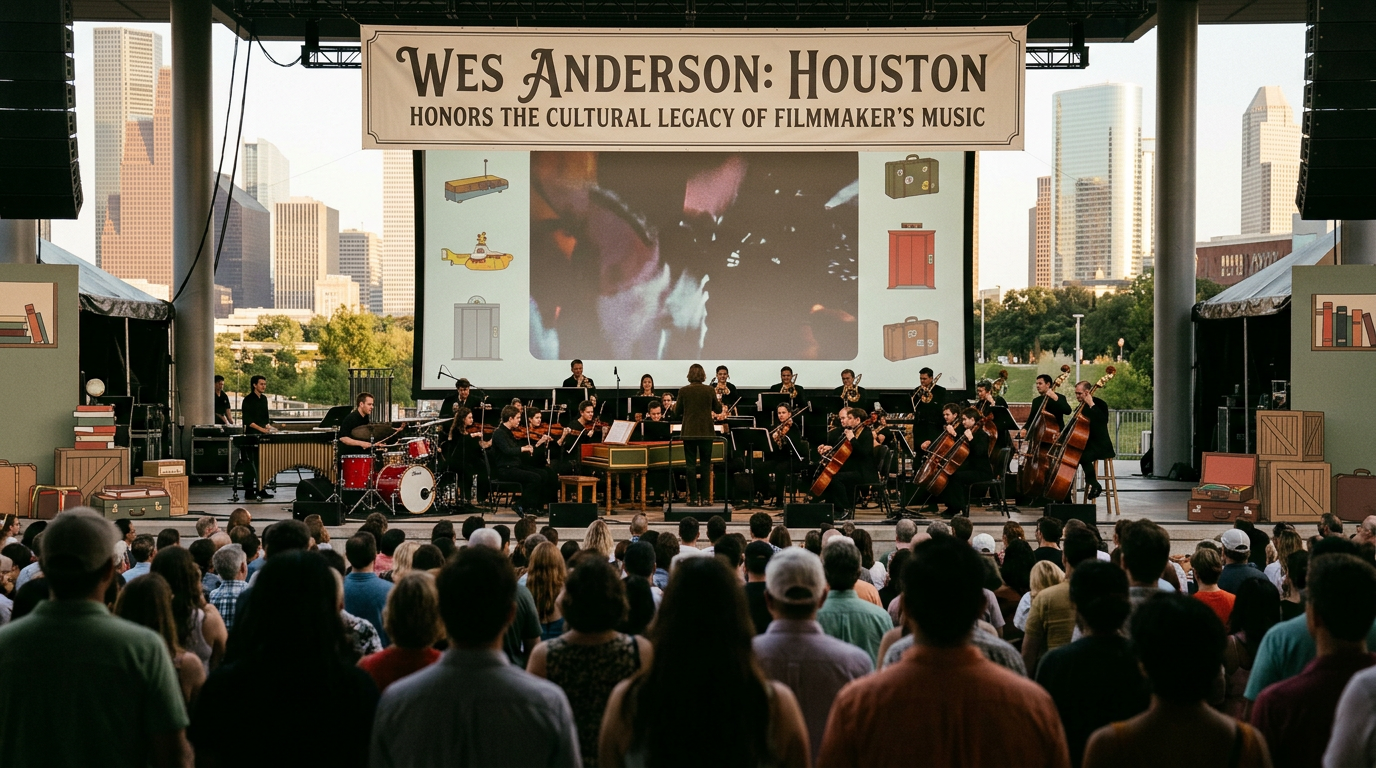
The artistic landscape of Texas recently played host to a sophisticated celebration of one of its most idiosyncratic native sons, director Wes Anderson. Over the course of a weekend in July 2026, a massive concert event aimed to bridge the gap between the silver screen and the stage, focusing exclusively on the curated soundtracks and original scores that have defined Anderson’s thirty-year career. Since the release of his debut feature, Bottle Rocket, in 1996, the Houston-born creator has been synonymous with a highly specific visual and auditory aesthetic. This tribute served not only as a retrospective of his work but as a testament to the power of the Texas creative spirit in reshaping global pop culture through meticulous attention to detail and a quirky, sentimental perspective. Contextually, this event follows a long tradition of Texans influencing the avant-garde and the mainstream simultaneously. From the high-society sensibilities of his upbringing at Houston’s St. John’s School to the vibrant, eclectic music scenes of Austin and Dallas, the cultural fabric of Texas is woven deeply into every frame of Anderson’s filmography. By gathering a diverse group of musicians and performers to reinterpret songs originally selected by Anderson and his longtime collaborator Randall Poster, the organizers highlighted how a director's personal taste can evolve into a cultural shorthand. The performance underscored a three-decade journey of storytelling that began in a small Texas town and eventually conquered the international stage, proving that local roots often produce the most universal art.
Texas relevance
The significance of Wes Anderson to the state of Texas cannot be overstated, particularly within the cities of Houston and Austin. As a graduate of the University of Texas at Austin, where he met frequent collaborator Owen Wilson, Anderson represents the pinnacle of the Texas film movement of the 1990s. His success provided a roadmap for independent filmmakers across the Lone Star State, demonstrating that intellectual and visually complex films could find a massive audience. These tributes reinforce Houston's burgeoning reputation as a hub for high-concept multi-media art, ensuring that the next generation of Texas creatives sees their home state as a viable place to launch a global career without losing their unique regional identity.
The Houston Roots of a Cinematic Icon
To understand the music of Wes Anderson, one must first understand the environment that shaped his formative years. Born in Houston, Anderson’s early exposure to the city’s distinct blend of urban sophistication and South Texas grit provided a rich backdrop for his later narratives. The recent tribute concert paid homage to this history, highlighting how the city’s architecture and atmosphere found their way into his artistic DNA. It was in Houston that Anderson developed his penchant for the baroque and the symmetrical, traits that define his films as much as the music does.
The event specifically referenced the influence of St. John’s School, where Anderson was a student. This institution served as the literal and metaphorical setting for his breakout hit Rushmore. By hosting the tribute in the same city that inspired one of his most beloved characters, Max Fischer, the organizers created a feedback loop of local pride and international acclaim. This geographic connection ensures that even as Anderson explores settings as diverse as the Italian coast or a fictionalized Japan, his work remains grounded in the specific rhythms of a Texas upbringing.
The Evolution of a Sound: From Kinks to Castles
The tribute’s repertoire traced the director’s evolution from using raw, British Invasion rock in the 1990s to the more orchestral and world-music-inspired scores of his later years. Participants at the concert noted how the music in Bottle Rocket felt like a mixtape of a restless Texas youth, while the songs in The Life Aquatic signaled a more mature, if still eccentric, directorial voice. This transition is reflective of the growth of the Texas film industry itself, which has expanded from small-scale indies to high-budget, internationally recognized productions.
A major highlight of the evening was the focus on the director's ability to repurpose obscure tracks. By featuring artists like Françoise Hardy and The Kinks, the concert demonstrated how Anderson’s films have acted as a form of musical curation for his audience. For many fans in attendance, these movies were the first introduction to these sounds, and the tribute provided a live setting to appreciate the complexity of the arrangements. The musicians performed with a precision that mirrored Anderson’s own famous ‘god’s-eye view’ camera angles.
The Impact of Collaborations
No discussion of Anderson’s music is complete without acknowledging the role of music supervisor Randall Poster and composer Mark Mothersbaugh. The tribute dedicated significant time to exploring these partnerships, which have defined the sonic identity of the 'Andersonverse.' The synergy between these creators allows for a level of thematic consistency that is rare in modern Hollywood. The Houston concert successfully translated this studio-born synergy into a live environment, utilizing period-correct instruments and meticulously scouted vocal talent.
The influence of Mark Mothersbaugh, in particular, was celebrated for bringing a whimsical, toy-instrument quality to early films like The Royal Tenenbaums. This unique sound helped establish the melancholic yet playful tone that became the director's calling card. As the concert moved into the later works, including those scored by Alexandre Desplat, the audience could hear the shift toward a more European, grand style. This sequence highlighted the director’s willingness to innovate while maintaining the core emotional sincerity that first endeared him to Texas audiences decades ago.
Visuals Meet Sound: The Multimedia Experience
Living up to the standard of a Wes Anderson production requires more than just good music; it requires a specific visual language. The stage design for the Houston event incorporated pastel color palettes, symmetrical set pieces, and Futura font—the hallmarks of the director’s brand. This immersive approach turned the concert into a living museum of Anderson’s style, allowing attendees to feel as though they had stepped through the screen. This level of production value is a testament to the sophistication of the Houston arts scene, which can execute such complex tributes with world-class flair.
By integrating film clips with live musical cues, the event allowed the audience to see exactly how music drives the emotion in every scene. Whether it was the swelling tension of a slow-motion walk or the quiet heartbreak of a solo piano piece, the interplay between the visual and auditory was at the forefront. This multimedia strategy served to educate the audience on the mechanics of filmmaking, elevating the event from a standard concert to a deep-dive masterclass in creative direction.
A Legacy of Independent Spirit
At its heart, the celebration of Wes Anderson is a celebration of the independent spirit that Texas prides itself on. Despite achieving global fame, Anderson has never conformed to typical Hollywood tropes, choosing instead to double down on his own vision. This stubborn commitment to originality is a trait often associated with the Texas identity, from its entrepreneurs to its artists. The tribute concert echoed this sentiment, focusing on the director's bravery in being 'different' and the massive community that has formed around that difference.
The attendance figures and the enthusiastic response from the locals suggest that Anderson’s influence is only growing. As he continues to release new projects, his connection back to his home state remains a point of pride for many Texans. The concert ended not just as a look backward, but as a look forward to the future of independent cinema and the role that Texas creators will continue to play in it. By honoring the past thirty years, the event set the stage for the next thirty years of Texas-born innovation.
Analysis
While the concert was ostensibly about music, it functioned as a successful exercise in branding and community building. Critics note that Anderson’s 'vibe' has become its own industry, but the sincerity of this Houston tribute suggests that for Texans, he is more than a template—he is a local hero. The event’s success points to a growing desire among Texas audiences for curated, nostalgic experiences that celebrate high-brow artistry in an accessible, communal format. By leaning into the 'Wes Anderson aesthetic,' the organizers tapped into a multi-generational fan base that spans from Gen X-ers who saw Bottle Rocket in theaters to Gen Z fans of Asteroid City.
Source attribution
This story was reported using a public release from the Texas Monthly. Keep TX Red rewrote the coverage independently and links to the official statement for verification.
Frequently Asked Questions
- Where is Wes Anderson originally from?
- Wes Anderson was born and raised in Houston, Texas. Many of his early life experiences in the city, including his time at St. John's School, directly inspired his films, most notably the 1998 classic Rushmore.
- What was the significance of the 2026 Houston concert?
- The concert was a high-scale tribute to the music and soundtracks of Anderson's films. It marked thirty years since his first feature, Bottle Rocket, was released, celebrating his evolution from a local Texas filmmaker to an international icon.
- Who are some of the key musical collaborators mentioned in the tribute?
- The tribute focused on the work of music supervisor Randall Poster and composers Mark Mothersbaugh and Alexandre Desplat, who have collaborated with Anderson to create the specific sounds associated with his movies.
- How does Wes Anderson's work relate to the Texas film industry?
- Anderson is a key figure in the rise of independent Texas filmmaking. Along with the Wilson brothers, he helped put the Texas creative scene on the map in the 1990s, and his ongoing success continues to provide inspiration for the state's artistic community.
Official Sources
Take the next step
Browse the Newsroom →Read more about Keep Texas Red → Our full guide to what Keep Texas Red means and why Texans support it.
Related Articles

Get Texas updates delivered weekly.
Independent Texas reporting on politics, policy, and daily life. One email a week. Unsubscribe anytime.
Keep TX Red Newsroom
The Keep Texas Red Editorial Staff produces nonpartisan explainers, policy breakdowns, and educational resources to help Texans understand how their government works. All content is reviewed for accuracy and updated regularly.
About Keep TX Red →