Governor Abbott Expands Disaster Declaration for 59 Texas Counties Amid Flash Flood Threats
Governor Abbott issues a disaster declaration for 59 Texas counties as severe weather and flash flooding trigger Level II emergency operations statewide.
Editorial disclaimer: Opinions and analysis on Keep TX Red are editorial content — not statements of fact. See our editorial standards.
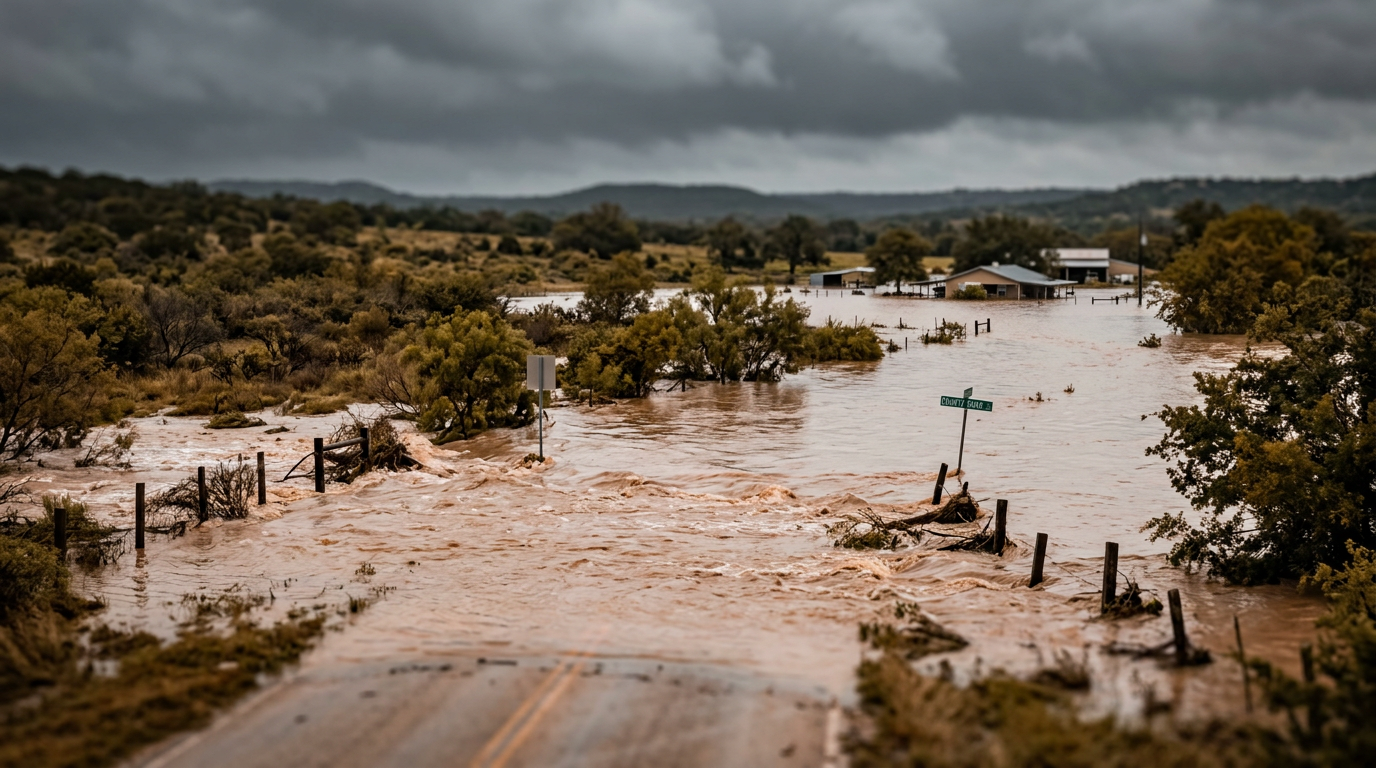
Governor Greg Abbott has reacted to a wave of volatile weather systems by issuing a comprehensive disaster declaration covering 59 counties across the state of Texas. This move follows a period of increasing atmospheric instability that has produced significant rainfall and the immediate threat of pervasive flash flooding. To manage the crisis, the Texas Division of Emergency Management (TDEM) has been ordered to maintain a heightened state of readiness. The State Emergency Operations Center is currently functioning at Level II, which denotes an escalated response stance that mandates 24-hour staffing and continuous coordination between various state agencies and local municipalities. Texas has a long history of managing high-intensity weather events, from the hurricane-prone Gulf Coast to the flash-flood alleys of the Hill Country. Historically, these disaster declarations serve as the necessary legal mechanism to unlock specialized state funding and move heavy equipment into high-risk zones before the worst damage occurs. By formalizing the disaster status at this stage, the Governor provides local mayors and county judges with the ability to bypass certain procurement hurdles, ensuring that sandbags, high-water rescue vehicles, and emergency personnel are positioned where the meteorological data suggests the highest impact will occur.
Texas relevance
This administrative action directly affects millions of residents throughout the 59 listed counties, which include major population centers and rural agricultural hubs alike. In Texas, weather-related disasters are frequently characterized by 'turn around, don't drown' conditions where rapid runoff can transform dry creek beds into lethal torrents within minutes. The relevance to the average Texan lies in the availability of state-level resources—such as the Texas A&M Task Force 1 and Department of Public Safety assets—that are now on standby to assist local first responders. Furthermore, the declaration provides a framework for future federal assistance if the damage thresholds are met after the storm system exits the region.
The Escalated Response Mandate
The shift to Level II operations at the State Emergency Operations Center (SOC) is a significant administrative escalation. It signals that the state's resources are no longer just monitoring the situation but are actively engaged in deployment and coordination. Under this level of readiness, the SOC serves as a centralized hub where officials from the Texas Department of Transportation, the Texas Military Department, and the Texas Department of State Health Services can share real-time data and respond to local requests for aid instantly.
This centralized approach is vital for a state as geographically diverse as Texas. While one county may be dealing with extreme wind damage, another may be grappling with rising river levels. The Level II status ensures that the allocation of state assets is handled with a macro-view of the entire state's needs, preventing any single region from being underserved during a simultaneous multi-front weather event. The Governor has indicated that this 24-hour operation will persist until the threat of flash flooding has moved beyond the state's borders.
Geographic Scope of the Declaration
The 59 counties included in the initial declaration represent a broad swath of the Texas landscape. Although the specific names of all counties are often updated as storm tracks change, the current list focuses on regions most vulnerable to stagnant low-pressure systems and heavy precipitation. This includes areas with poor drainage infrastructure and regions where the ground is already saturated from previous rainfall, increasing the likelihood of immediate runoff into homes and roadways.
State officials have made it clear that the disaster declaration is a dynamic document. As the severe weather continues to move across the state, the Governor’s office has the authority to add additional counties. This allows the state to remain flexible, extending legal protections and resource access to new areas if the storm system takes an unexpected turn or persists longer than meteorologists originally forecasted. Residents are encouraged to check the official TDEM registers to see if their specific local jurisdiction is covers under the current order.
Mobilization of State Resources
With the disaster declaration in effect, various state agencies are now operating under emergency protocols. The Texas Division of Emergency Management is the primary coordinator, but the impact is felt across multiple departments. For instance, the Texas Department of Public Safety (DPS) can increase patrols in high-risk zones to assist with traffic control and road closures. Simultaneously, the Texas Parks and Wildlife Department can deploy game wardens equipped with swift-water rescue boats to areas where residents may become stranded by rising waters.
This mobilization also extends to the Texas military forces. While active-duty deployments are often seen as a last resort, the declaration provides the Governor with the legal pathway to call upon the Texas National Guard should the situation exceed the capacity of civilian first responders. These resources are not just for immediate rescue but also for the critical 'recovery' phase that begins the moment the rain stops, including debris removal and the restoration of essential utilities like power and water.
Public Safety Guidelines and Warnings
In conjunction with the administrative orders, Governor Abbott and state meteorologists have issued a series of warnings for the general public. The primary concern is the danger posed by flash flooding on Texas highways. Statistical data from the state often shows that a majority of weather-related fatalities occur in vehicles when drivers underestimate the depth or speed of water crossing a road. The Governor's office has reiterated the importance of avoiding flooded roadways and following all barricades placed by local authorities.
Beyond immediate road safety, the state is urging Texans to have their emergency kits prepared. These kits should include several days' worth of food and water, necessary medications, and a way to receive weather alerts if power is lost. The Level II activation ensures that if local communications systems fail, the state has the redundant infrastructure to keep local officials informed, but individual preparedness remains the first line of defense against the unpredictability of severe Texas storms.
Economic and Infrastructure Impact
Severe weather of this magnitude often has a secondary impact on the state's economy and infrastructure. Flash floods can cause significant damage to bridges, state highways, and local farming operations. By issuing a disaster declaration, the state can begin the process of documenting damage for potential reimbursement through various state and federal disaster relief funds. This documentation is crucial for smaller rural counties that may not have the tax base to repair significant infrastructure failures on their own.
Furthermore, the declaration allows the state to monitor for price gouging in affected areas. Under Texas law, once a disaster is declared by the Governor, it becomes illegal for businesses to sell essential goods—such as fuel, medicine, and food—at an exorbitant price. This consumer protection aspect is an often-overlooked benefit of the formal declaration process, ensuring that the financial burden of the storm is not exacerbated by predatory business practices during the recovery period.
Long-Term Weather Patterns in Texas
This recent surge in severe weather is part of a broader pattern of climate variability that Texas has faced in recent years. The state has seen a trend of more intense, localized rainfall events followed by periods of extreme drought. This 'weather whiplash' creates unique challenges for emergency management, as dry soil can often repel water initially, leading to faster runoff and more catastrophic flash flooding. The current declaration is a response to these evolving conditions.
Meteorologists suggest that as traditional seasonal transitions occur, the interaction between warm Gulf moisture and cold fronts from the north will continue to spawn these types of hazardous systems. The state’s investment in the Emergency Operations Center and the TDEM reflects a long-term commitment to infrastructure that can handle these recurring threats. Governor Abbott’s administration continues to emphasize that while weather cannot be controlled, the state's readiness and response time can be optimized through these types of proactive legal and operational measures.
Analysis
The Governor’s decision to move to a Level II response indicates that early damage reports and predictive modeling suggest this is not a routine seasonal storm. By declaring a disaster early, the state administration is attempting to mitigate the logistical logjams that often occur during catastrophic flooding. Politically and operationally, Abbott is leaning on the TDEM's modernized infrastructure, which was heavily scrutinized and subsequently bolstered following major events like Hurricane Harvey. This proactive posture is designed to demonstrate state-level competency and to provide a clear directive to the public that the current weather patterns pose an elevated risk to life and property.
Source attribution
This story was reported using a public release from the Office of the Governor. Keep TX Red rewrote the coverage independently and links to the official statement for verification.
Frequently Asked Questions
- What does a 'Level II' emergency response mean?
- Level II, or Escalated Response, signifies that a disaster or emergency is imminent or has occurred. It requires the Texas Division of Emergency Management to staff the State Emergency Operations Center around the clock with representatives from state agencies that may be needed to support local response efforts. It is one step below Level I, which is the highest state of emergency.
- How can I find out if my county is included in the disaster declaration?
- The list of 59 counties is maintained by the Governor’s office and the Texas Division of Emergency Management (TDEM). Residents can check the official TDEM website or local news outlets for the most updated list, as the Governor has the authority to add more counties as the weather system moves through the state.
- What should I do if my home is flooded during this disaster?
- The primary focus should be on safety. Evacuate if ordered by local officials. Once safe, document any damage with photos and video for insurance and potential state assistance. If you are in immediate danger, call 911. Avoid entering standing water, as it may be contaminated or contain hidden electrical hazards.
- Does this declaration provide financial aid to residents?
- Initially, the declaration is used to mobilize state resources and equipment to assist local governments. However, it also serves as the formal record-keeping start point for assessing if the state meets the financial damage threshold for federal assistance from FEMA, which can eventually lead to individual assistance programs for homeowners.
Official Sources
Take the next step
Browse the Newsroom →Read more about Keep Texas Red → Our full guide to what Keep Texas Red means and why Texans support it.
Related Articles


Get Texas updates delivered weekly.
Independent Texas reporting on politics, policy, and daily life. One email a week. Unsubscribe anytime.
Keep TX Red Newsroom
The Keep Texas Red Editorial Staff produces nonpartisan explainers, policy breakdowns, and educational resources to help Texans understand how their government works. All content is reviewed for accuracy and updated regularly.
About Keep TX Red →