Unfiltered Reality: Austin Luxury High-Rise Paseo Faces Backlash Over Health Concerns and Management Practices
Residents at Austin's tech-focused Paseo tower report a disconnect between influencer-led marketing and the reality of living in the luxury complex.
Editorial disclaimer: Opinions and analysis on Keep TX Red are editorial content — not statements of fact. See our editorial standards.
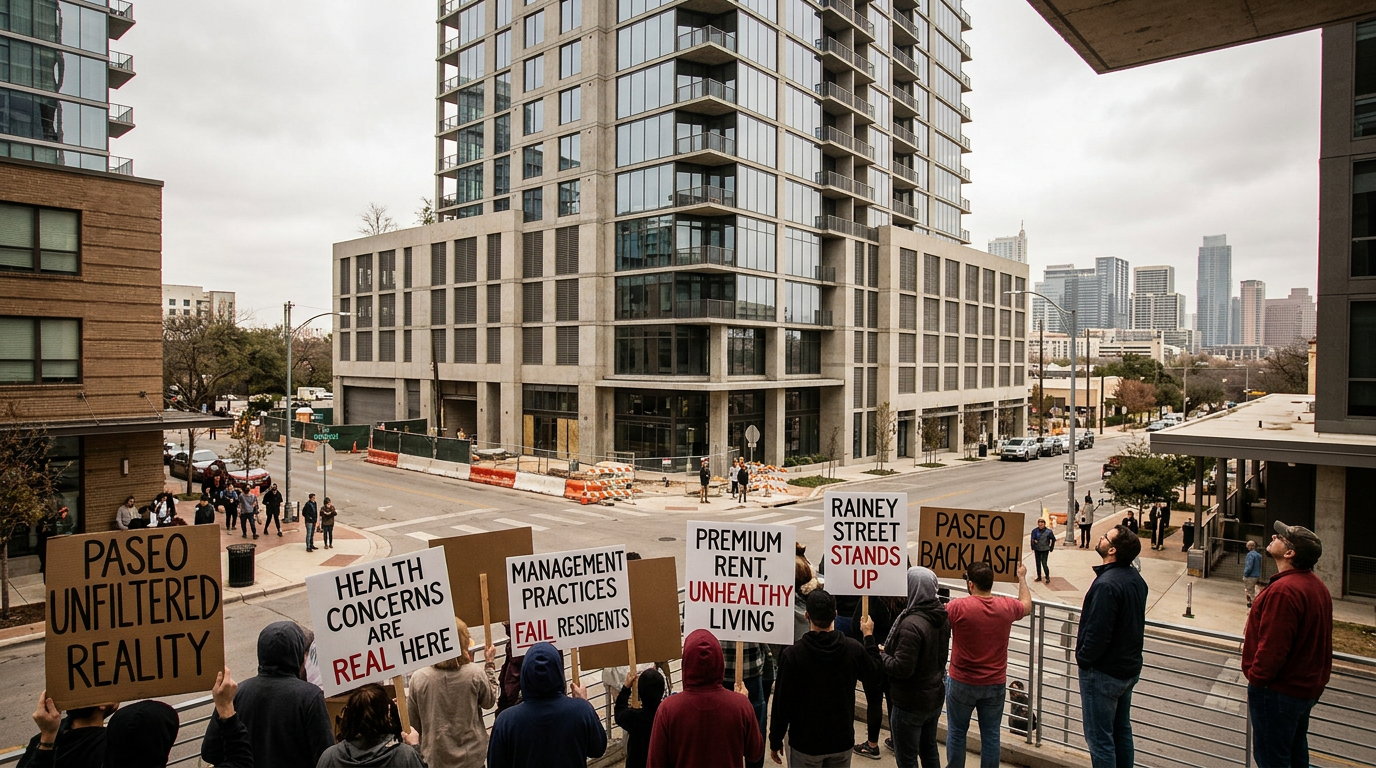
Recent reports regarding the Paseo building in Austin's Rainey Street District highlight a growing rift between the polished image of luxury lifestyle apartments and the day-to-day experiences of those paying premium rents. Historically, Austin has undergone a rapid transformation from a mid-sized capital city to a global tech and lifestyle hub, driving a surge in high-end developments designed specifically to appeal to content creators and influencers. This trend toward 'Instagrammable' living spaces has reached a pinnacle at Paseo, where the marketing focus centers on shared wellness amenities and photogenic interiors. However, the operational reality within the building has come under fire as residents describe a environment plagued by maintenance failures and sanitation issues that contradict the building's high-priced allure. The friction at Paseo represents a broader tension in the Texas real estate market, where rapid construction often meets the high expectations of a digital-savvy clientele. In this instance, the discrepancy between the promotional 'wellness fantasy' and the physical state of the facility has led to significant resident dissatisfaction. While the building's facade and common areas are designed to serve as backdrops for TikTok and Instagram content, internal reports suggest that the infrastructure behind those backdrops is failing to meet basic standards of cleanliness and safety. This situation serves as a case study for the evolving expectations of the Austin rental market and the potential consequences when brand promises are not met with operational consistency.
Texas relevance
As the fastest-growing major metropolitan area in Texas for years, Austin serves as the state's primary laboratory for new residential living concepts. The issues identified at the Paseo tower are directly relevant to the thousands of Texans relocating to urban centers like Dallas, Houston, and San Antonio, where similar luxury developments are becoming the standard for downtown density. Texas law generally provides specific protections for tenants regarding habitability and sanitation, and the situation in Austin raises questions about how modern, amenity-heavy leases intersect with traditional property management responsibilities. For Central Texas residents and real estate investors, the controversy over Paseo highlights the risks of prioritizing aesthetic marketing over the maintenance of high-density infrastructure in the scorching Texas climate.
The Marketing Mirage vs. Daily Disruptions
The marketing strategy for Paseo was built on the idea of a seamless, high-tech sanctuary for the modern professional. Advertisements frequently featured influencers demonstrating yoga, healthy eating, and a social lifestyle that seemed out of reach for the average worker. This carefully crafted narrative lured in hundreds of tenants willing to pay above-market rates for a slice of the Austin dream. The promise of a built-in community of like-minded creators was a significant draw, especially for newcomers to the city who were looking for an immediate social network.
Despite this polished exterior, many residents now claim they were sold an incomplete vision. The primary complaints involve the failure of basic building systems. Broken windows in high-traffic areas have been left boarded up for extended periods, detracting from the high-end feel and raising concerns about security. Elevators, a critical necessity in high-rise living, have reportedly suffered from frequent outages, forcing residents to navigate long waits or multiple flights of stairs in a building that prides itself on efficiency and luxury.
Furthermore, the communal spaces that were supposed to be the crown jewels of the property have reportedly become sites of frustration. Instead of the tranquil environments promised in promotional videos, residents frequently encounter maintenance staff struggling to keep up with the demands of the building’s heavy traffic. The gap between the lifestyle shown on a smartphone screen and the physical reality of a broken amenity has turned many former advocates of the building into vocal critics.
Sanitation Concerns and the 'Dog Park' Dilemma
One of the most concerning reports involves the building’s designated pet area. In an urban environment like the Rainey Street District, private green space for dogs is a major selling point. However, residents at Paseo have likened the current state of the pet area to a sanitation nightmare. Inadequate drainage and infrequent cleaning have allegedly led to an accumulation of waste that creates an overwhelming stench, particularly damaging during the intense Texas summer heat.
Beyond the smell, the lack of proper hygiene in these shared spaces poses potential health risks to both the pets and their owners. Residents have shared images and stories of overflowing waste bins and surfaces that appear to have not been sanitized in weeks. This failure in basic maintenance directly contradicts the 'wellness' branding of the building. In an environment where health and fitness are touted as core values, the presence of an unsanitary pet area serves as a glaring hypocrisy that residents find difficult to ignore.
The pet park issue also highlights a design flaw common in many modern mid-rise and high-rise developments in Austin. When buildings are designed for maximum density, the infrastructure required to handle hundreds of pets is often underestimated. At Paseo, it appears that the reality of pet ownership in a high-rise has outpaced the building's ability to maintain its facilities, leading to a breakdown in the very luxury experience that residents are paying for.
Censorship and Community Management Policies
Perhaps the most controversial aspect of the Paseo situation is the way management has allegedly handled resident complaints. Modern luxury buildings often use internal social apps or community boards to facilitate communication. However, several residents have claimed that their posts regarding maintenance issues or sanitation failures have been deleted or hidden by building administrators. This perceived censorship has fueled a sense of distrust and frustration among the tenant base.
Rather than addressing the root causes of the complaints, the management's focus on controlling the internal narrative suggests a priority on protecting the building's public image at all costs. For a building that markets itself specifically to influencers—people whose livelihood depends on free speech and digital transparency—this heavy-handed moderation is particularly ironic. It has led some residents to move their grievances to public platforms like TikTok and Yelp, where the building management has less control over the messaging.
The legal and ethical implications of moderating resident communications are complex. While private property managers generally have the right to monitor their own digital platforms, the active suppression of legitimate safety and health concerns can lead to claims of bad faith. In Austin's competitive rental market, a reputation for silencing tenants can be as damaging as the physical maintenance issues themselves, as prospective renters increasingly rely on third-party reviews over official marketing materials.
The Impact of High-Density Development on Rainey Street
The problems at Paseo are not isolated but are part of a larger conversation about the rapid development of Austin’s Rainey Street District. Once a quiet neighborhood of historic bungalows, Rainey Street has been transformed into a canyon of glass and steel. This density brings significant challenges for infrastructure, including waste management, traffic, and noise control. Paseo, as one of the newer entries into this crowded market, represents the extreme end of this densification.
The concentration of luxury towers in such a small area puts immense pressure on local services and the building's own internal systems. When these systems fail, the impact is magnified because there are so many people living in such close proximity. The 'influencer building' concept was intended to capitalize on the district's reputation as a nightlife and social hub, but the infrastructure to support that lifestyle may not be as robust as the marketing suggests.
Urban planners in Texas often point to Rainey Street as both a success story of revitalization and a cautionary tale of unchecked growth. The issues at Paseo suggest that without rigorous oversight and a commitment to long-term maintenance, the high-end developments that define the area's new skyline may struggle to maintain their value. As more projects are slated for the area, the experiences of Paseo's residents provide critical data points for future developers and city officials.
Tenant Rights and Legal Recourse in Texas
In the state of Texas, the relationship between a landlord and a tenant is governed by the Texas Property Code, which outlines specific requirements for maintaining a habitable environment. This includes the duty to repair any condition that materially affects the physical health or safety of an ordinary tenant. While broken elevators or cosmetic damage might not always meet this threshold, chronic sanitation failures and pervasive safety hazards often do. Residents at Paseo who feel their needs are being ignored may have legal avenues to explore.
Texas law requires tenants to follow a specific process for requesting repairs, including providing written notice via certified mail. If a landlord fails to make a diligent effort to repair the issue within a reasonable time, the tenant may be entitled to various remedies, ranging from judicial orders to lease termination. For the residents of a high-priced luxury building, the stakes are high, as many are locked into long-term contracts with significant financial penalties for early exit.
The situation at Paseo also raises questions about the effectiveness of local code enforcement. In Austin, the Code Department is responsible for ensuring that buildings meet minimum health and safety standards. If a building as prominent as Paseo is struggling with basic sanitation, it may prompt a broader review of how the city monitors its growing inventory of high-rise residential properties. The visibility of these complaints on social media may force a level of accountability that traditional reporting mechanisms have failed to achieve.
Future Outlook for 'Instagrammable' Real Estate
The trend of designing real estate for social media prominence is unlikely to disappear, but the Paseo controversy may lead to a more skeptical consumer base. Future renters in Austin and other major Texas cities may begin looking beyond the community lounge and the rooftop pool to inquire about less glamorous details like elevator redundancy, waste management protocols, and management's history of responding to resident feedback. The 'influencer' tag may even become a red flag for some who view it as a sign of style over substance.
For developers, the lesson of Paseo is that a brand is only as strong as its weakest link. In the age of instant digital feedback, a few viral videos or photos of a neglected dog park can do more damage to a building’s occupancy rates than any advertising campaign can fix. Maintaining a high-rise is an expensive, ongoing operation that requires more than just a talented marketing team; it requires a commitment to the fundamentals of property management that cannot be bypassed.
As Austin continues to evolve, the distinction between true luxury and 'lifestyle theater' will become increasingly important. The residents of Paseo have shown that even in a city known for its hype, there is no substitute for a clean, safe, and well-managed home. The coming months will likely determine whether the building's management can course-correct and restore the trust of its residents or if Paseo will become a permanent warning about the limits of influencer-driven development.
Analysis
The fallout at Paseo illustrates the dangers of 'aesthetic-first' real estate development in Texas. For years, the Austin market has been driven by an influx of capital and a demand for lifestyle-oriented housing. However, when a building's primary value proposition is its image rather than its functionality, the foundation of the landlord-tenant relationship becomes fragile. The reports of management attempting to curate or censor the discourse within the community's digital spaces suggest a corporate strategy that prioritizes brand protection over problem-solving. This approach is likely to backfire in a state like Texas, where word-of-mouth and transparency are highly valued among local residents. Moving forward, developers may find that while influencer partnerships can fill units quickly, they cannot sustain a building's reputation if the core living experience is compromised.
Source attribution
This story was reported using a public release from the Texas Monthly. Keep TX Red rewrote the coverage independently and links to the official statement for verification.
Frequently Asked Questions
- What is the Paseo building in Austin known for?
- Paseo is a high-rise luxury apartment building in Austin's Rainey Street District that marketed itself as a premier destination for influencers and content creators, focusing on wellness amenities and photogenic shared spaces.
- What are the primary complaints from Paseo residents?
- Residents have reported a range of issues including unhygienic conditions in the dog park, long-term unaddressed maintenance like broken windows, frequent elevator failures, and the censorship of online community forums.
- Can management legally delete resident comments?
- While property managers generally control their own internal communication apps, the suppression of health and safety concerns can create legal and reputational risks, especially if it hides violations of the Texas Property Code.
- What rights do Texas tenants have regarding sanitation issues?
- Under the Texas Property Code, landlords are required to make a diligent effort to repair any condition that materially affects the physical health or safety of a tenant, provided the tenant follows proper notification procedures.
- How does the Austin heat impact these issues?
- The intense Texas summer heat exacerbates sanitation problems, particularly in poorly maintained pet areas, leading to severe odor issues and increased health risks from bacteria and waste.
Official Sources
Take the next step
Browse the Newsroom →Read more about Keep Texas Red → Our full guide to what Keep Texas Red means and why Texans support it.
Related Articles

Get Texas updates delivered weekly.
Independent Texas reporting on politics, policy, and daily life. One email a week. Unsubscribe anytime.
Keep TX Red Newsroom
The Keep Texas Red Editorial Staff produces nonpartisan explainers, policy breakdowns, and educational resources to help Texans understand how their government works. All content is reviewed for accuracy and updated regularly.
About Keep TX Red →