Mapping the Reach of Texas Barbecue Culture in the Pacific Northwest
A deep dive into how Central Texas smokehouse traditions have flourished in Portland, Oregon, and what it means for the Lone Star State’s culinary legacy.
Editorial disclaimer: Opinions and analysis on Keep TX Red are editorial content — not statements of fact. See our editorial standards.
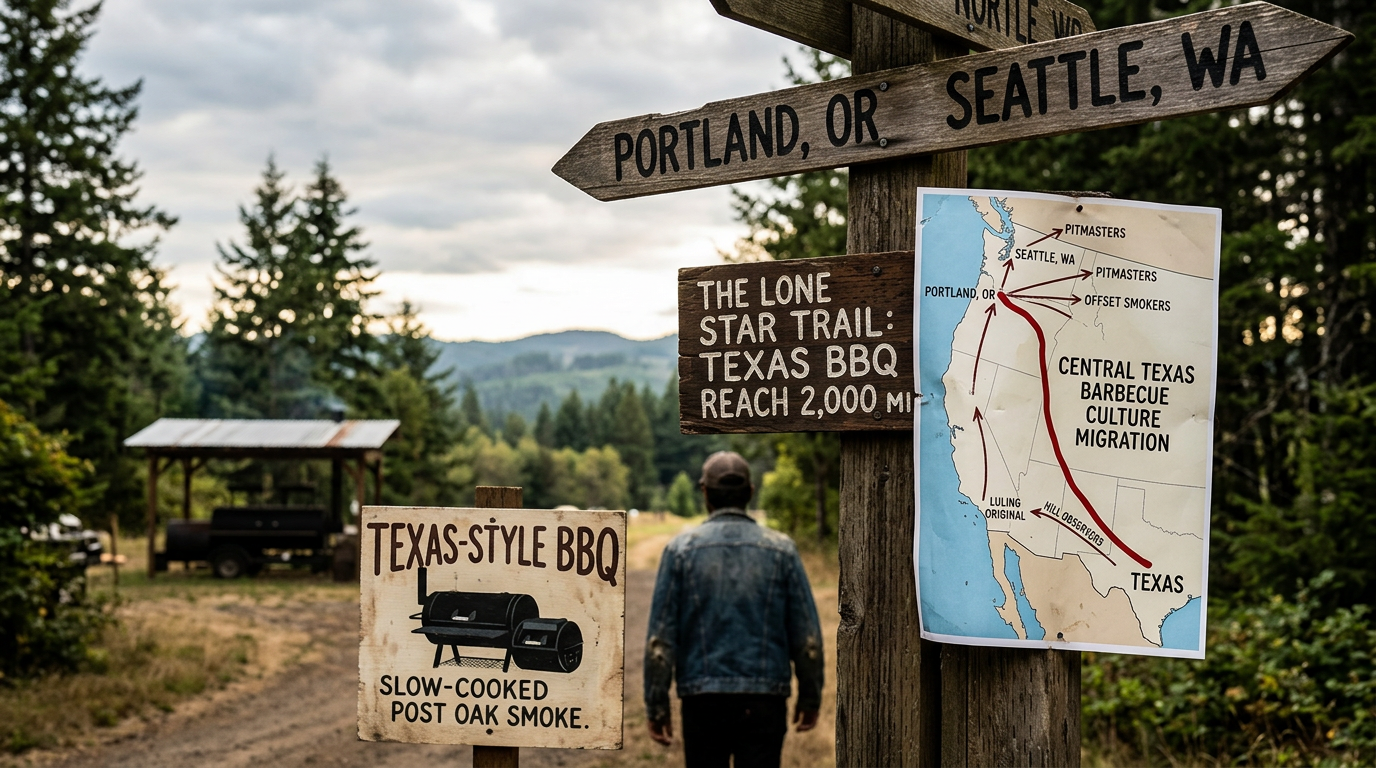
The global fascination with Central Texas barbecue has transformed from a regional specialty into a worldwide culinary standard. Historically, the techniques developed in towns like Lockhart, Taylor, and Luling remained within state lines for generations, guarded by families who used offset smokers and post oak wood. However, the last decade has seen a mass migration of these techniques to unexpected territories. Recent culinary assessments in the Pacific Northwest, specifically Portland, Oregon, suggest that the discipline of Texas pitmasters has taken deep root thousands of miles away from the Hill Country. This expansion represents a significant shift in how Texas identity is exported and maintained outside the South, as chefs strive for the perfect bark, smoke ring, and fat render that once could only be found on a butcher paper tray in Texas. Observers have noted that the Portland barbecue scene is no longer a collection of mere imitators but has evolved into a sophisticated hub of smokehouse craftsmanship. In 2019, critics even labeled the city as the premier destination for Texas-style meats outside of Texas itself. Returning to these establishments in 2026 reveals a matured market where the obsession with authenticity remains high. The use of traditional fuels, the adherence to simple salt-and-pepper rubs, and the patience required for 12-hour cook times are now standard practices in the Oregon metropolis. This trend highlights a broader cultural phenomenon: the 'Texas Way' of cooking is becoming a universal benchmark for quality in the American culinary landscape, influencing how diners from Seattle to Savannah perceive smoked meats.
Texas relevance
For Texans, the proliferation of 'Texas-style' barbecue is both a point of pride and a matter of strict scrutiny. The culinary reputation of the Lone Star State is one of its most potent soft-power tools, attracting tourism and business to cities like Austin, Houston, and Dallas. When cities like Portland claim to have mastered the craft, it challenges Texas's monopoly on its most famous tradition. However, it also serves as a testament to the influence of Texas culture. Every brisket sold in Oregon that follows the Central Texas method is a tribute to the innovations of Czech and German settlers in 13th-century Texas. This cross-state competition ensures that Texas pitmasters must continue to innovate and maintain their high standards to keep the title of the world’s barbecue capital firmly in place within state borders.
The Evolution of Portland’s Smoke Scene
In the early 2010s, finding a legitimate slice of brisket in the Pacific Northwest was a difficult task. Most establishments relied on gas-assisted ovens or heavy sauces to mask mediocre meat quality. The shift began when a handful of dedicated chefs started traveling to Texas to study the craft under legendary pitmasters, bringing back the knowledge of fire management and meat selection.
Today, the landscape is entirely different. Small-scale operations have grown into established brick-and-mortar restaurants that command long lines, reminiscent of the queues at Franklin BBQ or Snow’s. These Pacific Northwest pitmasters are sourcing high-quality beef and, in some cases, even importing post oak or using local equivalents like white oak to mimic the specific flavor profile of the Texas Hill Country.
The sustainability of this scene is what surprises many veteran Texas food critics. Often, regional food trends fade once the novelty wears off, but Portland has shown a sustained commitment to the technical rigors of barbecue. This longevity suggests that the Texas method has become a permanent fixture of Oregon's diverse food identity rather than a passing fad.
Technical Fidelity to Texas Standards
What defines 'Texas-style' in Portland is the strict adherence to the 'low and slow' philosophy. Pitmasters in the region have largely abandoned the sweet, sticky glazes associated with Kansas City or the vinegar bites of the Carolinas. Instead, they focus on the chemistry of the smoke and the texture of the fat, which are the hallmarks of the Texas tradition.
The equipment found in these Oregon smokehouses often mirrors what you would see in a backyard in Waco or a commercial lot in Lockhart. Custom-built offset smokers, often reaching massive proportions, are the heart of these businesses. Maintaining a clean fire in the damp climate of Portland presents unique challenges, but it is a challenge the local chefs have embraced with scientific precision.
Furthermore, the side dishes served alongside the meats have begun to reflect Texas sensibilities. Creamy coleslaw, pinto beans, and white bread are the standard accompaniments. While some local flair is occasionally added—such as seasonal Northwest produce—the core offering remains a faithful recreation of a Texas meat market lunch.
The Impact of Displacement and Migration
The spread of Texas barbecue is partly driven by the migration of Texans to other parts of the country. As residents move for tech jobs or a lower cost of living, they bring their palates with them, creating a demand for the flavors of home. This domestic diaspora has turned cities like Portland into testing grounds for Texas brands and styles.
This migration works both ways. Many aspiring pitmasters from outside the state spend months 'apprenticing' at Texas institutions before returning home to start their own ventures. This exchange of human capital has professionalized the barbecue circuit, turning it from a hobbyist’s pastime into a rigorous discipline with standardized metrics for quality.
Critics often wonder if the quality can hold up when the 'vibe' of Texas is missing. The heat, the dry air, and the sprawling landscape of Texas are intrinsic to the experience of eating at a roadside stand. In Portland, the experience is shifted into a more urban, rain-slicked context, yet the flavor profile remains remarkably consistent with its southern origins.
Economic Implications for Texas Beef
The national popularity of Texas-style barbecue has a direct economic link back to the Texas cattle industry. As more restaurants across the U.S. adopt these cooking methods, the demand for specific cuts like the whole packer brisket has skyrocketed. This has led to higher prices for consumers but also a robust market for Texas ranchers who produce high-grade Angus and Wagyu crossbreeds.
Supply chains have had to adapt to get these specific beef products to the Northwest. The logistics of moving perishable, high-value meat across the country at scale is a complex operation that supports numerous Texas-based logistics and agricultural firms. When a Portland smoker is fired up, it is often burning through product that originated in a Texas pasture.
This economic footprint extends to the manufacturing of the pits themselves. Many of the high-end smokers used in the Northwest are fabricated by Texas craftsmen. The export of heavy metal offset smokers is a niche but profitable industry that benefits from the global desire to replicate the Texas barbecue experience.
Comparing Global Barbecue Hubs
While Portland is a current frontrunner, it is not the only city vying for the title of 'Best Texas Barbecue Outside Texas.' Competition is fierce in cities like New York, Chicago, and even international locations like London and Tokyo. Each of these hubs brings a different perspective to the craft, yet they all look to Central Texas as the gold standard.
What sets Portland apart is the density of high-quality options. In many cities, you might find one or two standout locations, but Portland has developed a cluster of excellence that allows for a true 'barbecue crawl' experience. This density fosters internal competition, which naturally drives up the quality of the food for the consumer.
As these external hubs grow, they eventually begin to develop their own sub-styles. While they remain rooted in Texas techniques, the integration of local ingredients—like specific wood types or local beer for spritzing—creates a hybrid that honors the source while acknowledging the local environment. Texas will always be the heart, but the branches are growing long and strong.
Analysis
Opinion: While imitation is the sincerest form of flattery, the 'Texas-style' label is increasingly used as a marketing shorthand that may dilute the specific regional nuances of our state. Portland’s success is impressive, but true Texas barbecue is an ecosystem, not just a recipe. It relies on the Texas environment, the specific seasoning of decades-old pits, and a proximity to the cattle industry that can't be replicated in the moist, cool climate of the Northwest. We should celebrate the spread of our culture, but we must also protect the 'Texas' brand from becoming a generic descriptor for any meat cooked with wood smoke.
Source attribution
This story was reported using a public release from the Texas Monthly. Keep TX Red rewrote the coverage independently and links to the official statement for verification.
Frequently Asked Questions
- What defines Texas-style barbecue in this context?
- It specifically refers to Central Texas-style, which focuses on beef (primarily brisket), rubbed with salt and pepper, and smoked over hardwood (usually oak) in an offset smoker without heavy sauces.
- Why is Portland considered a leader in this area?
- A high concentration of dedicated pitmasters in Portland have committed to the authentic, labor-intensive methods of Texas cooking, creating a competitive market that keeps quality high.
- Can you get the same wood in Oregon as in Texas?
- While post oak is native to Texas, pitmasters in other regions either import it at a high cost or use local white oak, which shares similar clean-burning and flavor-imparting characteristics needed for Texas-style brisket.
Official Sources
Take the next step
Browse the Newsroom →Read more about Keep Texas Red → Our full guide to what Keep Texas Red means and why Texans support it.
Related Articles

Get Texas updates delivered weekly.
Independent Texas reporting on politics, policy, and daily life. One email a week. Unsubscribe anytime.
Keep TX Red Newsroom
The Keep Texas Red Editorial Staff produces nonpartisan explainers, policy breakdowns, and educational resources to help Texans understand how their government works. All content is reviewed for accuracy and updated regularly.
About Keep TX Red →