International Soccer Fever Sweeps Across Texas Leading Into World Cup Finale
Texas prepares for massive economic impact as the 2026 World Cup nears, shifting state sports culture and local traditions toward global soccer.
Editorial disclaimer: Opinions and analysis on Keep TX Red are editorial content — not statements of fact. See our editorial standards.
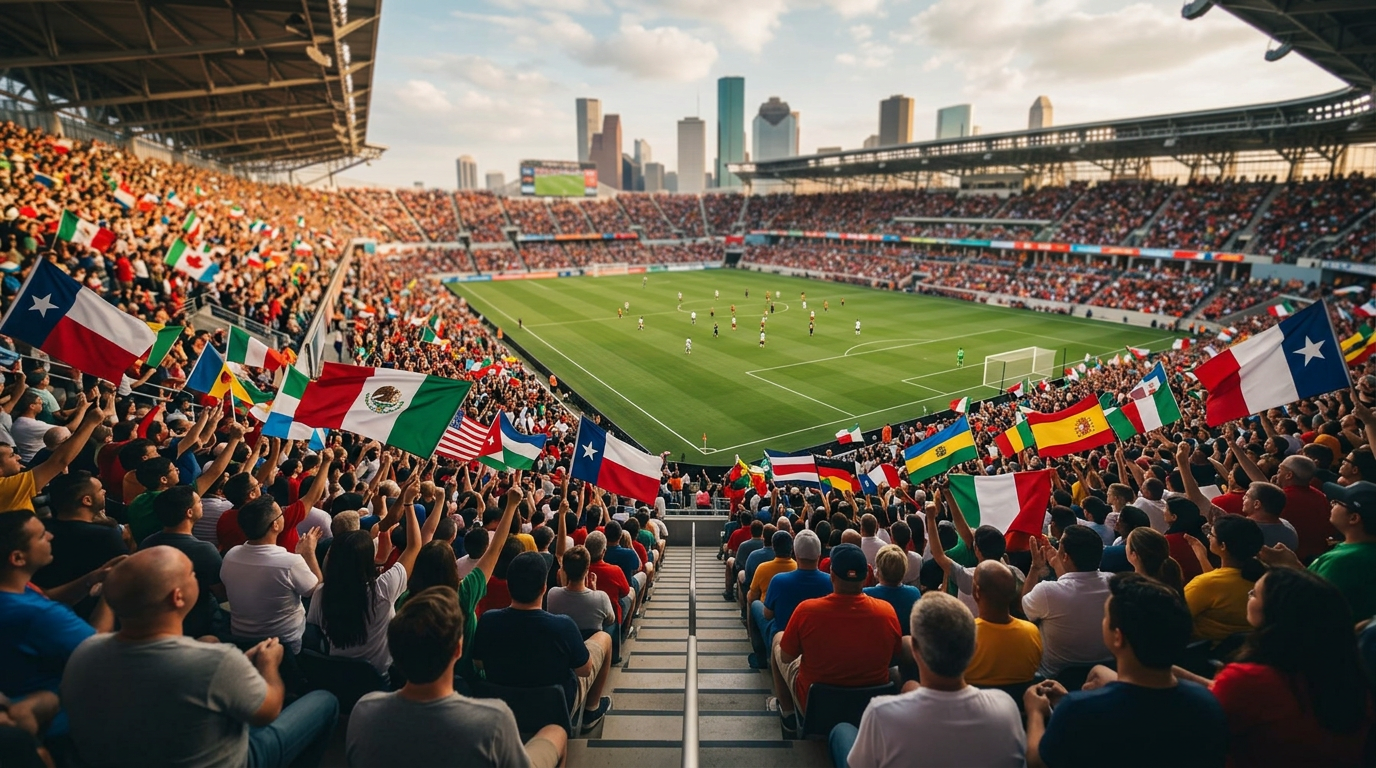
As the global community prepares for the 2026 FIFA World Cup, Texas has emerged as a central pillar of the tournament's North American presence. Historically, the Lone Star State has been defined by its deep-rooted devotion to American football, from the Friday night lights of small-town high schools to the massive following of professional franchises. However, the selection of Houston and the Dallas-Fort Worth metroplex as host cities represents a significant turning point in the regional sports landscape. This shift is not merely about hosting games; it is an evolution of Texas identity that incorporates the world’s most popular sport into a culture previously dominated by the gridiron. The local excitement reflects a growing realization that soccer offers a unique brand of communal passion, bridging cultural gaps through a shared international language of competition. While previous generations of Texans might have viewed soccer as an outsider’s game, the modern era sees a state fully invested in the logistical, emotional, and financial stakes of the beautiful game. The context of this transition dates back to the 1994 World Cup, where Dallas played a pivotal role as a host city. That tournament served as the catalyst for Major League Soccer and planted the seeds for the robust youth sports programs that now span from the Rio Grande Valley to the Red River. In the decades since, the demographics of Texas have shifted, bringing in millions of residents from soccer-loving nations and nurturing a homegrown generation of fans who value the technical precision of the pitch as much as the physicality of the football field. The upcoming matches represent the culmination of this long-term cultural integration, setting the stage for Texas to be the face of American soccer on the world stage.
Texas relevance
The 2026 World Cup holds immense importance for Texas as it positions both Dallas (Arlington) and Houston as primary international hubs. The direct economic impact is projected to reach hundreds of millions of dollars per city, affecting everything from local hospitality and transportation to long-term infrastructure improvements. Beyond the finances, the event serves as a massive branding opportunity for the state, showcasing Texas as a diverse and welcoming destination for global tourism. With Arlington’s AT&T Stadium and Houston’s NRG Stadium serving as venues, the state’s world-class facilities will be under a microscope, influencing future bids for major sporting events and public works projects.
The Evolution of Texas Sports Heritage
For most of the 20th century, the sporting identity of Texas was virtually synonymous with football. The rhythms of life in towns like Midland, Odessa, and Tyler were dictated by the football schedule, and the state's storied collegiate rivalries defined familial loyalties for generations. Soccer existed on the fringes, often relegated to niche communities or collegiate club teams that rarely garnered mainstream media attention or significant public funding.
The shift began in the late 1990s as youth participation in soccer began to outpace many other sports. Parents across the Texas suburbs started to prioritize the safety and global connectivity of soccer, leading to a massive expansion of select leagues and academy programs. Today, those children have grown into adults who carry their love for the sport into the professional arena, creating a sophisticated fan base that understands the nuances of tactical formations and international transfer markets just as well as they understand a blitz or a home run.
Economic Implications for Dallas and Houston
Hosting World Cup matches is a logistical undertaking that rivals the scale of a Super Bowl but repeated over several weeks. For Houston and the Dallas-Fort Worth area, this means a sustained boom in the service sector. Hotels, restaurants, and local transportation providers are anticipating record-breaking demand. The Texas Governor’s Office has historically utilized major event trust funds to help cities offset the costs of hosting such massive gatherings, recognizing the long-term tax revenue benefits they provide.
Infrastructure is also seeing a boost. Improvements to light rail systems, airport expansions, and stadium upgrades are being fast-tracked to ensure that the millions of visiting fans can navigate the expansive Texas geography. These investments are intended to leave a lasting legacy that benefits Texas residents long after the final whistle of the tournament blows, enhancing the state's ability to host future international summits and athletic competitions.
Bridging Cultural Divides Through Competition
The World Cup is uniquely positioned to highlight the demographic diversity of modern Texas. In cities like Houston, where over 140 languages are spoken, soccer acts as a common denominator. The tournament provides a platform for residents to celebrate their heritage while simultaneously cheering for their home state’s role as a host. It is one of the few events capable of bringing together disparate communities under a single banner of athletic excellence.
This cultural blending is evident in the fan zones and watch parties that have begun popping up in urban centers. Traditional Texas barbecue joints are now just as likely to fly the flags of competing nations as they are the Lone Star flag. This inclusive atmosphere is a testament to the adaptability of Texas culture, which remains firmly rooted in its own history while remaining open to the influences of the global community.
Logistical Challenges and Stadium Readiness
One of the biggest hurdles for Texas venues has been the transition from artificial turf to natural grass surfaces required by FIFA. Both AT&T Stadium and NRG Stadium have had to implement complex systems to grow and maintain high-quality pitches within enclosed environments. This technological feat requires specialized lighting, irrigation, and ventilation systems that demonstrate the engineering prowess present within the state.
Security and transportation also present significant challenges. Coordinating between local police departments, state troopers, and federal agencies is a mammoth task intended to ensure the safety of players and spectators alike. The sprawling nature of Texas cities means that traffic management will be a top priority, with local officials working to minimize disruptions for residents who are simply trying to commute to work during the tournament madness.
The Emotional Weight of the Beautiful Game
Beyond the spreadsheets and infrastructure, the World Cup is defined by the emotional experiences of the individuals involved. For many Texans, this is their first opportunity to witness the intensity of international soccer in person. The 'heartbreak' mentioned by fans often stems from the low-scoring nature of the game, where a single mistake can decide the fate of a nation, and a single moment of brilliance can create a lifelong memory.
This emotional volatility is what draws people in. The theater of the World Cup offers a narrative of redemption, struggle, and triumph that resonates with the Texas ethos of hard work and perseverance. As fans gather in the massive stadiums of the North, they are participating in a global ritual that transcends borders, providing a sense of scale and connection that few other events can replicate.
Long-Term Impact on Texas Youth Athletics
The visibility of the World Cup is expected to trigger a fresh surge in youth soccer participation across Texas. When children see the world’s greatest athletes competing in their own backyard, the dream of reaching تلك levels becomes more tangible. This could lead to increased funding for public parks, more scholarship opportunities for Texas athletes, and a higher level of coaching expertise entering the state.
Furthermore, the professional infrastructure left behind will benefit local teams like FC Dallas and the Houston Dynamo. The proximity to global scouts and the increased media profile of the region will likely make Texas a primary destination for international talent seeking to play in the United States. This virtuous cycle of investment and interest ensures that the 2026 World Cup is not a one-time event, but a foundation for the future of Texas sports.
Texas as a Strategic Hub for FIFA
FIFA's decision to utilize Texas so heavily is no accident. The state's central location in North America makes it a convenient travel hub for fans flying in from Europe, South America, and Asia. Additionally, the sheer capacity of Texas stadiums allows for maximum ticket sales, ensuring the tournament remains financially viable. The state’s pro-business environment and experience with large-scale events made it an easy choice for organizers.
As the tournament draws closer, the focus will remain on the synergy between Texas leadership and FIFA officials. The success of this partnership will likely determine if Texas becomes a permanent fixture in the rotation for future international cups, including the Women’s World Cup and the Club World Cup. The eyes of the world are truly on Texas, and the state is ready to perform.
Analysis
Opinion: The influx of soccer culture into Texas is often viewed through the lens of 'traditional versus modern,' but this binary is misleading. The true narrative is one of additive culture. By embracing the World Cup, Texas is not losing its soul to a foreign sport; it is proving that the Texas spirit of hospitality and large-scale spectacle can adapt to any medium. The emotional stakes for fans—ranging from the heartbreak of a narrow defeat to the euphoria of a late-match goal—resonate deeply with a population already accustomed to the highs and lows of sports fanaticism. This event will likely cement soccer as a permanent, top-tier fixture in the Texas psyche, existing alongside, rather than in place of, our existing traditions.
Source attribution
This story was reported using a public release from the Texas Monthly. Keep TX Red rewrote the coverage independently and links to the official statement for verification.
Frequently Asked Questions
- Which Texas stadiums will host World Cup matches?
- The primary venues in Texas are AT&T Stadium in Arlington (home of the Dallas Cowboys) and NRG Stadium in Houston (home of the Houston Texans). Both stadiums have undergone modifications to accommodate FIFA requirements, including field dimensions and surface types.
- What is the expected economic impact on Texas?
- Economic analysts predict that the World Cup will generate hundreds of millions of dollars in economic activity for the host regions. This includes direct spending at hotels, restaurants, and retail outlets, as well as thousands of temporary jobs in the hospitality and security sectors.
- Why was Texas chosen as a major host site?
- Texas was chosen due to its world-class stadium infrastructure, its central geographic location in North America, and its proven track record of successfully hosting massive sporting events like the Super Bowl and Final Four. Additionally, the state's growing soccer fan base made it a natural fit for FIFA's expansion goals.
Official Sources
Take the next step
Browse the Newsroom →Read more about Keep Texas Red → Our full guide to what Keep Texas Red means and why Texans support it.
Related Articles

Get Texas updates delivered weekly.
Independent Texas reporting on politics, policy, and daily life. One email a week. Unsubscribe anytime.
Keep TX Red Newsroom
The Keep Texas Red Editorial Staff produces nonpartisan explainers, policy breakdowns, and educational resources to help Texans understand how their government works. All content is reviewed for accuracy and updated regularly.
About Keep TX Red →