Alarming Shift in Roadway Safety as Texas Leads Nation in Fatal Highway Incidents
New data reveals Texas highways are the most dangerous in the U.S. based on fatal crash statistics, prompting calls for increased driver awareness.
Editorial disclaimer: Opinions and analysis on Keep TX Red are editorial content — not statements of fact. See our editorial standards.
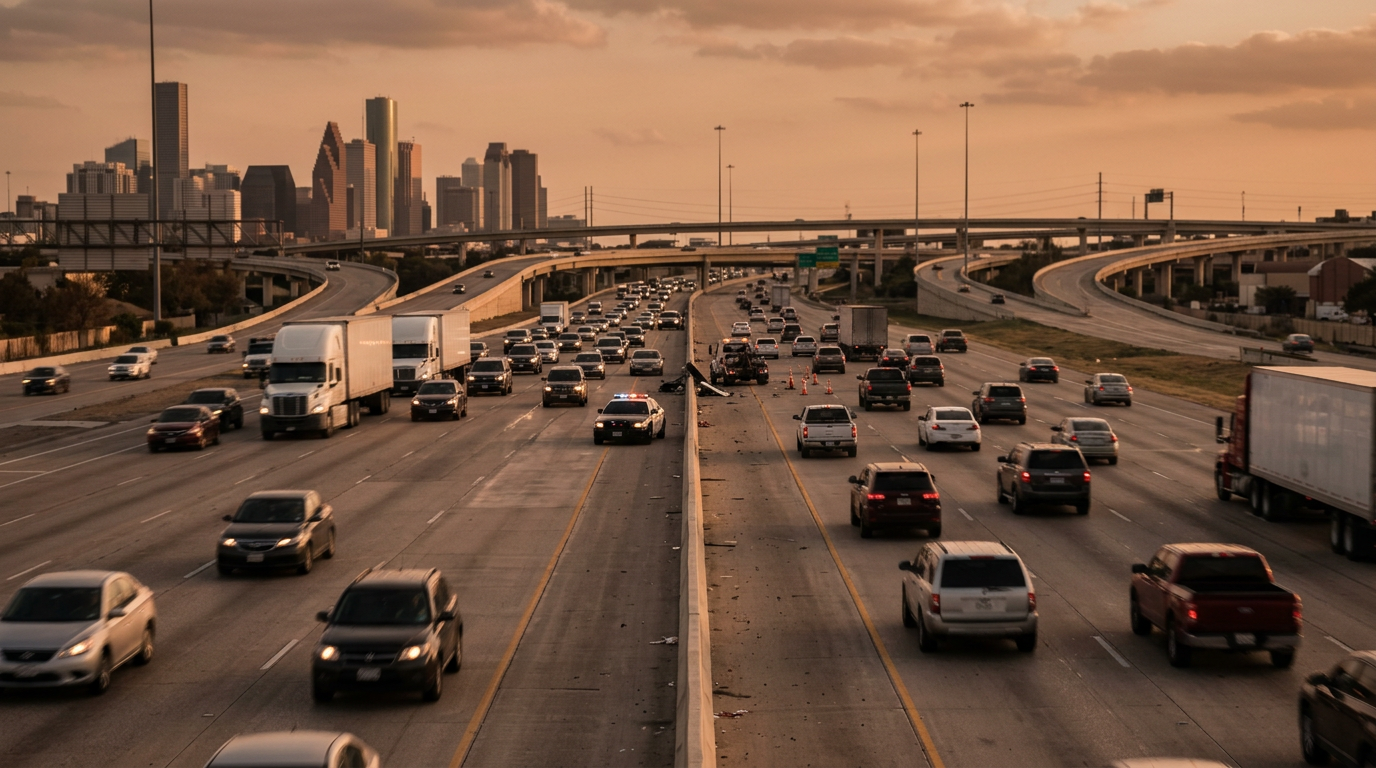
For decades, Texas has served as the backbone of American commerce and travel, boasting more miles of public roadway than any other state in the nation. However, this expansive infrastructure now faces a grim reality as recent reporting and data analysis place Texas at the top of a list no state wishes to lead: the highest number of fatal highway crashes in the United States. Following a steady rise in vehicular incidents over the last five years, authorities are highlighting the specific corridors where accidents are most frequent. The news serves as a sober reminder of the inherent risks on the 80,000 miles of highway maintained by the state, where high speed limits and heavy commercial trucking traffic create a volatile environment for everyday commuters. Historically, the Lone Star State has grappled with the 'End The Streak' initiative, a campaign by the Texas Department of Transportation (TxDOT) aimed at ending the trend of daily deaths on Texas roads, which has persisted since November 7, 2000. Despite multimillion-dollar awareness campaigns and engineering improvements, the raw numbers suggest that driver behavior is not yet aligning with safety goals. The current data points to a confluence of distracted driving, excessive speed, and the sheer volume of vehicles on major arteries like I-45, I-10, and I-35. This report serves as a diagnostic look at why Texas remains a hotspot for tragedy on the tarmac and what local officials are prioritizing to reverse these trends as 2026 approaches.
Texas relevance
This issue is deeply rooted in the daily lives of every Texan, particularly those in the Texas Triangle—the region between Dallas, Houston, and San Antonio. As the state’s population continues to explode, adding millions of new residents each decade, the strain on highway infrastructure has reached a breaking point. Texas drivers are uniquely impacted not only by the physical risk of these crashes but also by the resulting economic burdens, including rising insurance premiums that are among the highest in the country due to frequent claims. The findings underscore the critical need for Texas legislators and regional planners to address the specific dangers posed by rural highways and congested urban freeways alike.
The Geography of Danger: Identifying the High-Risk Corridors
Data indicates that the majority of these fatal incidents are concentrated in high-traffic corridors that connect the state's major metropolitan hubs. Interstate 45, which links Dallas to Houston, has long been cited by safety advocacy groups as one of the deadliest stretches of road in the developed world. The combination of heavy freight traffic and high-speed passenger vehicles creates a dangerous differential in momentum during collisions.
Beyond the major interstates, rural Texas highways are seeing a disproportionate rise in single-vehicle rollover accidents. These roads often lack the median barriers or wide shoulders found on urban freeways, meaning a slight mistake or a moment of distraction can lead to a catastrophic excursion from the roadway. The vast distances between medical centers in West Texas and the Panhandle also mean that response times for life-saving care are often longer, increasing the likelihood that a severe crash becomes a fatal one.
The Human Element: Distraction and Speed as Primary Catalysts
Law enforcement officials across the state have noted that while vehicle technology has become safer with the advent of automatic braking and lane-assist, human behavior has become increasingly erratic. Distracted driving, specifically related to mobile device usage, remains a top cited cause in post-accident investigations. Even with state laws banning texting while driving, the habit remains deeply ingrained in the commuting culture.
Speeding is the other half of the deadly equation. With many Texas highways featuring speed limits of 75 or even 85 miles per hour on certain toll roads, the margin for error is razor-thin. At these velocities, the physics of a crash are exponentially more violent. Safety experts argue that while the roads are designed for these speeds, the drivers often lack the specialized training or focus required to navigate them safely over long distances.
Impact on the Texas Trucking Industry and Logistics
Texas is the nation's leader in international trade, much of which moves on the back of semi-trucks traversing the state from the border to the interior. The high fatality rate creates a major logistical challenge for the trucking industry, which faces skyrocketing liability insurance and a shortage of drivers willing to navigate the most dangerous routes. Every fatal crash often leads to hours of road closures, stalling the supply chain and costing the Texas economy millions in lost productivity.
Efforts to separate commercial and passenger traffic have been discussed in the Texas Legislature for years. Proposed 'truck-only lanes' could potentially mitigate the friction between heavy rigs and smaller cars, but the cost of such infrastructure projects is astronomical. For now, truckers and commuters must share the same narrow lanes, often with differing priorities and levels of fatigue, contributing to the grim statistics highlighted in the latest travel alerts.
Technological and Engineering Solutions for Safer Roads
TxDOT has invested heavily in 'smart' highway technology to combat the rise in fatalities. This includes dynamic message signs that provide real-time alerts about accidents ahead, as well as the installation of rumble strips and high-friction surface treatments on dangerous curves. These engineering interventions are designed to provide physical cues to drivers who may be drifting out of their lanes due to fatigue or distraction.
Another area of focus is the improvement of nighttime visibility. A significant portion of fatal crashes in Texas occur after dark, often involving pedestrians or stalled vehicles on the shoulder. Enhanced reflective striping and better lighting in high-congestion areas are being rolled out as part of a multi-billion dollar safety initiative. The goal is to create a 'forgiving' road system where a minor error does not inevitably lead to a loss of life.
Legislative Response and Future Traffic Policy
The concerning data is fueling a new wave of debate in Austin regarding traffic enforcement. Some advocates are pushing for the return of red-light cameras or the implementation of speed-averaging cameras in construction zones, though these measures often face stiff opposition from those concerned about privacy and government overreach. However, the sheer volume of deaths is making it harder for lawmakers to ignore the need for stricter enforcement protocols.
Looking toward the next legislative session, we can expect to see proposals for increased funding for the Department of Public Safety (DPS) to put more troopers on the highways. The presence of law enforcement is statistically proven to reduce average speeds and discourage reckless behavior. As Texas continues to grow, the balance between freedom of movement and the safety of the public will remain a central pillar of state political discourse.
The Role of Education and Public Awareness Campaigns
Public awareness remains the most cost-effective tool in the state's arsenal. Campaigns like 'Click It or Ticket' have seen varying levels of success over the years, but the current crisis suggests a need for a more aggressive approach. Educational programs are shifting focus toward the 'Share the Road' philosophy, emphasizing the need for passenger vehicles to give large trucks ample space and for motorcyclists to be given extra consideration.
Community engagement at the local level is also vital. Schools and workplaces across Texas are being encouraged to implement safe driving policies and to host seminars on the dangers of driving under the influence of substances or lack of sleep. By fostering a culture of accountability, Texas hopes to eventually see the streak of daily road deaths come to an end, ensuring that the state's highways are pathways to opportunity rather than sites of tragedy.
Analysis
While the raw numbers indicate Texas has the most fatalities, it is essential to provide the context of scale. Texas has significantly more road miles and a much higher total vehicle miles traveled (VMT) than states like Rhode Island or even California. However, even when adjusted for population, the data suggests a cultural complacency regarding speeding and phone use while driving. The 'Go Big or Go Home' mentality often translates poorly to the passing lane. From a policy perspective, we are likely to see a renewed push for hands-free enforcement and perhaps a debate over whether current speed limits in sprawling suburban areas are contributing to the severity of these impacts. The state must balance the need for fast-moving transit for the economy with the basic duty of protecting its citizens.
Source attribution
This story was reported using a public release from the Texas Travel Stories (Google News). Keep TX Red rewrote the coverage independently and links to the official statement for verification.
Frequently Asked Questions
- Why does Texas have more fatal crashes than other states?
- Texas has the largest network of highways in the U.S. and some of the highest vehicle miles traveled. The combination of high speed limits, significant commercial truck traffic, and a rapidly growing population contributes to the high frequency of fatal incidents.
- What is the 'End The Streak' campaign?
- It is a TxDOT initiative aimed at ending the trend of at least one person dying on Texas roads every single day, a streak that has unfortunately continued uninterrupted for over two decades.
- Which Texas highway is considered the most dangerous?
- Interstate 45, particularly the stretch between Dallas and Houston, is frequently ranked as one of the deadliest highways in the nation due to high speeds and heavy congestion.
Official Sources
Take the next step
Browse the Newsroom →Read more about Keep Texas Red → Our full guide to what Keep Texas Red means and why Texans support it.
Related Articles
Get Texas updates delivered weekly.
Independent Texas reporting on politics, policy, and daily life. One email a week. Unsubscribe anytime.
Keep TX Red Newsroom
The Keep Texas Red Editorial Staff produces nonpartisan explainers, policy breakdowns, and educational resources to help Texans understand how their government works. All content is reviewed for accuracy and updated regularly.
About Keep TX Red →