The True Story Behind Gracie the Giraffe’s Hill Country Journey and Rescue
Discover the full story of Gracie the giraffe’s unexpected Texas Hill Country adventure and the local community that rallied to protect her.
Editorial disclaimer: Opinions and analysis on Keep TX Red are editorial content — not statements of fact. See our editorial standards.
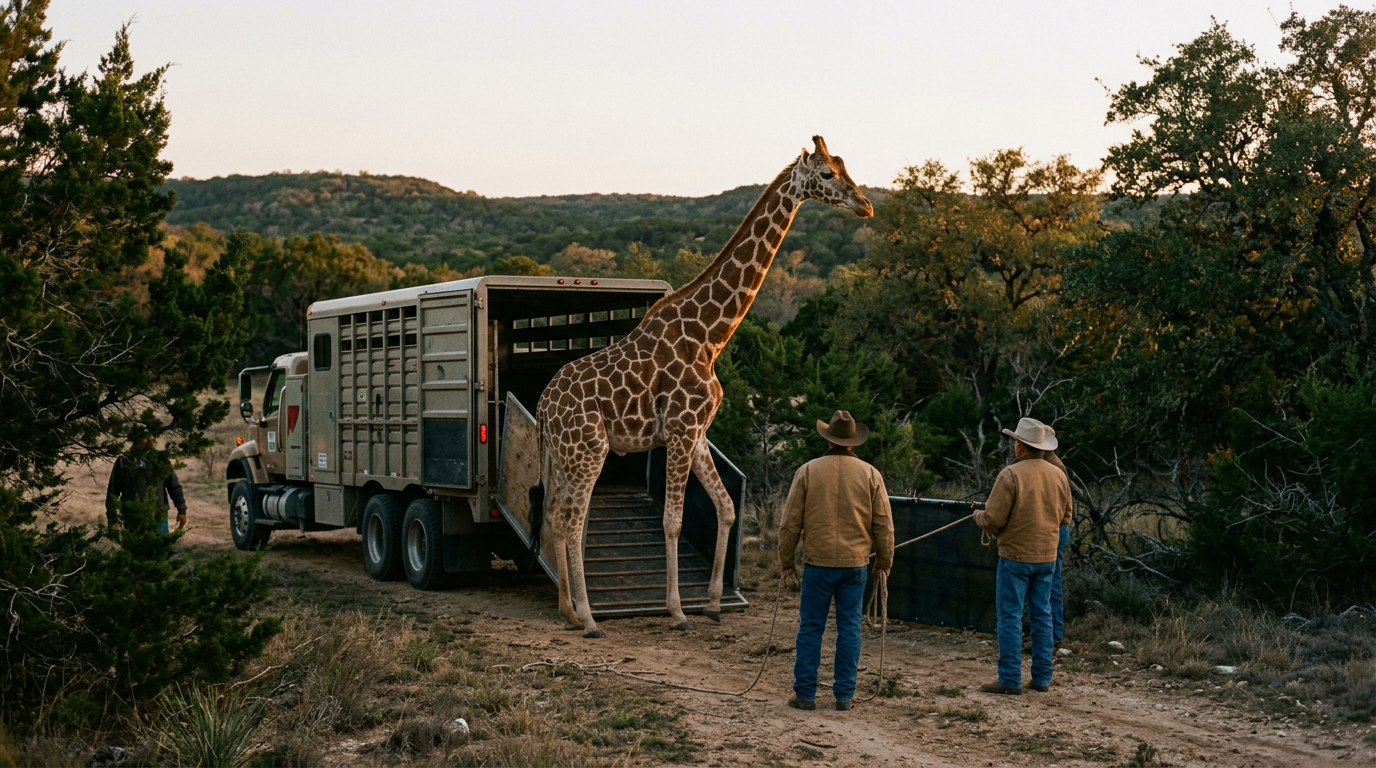
The saga of Gracie the giraffe has captured the imagination of the Texas Hill Country, evolving from a local curiosity into a complex narrative involving wildlife management and community resilience. Moving beyond rumors, recent accounts clarify the timeline of Gracie's unexpected presence in the rural landscape. This incident follows a long tradition of exotic animal ranching in Texas, a practice that dates back several decades when landowners began diversifying their holdings with non-native species. Gracie’s story is not merely about a stray animal; it highlights the intricate relationship between Texas residents and the unique wildlife that shares their terrain. The events began when Gracie traveled across borders she was never meant to cross, prompting a massive logistical effort to ensure her safety and eventual relocation. Her journey involved local landowners, specialized veterinarians, and curious neighbors, all of whom played a role in the giraffe's transition back to a stable environment. The narrative underscores the challenges of managing large exotic mammals in a state where private property rights often intersect with animal welfare concerns. This specific incident has reignited discussions about the infrastructure required to house such majestic creatures and the protocols necessary when they venture away from their designated habitats. Ultimately, the story of Gracie serves as a reminder of the unexpected encounters that define the modern Texas rural experience.
Texas relevance
This story is deeply rooted in the heart of the Texas Hill Country, a region known for its rugged beauty and extensive private ranches. For decades, Texas has led the nation in the number of exotic animals kept on private land, with the Hill Country serving as a primary hub for species ranging from zebras to giraffes. The local stake involves the coordination between Texas game wardens, local law enforcement, and private animal experts who must manage these situations without standard municipal animal control resources. For residents in the area, a giraffe on the loose represents a unique intersection of local culture and the unpredictable reality of living in a state where the 'wild' often includes animals from halfway around the globe. The outcome of Gracie's story sets a precedent for how Hill Country communities handle similar incidents in the future, balancing public safety with the protection of high-value exotic livestock.
The Origins of the Hill Country Adventure
The story began when Gracie displaced herself from her expected environment, leading to various sightings by unsuspecting Hill Country residents. Unlike typical livestock such as cattle or goats, a giraffe presents unique logistical challenges due to its height and specific nutritional requirements. Local witnesses describe a period of disbelief as they watched the long-necked herbivore navigate the brush and cedar characteristic of the Central Texas landscape.
Initial reports were fragmented, leading to a surge of social media theories about where the animal came from and who was responsible for its care. It was later determined that Gracie's presence was the result of a complex logistical situation involving her transportation and housing. The rugged terrain of the Hill Country, while beautiful, is not always forgiving for animals that are not indigenous to the North American continent, making her safety a top priority for those involved.
As the days progressed, a small group of specialists began tracking her movements to ensure she stayed away from high-traffic roads and areas where she might inadvertently cause property damage. This tracking phase required a deep understanding of giraffe behavior, as these animals are notoriously skittish and can be easily stressed by human intervention. The goal was to maintain a non-threatening distance while preparing for a permanent move.
Logistics and Specialist Intervention
Recovering a giraffe is not as simple as herding sheep. It requires specialized equipment, including modified trailers and tranquilization protocols that must be administered with extreme precision. In Texas, there are only a handful of veterinary experts capable of managing the sedation of a giraffe, as their unique circulatory systems make anesthesia particularly risky.
The logistics team had to coordinate with local landowners to secure access points across various properties. This collaboration is a testament to the community ties in the Hill Country, where property lines are respected but neighborly assistance is common during emergencies. Heavy machinery was occasionally needed to clear paths for the transport equipment, ensuring that Gracie could be moved without injury to her or the handlers.
The specialized crates used for her transport were designed to accommodate her height while providing stability during the drive through winding Texas backroads. Every bump in the road and every low-hanging branch had to be accounted for, turning a relatively short distance into a multi-hour tactical operation. The expertise required for this task highlights the professionalized nature of the exotic animal industry in the state.
The Role of Local Property Owners
Much of the credit for the successful resolution of Gracie's journey goes to the local residents who prioritized the animal's well-being over the novelty of the situation. Some landowners provided temporary sanctuary, allowing Gracie to graze and rest while the recovery team finalized their plans. These individuals often worked behind the scenes, away from the glare of social media attention, to provide a quiet environment for the giraffe.
This cooperative effort shows a different side of the Texas ranching community—one that is deeply committed to the stewardship of all living things on their land. The presence of such a large and exotic animal could have been a liability, but instead, it became a shared mission. Landowners often checked fences and monitored water sources to ensure Gracie remained hydrated and contained within safe zones.
The interaction between the recovery team and the locals was a masterclass in rural diplomacy. Communicating the needs of the giraffe while respecting the daily operations of working ranches was essential. This synergy ensured that no cattle were displaced and no property was significantly damaged during the time Gracie was roaming the area.
Environmental Challenges and Adaptation
The Texas Hill Country environment presents a specific set of challenges for a giraffe. While the climate can be hot and dry—resembling parts of the African savanna—the flora is quite different. The prevalence of Ashe juniper (commonly known as cedar) and live oak required Gracie to adapt her feeding habits. Experts monitored her health closely to ensure she was getting adequate nutrition from the available Texas vegetation.
Another concern was the varying elevation and rocky soil of the region. Giraffes are accustomed to flat plains, and the limestone shelves of the Hill Country can be slippery and dangerous for their slender legs. Every movement across the terrain was a potential risk for the animal, making the swiftness of her recovery even more vital to her long-term survival.
Weather patterns also played a role. Sudden Texas thunderstorms and temperature shifts can stress exotic animals that are highly sensitive to barometric pressure changes. Throughout the ordeal, the weather remained stable enough to allow for a successful extraction, but the handlers were always one eye on the sky, knowing how quickly the Texas climate can turn against a recovery mission.
Public Perception vs. Reality
While the public saw a 'giraffe on the loose,' the reality was a controlled, albeit difficult, management situation. The disconnect between viral rumors and the actual work being done on the ground created a sense of urgency that didn't always reflect the methodical pace of the professionals. This case study demonstrates how quickly information can transform into folklore in modern Texas.
By the time the full story emerged, Gracie had already become a local legend. However, the professionals involved emphasized that the best outcome for such animals is always to avoid these situations through better containment and transport planning. They hope that the 'fame' of Gracie will lead to better education regarding the complexities of owning and moving large exotic species.
The media coverage focused heavily on the mystery, but the human element—the sleepless nights of the handlers and the patience of the ranchers—was the true backbone of the story. Gracie’s safe arrival at her final destination was the culmination of hundreds of man-hours and a deep respect for the animal’s dignity.
Future Implications for Texas Wildlife Management
The incident with Gracie may lead to a review of how exotic animals are tracked during transit across Texas. Currently, the state has robust laws regarding native wildlife, but the private ownership of exotics falls into a more complex legal category. State legislators and wildlife officials often look at these high-profile cases to determine if current regulations are sufficient for public safety.
Ranchers and exotic animal owners are also likely to take notes from this event. Improving trailer designs and increasing the number of trained handlers in the Hill Country could prevent future 'adventures' from becoming so prolonged. The incident serves as a live-action training scenario for everyone involved in the industry, from the breeders to the veterinarians.
In the end, Gracie’s story is a uniquely Texan one. It reflects a state where the unexpected is expected, and where the community will always come together to help a neighbor—even if that neighbor is an eighteen-foot-tall giraffe. As Gracie settles into her new home, the Hill Country returns to its usual quiet, though with one more legendary tale to tell around the campfire.
Analysis
While the story of Gracie the giraffe is often treated as a whimsical human-interest piece, it reveals a serious underlying reality regarding the Texas exotic animal industry. The ease with which a giraffe could become a subject of local 'speculation' suggests that while these animals are common on private ranches, the contingency plans for their escape or relocation are sometimes less visible to the public. There is a clear tension between the right to own exotic wildlife and the communal responsibility for their care when things go wrong. From a policy perspective, Gracie’s adventure may encourage more standardized reporting or tracking within the private sector to ensure that the public and the animals remain safe. This incident also showcases the power of the 'Texas spirit'—where neighbors who might have never seen a giraffe in person were immediately willing to assist in its recovery. It highlights a culture of localized problem-solving that remains a hallmark of the rural Texas identity.
Source attribution
This story was reported using a public release from the Texas Monthly. Keep TX Red rewrote the coverage independently and links to the official statement for verification.
Frequently Asked Questions
- How did a giraffe end up roaming the Texas Hill Country?
- Gracie was part of a planned move between facilities, but complications during the transport and transition phase led to her being in an unsecured area longer than anticipated. She was not wild, but rather a privately owned animal in the middle of a relocation process.
- Is it legal to own a giraffe in Texas?
- Yes, Texas law allows for the private ownership of many exotic species, including giraffes, provided that owners comply with federal regulations and certain state-level permits. The Texas Hill Country is one of the most popular regions in the world for private exotic animal ranching.
- Was the giraffe in any danger while she was loose?
- The primary risks to Gracie included potential injury from the rocky Hill Country terrain, dehydration, and the stress of being in an unfamiliar environment. However, local residents and specialists monitored her closely to provide water and ensure she stayed away from dangerous areas like highways.
- What happened to Gracie after she was caught?
- Gracie was carefully loaded into a specialized transport trailer and moved to a facility designed to provide her with long-term care, proper nutrition, and the social environment giraffes require. She is reported to be in good health following her adventure.
Official Sources
Take the next step
Browse the Newsroom →Read more about Keep Texas Red → Our full guide to what Keep Texas Red means and why Texans support it.
Related Articles
Get Texas updates delivered weekly.
Independent Texas reporting on politics, policy, and daily life. One email a week. Unsubscribe anytime.
Keep TX Red Newsroom
The Keep Texas Red Editorial Staff produces nonpartisan explainers, policy breakdowns, and educational resources to help Texans understand how their government works. All content is reviewed for accuracy and updated regularly.
About Keep TX Red →