Texas A&M Scientists to Study Vineyard Resilience Through Space Station Grape Research
Researchers at Texas A&M are sending wine grapes to the International Space Station to study genetic resilience and cosmic radiation effects.
Editorial disclaimer: Opinions and analysis on Keep TX Red are editorial content — not statements of fact. See our editorial standards.
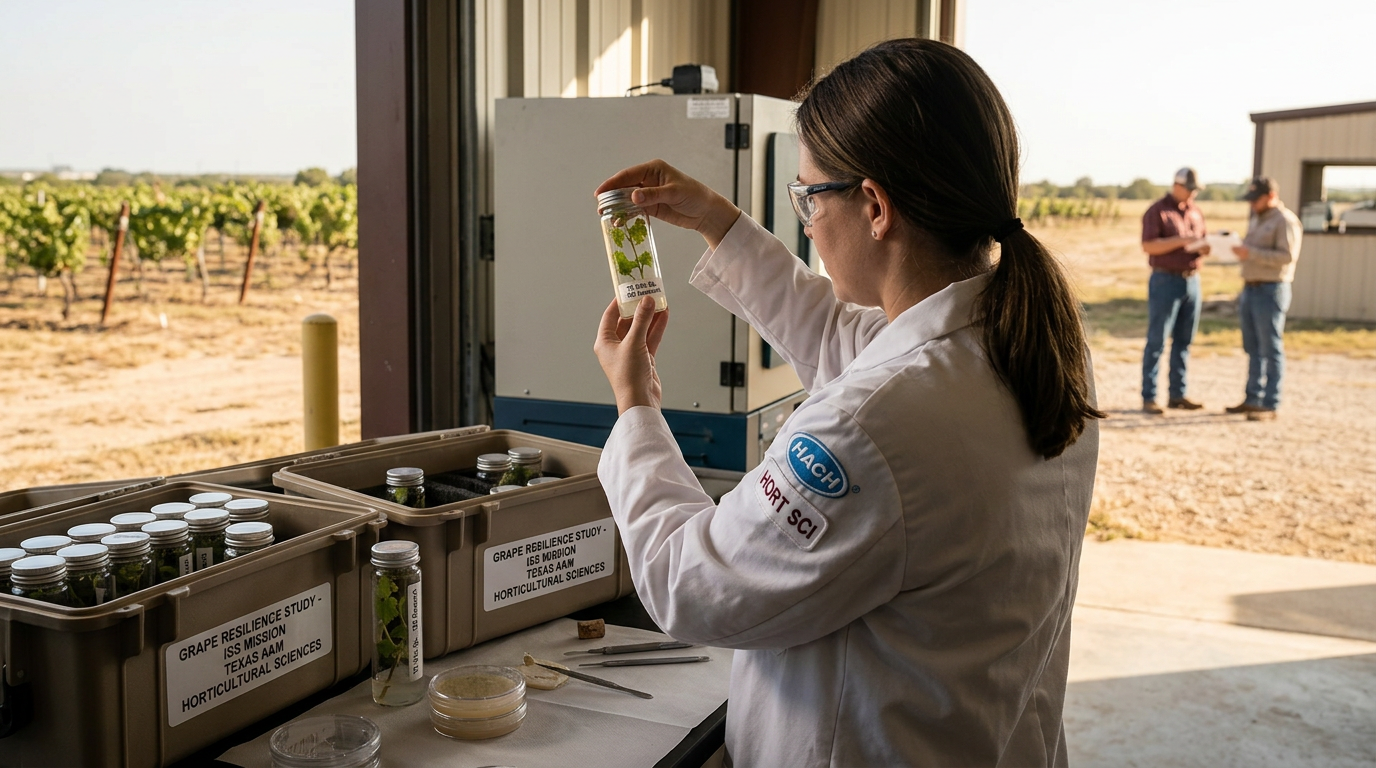
Agricultural researchers at Texas A&M University are preparing for an unconventional experiment that will take the state’s viticulture industry to new heights. By sending Texas-grown wine grapes into orbit aboard the International Space Station (ISS), scientists aim to observe how the harsh conditions of microgravity and cosmic radiation impact the genetic structure and development of the vines. This project represents a collaborative effort between the university's Department of Horticultural Sciences and commercial space partners, seeking to unlock secrets of plant stress adaptation. Historically, Texas has a rich legacy of agricultural innovation, having saved the French wine industry in the 19th century through the work of T.V. Munson; this new venture seeks to continue that tradition of global impact through cutting-edge biological exploration. The experiment is scheduled to launch in the near future, utilizing a SpaceX resupply mission to carry the delicate plant samples into the low Earth orbit environment. Once aboard the ISS, the grapevines will be housed in specialized growth chambers designed to mimic Earth-like conditions while still exposing the specimens to the unique stressors found only in space. The research team intends to compare these orbital samples against a control group grown simultaneously at the Texas A&M campus in College Station. By isolating the variables of gravity and radiation, the team hopes to identify specific genetic triggers that may make plants more resilient to environmental challenges on Earth. While sending seeds into space is not entirely unprecedented, the focus on specific Texas wine grape varieties highlights the state's growing influence in the global wine market. The study will monitor everything from cellular mutations to changes in the vine’s vascular system, providing a detailed map of how complex perennial plants cope with extreme environments. This data is expected to yield insights that are not only applicable to future long-term space colonization efforts but also to the immediate benefit of farmers facing volatile climate conditions in the Lone Star State.
Texas relevance
Texas is currently the fifth-largest wine-producing state in the nation, contributing billions of dollars annually to the state's economy. The research conducted by Texas A&M directly impacts the longevity and sustainability of this critical industry. By leveraging the prestige of the university's agricultural programs, Texas is positioning itself at the intersection of aerospace technology and traditional farming. The results of this study could provide local vineyard owners in the Hill Country and the High Plains with new, hardier grape varieties that are better equipped to handle the unpredictable weather cycles, including late freezes and extreme heat, that frequently characterize the Texas climate.
The Science of Cosmic Viticulture
The primary objective of the mission is to observe the 'stress response' of the grapevines. In a microgravity environment, plants often lose their sense of direction, a phenomenon known as gravitropism, which usually dictates that roots grow downward and stems grow upward. By observing how Texas grapes navigate this disorientation, researchers can learn more about the internal signaling pathways of the plant.
Furthermore, the exposure to cosmic radiation is much higher on the International Space Station than it is on the surface of the Earth. This exposure can induce rapid genetic mutations. While many mutations are harmful, some can lead to beneficial traits such as increased drought tolerance or higher sugar content in the fruit. The Texas A&M team will be looking specifically for these beneficial adaptations once the plants are returned to Earth for analysis.
The testing protocol involves a rigorous period of quarantine and preparation to ensure that no Earth-based pathogens are introduced to the ISS environment. The vines chosen for the project represent some of the most popular and commercially viable varieties currently grown in the Texas High Plains, ensuring that the findings have immediate practical application for the state’s winemakers.
Impact on the Texas Wine Economy
Texas vineyards have faced significant hurdles in recent years, including devastating winter storms and shifts in rainfall patterns. The wine industry in the state is a significant economic engine, supporting thousands of jobs across tourism, hospitality, and agriculture. Any advancement in crop resilience directly translates to economic stability for rural Texas communities.
By participating in space-based research, the Texas wine industry gains a competitive edge over traditional markets like California or France. The data gathered from the ISS could lead to the development of 'super-vines' that require less water and fewer chemical interventions. This aligns with a broader trend toward sustainable farming practices that are becoming increasingly necessary as water rights and land use become more contentious issues in Texas.
The collaboration also highlights the role of Texas A&M as a premier land-grant institution. By facilitating partnerships between the university, NASA, and private space firms, the state is creating a pipeline for high-skilled jobs that bridge the gap between the lab and the field. This interdisciplinary approach is vital for maintaining Texas' economic diversity.
Historical Context of Texas Agricultural Innovation
Texas has a long history of saving wine industries. In the late 1800s, the Great French Wine Blight nearly destroyed European vineyards. It was Thomas Volney Munson of Denison, Texas, who discovered that grafting European vines onto native Texas rootstock could provide immunity to the devastating phylloxera insects. This historical precedent serves as an inspiration for the current project.
Just as Texas rootstock once crossed the Atlantic to save the world's wine, Texas genetics are now crossing the atmosphere. The current research team views this mission as a modern extension of Munson’s work. Instead of battling insects, they are now battling the stressors of a changing climate and the limitations of terrestrial biology.
The documentation of this historical link is important for public engagement. It reminds Texans that their agricultural heritage is not just about tradition, but about constant adaptation and scientific leadership. The 'Space Grape' project is the latest chapter in a century-long story of Texas providing solutions for global agricultural challenges.
Technological Logistics and the Launch Cycle
Sending biological matter into space requires highly specialized hardware. The grapes will be stored in automated habitats that control light, temperature, and humidity without the need for constant astronaut intervention. These units are designed to withstand the G-forces of launch and the vibrations of the climb into orbit.
Upon arrival at the ISS, the samples will spend several months in the orbiting laboratory. During this time, sensors will relay real-time data back to the researchers in College Station. This constant stream of information allows the team to monitor the vines' growth in ways that were previously impossible, providing a minute-by-minute look at how the plants react to the absence of gravity.
The return journey is just as critical as the launch. Once the mission is complete, the vines will be returned to Earth via a splashdown in the ocean or a landing at a designated facility. From there, they will be transported back to Texas A&M for a multi-year study into how their DNA has changed compared to the control group that remained grounded.
Future Implications for Space Colonization
Beyond the immediate benefits to Texas farmers, this research has profound implications for the future of human space flight. If humans are to establish permanent bases on the Moon or Mars, they will need to be able to grow nutrient-dense and culturally significant crops in controlled environments. Grapes, which provide both nutrition and the raw materials for wine, are a top candidate for extraterrestrial agriculture.
The Texas A&M study will help determine if the fermentation process itself is affected by space flight. While the current mission focuses on the growth of the vines, future iterations could look at how microgravity affects the yeast and aging process. This holistic view of the vine-to-glass process is essential for long-term mission planning.
Ultimately, this project proves that Texas is ready to lead in the era of 'Off-World Agriculture.' By testing the limits of what Earthly plants can endure, Texas scientists are laying the groundwork for a future where the products of the Lone Star State are enjoyed not just across the world, but across the solar system.
Analysis
This initiative underscores the strategic pivot within Texas higher education to merge legacy industries like agriculture with the burgeoning commercial space sector thriving in North Texas and the Gulf Coast. By utilizing the International Space Station as a lab, Texas A&M is effectively rebranding viticulture as a high-tech frontier. The potential discovery of radiation-resistant genetic markers could lead to patented vine varieties, further cementing Texas' status as a hub for intellectual property in the bio-tech space. Beyond the scientific data, the sheer visibility of the project serves as a marketing catalyst for Texas wines, elevating the brand of the state's vineyards on a global—and now celestial—stage.
Source attribution
This story was reported using a public release from the Texas Standard. Keep TX Red rewrote the coverage independently and links to the official statement for verification.
Frequently Asked Questions
- Why is Texas A&M sending grapes to space specifically?
- The goal is to use the unique environment of microgravity and high cosmic radiation to trigger genetic responses in the plants. Researchers want to identify which genes help the plants survive extreme stress, which could lead to more resilient crops for Texas farmers dealing with climate volatility.
- Will the grapes be grown into wine while in space?
- No, this specific mission is focused on the horticultural and genetic development of the vines themselves. While the idea of 'space wine' is a popular concept, the current scientific priority is understanding plant biology and DNA changes in a low-gravity environment.
- How does this benefit the average Texas resident?
- The wine industry is a major part of the Texas economy. By creating more durable grape varieties, the research helps protect jobs, boosts agricultural stability, and ensures that the Texas wine brand remains competitive globally, even as weather patterns become more unpredictable.
Official Sources
Take the next step
Browse the Newsroom →Read more about Keep Texas Red → Our full guide to what Keep Texas Red means and why Texans support it.
Related Articles



Get Texas updates delivered weekly.
Independent Texas reporting on politics, policy, and daily life. One email a week. Unsubscribe anytime.
Keep TX Red Newsroom
The Keep Texas Red Editorial Staff produces nonpartisan explainers, policy breakdowns, and educational resources to help Texans understand how their government works. All content is reviewed for accuracy and updated regularly.
About Keep TX Red →