Mexican Empalmes Arrive in Texas Dining Scene
A new regional favorite from Nuevo León called the empalme is making its way into Texas restaurants, blending traditional flavors with unique textures.
Editorial disclaimer: Opinions and analysis on Keep TX Red are editorial content — not statements of fact. See our editorial standards.
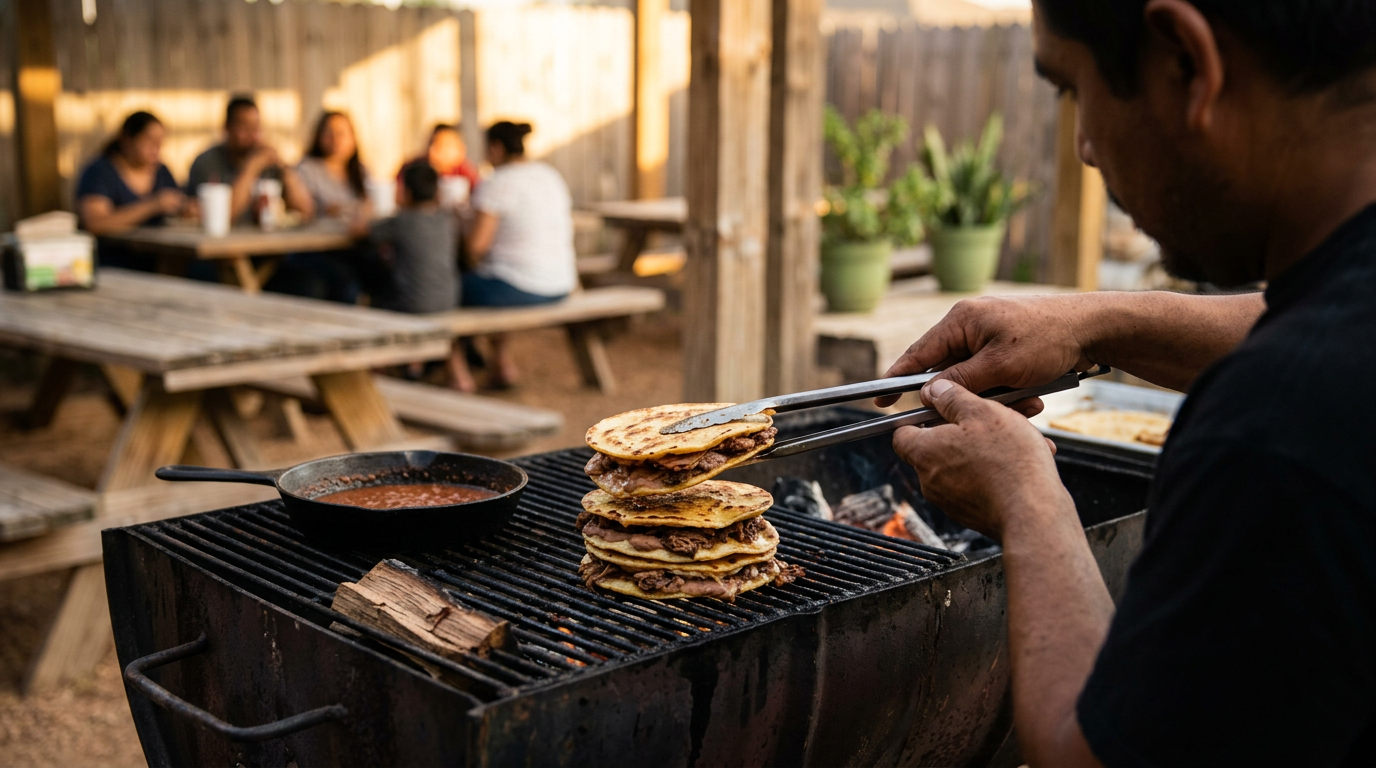
A culinary movement from the heart of Nuevo León is currently migrating north, introducing Texas food enthusiasts to a unique grilled delicacy known as the empalme. Historically rooted in the rural areas near Monterrey, specifically the town of Zuazua, the empalme functions as a stack of corn tortillas layered with savory ingredients and heated until the fats meld into the corn. While the Texas food landscape has long been dominated by the taco and the quesadilla, this specific preparation method represents a distinct regional tradition that emphasizes portability and intense heat during the cooking process. Culinary historians note that the dish was born out of the necessity for transportable meals for workers, using lard and spice as both flavoring agents and preservatives in the heat of Northern Mexico. The dish is characterized by its appearance, which many first-time diners describe as a cross between a traditional quesadilla and a layered sandwich. It traditionally features two corn tortillas slathered with lard or pork fat and filled with refried beans mixed with red salsa. The exterior is then toasted on a flat-top grill or comal until the surfaces become crispy and deeply permeated by the seasoned fat. As culinary exchange between Texas and Northern Mexico intensifies, boutique eateries and street food vendors across the Lone Star State are beginning to integrate this heirloom dish into their permanent menus, marking a shift toward more specialized regional Mexican offerings beyond the standard Tex-Mex fare.
Texas relevance
For Texas, this culinary trend is more than just a new menu item; it reflects the deep cultural and economic ties between the state and the neighboring Mexican state of Nuevo León. In cities like Laredo, San Antonio, and Austin, the arrival of the empalme signals an evolution in the local palate, moving away from generic interpretations of Mexican food toward authentic, localized specialties. As thousands of people move between Monterrey and major Texas hubs daily, the culinary heritage of the borderlands continues to blend, ensuring that Texas remains at the forefront of North American food innovation. The rise of these dishes supports local Texas business owners who are finding success by highlighting their specific family roots in Northern Mexico, rather than catering to broader national stereotypes of what 'Mexican food' should be.
The Origin Story of the Zuazua Staple
The empalme originates from the town of General Zuazua, located just north of Monterrey. In its early days, the dish was designed to be a durable lunch for laborers who spent long hours in the sun. The key to its longevity was the use of lard and highly seasoned beans, which could withstand the temperature changes and physical movement of a workday without losing their structural integrity or flavor.
In the traditional setting, the tortillas used for empalmes are often smaller than standard taco shells. They are dipped in a mixture of lard and chiles, giving them a distinct orange or reddish hue before they even touch the heat. This process ensures that every bite is infused with seasoning, a departure from the practice of adding salsa only at the end of the cooking process. As this tradition moves into Texas, chefs are maintaining these meticulous preparation methods to preserve authenticity.
Anatomy of the Perfect Empalme
While it may look simple, the construction of an empalme follows a specific structural logic. The bottom tortilla acts as a foundation, usually coated in a layer of refried beans that have been whipped with pork fat. This creates a creamy, dense center that holds the heat. A second tortilla is then 'overlapping'—hence the name 'empalme'—to seal in the heat and moisture, creating a package that is toasted until the edges are brittle and the center is molten.
Variations of the filling have evolved over time to include cheese, chorizo, or shredded beef, but the core identity remains rooted in the beans and salsa. The salsa used is typically a 'salsa roja' made from dried chiles, providing a subtle smoky heat that balances the richness of the animal fats used in the frying process. In Texas, some chefs are experimenting with local brisket or venison to add a regional twist to the filling, though the corn-and-lard exterior remains the non-negotiable standard.
Texture and Temperature Dynamics
One of the primary reasons the empalme is gaining traction in Texas is its unique mouthfeel. Unlike a taco, which relies on a soft or brittle shell, the empalme offers a chewy, saturated texture that is achieved through a slow sear. The lard creates a barrier that prevents the tortilla from becoming soggy, even when filled with moist ingredients. This results in a snack that is intensely hot and stays warm much longer than a standard corn tortilla preparation.
For diners, this means the empalme is often served piping hot directly from the comal. The heat retention is a major selling point for takeout and delivery, a sector of the Texas dining market that has exploded in recent years. As Texans look for food that travels well without compromising on quality, the empalme presents a historic solution to a modern logistical problem.
The Monterrey-Texas Pipeline
The migration of the empalme is a direct result of the 'Monterrey-to-Texas' pipeline that has shaped the demographics of cities like San Antonio and Houston for decades. Families moving from Nuevo León bring their recipes with them, and as the second and third generations open their own businesses, they are reaching back into their heritage to find dishes that stand out in a crowded market. This has led to a 'boutique' approach to regional Mexican cooking in the state.
This influence is most visible in Laredo, where the proximity to the border allows for the rapid exchange of ingredients and cooking styles. However, the trend is moving further north into the Dallas-Fort Worth metroplex and beyond. Texas food critics have noted that the state's diners are becoming increasingly sophisticated, seeking out specific regional variations such as the empalme rather than being satisfied with generic 'Mexican' labels.
Economic Impact on Local Restaurants
Small business owners in Texas are finding that niche items like the empalme can be highly profitable. Because the base ingredients—corn, beans, and lard—are relatively inexpensive, these businesses can offer an affordable price point for customers while maintaining healthy margins. The value is added through the labor-intensive preparation and the unique seasoning profiles that cannot be easily replicated by larger chains.
Furthermore, the rise of the empalme supports a network of local suppliers. Tortillerias that process corn using traditional nixtamalization methods are essential for the proper texture of an empalme. As demand grows, these local manufacturers see increased business, creating a positive ripple effect throughout the Texas agricultural and food processing sectors. It is a prime example of how cultural preservation can drive local economic growth.
Future Outlook for Texas Street Food
Looking ahead, the empalme is poised to become a staple of the Texas street food scene, much like the breakfast taco or the elote. Its compact size and intense flavor make it an ideal candidate for food trucks and pop-up events at Texas festivals. As more people become aware of the dish, we can expect to see it appearing on menus at high-end fusion restaurants as well as humble roadside stands.
The success of the empalme also paves the way for other lesser-known regional dishes from Northern Mexico to gain a foothold in Texas. By proving that there is a market for authentic, localized flavors, the empalme is helping to redefine the Texas culinary identity for the 21st century. It is a testament to the fact that in Texas, the best new ideas are often rooted in deep, historical traditions.
Analysis
Opinion: The rising popularity of the empalme in Texas demonstrates the state's unique ability to act as a cultural incubator. Unlike other states that may treat international cuisines as static imports, Texas culture actively absorbs and expands upon the traditions of its neighbors. This trend isn't just about a new snack; it represents the ongoing strength of the Texas-Mexico cross-border identity. By embracing niche regional foods like those from Zuazua, the Texas food scene rejects the homogenization seen in national fast-food chains. These dishes require high-quality lard and specific corn processing techniques, which in turn supports traditional producers in the region. Politically and socially, it reinforces the reality that the Rio Grande serves as a bridge for heritage rather than just a boundary, enriching the local economy through small-scale culinary entrepreneurship.
Source attribution
This story was reported using a public release from the Texas Monthly. Keep TX Red rewrote the coverage independently and links to the official statement for verification.
Frequently Asked Questions
- What makes an empalme different from a regular quesadilla?
- While both involve tortillas and heat, an empalme uses corn tortillas specifically soaked or brushed with lard and chiles before being grilled. The filling is historically centered around refried beans and salsa rather than just cheese, and the stack is pressed until the fats create a unique crispy-yet-dense texture that stays hot longer than a quesadilla.
- Where can I find empalmes in Texas?
- Empalmes are increasingly available in cities with strong cultural ties to Northern Mexico, such as Laredo, San Antonio, and Austin. Look for authentic 'regio' style eateries, specialized food trucks, or eateries that explicitly feature Monterrey-style cuisine on their menus.
- Is the empalme a spicy dish?
- Generally, yes. The tortillas are often treated with a red chile-infused lard, and the bean filling typically includes a red salsa. However, the heat level can vary depending on the specific recipe used by the chef. The spice is usually described as a warm, smoky heat rather than an overpowering burn.
Official Sources
Take the next step
Browse the Newsroom →Read more about Keep Texas Red → Our full guide to what Keep Texas Red means and why Texans support it.
Related Articles

Get Texas updates delivered weekly.
Independent Texas reporting on politics, policy, and daily life. One email a week. Unsubscribe anytime.
Keep TX Red Newsroom
The Keep Texas Red Editorial Staff produces nonpartisan explainers, policy breakdowns, and educational resources to help Texans understand how their government works. All content is reviewed for accuracy and updated regularly.
About Keep TX Red →