Vatican Schism Declaration Impacts Texas Catholic Communities as Society of Saint Pius X Faces Formal Separation
A formal decree of schism from the Vatican regarding the SSPX creates significant canonical shifts for thousands of Catholic parishioners across Texas.
Editorial disclaimer: Opinions and analysis on Keep TX Red are editorial content — not statements of fact. See our editorial standards.
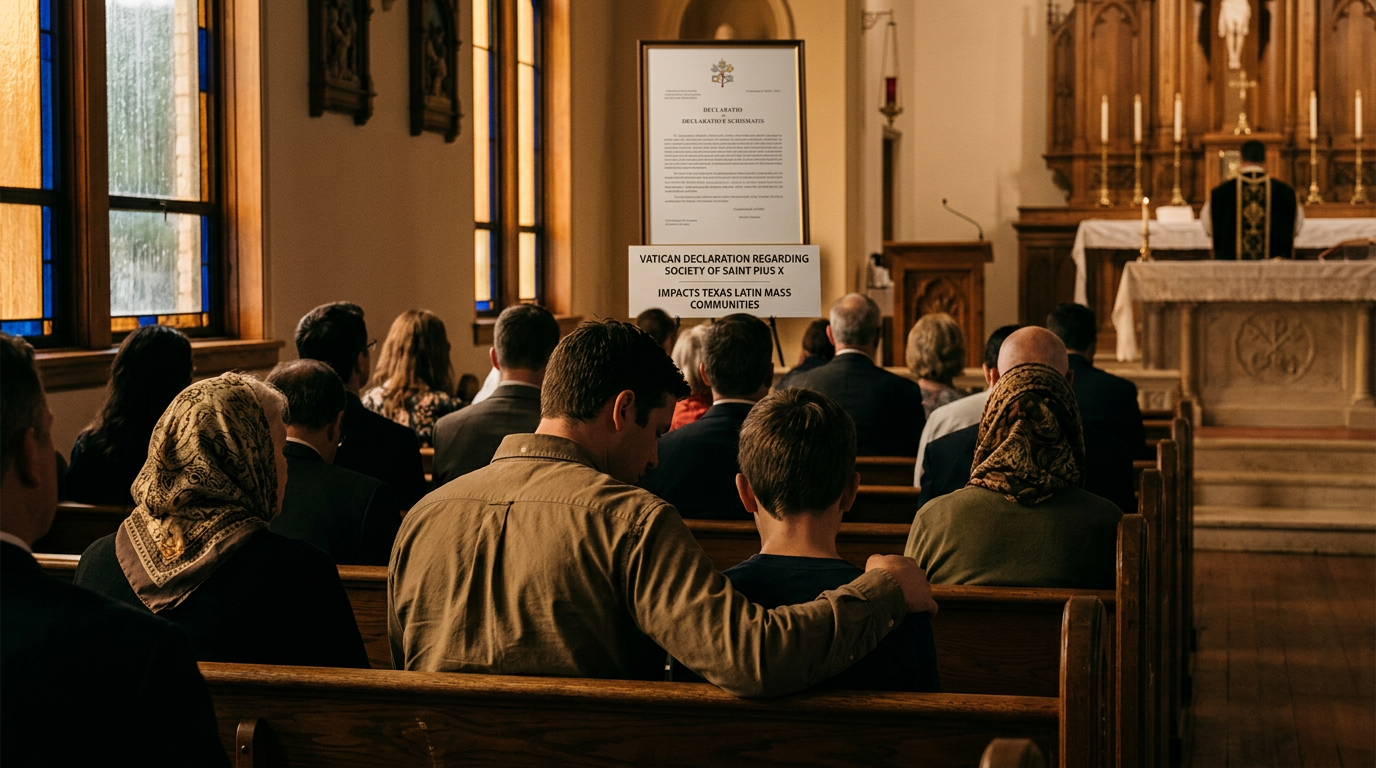
The Vatican has issued a formal declaration of schism regarding the Society of Saint Pius X (SSPX), a traditionalist group that has long remained at the periphery of the Roman Catholic Church. This definitive ruling marks a historic break in church authority, centering on unauthorized episcopal consecrations and fundamental disagreements over the interpretation of modern Church doctrine. For years, the SSPX functioned in a state of 'irregular canonical status,' but this transition to formal schism signifies a complete break from the hierarchy of the Holy See. This move comes after exhaustive attempts at reconciliation failed to bridge the gap between the traditionalist movement and the reforms instituted by the Second Vatican Council. Historically, the SSPX was founded by Archbishop Marcel Lefebvre in 1970 as a response to what he viewed as the watering down of traditional liturgy and theology. In Texas, where the Catholic population is massive and diverse, this formal designation creates immediate practical and spiritual implications for those attending SSPX chapels in major metropolitan areas like Houston, Dallas, and San Antonio. The ruling is not merely a theological footnote; it changes the legal and spiritual standing of those participating in the sacraments within these specific communities.
Texas relevance
Texas is home to one of the largest Roman Catholic populations in the United States, and the state's diverse religious landscape includes a robust network of traditionalist communities. The schism is particularly relevant to the Lone Star State because several large SSPX parishes and schools operate within the jurisdictional boundaries of Texas dioceses. In cities like Post Falls, Houston, and the Dallas-Fort Worth metroplex, the SSPX has maintained a steady presence, often attracting families who prefer the Tridentine Mass over the modern Novus Ordo services. This Vatican decision forces a significant number of Texans to choose between their local parish structure and their loyalty to the Holy See’s unified leadership. Furthermore, the legal status of marriage and other sacraments performed at these Texas sites is now under intense scrutiny by local bishops who must enforce the Vatican's decree. The historical precedent for such a move in Texas traces back to various schismatic movements, but none with the global reach or local density of the current SSPX situation.
The Roots of Disagreement and Canonical Status
The conflict leading to this formal schism is rooted in the aftermath of the Second Vatican Council, which took place in the 1960s. The SSPX was founded on the principle of preserving the Latin Mass and resisting changes to ecumenism and religious liberty that they felt compromised the core tenets of the faith. For decades, the group operated without the approval of the Pope, leading to the excommunication of its founders in 1988 after unauthorized bishop ordinations.
While Pope Benedict XVI made significant efforts to heal the rift by lifting those excommunications in 2009, the underlying theological differences remained unresolved. The Vatican’s latest move indicates that the dialogue has reached a dead end. This change in status from 'irregular' to 'schismatic' is a severe legal distinction in Canon Law, suggesting that the group is now considered fully separated from the body of the Church.
Immediate Impact on Texas Parishes
In Texas, the SSPX maintains several prominent locations, including Regina Coeli in Houston and other chapels in the North Texas region. These sites serve as hubs for spiritual life, education, and community gathering. With the formal declaration of schism, the status of these properties and the legitimacy of the ministries performed there are called into question. Texas bishops now face the difficult task of communicating this change to their congregants without causing unnecessary division.
For the average Texan parishioner attending an SSPX mass, the immediate concern is the validity of the sacraments. While the Church has historically made concessions regarding the validity of confessions and marriages in certain contexts, a formal schism usually voids the canonical legality of such acts. This puts a cloud of uncertainty over the millions of dollars in real estate and the thousands of families who have built their lives around these Texas-based traditionalist centers.
Liturgy and the Latin Mass Conflict in the Lone Star State
Texas has seen a resurgence in interest regarding the Traditional Latin Mass (TLM) over the last decade. Many younger families in urban centers like Austin and San Antonio have sought out the older rite of worship. While some of these families attend 'authorized' Latin Masses within the diocese, many have turned to the SSPX for what they perceive as a more authentic experience. The Vatican's decree creates a sharp divide between these two groups.
The tension is palpable in Texas dioceses where bishops have already been restricting the Latin Mass following Pope Francis’s prior mandates. This schism declaration acts as the final word on the matter for the SSPX, likely driving a wedge between the 'indult' communities (those with permission) and the 'schismatic' communities. This split could lead to a reshuffling of congregation sizes across the state as people decide where their spiritual priorities lie.
Educational and Community Ramifications
Beyond Sunday services, the SSPX operates various schools and youth programs across Texas. These institutions provide a classical education rooted in traditional Catholic values, which has been a major draw for Texas parents dissatisfied with public or mainstream private schools. The status of these schools is now in jeopardy, as they no longer have even a tenuous link to the official Catholic Church infrastructure.
Parents in these communities worry about the future of their children's standing within the Church. If the school is part of a schismatic body, the sacraments of confirmation and first communion received there may not be recognized by other Catholic institutions. This creates a logistical nightmare for families who may move or seek to enroll their children in Catholic universities later on, as the paper trail of their faith could be deemed invalid by the Vatican.
The Role of Local Texas Bishops
The reaction of the Texas hierarchy is crucial in the coming months. Bishops in the Archdioceses of Galveston-Houston and San Antonio must decide how strictly to enforce the Vatican's decree. They have the authority to issue guidelines for their specific regions, potentially offering paths for SSPX members to return to the mainstream Church while retaining some of their traditional practices.
Historically, Texas bishops have handled such delicate matters with a mix of strict adherence to Rome and pastoral concern for their local flock. However, given the high-profile nature of this schism, there may be little room for local deviation. The directives issued from the Texas Catholic Conference will likely be the guiding light for how these split communities are treated by their neighbors and fellow Catholics.
Comparing Global Trends to the Texas Experience
While the schism is a global event, its ripples are felt uniquely in Texas due to the state's culture of religious freedom and traditionalism. In Europe, the SSPX is often embroiled in political controversies, but in Texas, it is primarily seen as a liturgical and cultural refuge. This difference means the fallout in Texas may be less about politics and more about the fundamental identity of what it means to be Catholic in the modern world.
As other states also grapple with these changes, Texas remains a bellwether for traditionalist movements. If the SSPX continues to grow in Texas despite the schism label, it will signal a significant shift in how religious authority is perceived by Americans. The state's history of independent thinking may lead to a scenario where the SSPX thrives regardless of its official status in Rome, creating a permanent alternative Catholic culture within the state.
Analysis
From a traditionalist perspective, this move by the Vatican may be viewed as a final push to enforce uniformity across a global church that is increasingly polarized. By labeling the SSPX as schismatic, the Vatican removes any ambiguity regarding their standing, effectively forcing the hands of thousands of Texas faithful who have tried to keep one foot in both worlds. Critics of the decision argue that it alienates the most devout and traditional members of the faith at a time when secularization is already thinning out pews. Conversely, supporters of the Vatican’s move suggests that a formal break is necessary to preserve the integrity of the Church’s hierarchy and the authority of the Pope. In Texas, where 'independence' is a cultural hallmark, this ruling might not lead to an exodus from traditionalist chapels, but rather a hardening of stances among those who feel the modern Church has abandoned its roots. The long-term impact on Texas's religious demographics will depend on how local bishops handle the transition and whether they offer traditionalist alternatives that satisfy the liturgical requirements of the affected families.
Source attribution
This story was reported using a public release from the Texas Standard. Keep TX Red rewrote the coverage independently and links to the official statement for verification.
Frequently Asked Questions
- What does a formal schism actually mean?
- A formal schism is a legal declaration by the Church that a group has broken away from the authority of the Pope and the unity of the Catholic Church. It is one of the most serious designations in Canon Law.
- Are SSPX chapels in Texas now closed?
- No, the chapels remain open as they are privately owned by the SSPX. However, they are no longer recognized as part of the official Roman Catholic Church hierarchy.
- Can Texas Catholics still attend Mass at these locations?
- While individuals can physically attend, the Vatican advises against it as the group is now in schism. Participating in the sacraments there could have implications for one's standing within the official Church.
- How does this affect traditional Latin Masses in other Texas parishes?
- This decree specifically targets the SSPX. Latin Masses offered by diocesan priests or other approved groups like the Priestly Fraternity of St. Peter (FSSP) are not affected by this schism declaration.
Official Sources
Take the next step
Browse the Newsroom →Read more about Keep Texas Red → Our full guide to what Keep Texas Red means and why Texans support it.
Related Articles
Get Texas updates delivered weekly.
Independent Texas reporting on politics, policy, and daily life. One email a week. Unsubscribe anytime.
Keep TX Red Newsroom
The Keep Texas Red Editorial Staff produces nonpartisan explainers, policy breakdowns, and educational resources to help Texans understand how their government works. All content is reviewed for accuracy and updated regularly.
About Keep TX Red →