Vatican Decree Impacts Catholic Traditionalists Across Texas as Excommunication Hits SSPX
A Vatican ruling on the Society of Saint Pius X (SSPX) creates a religious divide in Texas, impacting traditional Latin Mass chapels and parishioners.
Editorial disclaimer: Opinions and analysis on Keep TX Red are editorial content — not statements of fact. See our editorial standards.
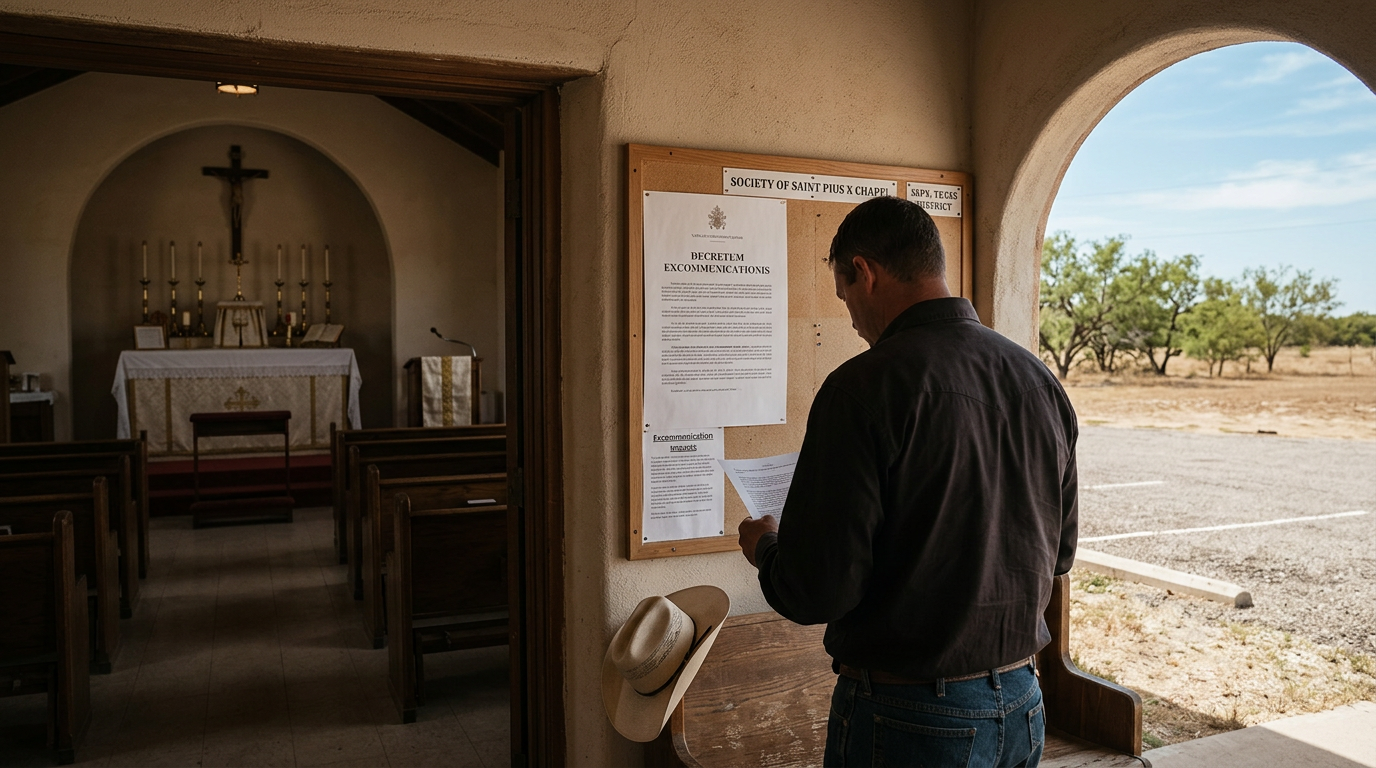
The Vatican has issued a formal decree of excommunication regarding clergy associated with the Society of Saint Pius X (SSPX), a move that marks a significant escalation in the ongoing theological and structural tensions within the Catholic Church. Historically, the SSPX was founded in 1970 by Archbishop Marcel Lefebvre in response to the reforms of the Second Vatican Council, particularly the transition from the traditional Latin Mass to the Novus Ordo liturgy. Over the decades, the relationship between the Holy See and the SSPX has fluctuated between periods of attempted reconciliation and strict disciplinary action. This latest maneuver from Rome suggests a definitive break, as the Church seeks to tighten its grip on liturgical unity and canonical obedience among its billion-plus members worldwide. Following the decree, administrative and spiritual landscapes for traditionalist Catholics are shifting rapidly. The excommunication targeted specifically those who have continued to operate outside the recognized hierarchical structure of the global Catholic Church, citing a lack of canonical status and refusal to submit to the authority of the Pope. For decades, the ‘schism’ has been more of a legal grey area, with many laypeople attending SSPX masses while remaining loyal to the broader Church identity. This new declaration removes much of that ambiguity, forcing a choice between the traditionalist framework of the SSPX and the formal communion recognized by the Vatican. The impact is not merely localized to Rome but radiates through every diocese where these traditionalist outposts exist. In practical terms, this means that priests associated with the SSPX are now officially barred from administering sacraments under the auspices of the Catholic Church. While the SSPX will likely continue to operate its chapels independently, the Vatican’s move serves as a stern warning to the faithful regarding the validity of their participation in these services. This development comes after years of Pope Francis signaling a desire for liturgical uniformity, notably through his previous restrictions on the traditional Latin Mass via the motu proprio ‘Traditionis Custodes.’ The current decree appears to be the final step in a multi-year effort to address what the Vatican views as a growing splinter movement within the faith.
Texas relevance
Texas is home to a significant and growing population of traditionalist Catholics, making the state a primary battleground for the effects of this Vatican decree. With SSPX chapels located in major metropolitan areas including the Dallas-Fort Worth metroplex, Houston, and San Antonio, thousands of Texas families find themselves at the center of this ecclesiastical dispute. Historically, Texas has been a stronghold for conservative religious movements, and the SSPX presence here often serves as a focal point for those seeking pre-Vatican II liturgical experiences. This ruling forces Texas bishops to clarify the standing of these chapels within their respective dioceses and creates a complex situation for local parishioners who must now navigate the legal and spiritual fallout of the excommunication order.
The Rise of Traditionalism in the Lone Star State
Over the last decade, Texas has seen a notable surge in the popularity of the traditional Latin Mass. While many of these celebrations occur within diocesan parishes with the approval of local bishops, a substantial subset of the faithful has gravitated toward the Society of Saint Pius X. The SSPX operates several independent chapels across the state, often purchasing older church buildings or constructing their own dedicated spaces to accommodate growing congregations. These communities are known for their large families, classical educational models, and a rigid adherence to the 1962 Missal.
The growth of the SSPX in Texas reflects a broader cultural trend within the state where residents often value institutional independence and traditional values. For many Texans, the appeal of the SSPX lies in its perceived stability amidst a rapidly changing modern world. However, this growth has also created a parallel religious infrastructure that operates without the oversight of Texas’s regional bishops. The new decree from the Vatican puts this independence into direct conflict with the official laws of the Church, potentially isolating these Texas communities from the wider Catholic body for the foreseeable future.
Canonical Implications and the Meaning of Excommunication
In the framework of Canon Law, excommunication is considered a medicinal penalty rather than a permanent expulsion. It is intended to encourage the offender to repent and return to the fold. However, for the priests of the SSPX, this decree signifies that their ministry is considered illegitimate by the Holy See. This includes the celebration of the Eucharist, the hearing of confessions, and the performance of marriages. For laypeople in Texas who frequent these chapels, the situation raises serious questions about the validity and liceity of the sacraments they receive.
Legal experts within the Church suggest that while the SSPX may argue they are operating under a ‘state of necessity’ to preserve traditional faith, the Vatican no longer accepts this justification. The decree serves to notify the global Catholic community that the SSPX does not have the authority to act in the name of the Church. In Texas, where property rights and organizational identity are strictly guarded, this religious ruling could eventually lead to disputes over the branding of these communities and their right to identify as ‘Catholic’ in a legal or public sense.
Impact on North Texas Traditionalist Communities
The Dallas-Fort Worth area is particularly affected by this news, as it hosts some of the most active traditionalist circles in the South. Local parishioners often travel long distances to attend SSPX services, viewing them as a necessary alternative to modern parish life. The excommunication decree creates a social rift within these communities, as some members may choose to move toward diocesan-approved Latin Masses to remain in good standing with Rome, while others may double down on their support for the SSPX in defiance of the Vatican.
Local leadership in North Texas dioceses will now face the challenge of providing pastoral care to those who feel alienated by the decree. There is an expressed concern that this move could backfire, driving traditionalists further away from mainstream Catholic life rather than bringing them back. The robust nature of Texas traditionalist networks means that the communication of this decree will be met with significant debate in the pews and online forums dedicated to Lone Star Catholicism.
The Role of the Latin Mass in Modern Texas Life
The Latin Mass is more than just a language preference; for many in Texas, it is the center of a holistic lifestyle that includes homeschooling, traditional gender roles, and a rejection of secular modernism. The SSPX has been a major provider of this lifestyle, often establishing schools and social groups that operate entirely within their own ecosystem. This self-contained nature has allowed the movement to thrive in the Texas climate of religious freedom and private initiative.
However, the Vatican’s centralizing efforts aim to ensure that this lifestyle remains tethered to the Bishop of Rome. By issuing this decree, the Church is attempting to prevent a permanent 'church within a church' from forming. In Texas, where rugged individualism is a point of pride, the tension between personal conscience and institutional authority is particularly acute. The outcome of this schism will likely redefine what it means to be a traditionalist in the state for the next generation.
Future Outlook for the Society of Saint Pius X
Despite the severity of the excommunication, the SSPX has a history of survival under pressure. It is unlikely that the group will disband or cease operations in Texas. Instead, observers expect the organization to formalize its position as an independent entity, possibly seeking to strengthen its own internal structures. This could lead to a permanent state of separation where the SSPX operates much like the Eastern Orthodox churches or other groups that share Catholic heritage but remain outside of Roman administration.
For the Catholic Church in Texas, the focus will now shift to reconciliation efforts. Bishops may look to expand the availability of the Latin Mass within the authorized diocesan structure to attract those who might otherwise join the SSPX. The competition for the hearts and minds of traditionalist Catholics is expected to intensify, with Texas serving as a key demographic indicator of whether the Vatican’s hardline approach will successfully restore unity or simply deepen the existing divide.
Source attribution
This story was reported using a public release from the Texas Standard. Keep TX Red rewrote the coverage independently and links to the official statement for verification.
Frequently Asked Questions
- What is the SSPX?
- The Society of Saint Pius X is an international priestly fraternity founded in 1970 that adheres to the traditional Latin Mass and rejects many of the reforms introduced by the Second Vatican Council.
- Can Texas Catholics still attend SSPX chapels?
- While parishioners can physically attend, the Vatican's decree warns that the priests are excommunicated and their administration of sacraments is not recognized as lawful by the Catholic Church.
- Where are these chapels located in Texas?
- The SSPX has a presence in several Texas cities, including major hubs like Houston, San Antonio, and the Dallas-Fort Worth area, serving thousands of residents.
- Does this mean the traditional Latin Mass is banned?
- No, the Latin Mass can still be celebrated by diocesan priests with the permission of their bishop; the decree specifically targets the SSPX organization and its unauthorized clergy.
Official Sources
Take the next step
Browse the Newsroom →Read more about Keep Texas Red → Our full guide to what Keep Texas Red means and why Texans support it.
Related Articles

Get Texas updates delivered weekly.
Independent Texas reporting on politics, policy, and daily life. One email a week. Unsubscribe anytime.
Keep TX Red Newsroom
The Keep Texas Red Editorial Staff produces nonpartisan explainers, policy breakdowns, and educational resources to help Texans understand how their government works. All content is reviewed for accuracy and updated regularly.
About Keep TX Red →