Codifying the Texas Identity through a New Texcentric Phonetic Alphabet
Discover how Texans are redefining the phonetic alphabet to reflect the state's unique linguistic heritage and iconic cultural landmarks.
Editorial disclaimer: Opinions and analysis on Keep TX Red are editorial content — not statements of fact. See our editorial standards.
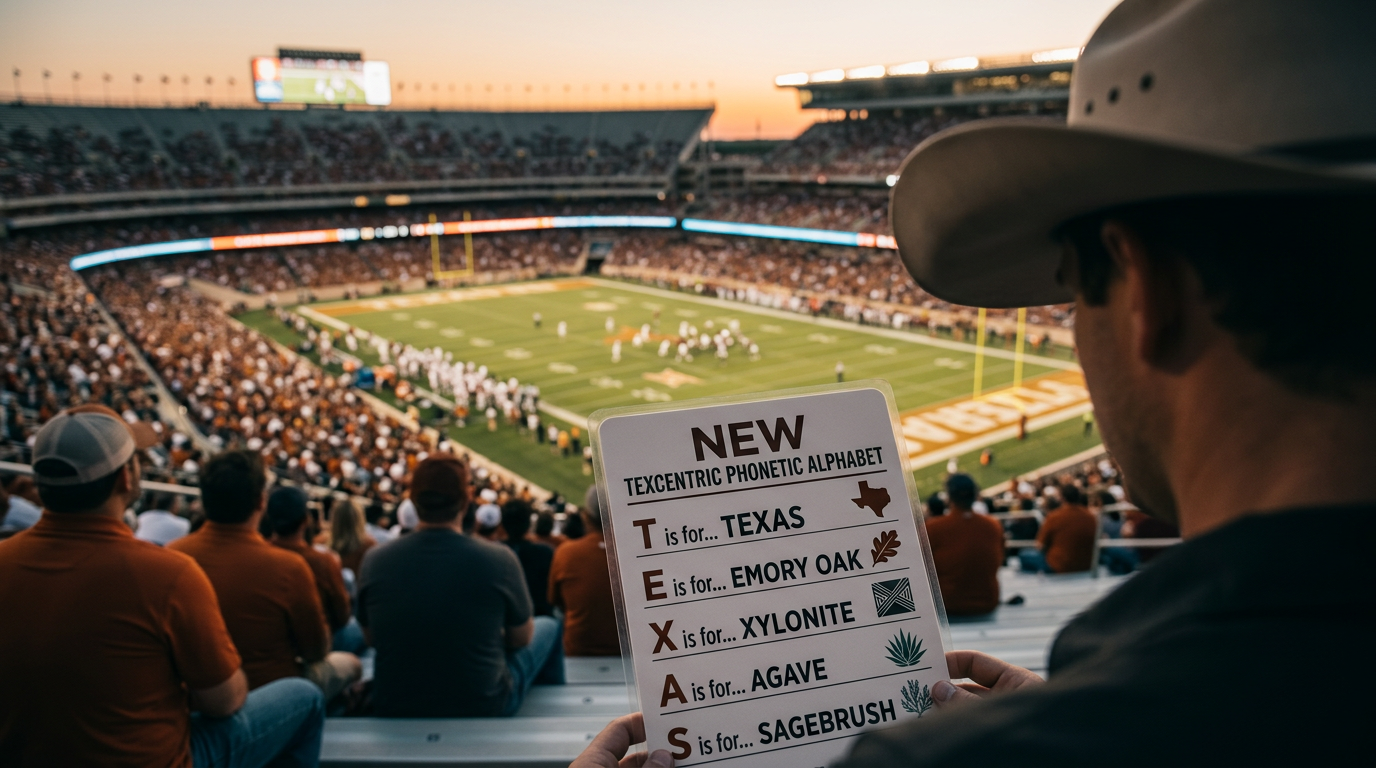
The evolution of the Texas phonetic alphabet marks a significant cultural milestone in the ongoing effort to preserve the state's unique linguistic identity. Unlike the standard NATO phonetic alphabet—which uses terms like Alpha, Bravo, and Charlie—this regional alternative sources its inspiration directly from the landscapes, history, and daily experiences of those living within the Lone Star State. This initiative, championed by observers like W.F. Strong, has moved beyond a mere academic exercise into a collaborative community project. By sourcing specific terms from residents across various regions, from the Panhandle to the Rio Grande Valley, the project aims to create a verbal map of Texas that resonates more deeply with the local populace than international standards ever could. Historically, regional dialects in the United States have faced pressure from mass media and standardized education, leading to a phenomenon known as dialect leveling. In Texas, however, the pride in local vernunacular and terminology remains a fierce point of distinction. This new phonetic list serves as a defense mechanism against the homogenization of speech. It categorizes the essential elements of the Texas experience into a recognizable A-to-Z format that can be used not just for clarity in communication, but as a celebratory badge of cultural belonging. The transition from individual commentary to a crowd-sourced repository reflects a broader trend of Texans reclaiming their narrative through the very words they use to spell out their lives.
Texas relevance
Texas is perhaps the only state in the Union with a cultural gravity strong enough to support its own localized phonetic system. For residents in cities like Austin, Dallas, and Houston, as well as the vast rural stretches in between, language is a primary marker of community. The relevance of a 'Texcentric' alphabet lies in its ability to reinforce local pride and ensure that regional terminology—whether it refers to a favorite convenience store, a historical site, or a staple of the local diet—remains at the forefront of the public consciousness. This project honors the specific cadence and vocabulary that define the Texas experience, ensuring that future generations maintain a connection to their linguistic roots.
The Origins of the Texcentric Phonetic System
The concept of a phonetic alphabet is rooted in the necessity for clear communication, particularly over radio or telephone lines where static can obscure letter sounds. For decades, the military and aviation sectors have relied on the NATO standard. While effective, these terms often feel sterile and disconnected from the vibrant, lived reality of the American Southwest. The Texas version began as an attempt to inject personality into this utility, replacing cold, tactical terms with ones that evoke heat, dust, and history.
Early iterations of the list focused on the most obvious icons, such as the Alamo or the armadillo. However, as the project gained traction among the public, it became clear that a single individual could not capture the full breadth of the Texas experience. The alphabet needed to account for the diverse geography of the state, ranging from the piney woods of East Texas to the high plains of the north. This necessitated a collaborative approach where suggestions from long-time residents helped refine the list into something truly representative.
Crowdsourcing the Texas Spirit
One of the most remarkable aspects of the updated list is the level of engagement from the Texas citizenry. Rather than a top-down declaration of what words should represent each letter, the process has been an organic dialogue. Listeners and readers contributed terms that they felt were essential to the Texan identity, leading to a list that feels more like a communal map than a dictionary. This participatory elements ensures that the alphabet remains a living document, capable of evolving as the state does.
The suggestions often highlight the intersection of commercial success and cultural loyalty. Brand names that have become synonymous with the state—such as Buc-ee's or H-E-B—vied for spots alongside natural features like the Bluebonnet. This reflects a unique Texan reality where the marketplace and the landscape are inextricably linked in the minds of the people. The resulting alphabet is a blend of the natural world, historical reverence, and modern consumer pride.
Linguistic Diversity and Regional Nuance
While the goal is a unified Texas alphabet, the process revealed the rich diversity within the state's borders. A term that seems essential to someone in El Paso might feel foreign to a resident of Beaumont. Reconciling these differences required a focus on 'Texcentricity'—finding words that, even if they are more prominent in one region, are universally recognized as part of the state's broader heritage. This exercise helps bridge the gap between urban centers and rural communities by identifying common threads.
The phonetic alphabet also pays homage to the multilingual history of Texas. Many of the terms considered for the list have roots in Spanish, reflecting the deep Tejano heritage that shaped the state from its inception. By including these terms, the phonetic system acknowledges that the Texas 'sound' is a composite of different cultures and histories coming together. This linguistic inclusivity is vital for any project aiming to speak for the entire state.
Educational and Social Applications
Beyond it's use as a cultural curiosity, the Texas phonetic alphabet has practical applications in education and social bonding. Teachers can use these terms to engage students in local history and geography lessons, making the memorization of phonetic sounds more relatable. It serves as a pedagogical tool that grounds abstract concepts in the familiar world around the learners.
Socially, the alphabet functions as a shibboleth—a way for Texans to recognize one another and affirm their shared background. In a world that often feels Increasingly fragmented, these shared cultural touchstones provide a sense of stability and continuity. Whether used jokingly or in earnest, the Texcentric alphabet reinforces the idea that being a Texan is a distinct identity that carries its own set of symbols and sounds.
Preserving the Oral Tradition
Texas has a long and storied tradition of oral storytelling and folklore. From the campfire tales of the 19th century to the modern-day commentary of figures like W.F. Strong, the spoken word has always been the primary vehicle for the Texas mythos. The phonetic alphabet project is a modern extension of this tradition, distilling the essence of the state into its most basic components—single words that carry an entire world of meaning.
By formalizing these terms into a list, proponents are ensuring that the specific vocabulary of Texas is not lost to time. As younger generations adopt more globalized speech patterns, projects like this serve as a reminder of the flavor and character of their home state. It encourages a deeper appreciation for the 'Texas accent'—not just in terms of pronunciation, but in terms of the specific choices of words that make our communication unique.
Future Expansion and Customization
The work on the Texcentric phonetic alphabet is far from finished. As Texas continues to grow and welcome new residents, the list will likely undergo further revisions to include new icons and landmarks. There is also potential for sub-lists that focus on specific Texas subcultures, such as a 'Texas Sports Alphabet' or a 'Texas Culinary Alphabet.' The flexibility of the format allows for endless customization while maintaining the core mission of state pride.
Ultimately, the success of this project depends on the continued enthusiasm of the Texas public. As long as there are people who feel a deep connection to the land and its history, there will be a desire to see that connection reflected in the alphabet. The Texas phonetic system stands as a testament to the fact that even something as small as a list of words can be a powerful vessel for a state's soul.
Analysis
The push for a Texas-specific phonetic alphabet is more than a whimsical hobby; it is an act of cultural preservation. In an era where digital communication often strips away regional flavor, intentionally choosing 'Whataburger' over 'Whiskey' or 'Alamo' over 'Alpha' is a subtle but powerful assertion of Texan sovereignty in the realm of ideas and identity. It reflects a desire to see one's own environment reflected in the tools of basic communication, turning the mundane task of spelling a name over the phone into an opportunity to signal shared values and history.
Source attribution
This story was reported using a public release from the Texas Standard. Keep TX Red rewrote the coverage independently and links to the official statement for verification.
Frequently Asked Questions
- What is the primary goal of the Texcentric phonetic alphabet?
- The goal is to create a list of words for each letter of the alphabet that resonates with Texas culture and history, providing a regional alternative to standardized phonetic systems like the military's Alpha-Bravo-Charlie list.
- Who is behind the development of this Texas-specific list?
- W.F. Strong, a well-known commentator on Texas culture, has led the initiative by synthesizing his own ideas with numerous suggestions provided by his audience and fellow Texans.
- Can these terms be used in official capacities?
- While not an official government standard, the list is designed for personal and cultural use, helping to promote Texas heritage in everyday communication and education.
- How can residents contribute their own ideas to the project?
- Residents often participate by responding to public commentaries or engaging with community platforms where the list is discussed, ensuring the alphabet remains a living reflection of the state.
Official Sources
Take the next step
Browse the Newsroom →Read more about Keep Texas Red → Our full guide to what Keep Texas Red means and why Texans support it.
Related Articles



Get Texas updates delivered weekly.
Independent Texas reporting on politics, policy, and daily life. One email a week. Unsubscribe anytime.
Keep TX Red Newsroom
The Keep Texas Red Editorial Staff produces nonpartisan explainers, policy breakdowns, and educational resources to help Texans understand how their government works. All content is reviewed for accuracy and updated regularly.
About Keep TX Red →