Blockbuster Evolution: How the Hollywood Surge Reshaped Texas Cinema and Global Media
A new industry study explores the 1980s and 90s media mergers that transformed independent film into a corporate powerhouse, impacting Texas culture.
Editorial disclaimer: Opinions and analysis on Keep TX Red are editorial content — not statements of fact. See our editorial standards.
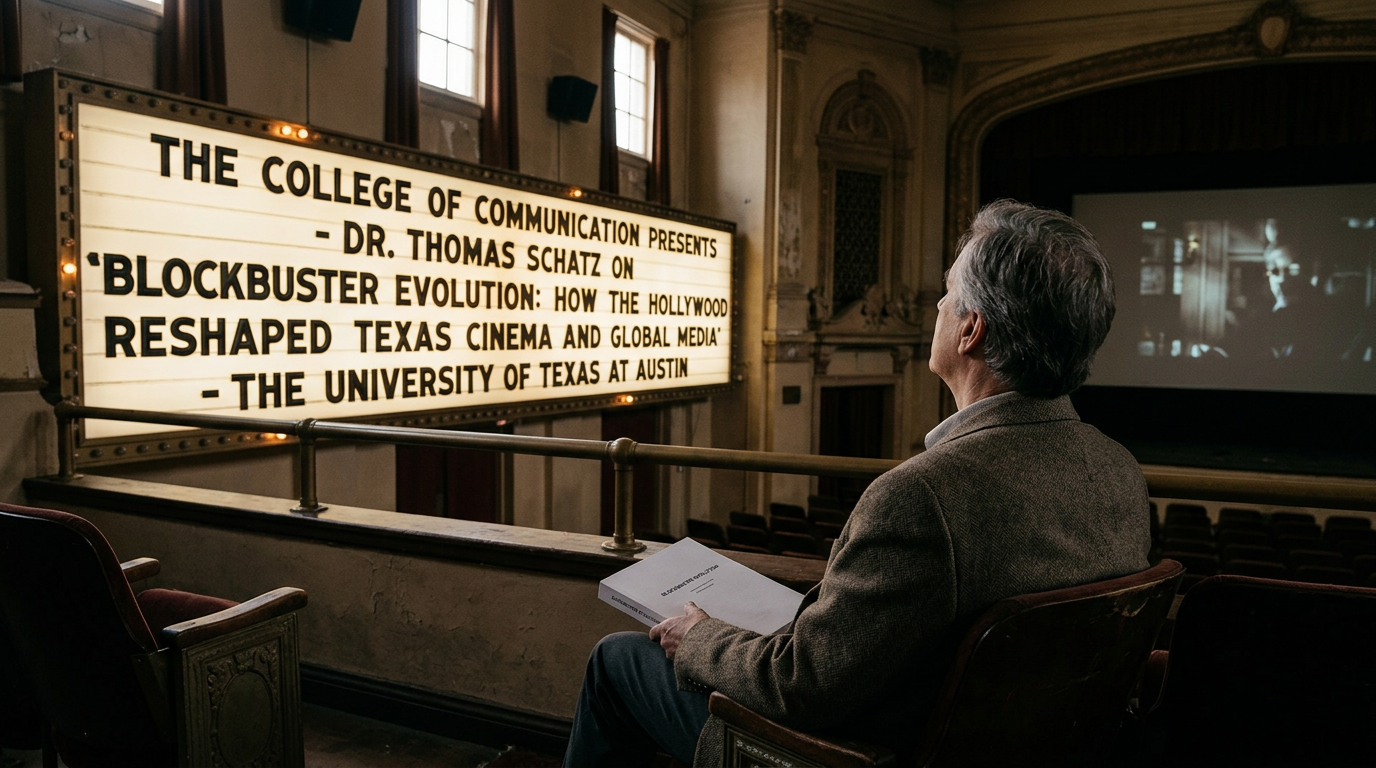
The landscape of modern entertainment was forged during a volatile period of corporate restructuring and creative experimentation between the mid-1970s and the early 2000s. According to Thomas Schatz, a media historian and professor at the University of Texas at Austin, this era represented a 'last hurrah' for traditional Hollywood while simultaneously birthing the modern conglomerate model. In his recent work, Schatz details how the rise of the blockbuster coincided with the absorption of independent film aesthetics into the mainstream. This transition was characterized by massive industrial shifts where global electronics firms and communications giants began acquiring historic film studios, fundamentally altering the economics of storytelling. Historically, the film industry operated on a decentralized model, but the late 20th century saw the emergence of 'total media' strategies where films served as anchors for broader brand ecosystems. This era provided the foundation for the current landscape of streaming services and franchise-dominated box offices that define the Texas media consumption experience today. Historically, Texas has served as both a mirror and a laboratory for these national trends. The state’s relationship with cinema dates back to the early 20th century, but it was the deregulatory environment of the 1980s that allowed Texas-based businesses to integrate with the developing Hollywood machine. As studios became parts of larger parent companies, the distribution of media reached deeper into the heart of Texas through the expansion of suburban multiplexes and the rise of home video retail. This period fundamentally shifted how Texans engaged with high-concept cinema, moving from local community theaters to massive, corporate-owned venues that prioritized global tentpole releases. This background provides the necessary context to understand Schatz’s argument that the industry did not just change its style, but its very biological and corporate DNA during this power surge.
Texas relevance
As a central hub for film production and academic scholarship, Texas remains a primary stakeholder in the evolution of the entertainment industry. The University of Texas at Austin has long served as a training ground for the filmmakers and historians who analyze these shifts, with scholars like Thomas Schatz providing the intellectual framework for understanding how global mergers affect local production. Furthermore, Texas cities like Austin and Dallas rose to prominence as 'indie' alternatives during the very era Schatz describes, benefiting from the spillover of creative talent looking for life outside the strictly corporate coastal systems. The state's economic incentives for filming and its massive network of independent theaters mean that any shift in how Hollywood conglomerates operate has a direct financial impact on the Texas labor market and the state's cultural identity. When major conglomerates change their distribution strategies, it impacts the revenue of the Alamo Drafthouse, the viability of the Dallas International Film Festival, and the employment rates of local production crews. Texas is not just a consumer of these changes; it is a vital part of the infrastructure that supports either the survival of independent thought or the complete dominance of corporate branding in modern cinema. Understanding Schatz’s research helps Texas filmmakers navigate an environment where 'selling out' isn't just an artistic choice, but an inevitable consequence of the way the modern media machine is built.
The Rise of the Global Multimedia Conglomerate
The era Schatz examines began when movies were no longer treated as standalone artistic ventures but as the primary drivers of large-scale corporate synergy. During the 1980s, the traditional studio system was largely dismantled and rebuilt under the ownership of massive companies like Sony, Matsushita, and Time Inc. These parent companies weren't just interested in the box office; they wanted the intellectual property that could be sold across music, toys, television, and consumer electronics. This led to a fundamental shift in how films were greenlit, with priority given to projects that had 'franchise' potential.
This period famously saw the release of 'Batman' in 1989, a film Schatz points to as the turning point for the industry. It was no longer just a movie; it was a global branding event that coordinated a musical soundtrack, a massive toy line, and extensive licensing deals. In Texas, this meant the arrival of the modern blockbuster marketing machine, where cinema became less about the story and more about the cultural ubiquity of the brand. This shift forced independent creators to either join these large systems or find survival on the fringes of a rapidly consolidating market.
Independence as a Corporate Commodity
Paradoxically, as Hollywood became more corporate, the 'indie' film movement gained unprecedented popularity. Schatz explains that during the 1990s, studios like Miramax and New Line Cinema—originally independent outfits—were acquired by Disney and Time Warner. Films like 'Pulp Fiction' showed that edgy, unconventional storytelling could generate massive profits if backed by the marketing muscle of a major studio. This created a new hybrid model where 'indie' essentially became a aesthetic style or a sub-brand for corporate giants.
For the Texas artistic community, this was a double-edged sword. On one hand, it allowed Texas directors to gain access to national audiences and larger budgets. On the other, it meant that the 'independent' label was often used merely as a marketing tool to sell products to younger, more cynical demographics. The rugged individualism that characterized early Texas cinema was increasingly absorbed into the polished, calculated world of 'prestige' divisions within the major studios, forever blurring the lines between art and commerce.
The Texas Connection: Academic and Practical Stakes
Thomas Schatz’s location at the University of Texas at Austin is not coincidental. Austin became a beacon for the 'slacker' culture and independent filmmaking that thrived during the final years of the era he describes. The city’s identity was deeply intertwined with the resistance to the blockbuster model, yet it also became a primary beneficiary of the industry's growth. The scholarship produced at UT provides a critical check on the narrative that Hollywood’s evolution was purely driven by creative needs, highlighting instead the cold financial calculations of its parent companies.
The impact of these mergers was felt on the ground in Texas through the professionalization of the local film workforce. As conglomerates looked for cheaper places to film outside of California, Texas offered competitive environments that could support large-scale productions while maintaining a lower cost of living. This era solidified Texas as a secondary hub for the film industry, a place where the corporate needs of Hollywood met the creative expertise of local technicians and writers, creating a complex relationship of dependency and innovation.
Stakeholders and the Shifting Distribution Model
The stakeholders in this narrative include not just the studio executives, but the theater owners and the audiences themselves. During the period between 1975 and 2005, the theater experience was transformed into a high-stakes environment where a film’s survival was determined in its first weekend. This 'opening-wide' strategy meant that smaller films were often crowded out in favor of massive releases. Texas theater chains had to adapt or close, leading to the rise of specialized theaters that catered to the audience’s desire for a curated experience.
The legacy of this era is also visible in the rise of the home video market. Companies like Blockbuster, which was headquartered in Dallas, Texas, became central players in the industry’s revenue stream. The ability for a film to have a 'second life' on VHS and DVD allowed for more experimental films to eventually find their footing, provided they could withstand the initial corporate pressure of the theatrical release. This ecosystem defined the way a generation of Texans consumed media until the digital revolution disrupted it once again.
What Changes Next for the Industry?
As we look beyond the 'last hurrah' described by Schatz, the industry is entering a phase dominated by algorithmic distribution. The conglomerates of the 90s have grown even larger, now incorporating telecommunications and internet providers into their structures. This suggests that the 'total media' strategy is now an all-encompassing digital reality. For the future of Texas cinema, this means a shift toward content that can live on diversified platforms, where the local flavor must be balanced against the demands of a globalized digital audience.
The next era will likely see a pushback against the extreme consolidation of the 1980s and 90s. As audiences grow weary of endless sequels and franchise fatigue, there is a renewed opportunity for genuinely independent creators to utilize decentralizing technologies. However, the financial structures established during the 'Power Surge' remain the dominant force. Texas will continue to serve as a vital battleground where the tension between corporate efficiency and creative authenticity plays out in the theaters and on the screens of the state.
Reader Impact and the Future of Media Literacy
For the average reader, understanding these historical shifts is a matter of media literacy. It helps audiences recognize why certain films receive massive promotion while others disappear, and why the local cinema landscape looks the way it does. By understanding the corporate history of the studios, Texans can better appreciate the value of supporting local, independent venues that provide an alternative to the conglomerate-driven mainstream. The films we choose to support directly influence which stories are told and who has the power to tell them.
Ultimately, Schatz's work emphasizes that the movies are more than just entertainment; they are the products of a massive, evolving industrial system. As this system continues to change, the role of the audience becomes more critical. By staying informed about the financial and structural shifts in Hollywood, Texans can play a proactive role in ensuring that the next 'hurrah' of the film industry includes a diverse array of voices and a healthy respect for the art of cinema, rather than just the bottom line of a balance sheet.
Analysis
The evolution of Hollywood from a creator of individual films to a manager of global intellectual property has profound implications for Texas. While the state has successfully branded itself as a haven for 'independent' art, primarily through festivals like SXSW, the reality is that the financial levers are still controlled by the massive conglomerates Schatz describes. The historical 'Power Surge' effectively commercialized rebellion, turning the indie aesthetic into a marketable commodity. For Texas to maintain its unique voice in cinema, it must navigate this corporate landscape while fostering local investment that isn't entirely dependent on the whims of New York or Los Angeles boardrooms. The story of Hollywood's mergers is a cautionary tale of how quickly a creative industry can become a subsidiary of the global tech and retail sectors. As independent cinema becomes a 'prestige' wing of major studios, the grassroots spirit that built the Texas film industry in the 1970s faces its greatest challenge: surviving in an era where data-driven metrics often outweigh artistic intuition.
Source attribution
This story was reported using a public release from the Texas Standard. Keep TX Red rewrote the coverage independently and links to the official statement for verification.
Frequently Asked Questions
- Who is Thomas Schatz and why is his research significant?
- Thomas Schatz is a renowned film historian and a professor at the University of Texas at Austin. His research is significant because it provides a structural and economic analysis of how movies are made, moving beyond just the artistic merit to understand the corporate forces that shape what audiences see on screen. He specifically focuses on how the transition to conglomerate ownership changed the 'DNA' of the film industry.
- What does 'indie went mainstream' mean in this context?
- This refers to the period in the 1990s when major Hollywood studios began buying independent distributors (like Miramax) because they realized that 'indie' films could be highly profitable. This led to larger budgets for independent-style movies but also gave corporate executives more control over the independent scene, eventually turning 'indie' into a brand rather than a method of production.
- How did the 1980s mergers change the types of movies being made?
- The mergers led to a 'hits-driven' business model. Because studios were now owned by massive corporations used to high profit margins, they began focusing on 'blockbusters'—films that could be marketed globally and paired with merchandise, rather than diverse, mid-budget stories. This essentially created the 'franchise' era we live in today.
- What role did Texas play in this Hollywood transformation?
- Texas served as both a strategic location for the headquarters of major distribution players like Blockbuster Video and as a cultural alternative to the Hollywood system through the Austin film scene. Additionally, research from institutions like UT Austin has been pivotal in documenting and analyzing these shifts as they happened.
Official Sources
Take the next step
Browse the Newsroom →Read more about Keep Texas Red → Our full guide to what Keep Texas Red means and why Texans support it.
Related Articles



Get Texas updates delivered weekly.
Independent Texas reporting on politics, policy, and daily life. One email a week. Unsubscribe anytime.
Keep TX Red Newsroom
The Keep Texas Red Editorial Staff produces nonpartisan explainers, policy breakdowns, and educational resources to help Texans understand how their government works. All content is reviewed for accuracy and updated regularly.
About Keep TX Red →