Invasive Screwworm Threat Returns to Texas: State Agriculture Officials Alert Livestock Producers
Texas faces a renewed threat from the flesh-eating New World screwworm. Learn the symptoms, tracking data, and how to protect Texas livestock.
Editorial disclaimer: Opinions and analysis on Keep TX Red are editorial content — not statements of fact. See our editorial standards.
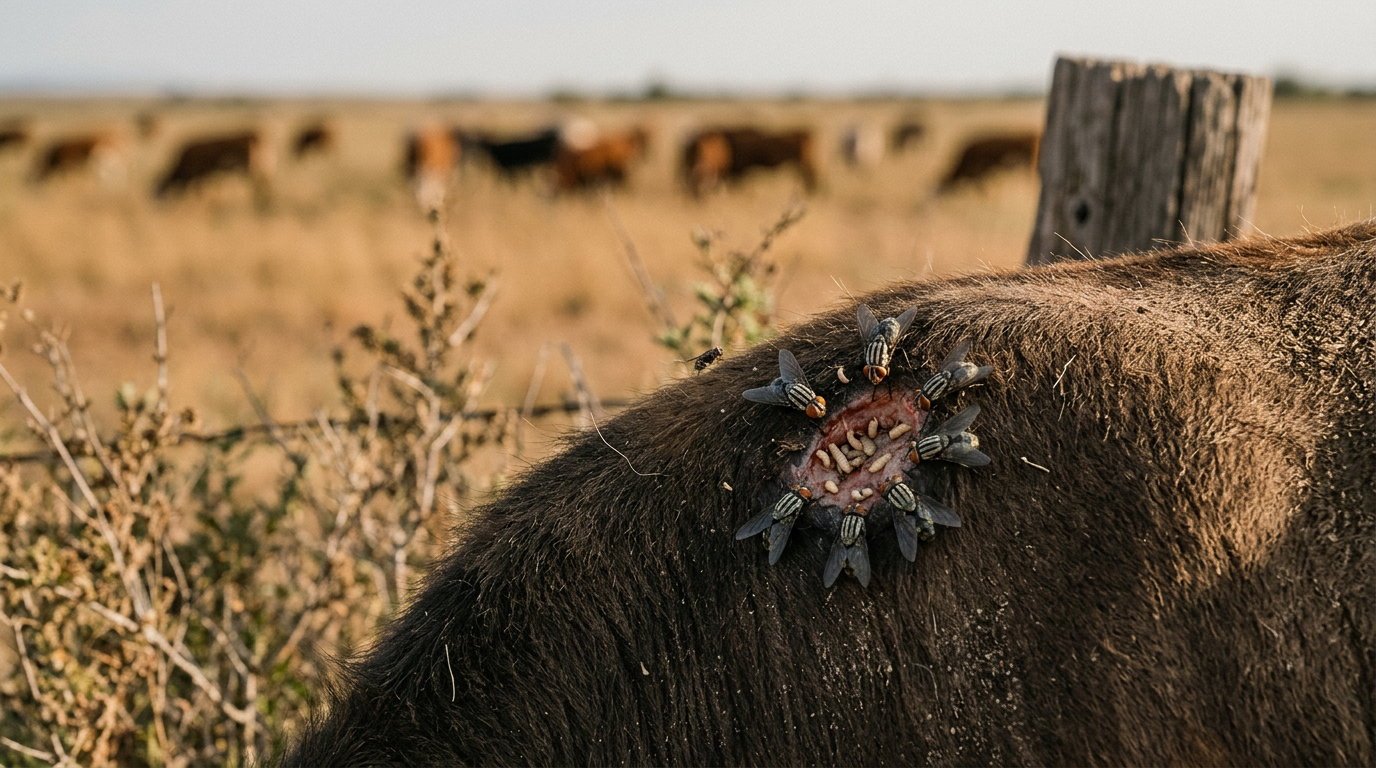
Agricultural authorities in Texas have confirmed the presence of the New World screwworm, marking a significant biological threat to the state’s massive livestock and wildlife populations. Historically, the United States successfully eradicated this parasite through an intensive sterile fly release program in the mid-20th century, but recent detections indicate a potential resurgence that could jeopardize the state's multi-billion dollar cattle industry. The New World screwworm is the larvae of the fly Cochliomyia hominivorax, a species that differs from typical houseflies by targeting living tissue rather than decaying matter. These pests seek out even the smallest open wounds on warm-blooded animals to deposit their eggs. Once the larvae hatch, they begin to consume the host's living flesh, which can lead to severe infection, permanent tissue damage, or death if left untreated. This biological threat is not limited to commercial livestock; it poses a lethal risk to deer, feral hogs, pets, and even humans in rare cases. The Texas Animal Health Commission and federal partners are currently tracking localized infestations to prevent a wider outbreak that could lead to interstate transport restrictions and massive economic losses for Texas ranchers. Monitoring efforts have shifted into high gear as seasonal conditions provide an ideal environment for the parasite to thrive and spread across the southern border regions into the Texas heartland.
Texas relevance
As the top cattle-producing state in the nation, Texas has the most to lose from a screwworm resurgence. The state's history with the parasite is deep-rooted; before the eradication success of the 1960s, screwworms cost the Texas economy hundreds of millions of dollars annually in lost livestock and mitigation costs. Cities like San Angelo and regions throughout the Hill Country and South Texas are particularly vulnerable due to the high density of ranching operations and white-tailed deer populations. Any confirmed case on a Texas ranch requires immediate quarantine and reporting to state officials to ensure that no contaminated animals are moved to auctions or other facilities, which would trigger a chain reaction of lockdowns across the Texas agricultural supply chain.
Biological Characteristics and Lifecycle
The New World screwworm lifecycle is an aggressive process that begins when a female fly is attracted to the scent of an open wound on a host animal. Unlike other blowflies that feed on carrion, the screwworm fly specifically seeks out fresh cuts, surgical sites, or even navels of newborn calves. A single female can lay hundreds of eggs at the edge of a wound within seconds. Within 12 to 24 hours, the larvae hatch and immediately begin burrowing into the living flesh of the host.
The larvae use pair of dark, wood-screw-shaped mandibles to anchor themselves and feed. As they grow, they create a deep, pocket-like cavity in the tissue. This feeding process produces a distinct odor that attracts even more female flies, leading to multiple infestations in a single wound. After five to seven days of feeding, the mature larvae drop to the ground, burrow into the soil, and pupate before emerging as adult flies to begin the cycle again, often traveling several miles in search of new hosts.
Understanding this fast-moving lifecycle is critical for Texas ranch hands and owners. Because the window from egg-laying to severe tissue damage is so short, daily inspections of herds are becoming a necessary operational standard in affected counties. The ability of the fly to travel significant distances means that a single neglected case on one property can lead to an outbreak that spans several neighboring counties within a matter of weeks.
Identifying Symptoms in Livestock and Pets
Early detection is the most effective way to prevent the loss of an animal to screwworm infestation. One of the first signs of a problem is an unusually large or draining wound that does not appear to be healing. Because the larvae remain buried deep within the tissue, they may not be immediately visible on the surface. Owners should look for a watery, bloody discharge coming from a wound, which is often accompanied by a foul, characteristic odor that is different from standard infection.
Behavioral changes are also a major indicator. Infested animals often show signs of extreme discomfort, lethargy, or a desire to isolate themselves from the rest of the herd. In cattle, this might manifest as constant licking or rubbing of a specific area. If the infestation is in a newborn calf's navel, the animal may become weak and fail to nurse. In pets, owners might notice localized swelling that looks like an abscess but feels firm and moves as the larvae shift beneath the skin.
To properly inspect a suspicious wound, it may be necessary to gently clear away discharge. If larvae are present, they are typically white or cream-colored and have a tapered body. It is vital that individuals do not attempt to squeeze the larvae out, as this can cause further trauma and secondary bacterial infections. Instead, an agricultural vet should be contacted immediately to ensure the larvae are collected for identification by state laboratory officials.
Economic Impact on the Texas Cattle Industry
The Texas cattle industry contributes over $12 billion annually to the state's economy, and the screwworm is one of the few pests capable of causing systemic market disruption. Beyond the direct loss of livestock, the cost of increased labor for herd inspections and the price of chemical treatments add a significant burden to ranching margins. If the infestation spreads, the U.S. Department of Agriculture may impose movement restrictions, preventing Texas producers from shipping cattle across state lines.
Historical data suggests that without the sterile fly program, the industry would face 10% to 20% higher operational costs just to manage the pest. Small-scale producers and family-owned ranches are often hit hardest, as they may lack the automated monitoring systems or large-scale veterinary support of corporate operations. The ripple effect extends to the Texas meat processing sector, where any interruption in the supply of healthy cattle can lead to facility shutdowns and job losses in rural communities.
Furthermore, the presence of screwworms affects the export market. International trading partners often have zero-tolerance policies for specific invasive pests. A confirmed widespread presence in Texas could result in temporary bans on Texas beef in foreign markets, further depressing prices and impacting the state's GDP. This makes the current containment efforts by the Texas Animal Health Commission a top priority for economic stability.
Prevention and Management Strategies
Preventing screwworm infestations requires a multi-faceted approach centered on wound management and fly population control. Ranchers are advised to schedule elective procedures, such as dehorning, branding, or castrating, during cooler months when fly activity is naturally lower. If these procedures must be done during peak fly season, the use of topical fly repellents and wound dressings is highly recommended to create a physical and chemical barrier against egg-laying females.
Newborn management is another critical area of focus. Applying iodine or other protective solutions to the navels of newborn livestock can significantly reduce the risk of infestation during the animal's most vulnerable stage. Additionally, maintaining clean pastures and removing dead animals quickly can help reduce the general fly population, though screwworms specifically target living hosts, general sanitation helps minimize the overall stress on the animals' immune systems.
Chemical treatments, including certain dewormers like ivermectin, have shown efficacy in preventing larvae from successfully establishing themselves in a host. However, these should be used under veterinary guidance to prevent the development of resistance. For landowners, the most effective tool remains visual surveillance. By catching an infestation in the first 24 hours, the wound can be cleaned and the larvae destroyed before they have a chance to drop into the soil and multiply.
The Role of State and Federal Agencies
The primary defense against a large-scale screwworm invasion is the joint effort between the Texas Animal Health Commission (TAHC) and the USDA’s Animal and Plant Health Inspection Service (APHIS). These agencies maintain a 'buffer zone' in Central America where they release millions of sterile male flies. Since female flies only mate once, mating with a sterile male results in no offspring, effectively collapsing the population. Recent detections in Texas suggest a breach or a hitchhiking event that has bypassed this barrier.
When a case is confirmed in Texas, the TAHC coordinates the local response, which includes mapping the infestation and conducting 'trace-backs' to determine where the animal has been and where the fly might have originated. They provide testing kits to veterinarians and ranchers to ensure that any larvae found are correctly identified as New World screwworms rather than less dangerous blowflies. This distinction is vital for determining the level of state intervention required.
Public education is also a key component of the agency's mission. By providing Texas residents with information on how to spot and report the pest, the TAHC creates a statewide network of observers. This 'citizen science' approach allows the state to respond to outbreaks in remote areas that might otherwise go unnoticed for weeks, significantly reducing the total area affected by the parasite.
Impact on Texas Wildlife and Hunting
Texas wildlife, particularly the white-tailed deer population, is highly susceptible to screwworm infestations. Unlike livestock, wild animals cannot be easily inspected or treated, meaning an outbreak in the wild can lead to significant population declines. This has a direct impact on the Texas hunting industry, which is a major source of revenue for rural counties during the autumn months. A decrease in deer numbers or the discovery of infested carcasses can lead to reduced tag sales and land lease values.
Conservationists are concerned about the impact on endangered species as well. In previous outbreaks in other states, rare deer subspecies were nearly wiped out before intervention could take place. In Texas, the sheer diversity of the landscape means that once the parasite enters the wild population, it can hide in brush-heavy areas like the South Texas Plains, making it nearly impossible to eradicate without large-scale aerial sterile fly drops.
Landowners who manage property for wildlife are encouraged to monitor their herds using trail cameras and to report any animals showing signs of distress or unusual wounds. During the rut, when bucks are prone to fighting and sustaining injuries, the risk of screwworm infestation increases exponentially. Cooperation between hunters, landowners, and the Texas Parks and Wildlife Department is essential to protecting the state's natural heritage from this invasive threat.
Analysis
The return of the screwworm represents more than just a biological nuisance; it is a test of the state's modern biosecurity infrastructure. Given the current challenges with border security and the movement of unconventional vectors, the risk of re-infestation from southern regions is at its highest point in decades. This situation demands a proactive response from the Texas Legislature and agricultural agencies to ensure that funding for monitoring and sterile male fly technology remains robust. For the Texas taxpayer and consumer, an uncontrolled outbreak would likely result in higher meat prices and a significant blow to the state's rural economy. Vigilance by private landowners will be the primary line of defense against this flesh-eating parasite.
Source attribution
This story was reported using a public release from the Texas Standard. Keep TX Red rewrote the coverage independently and links to the official statement for verification.
Frequently Asked Questions
- What exactly is a New World screwworm?
- The New World screwworm is the larval stage of the fly species Cochliomyia hominivorax. Unlike common flies that eat dead tissue, these larvae are 'obligate parasites' that must feed on the living flesh of warm-blooded hosts to survive. They are named for their screw-like appearance and the way they burrow into the tissue of their host.
- Can humans be infected by screwworms?
- Yes, humans can be infested if they have an open wound that is exposed to the female fly. While rare, human cases have occurred, particularly in individuals who are unable to properly care for themselves or are outdoors in heavily infested areas. Standard hygiene and treating even minor cuts is the best defense.
- What should I do if I find larvae on my animal?
- Do not attempt to remove the larvae yourself, as you might leave parts behind or cause more injury. Contact your local veterinarian or the Texas Animal Health Commission immediately. They will take a sample for lab identification and provide instructions on how to treat the animal and secure the area.
- How does the sterile fly program work?
- This program involves breeding millions of male screwworm flies and sterilizing them using radiation. When released into the wild, they mate with wild females, who only mate once in their lifetime. Since no eggs are fertilized, the population eventually dies out. This method was used to eradicate screwworms from the U.S. in the 1960s.
- Is there a specific time of year when screwworms are most active?
- Screwworms thrive in warm, humid conditions. In Texas, this means they are most active from late spring through early autumn. However, in South Texas, the climate may be mild enough for them to remain active year-round if not kept in check by a hard freeze.
Official Sources
Take the next step
Browse the Newsroom →Read more about Keep Texas Red → Our full guide to what Keep Texas Red means and why Texans support it.
Related Articles


Get Texas updates delivered weekly.
Independent Texas reporting on politics, policy, and daily life. One email a week. Unsubscribe anytime.
Keep TX Red Newsroom
The Keep Texas Red Editorial Staff produces nonpartisan explainers, policy breakdowns, and educational resources to help Texans understand how their government works. All content is reviewed for accuracy and updated regularly.
About Keep TX Red →