Houston’s African Community celebrates Historic World Cup Advancement as Tournament Expands
Houston's massive African diaspora celebrates as a record 10 teams from the continent qualify and thrive in the expanded FIFA World Cup field.
Editorial disclaimer: Opinions and analysis on Keep TX Red are editorial content — not statements of fact. See our editorial standards.
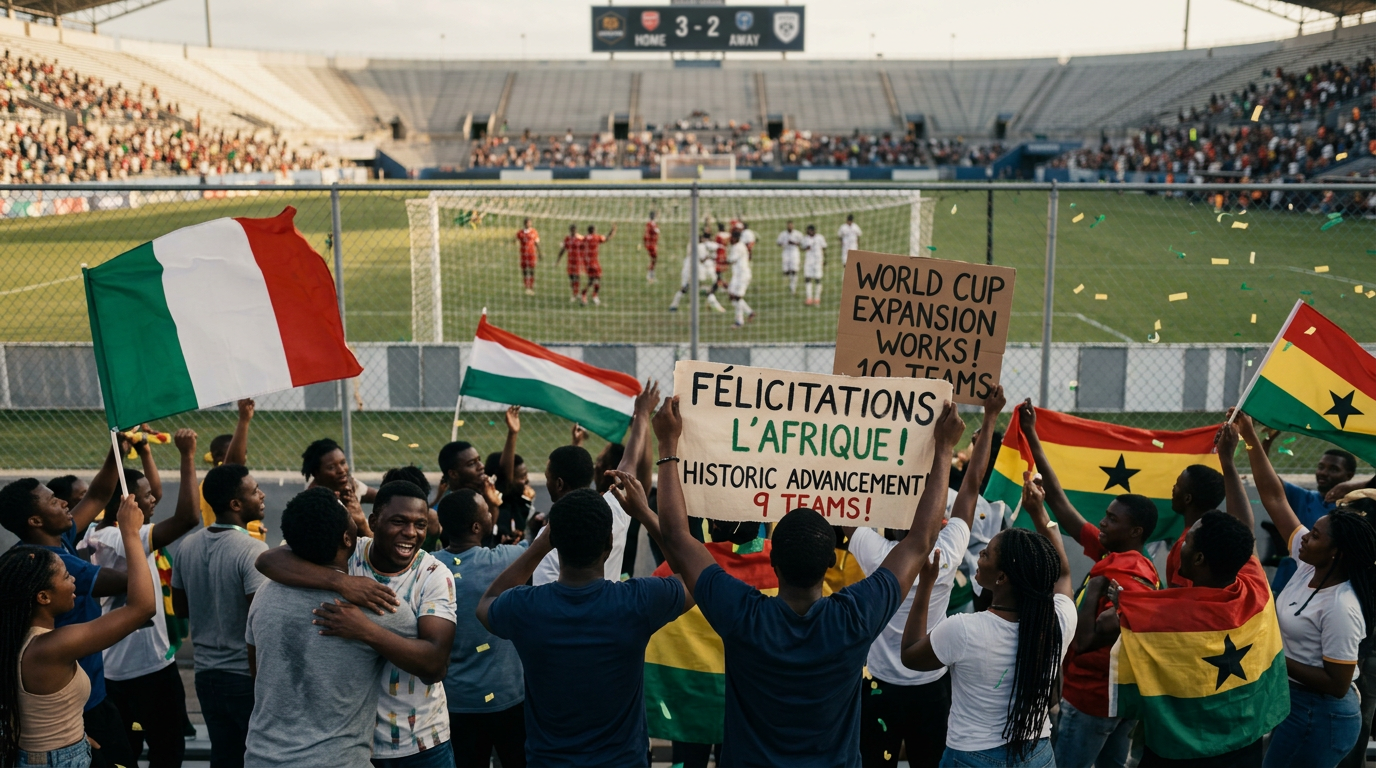
The landscape of international football is undergoing a seismic shift, and nowhere is that more evident than in the streets of Houston, Texas. Recently, the FIFA World Cup expanded its field, allowing for a broader representation of nations from across the globe. This structural change has directly benefited the African continent, which saw a record ten countries qualify for the tournament. In a stunning display of rising athletic prowess, nine of those ten teams successfully navigated the group stages to advance into the knockout rounds. Historically, African nations have faced significant barriers to entry in the global tournament due to restricted qualifying slots, but the new format has paved the way for a more inclusive competition that reflects the global popularity of the sport. In major metropolitan hubs like Houston, these developments are more than just sports statistics; they are cultural milestones. The success of teams from nations such as Nigeria, Senegal, and Morocco has sparked city-wide celebrations, bringing together thousands of residents who trace their heritage back to the African continent. This surge in representation highlights the growing influence of non-European teams in a sport traditionally dominated by a handful of South American and Western European powerhouses. As the tournament progresses, the energy in Texas remains high, with local businesses and community centers becoming focal points for fans to gather and witness what many are calling a new era for African soccer.
Texas relevance
Texas, and particularly the city of Houston, serves as one of the most significant hubs for the African diaspora in the United States. With one of the nation's largest populations of Nigerian, Ethiopian, and Ghanian immigrants, the local impact of the World Cup is profound. The state’s diverse demographics mean that international sporting events serve as major economic and social drivers. In Houston, which is a host city for many major sporting events, the success of these international teams translates into packed local viewing parties, increased revenue for ethnic restaurants, and a reinforced sense of community identity. Texas has a long history of embracing global cultures through sports, and this tournament reinforces the state's position as a central crossroad for international affairs and cultural exchange.
The Impact of World Cup Expansion
The decision by FIFA to expand the field of the World Cup was met with significant debate among sports analysts and traditionalists. Proponents argued that the move was necessary to grow the game in developing markets, while skeptics feared it would lower the competitive bar of the tournament. The 2026 cycle has largely silenced the critics, as the inclusion of 10 African nations resulted in one of the most competitive group stages in recent history. By providing more slots to the Confederation of African Football (CAF), the tournament has allowed for a deeper look at the tactical sophistication and physical endurance of teams that previously missed the cut by narrow margins.
For teams like the Super Eagles of Nigeria or the Lions of Teranga from Senegal, the expanded format provided the breathing room necessary to showcase their depth. In previous years, even high-ranking African teams would often be excluded due to the limited number of slots assigned to the entire continent. Now, with nearly double the representation, the sheer volume of African talent is impossible to ignore. This shift has not only changed the tournament bracket but has also altered the global scouting landscape, with more eyes than ever on players competing for their home nations.
Houston as a Global Sports Epicenter
Houston has solidified its reputation as a premiere destination for international soccer fans. As the most diverse city in Texas, it serves as a microcosm of the World Cup itself. During the recent matches, neighborhoods in Southwest Houston and the Energy Corridor saw an explosion of activity. Local businesses reported a surge in patronage as fans sought out venues that mirrored the atmosphere of stadiums in Lagos or Dakar. This economic injection is a testament to how international sports can drive local Texas markets, creating a temporary but intense demand for hospitality and entertainment services.
The city's infrastructure, from its expansive parks to its state-of-the-art stadiums, makes it uniquely suited to handle the fervor of a global tournament. Community organizers in Harris County have worked to ensure that viewing events are safe and accessible, recognizing that for many Houstonians, these games are a vital link to their ancestral homes. The city's ability to host these diverse crowds without incident reflects the welcoming nature of the Lone Star State and its capacity to thrive as a multicultural hub.
Cultural Identity and the Diaspora
For many members of the African diaspora in Texas, the World Cup is less about the scores and more about the visibility of their heritage. In a state where cultural identity is often celebrated through festivals and public gatherings, the success of African teams provides a unique platform for pride. Many first- and second-generation immigrants use these matches as an opportunity to teach younger family members about their roots. Wearing the national colors of a home country while standing on Texas soil has become a common sight, symbolizing the dual identity that many Texans hold.
The communal aspect of watching these games cannot be overstated. Unlike traditional American sports which are often watched in individual homes, soccer in the African tradition is a collective experience. In Houston, this has led to the transformation of community halls and church basements into miniature stadiums. The shared joy of a goal or the collective tension of a penalty shootout creates bonds between neighbors who might otherwise never interact. This social cohesion is a quiet but powerful benefit of the tournament’s expansion and the subsequent success of international teams.
The Economic Ripple Effect in Texas
The financial implications of the World Cup reach far beyond the ticket sales at the stadiums. In Texas, the retail sector has seen a measurable uptick in the sale of sports apparel, flags, and memorabilia associated with African nations. Local entrepreneurs have seized the moment, offering themed viewing parties and specialized catering that highlights African cuisine. This demonstrates how global events can stimulate the grassroots economy in Texas, providing opportunities for small business owners to reach new customers and capitalize on the international spotlight.
Furthermore, the media coverage of the diaspora’s celebrations in cities like Houston and Dallas provides positive branding for the state. At a time when Texas is often in the national spotlight for policy and politics, the images of diverse communities coming together to celebrate sport project an image of a vibrant, modern, and energetic state. This type of soft power is invaluable for attracting future international investment and tourism, showing that Texas is a place where every corner of the world can find a home and a reason to celebrate.
Technical Growth of African Football
The fact that nine out of ten African teams advanced to the knockout stage is a clear indicator of the technical growth of the sport on the continent. Over the last decade, many African nations have invested heavily in youth academies and domestic leagues. They have also benefited from players who compete in top-flight European leagues bringing their experience back to their national squads. This professionalization of the sport has closed the gap between the historically dominant nations and those categorized as 'emerging' powers. The results seen this year are the fruit of long-term planning and investment in athletic infrastructure.
Tactically, African teams have shown a remarkable ability to adapt to different styles of play. Whether it was the disciplined defense of Morocco or the explosive counter-attacks of Ghana, the variety of strategies on display has been impressive. For soccer fans in Texas, who are accustomed to high-quality high school and collegiate sports, the level of competition has been a welcome sight. The rigor of the tournament has proven that these teams are not just there to fill slots; they are there to compete for the trophy, challenging the status quo of the soccer world.
The Future of International Soccer in the US
As the United States prepares to host major portions of the upcoming World Cup cycles, the engagement of the African diaspora in cities like Houston offers a roadmap for success. It shows that there is a massive, untapped market for international matches on American soil. Organizers are taking note of the high attendance and passionate responses from these communities, which will likely influence how future tournaments are marketed and where matches are scheduled. Texas is positioned to be a primary beneficiary of this trend, given its central location and massive population centers.
The enthusiasm seen this year suggests that the World Cup will continue to grow in popularity within the US. As more residents see their own backgrounds represented on the field, the emotional investment in the sport will deepen. This sets the stage for a lasting legacy for soccer in Texas, potentially inspiring a new generation of Texas athletes to pursue the sport at a professional level. The success of the ten African nations in the expanded field is just the beginning of a broader transformation of the sporting landscape in the Lone Star State.
Analysis
Opinion: The success of nine African teams reaching the knockout stage is not just a fluke of expansion; it is a validation of the talent pool that has long been overlooked by global football hierarchies. For decades, critics argued that expanding the World Cup would dilute the quality of play. However, the performance of these ten African nations proves that the talent was always there, merely lacking the systemic opportunity to compete on the world stage. From a Texas perspective, this cultural moment underscores the importance of the state's international connections. As Houston continues to grow as a global city, the intersection of sports, commerce, and heritage becomes a vital part of the Texas success story. This tournament should be viewed as a turning point where the 'global' in the World Cup finally matches the reality of the sport's diversity.
Source attribution
This story was reported using a public release from the Texas Standard. Keep TX Red rewrote the coverage independently and links to the official statement for verification.
Frequently Asked Questions
- How many African teams qualified for the latest World Cup?
- A total of 10 teams from the African continent qualified for the tournament due to the expansion of the field, marking a historical high for the region.
- Why is Houston such a significant location for these celebrations?
- Houston is home to one of the largest and most diverse African immigrant populations in the United States, including major communities from Nigeria, Ethiopia, and Ghana, making it a natural center for international fan activity.
- Did the expansion of the tournament format affect the quality of play?
- While some feared quality would drop, the performance of African nations suggests otherwise; nine out of ten qualified teams reached the knockout rounds, proving the competitive depth of the expanded field.
- What kind of local impact are the games having in Texas?
- The games have sparked significant economic activity in the hospitality and retail sectors, while also fostering social cohesion and cultural pride among Texas's diverse international communities.
Official Sources
Take the next step
Browse the Newsroom →Read more about Keep Texas Red → Our full guide to what Keep Texas Red means and why Texans support it.
Related Articles

Get Texas updates delivered weekly.
Independent Texas reporting on politics, policy, and daily life. One email a week. Unsubscribe anytime.
Keep TX Red Newsroom
The Keep Texas Red Editorial Staff produces nonpartisan explainers, policy breakdowns, and educational resources to help Texans understand how their government works. All content is reviewed for accuracy and updated regularly.
About Keep TX Red →