How Texas Roots Shaped the History of Cinco de Mayo and General Ignacio Zaragoza
Discover the deep Texas connections to Cinco de Mayo, centered on the Goliad-born General Ignacio Zaragoza and the Battle of Puebla.
Editorial disclaimer: Opinions and analysis on Keep TX Red are editorial content — not statements of fact. See our editorial standards.
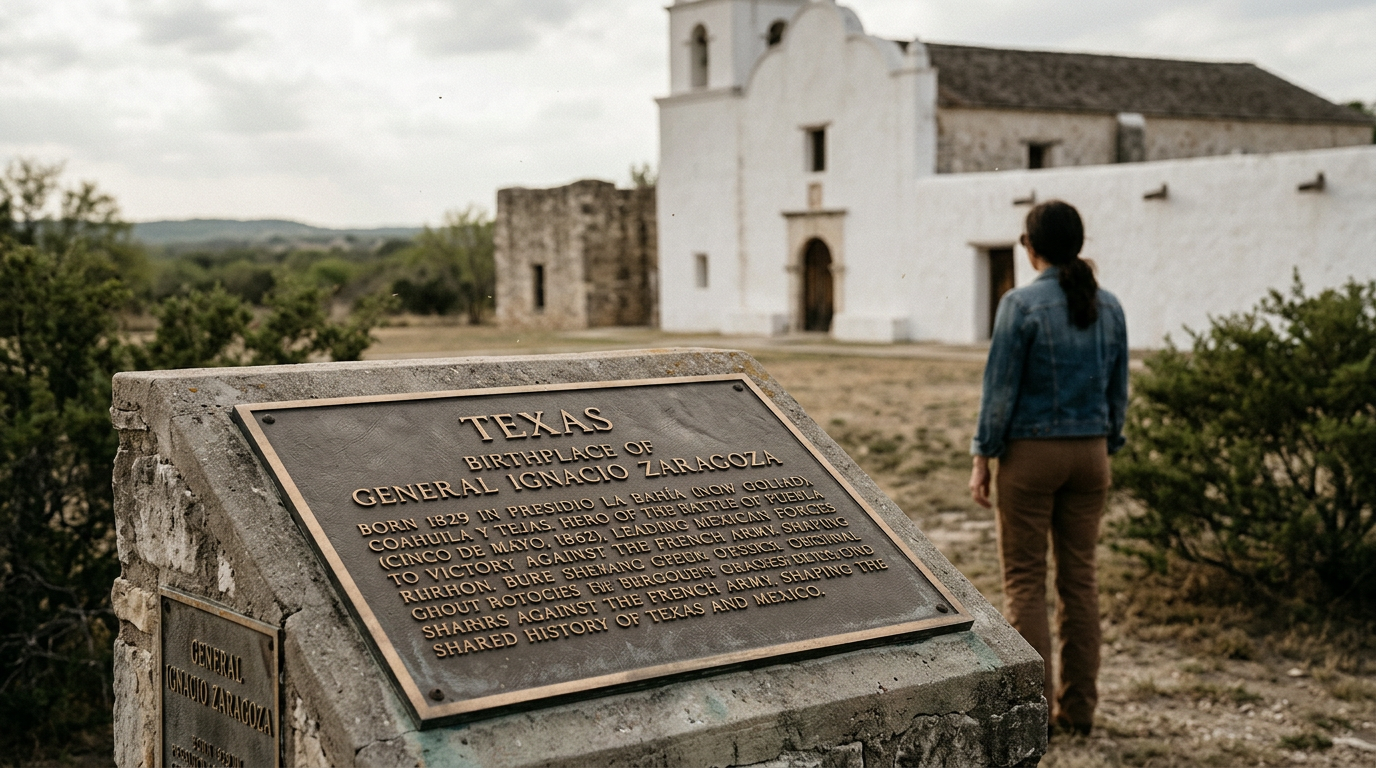
Cinco de Mayo is frequently misunderstood as Mexican Independence Day, but its true historical significance is deeply intertwined with the story of a man born in Texas. General Ignacio Zaragoza, the military mastermind who led Mexican forces to an unlikely victory over the French army in 1862, was born in the settlement of Bahía del Espíritu Santo, which is known today as Goliad, Texas. At the time of his birth in 1829, Texas was still part of the Mexican state of Coahuila y Tejas. This geographical and historical link firmly anchors the holiday’s origins within the cultural and territorial footprint of the Lone Star State. Texas has long emphasized the preservation of this specific narrative to ensure that the holiday is recognized not just as a festive occasion, but as a tribute to a native son’s strategic brilliance and his defense of sovereignty against European imperialism. The context of the early 19th century in Texas provides a map of the shifting borders that shaped Zaragoza’s life. After his family moved to Matamoros and later Monterrey, his identity remained tethered to his birthplace. In modern times, the State of Texas has officially designated Goliad as the 'Birthplace of Ignacio Zaragoza,' establishing a permanent historical landmark at the site of his former home. This legacy serves as a bridge between modern Texas and its past, highlighting a period when the defense of North American soil against foreign monarchs was a shared priority across the Rio Grande. Understanding this connection requires a look at the complexities of the era, where military service and civic duty were frequently defined by the rapidly changing political climate of the borderlands.
Texas relevance
Texas holds a unique claim to Cinco de Mayo because of General Zaragoza’s roots in Goliad. While the holiday is celebrated throughout the United States, its resonance in Texas is grounded in physical monuments and legislative recognition. The Zaragoza Birthplace State Historic Site, managed under the Texas Parks and Wildlife Department near the Presidio La Bahía, stands as a testament to this local connection. For Texans, especially those in the southern regions of the state, the holiday reflects a specific regional pride that commemorates a local figure who achieved international military fame. Furthermore, the cultural fabric of Texas cities from San Antonio to Houston is heavily influenced by these historical intersections, making the history of the Battle of Puebla a point of local educational emphasis rather than just a distant foreign event.
The Texas Origins of a Military Legend
Ignacio Zaragoza was born in 1829 at a time when the Presidio La Bahía was a bustling military and civilian center in what is now Goliad County. His father was a soldier in the Mexican army, meaning Zaragoza grew up immersed in the culture of the frontier military. The harsh conditions of the Texas wilderness during this period necessitated a resilient character, a trait that many historians believe served Zaragoza well during his later military campaigns. His early years in Texas were spent in a landscape defined by conflict, transition, and a burgeoning sense of local identity.
When the Texas Revolution broke out in 1835, the Zaragoza family moved south into the interior of Mexico. However, the influence of his birthplace never truly faded. The values of the borderlands—toughness, strategic thinking, and a fierce defense of one’s home—remained core components of his leadership style. By the time he reached adulthood, Zaragoza had risen through the ranks of the Mexican military, eventually finding himself at the center of one of the most significant defensive battles in North American history.
The Conflict at the Battle of Puebla
The Battle of Puebla, which occurred on May 5, 1862, was never intended to be a decisive victory for the Mexican forces. They were vastly outnumbered and outgunned by the French army under Napoleon III, which at the time was considered the premier military power in the world. The French moved toward Mexico City with the intention of establishing a satellite monarchy, taking advantage of the chaos caused by the American Civil War to re-establish a European foothold in the Americas. Zaragoza faced a professional force of several thousand soldiers with a ragtag group of defenders.
Utilizing his knowledge of the terrain and an aggressive defensive posture, Zaragoza managed to repel the French advance. The victory was a massive morale boost for Mexico and provided a warning to European powers that the conquest of Mexican territory would not be simple or cheap. For Texans, the pride comes from knowing that the general who engineered this massive upset was a product of the very same Goliad soil that had seen its own shares of sacrifice during the Texas Revolution just decades prior.
Preservation of the Goliad Birthplace
Today, the site of General Zaragoza's birth is a focal point for history enthusiasts and tourists in South Texas. The reconstruction of his birthplace, located near the Presidio La Bahía, allows visitors to see the humble beginnings of a man who would go on to command national armies. This site was carefully reconstructed using period-accurate materials and research to reflect the architectural style of the 1820s. It serves as a physical anchor for the story, moving it from the realm of legend into tangible reality.
The Texas Parks and Wildlife Department maintains this site, ensuring that the legacy of Zaragoza as a 'Tejano' hero remains intact. Educational programs at the site often highlight the interconnectedness of Texas and Mexican history during the 19th century. By maintaining this landmark, Texas ensures that its role in the global story of Cinco de Mayo is never forgotten or overshadowed by generic celebrations that lack historical depth.
Cinco de Mayo vs. Mexican Independence
A common misconception that persists in Texas and across the United States is that May 5th marks Mexico’s independence from Spain. In reality, Mexican Independence Day is celebrated on September 16th and honors the 'Grito de Dolores' from 1810. Cinco de Mayo specifically celebrates the single victory at Puebla against the French. While Mexico eventually lost the wider war and saw the temporary installment of Emperor Maximilian, the battle remains a symbol of resistance and the refusal to succumb to colonial pressure.
Because Zaragoza was a Texan by birth, the distinction between these two holidays is especially important in local historical circles. Educators often use this difference to teach students about the nuances of 19th-century geopolitics. Understanding that Zaragoza was defending Mexico from a French invasion—at a time when European powers were closely watching the fractured United States—adds a layer of international intrigue to the Texas connection.
Cultural Legacy and Modern Celebration
In Texas, the celebration of Cinco de Mayo has evolved into a massive cultural phenomenon, yet it remains most authentic in communities that emphasize its historical roots. San Antonio, for example, hosts massive festivals that often integrate the story of Zaragoza into the festivities. However, Goliad remains the epicenter for those seeking a deeper understanding. Each year, the town hosts events that focus on the military history and the personal biography of the general, often involving historical reenactors and scholarly lectures.
This cultural legacy also influences Texas politics and diplomacy. The shared history symbolized by Zaragoza provides a platform for cross-border cooperation and mutual respect. It serves as a reminder that the history of the Lone Star State is not a solitary narrative but one that is intertwined with the movements and leaders of neighboring nations. As such, Cinco de Mayo in Texas is as much about honoring a local hero as it is about celebrating shared heritage.
The Strategic Brilliance of General Zaragoza
Military historians often study Zaragoza’s tactics at Puebla as a masterclass in using fortified positions to neutralize a superior enemy. He effectively utilized the forts of Loreto and Guadalupe to funnel the French into kill zones, despite his troops having inferior equipment. His ability to maintain discipline among a largely volunteer force was a testament to his charisma and the respect he commanded. This strategic mind was honed by a lifetime of military exposure, beginning on the Texas frontier.
Wait-and-see tactics and surprise flanking maneuvers were hallmarks of his success that day. Unfortunately, Zaragoza did not live long to enjoy the fruits of his victory, as he passed away from typhoid fever just months after the battle at the age of 33. His untimely death turned him into a martyr for the Mexican cause, ensuring his name would be etched into history books on both sides of the border forever.
Analysis
From an editorial perspective, reclaiming the Texas narrative of Cinco de Mayo serves to move the holiday beyond the commercialized stereotypes often seen in popular culture. By focusing on the life of Ignacio Zaragoza, Texans can appreciate the rigorous military discipline and localized patriotism that defined the mid-1800s. It is important to distinguish this victory from 'independence' and instead frame it as a resistance against global colonial expansion—a theme that resonates with the broader American spirit. Promoting the Goliad connection elevates Texas history on the world stage, reminding citizens that the state’s heritage is one of significant global influence. This shift in focus honors the actual sacrifices made at the Battle of Puebla and validates the long-standing efforts by Texas historians to keep the state's diverse and complex military history at the forefront of public consciousness.
Source attribution
This story was reported using a public release from the Texas History Stories (Google News). Keep TX Red rewrote the coverage independently and links to the official statement for verification.
Frequently Asked Questions
- Was General Zaragoza actually a Texan?
- Yes, by modern geographic standards. He was born in 1829 in Goliad (then called Bahía del Espíritu Santo). At the time, this was the Mexican territory of Coahuila y Tejas, but the location is firmly within the borders of present-day Texas.
- Is Cinco de Mayo a state holiday in Texas?
- While it is not an official state holiday that closes government offices, it is widely recognized and celebrated across the state through proclamations, festivals, and educational events, particularly in Goliad and San Antonio.
- Can you visit Ignacio Zaragoza's birthplace?
- Yes. The Zaragoza Birthplace State Historic Site is located in Goliad, Texas. It features a reconstructed home and information about his life and the Battle of Puebla, managed by the Texas Parks and Wildlife Department.
- Why is the Battle of Puebla significant to U.S. history?
- The Mexican victory delayed the French from potentially supporting the Confederacy during the American Civil War. By keeping the French occupied in Mexico, Zaragoza’s forces indirectly benefited the Union's efforts to prevent European intervention.
Official Sources
Take the next step
Browse the Newsroom →Read more about Keep Texas Red → Our full guide to what Keep Texas Red means and why Texans support it.
Related Articles

Get Texas updates delivered weekly.
Independent Texas reporting on politics, policy, and daily life. One email a week. Unsubscribe anytime.
Keep TX Red Newsroom
The Keep Texas Red Editorial Staff produces nonpartisan explainers, policy breakdowns, and educational resources to help Texans understand how their government works. All content is reviewed for accuracy and updated regularly.
About Keep TX Red →