Camp Mystic Safety Report Reveals Systemic Gaps One Year After Hill Country Flash Flooding
A comprehensive investigative report identifies critical communication and infrastructure failures at a historic Texas summer camp during 2025 floods.
Editorial disclaimer: Opinions and analysis on Keep TX Red are editorial content — not statements of fact. See our editorial standards.
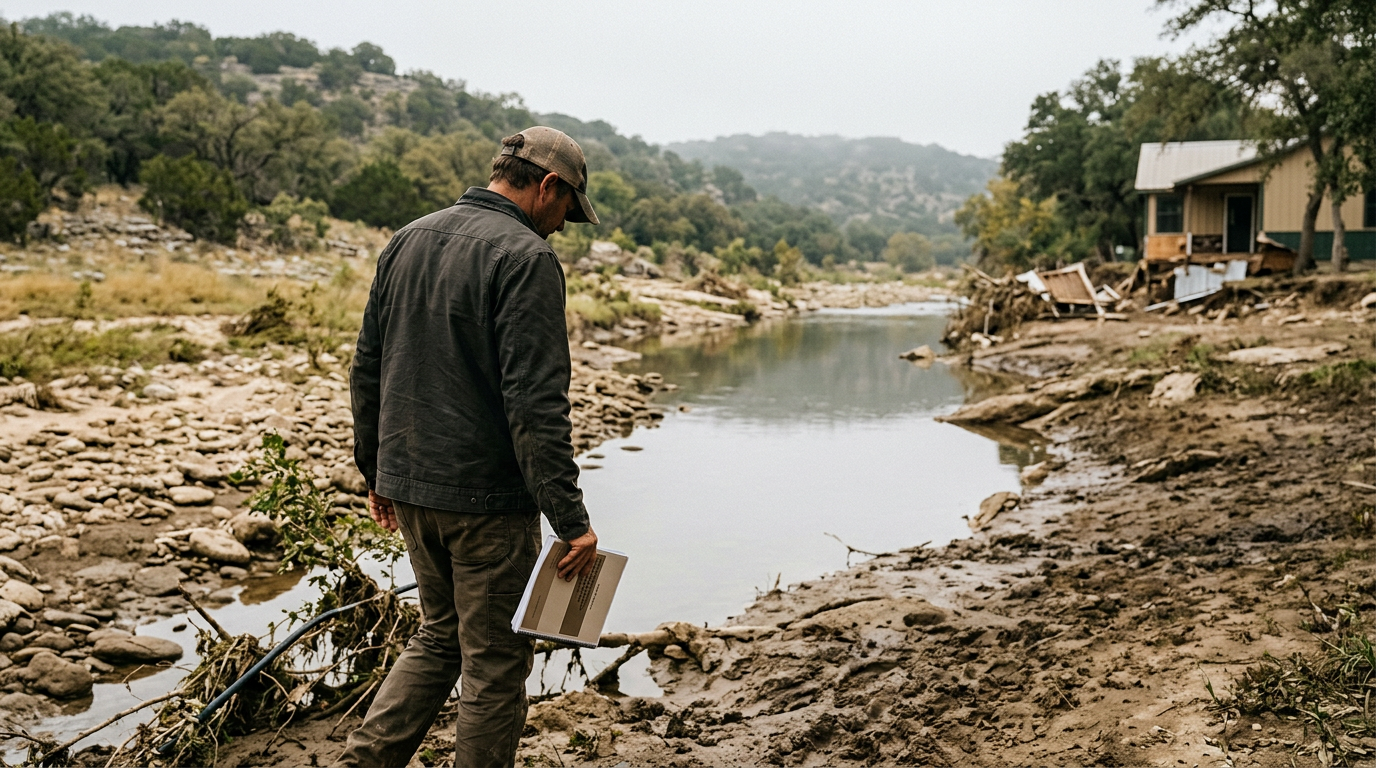
Deep in the heart of the Texas Hill Country, the anniversary of the devastating July 4, 2025, floods has been marked by the release of a significant investigative report. Lead investigator Michael Massengale has detailed a series of interconnected failures at Camp Mystic, a long-standing private summer camp for girls located near Hunt, Texas. The report focuses on how natural weather events were compounded by institutional delays and infrastructure limitations, leading to a life-threatening situation for campers and staff when the Guadalupe River surged beyond its banks. Historically, flash flooding is a known risk in this region of Texas, often referred to as 'Flash Flood Alley,' yet the report suggests that preparation did not match the severity of the 2025 event. Historically, the Hill Country has seen numerous catastrophic floods, such as the 1932 Guadalupe flood and the 1978 events on the Blanco and Cypress Creeks. Texas law and local emergency management protocols have evolved to handle these threats, but private institutions often manage their own internal emergency response plans. This new report serves as a post-mortem on those internal policies, highlighting that while the natural elements were extreme, the human response lacked the necessary agility to ensure maximum safety. The document meticulously tracks the timeline of the rising water against the camp’s decision-making process, revealing that many critical actions were taken only after water had already entered key structures.
Texas relevance
The safety of Texas summer camps is a matter of immense public concern, given that the Hill Country hosts one of the highest concentrations of youth camps in the United States. Following the 2025 floods, parents from across the state—from Houston to Midland—expressed concern regarding the emergency protocols of these remote facilities. This report acts as a precedent for Kerr County and surrounding jurisdictions like Gillespie and Kendall, setting a new benchmark for what is expected in terms of weather monitoring and evacuation speed. The proximity of the Guadalupe River to dozens of these camps makes this case a primary example of why regional emergency coordination is vital for protecting Texas residents and visitors.
The Breakdown of Communication Systems
One of the most alarming findings in the Massengale report involves the total collapse of effective communication during the onset of the storm. As rainfall totals climbed rapidly in the upper Guadalupe basin, the flow of information from local weather authorities to camp leadership was significantly delayed. This was partly due to the geographic isolation of the Hunt area, where cellular and internet service can be intermittent during severe weather events.
The investigation found that rely on a single point of information led to a lack of redundancy. When the primary communication channel failed, there was no secondary protocol to receive real-time upstream gauge data. Consequently, the camp was operating on weather data that was nearly an hour old during the most critical period of the river's rise. This delay stripped the staff of the precious minutes needed to relocate campers from low-lying cabins to higher ground before the roads became impassable.
Furthermore, the internal communication within the camp was hampered by the environment. The report highlights that staff members were struggling to share updates across the sprawling property as the noise of the rain and the rising river drowned out unamplified voices and low-power radio signals. This created a 'vacuum of information' where different sections of the camp were unaware of the rising danger occurring just a few hundred yards away.
Infrastructure and Geographic Vulnerabilities
The physical layout of Camp Mystic, while aesthetically beautiful and historically significant, played a major role in the hazards faced during the flood. The report describes how certain drainage culverts and small bridges within the property acted as bottlenecks. Rather than facilitating the flow of water, these structures became clogged with debris, effectively creating temporary dams that, once breached, sent surges of water into areas previously thought to be safe.
Many of the cabins at Camp Mystic were constructed decades ago, long before modern flood plain mapping was as sophisticated as it is today. The report notes that several structures are situated in zones that are highly susceptible to fast-moving water. During the July 4 event, the velocity of the Guadalupe River was high enough to move heavy equipment and displace large trees, which then threatened the structural integrity of the camper housing.
The investigation suggests that the camp's physical response plan did not account for a 'worst-case' hydraulic scenario. While the staff followed historical precedent for 'normal' floods, the 2025 event exceeded those benchmarks significantly. The report recommends a total regrading of certain camp roads to ensure that at least one high-water exit remains viable even during extreme flash flood conditions.
Decision Making Under Pressure
A central theme of the report is the concept of 'decision paralysis.' Massengale and his team observed that there was a hesitation to disrupt the holiday festivities until it was almost too late. Because July 4 is a major event for the camp, leadership was reluctant to execute a full-scale evacuation of the riverfront areas based on early warnings that had, in the past, resulted in 'false alarms' or minor rises.
This hesitation resulted in what the report calls 'cascading failures.' By the time the decision to evacuate the cabins was finalized, the water had already reached the porch levels of several buildings. This forced a harried and dangerous relocation effort in the dark, through rising water, rather than a controlled movement of campers during the earlier, drier hours of the evening.
The report does not find malicious intent but rather a reliance on 'institutional memory' that was no longer applicable to the current environmental reality. The staff’s bravery in the moment was noted, but the report stresses that heroic last-minute efforts should never be a substitute for early, decisive administrative action.
Kerr County Emergency Coordination
The investigation also looks outward at how Kerr County emergency services interacted with private entities during the crisis. It found that while the county did issue alerts, the specific needs of high-occupancy locations like Camp Mystic were not prioritized in the general broadcast. There was a lack of a direct 'hotline' or specialized alert system that would cater to the unique risks of summer camps in the valley.
In the wake of this report, there are calls for a more integrated approach between Hill Country camp directors and the National Weather Service in Austin/San Antonio. By establishing a more robust network of private weather stations and water sensors, camps can provide real-time ground truth data to meteorologists, who can then issue more accurate and localized warnings.
The report suggests that the county should implement a 'mandatory check-in' system for camps during severe weather watches. This would require camp directors to acknowledge receipt of warnings and provide a brief status update on their evacuation readiness, ensuring that no facility is 'lost' in the shuffle of a regional emergency.
Recommendations for the Future
To prevent a recurrence, the report outlines a series of mandatory and recommended upgrades for Camp Mystic and similar facilities. Chief among these is the installation of an automated siren system that can be heard across the entire property, regardless of power outages. This would provide an unmistakable signal for all campers and staff to move to pre-designated 'safe zones' immediately.
The report also advocates for more rigorous staff training. While counselors are trained in CPR and water safety, the 2025 floods showed a need for specialized 'flash flood response' training, including how to lead groups through moving water and how to utilize emergency flotation devices in a non-pool environment.
Finally, the investigation calls for an annual independent audit of flood plans for all camps operating in the Guadalupe River basin. This would move safety beyond a self-policed model into a more transparent system where third-party experts review and stress-test the emergency protocols before the start of each summer season.
Impact on the Texas Summer Camp Industry
The shadow of the Camp Mystic report extends far beyond Hunt, Texas. As one of the most prestigious camps in the state, the failures identified here are being studied by directors at dozens of other facilities. The industry is currently facing a 'reckoning' regarding how to balance the traditional outdoor experience with the increasing legal and moral obligations of safety in an era of extreme weather.
Local businesses in Kerrville and Fredericksburg, which rely on the summer camp 'season' for a significant portion of their annual revenue, are also watching closely. Any change in perception regarding the safety of these camps could have a multi-million dollar impact on the local Hill Country economy. Therefore, the implementation of the report’s recommendations is seen as vital for the survival of the industry at large.
Parents are also becoming more proactive in demanding transparency. Since the 2025 flood, enrollment forms for many Texas camps have begun to include more detailed information about flood insurance, evacuation routes, and emergency communication capabilities, showing a direct shift in the consumer's expectations toward safety over tradition.
Analysis
Opinion: The findings in the Camp Mystic investigation suggest a disconnect between the rapid technological advancement of weather forecasting and the traditional, somewhat isolated management styles of legacy Texas institutions. While Camp Mystic remains a cherished Texas institution, the 'cascading failures' mentioned by Massengale reflect a broader need for statewide standards regarding private camp safety. It is not enough to rely on historical luck; as Texas weather patterns become more erratic, the burden of data-driven safety management must be prioritized over maintaining a traditional 'off-the-grid' camp atmosphere.
Source attribution
This story was reported using a public release from the Texas Standard. Keep TX Red rewrote the coverage independently and links to the official statement for verification.
Frequently Asked Questions
- What specifically caused the 'cascading failures' mentioned in the report?
- The term refers to a series of events where one failure led to another. Specifically, the lack of real-time communication led to a delay in decision-making, which then meant evacuations had to occur in dangerous flood conditions rather than beforehand. This was compounded by infrastructure that could not handle the debris-laden water flow.
- Were there any fatalities at Camp Mystic during the 2025 flood?
- The report focuses on the safety failures and close calls that occurred. While the 2025 floods in the Hill Country resulted in regional tragedies, the specific investigation into Camp Mystic emphasizes the high risk and near-misses that occurred, using them as a catalyst for future safety changes.
- Who led the investigation into the Camp Mystic incident?
- The investigation was co-authored and led by Michael Massengale, a former justice of the First Court of Appeals in Texas. His team spent months reviewing testimony, weather data, and the physical characteristics of the camp property to compile the findings.
- How can other Texas camps use this information?
- Other camps can use the report as a checklist for their own emergency plans. It highlights the importance of having multiple redundant communication methods, training staff for flood-specific rescues, and ensuring that all housing is located well above the projected '500-year' flood levels.
Official Sources
Take the next step
Browse the Newsroom →Read more about Keep Texas Red → Our full guide to what Keep Texas Red means and why Texans support it.
Related Articles
Get Texas updates delivered weekly.
Independent Texas reporting on politics, policy, and daily life. One email a week. Unsubscribe anytime.
Keep TX Red Newsroom
The Keep Texas Red Editorial Staff produces nonpartisan explainers, policy breakdowns, and educational resources to help Texans understand how their government works. All content is reviewed for accuracy and updated regularly.
About Keep TX Red →