Texas Hill Country Flood Anniversary: Tracking Long-Term Recovery Efforts in the Guadalupe River Basin
One year after the devastating July 4 floods, Hill Country communities navigate infrastructure repairs and disaster mitigation efforts.
Editorial disclaimer: Opinions and analysis on Keep TX Red are editorial content — not statements of fact. See our editorial standards.
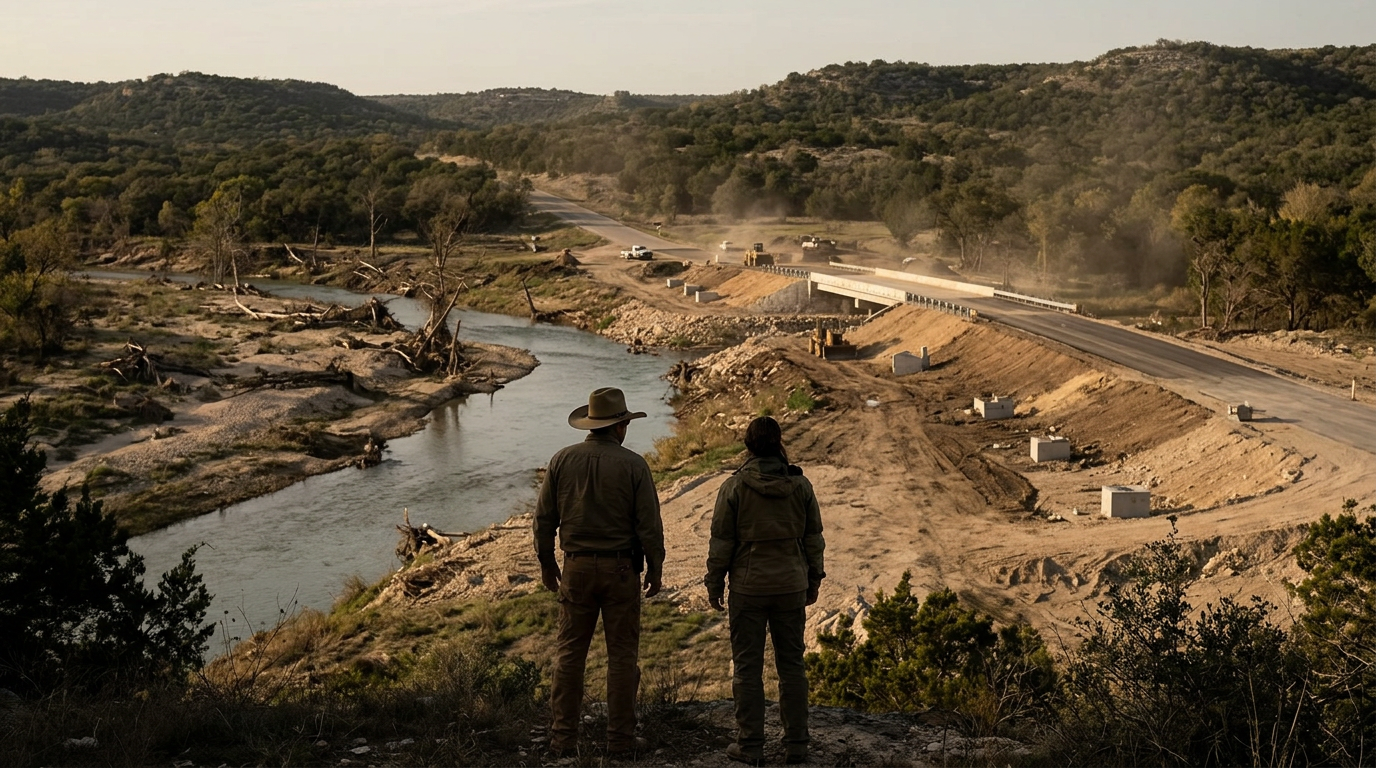
As the one-year anniversary of the July 4 catastrophic floods approaches, the Texas Hill Country remains a focal point for regional disaster management and infrastructure resilience. The floods, which primarily impacted the Upper Guadalupe River and Sandy Creek regions, resulted in significant loss of life and massive property damage across several counties. Historically, the Hill Country is known as 'Flash Flood Alley' due to its unique topography and thin limestone soil, which allows water to shed rapidly into river basins rather than soaking into the ground. Prior events, such as the 1998 and 2002 floods, set the precedent for the high-velocity surges seen last year, but the scale of the 2025 event tested modern emergency response systems to their limits. Recovery across the region has not been uniform, with different municipalities facing varying timelines for rebuilding. While some areas have seen a rapid return to commercial normalcy, others are still grappling with the replacement of critical infrastructure such as bridges and water treatment facilities. State and local officials continue to monitor the progress of federal aid distribution and local zoning changes aimed at preventing future tragedies in these high-risk zones. The dual path of recovery highlights the logistical challenges inherent in managing decentralized emergency responses across rural and suburban Texas landscapes.
Texas relevance
This story is deeply rooted in the safety and economic stability of the Texas Hill Country, a region vital to the state's tourism and residential growth. Central Texas residents rely on the Guadalupe River for both recreation and utility, making the status of these communities a priority for state-level disaster planning. Following the 2025 disaster, the Texas Water Development Board and local river authorities have increased scrutiny on floodplain mapping, a process that directly affects insurance rates and property values for thousands of Texans. The ongoing recovery efforts serve as a blueprint for how other flood-prone regions in the Lone Star State might handle future climate events and infrastructure failures.
The Geographic Impact on the Guadalupe Basin
The Upper Guadalupe River is characterized by its steep gradients and rocky terrain, which contributed significantly to the velocity of the floodwaters last July. When heavy rainfall concentrated over the basin, the river transformed from a scenic waterway into a destructive force within hours. This rapid rise caught many residents off guard, particularly those in low-lying areas that had not seen significant flooding in over two decades.
Engineering assessments following the flood have focused on how the natural bottlenecks in the river contributed to the surge. In many cases, debris such as uprooted cypress trees and loose construction materials acted as makeshift dams, which eventually gave way and sent walls of water downstream. This phenomenon caused localized catastrophes that were difficult for traditional meteorological models to predict with total accuracy.
State geologists note that the karst topography of the Hill Country plays a double-edged role. While the aquifer system can eventually absorb some water, during extreme rain events, the saturation point is reached almost instantly. This means that nearly every drop of rain becomes runoff, funneling directly into the creek beds and rivers that define the region's geography.
Infrastructure Challenges and Bridge Restoration
One of the most visible indicators of the slow recovery is the state of the region's bridges. Several crossings along the Guadalupe were completely washed away or structuraly compromised, severing essential transit routes for emergency services and local commuters. Rebuilding these structures is not a simple 'like-for-like' replacement; new state regulations require updated load capacities and higher elevations to withstand future 'hundred-year' floods.
The Texas Department of Transportation (TxDOT) has been working alongside local county commissioners to prioritize the most critical arteries. However, the procurement of materials and the shortage of specialized construction labor have extended timelines beyond what many residents initially expected. For businesses located across these broken links, the delay has translated into significant revenue losses as tourists and locals alike avoid long detours.
Furthermore, the damage to subsurface infrastructure, including sewage lines and fiber-optic cables, has required extensive excavation. In some Hill Country towns, the primary focus has shifted from surface aesthetics to the invisible network of utilities that keep the community functional. This foundational work is often slow and provides little visual evidence of progress to the frustrated public.
Economic Strain on Local Hill Country Businesses
The Hill Country economy is heavily dependent on seasonal tourism, particularly during the summer months when tubers and rafters flock to the Guadalupe. Last year's July 4 disaster effectively ended the season early for many outfitters and riverside resorts. A year later, the psychological impact of the flood is still being felt as potential visitors weigh the safety of returning to these areas.
Small business owners have had to dip into personal savings or take out high-interest loans to cover the gap left by insurance payouts that were often insufficient to cover total losses. While some larger corporate-owned entities were able to rebuild quickly, the 'mom and pop' shops that give the Hill Country its unique character are facing a more precarious future. Some have closed permanently, changing the local landscape forever.
Local chambers of commerce have launched marketing campaigns to reassure the public that the region is open for business. These efforts emphasize the resilience of the community and the safety measures now in place. However, the economic shadow of the 2025 flood remains long, with tax revenues still recovering to pre-disaster levels in several key precincts.
Environmental Changes and River Ecology
The ecological impact of the flood changed the Guadalupe River's physical path in several locations. Massive shifts in gravel bars and the loss of ancient bald cypress trees have altered the fish habitats and the flow of the water. Environmental groups are currently working with the Texas Parks and Wildlife Department to assess the long-term health of the river's ecosystem.
Restoring the riverbanks is a priority not just for beauty, but for stability. Without vegetation to hold the soil, future rains will undoubtedly lead to increased erosion and siltation. This siltation can clog water intakes for municipal water systems, creating a secondary crisis for local utilities. Replanting efforts are underway, though it will take decades for the new trees to reach the size of those lost.
Invasive species management has also become a concern. The floodwaters likely transported non-native plants and aquatic life into new sections of the river. Scientists are monitoring these developments to ensure that the native Texas flora and fauna can recover without being overwhelmed by aggressive opportunistic species that thrive in disturbed environments.
Policy Shifts in Floodplain Management
In the wake of the disaster, county officials are reconsidering how and where residents are allowed to build. The push for stricter floodplain ordinances is a point of contention between those advocating for public safety and those concerned about property rights. Historically, Texas has leaned toward less restrictive zoning, but the high death toll from this event has shifted the conversation significantly.
New mapping technology is being utilized to provide more granular data on where water is likely to pool or surge. These maps will eventually dictate who is required to purchase flood insurance and what types of building materials must be used in new construction. Local leaders are also exploring the possibility of voluntary buyouts for homes located in the most dangerous 'floodways' where water moves with the most force.
The debate over these policies is playing out in town halls across the region. Supporters argue that the state cannot continue to subsidize the risk of building in known danger zones, while opponents worry that increased regulation will make the Hill Country unaffordable for the working class. The outcome of these policy discussions will likely set a precedent for other growing regions in Texas.
Community Resilience and Volunteerism
Despite the slow pace of official recovery, the social fabric of the Hill Country has proven remarkably resilient. In the immediate aftermath and throughout the past year, volunteer organizations have been the backbone of the cleanup effort. Neighbors helping neighbors has been the dominant theme, with local churches and non-profits providing food, shelter, and emotional support to those who lost everything.
Charitable foundations have raised millions of dollars to assist with unmet needs that government programs fail to cover. These funds have been used for everything from replacing household appliances to providing mental health services for survivors dealing with post-traumatic stress. The communal response has underscored a uniquely Texan spirit of self-reliance and mutual aid.
Looking forward, many communities are establishing permanent long-term recovery groups. These organizations are designed to remain active even when there isn't a current disaster, ensuring that the lessons learned from the 2025 flood are preserved for future generations. By building these local networks, the Hill Country aims to be better prepared for the next time the rivers rise.
Analysis
Opinion: The disparity in recovery between neighboring communities often reveals the underlying strengths and weaknesses of local governance and tax bases. In the Hill Country, where rugged independence is a point of pride, the reliance on state and federal aid creates a complex tension. For Texas to truly be 'flood-hardened,' the legislature must ensure that recovery funds are not just available, but accessible to smaller municipalities that lack the administrative staff to navigate complex grant applications. The move toward more robust infrastructure is a necessary investment to protect the Texas economy and the lives of those who call these beautiful but dangerous corridors home.
Source attribution
This story was reported using a public release from the Texas Standard. Keep TX Red rewrote the coverage independently and links to the official statement for verification.
Frequently Asked Questions
- Why is the Hill Country so prone to flash flooding?
- The region features steep hills and thin, rocky soil that cannot absorb large amounts of water quickly. This causes rainfall to immediately run off into narrow creek beds and rivers, creating fast-moving walls of water known as flash floods.
- What is the status of federal aid for the affected counties?
- While federal disaster declarations were made, the distribution of funds often takes years. Many communities are currently working through the reimbursement process for emergency repairs while applying for long-term mitigation grants.
- How can residents stay informed about river levels?
- Residents are encouraged to use the USGS 'WaterWatch' system and local LCRA or GBRA gauges. Additionally, signing up for county-specific emergency alerts is critical for receiving timely evacuation notices.
Official Sources
Take the next step
Browse the Newsroom →Read more about Keep Texas Red → Our full guide to what Keep Texas Red means and why Texans support it.
Related Articles
Get Texas updates delivered weekly.
Independent Texas reporting on politics, policy, and daily life. One email a week. Unsubscribe anytime.
Keep TX Red Newsroom
The Keep Texas Red Editorial Staff produces nonpartisan explainers, policy breakdowns, and educational resources to help Texans understand how their government works. All content is reviewed for accuracy and updated regularly.
About Keep TX Red →