Revolutionary Roots in South Texas: Celebrating the Hispanic Heritage of America 250
Discover how descendants of South Texas cattle ranchers are honoring the 250th anniversary of the American Revolution through Spanish-Texan history.
Editorial disclaimer: Opinions and analysis on Keep TX Red are editorial content — not statements of fact. See our editorial standards.
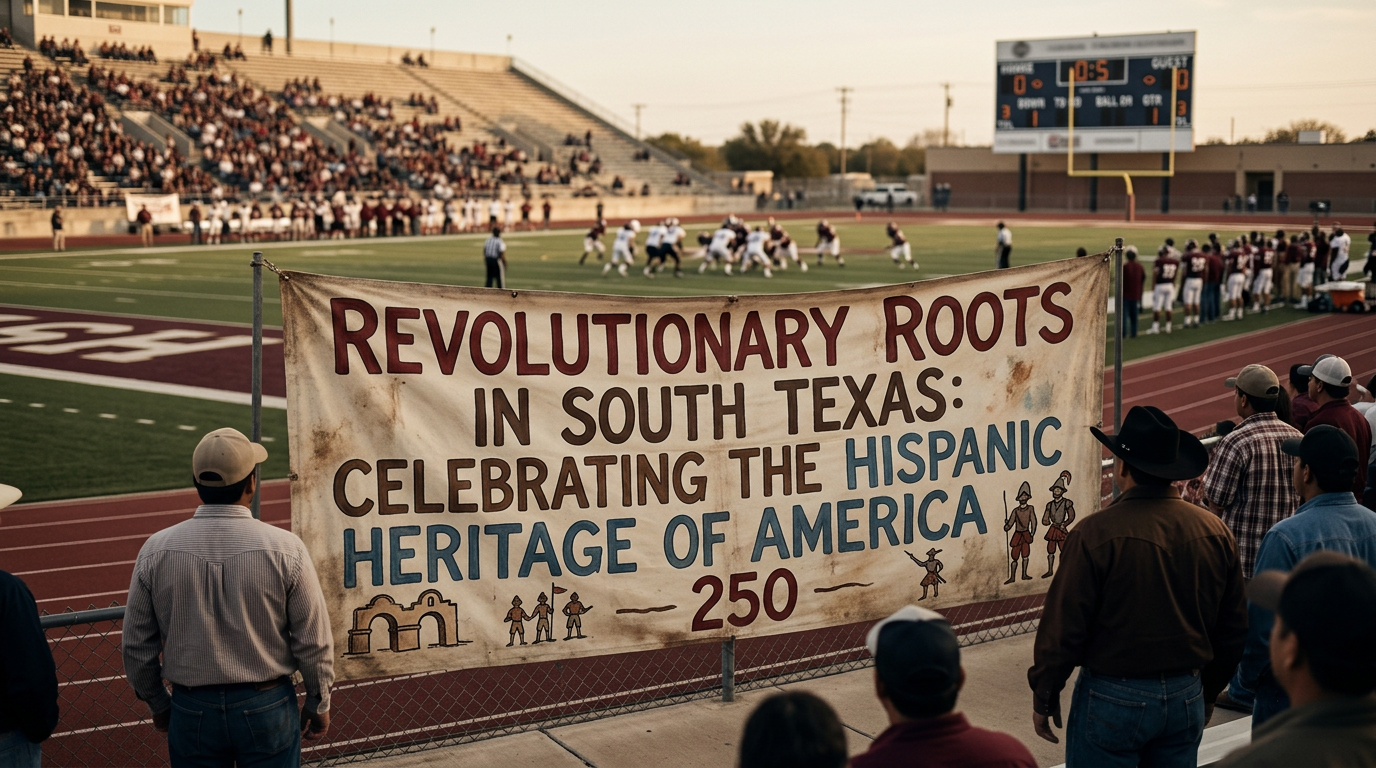
As the United States approaches the 250th anniversary of its founding, a historical movement is gaining momentum across South Texas to highlight the critical role the region played in the American Revolution. While traditional narratives often focus on the thirteen original colonies, local historians and descendants are working to ensure the story of Spanish Texas is included in the national 'America250' celebration. This effort centers on the Spanish government's support of the Continental Army and the cattle drives that originated in Texas to feed colonial soldiers fighting the British. Historically, Texas is positioned as a silent but vital partner in the struggle for independence, a fact that organizers hope to make a cornerstone of 2026 festivities. The context of this movement stretches back to the late 18th century when the Spanish crown, under King Carlos III, aided the American cause. Under the leadership of Bernardo de Gálvez, the Governor of Louisiana, Spanish and Texan forces launched campaigns against British strongholds. This historical foundation provides a unique opportunity for Texans to connect their regional identity to the broader tapestry of American independence. By highlighting these specific genealogical and historical links, organizations in San Antonio and surrounding areas are preserving a legacy that defines the multicultural origins of the American experiment.
Texas relevance
This story is deeply rooted in the San Antonio and Goliad regions of South Texas. Texas relevance is established through the archival records of Spanish ranching families who provided thousands of cattle for General Gálvez's troops between 1779 and 1782. Today, the descendants of these ranchers, who live in modern-day Texas cities, serve as the living link between the colonial era and the state's current cultural landscape. The America250 initiative within Texas serves as a bridge for residents to explore their ancestry and recognize the Lone Star State's place in the 1776 timeline, long before it achieved its own independence in 1836.
The Cattle Drives that Fueled Liberty
In the late 1770s, the Continental Army faced severe shortages of supplies and food. Recognizing an opportunity to weaken the British, Spanish officials authorized the first major cattle drives from the missions and ranches of San Antonio and Goliad toward Louisiana. These herds, often numbering in the thousands, were driven across harsh terrain to reach General Bernardo de Gálvez's forces. This logistics operation was funded and executed by early Texas residents, known as Tejano vaqueros, who were instrumental in the success of Spanish military campaigns along the Gulf Coast.
The impact of these drives cannot be overstated in a military context. Without the protein provided by Texas beef, the Spanish forces would have struggled to maintain their siege operations against British-held West Florida. These actions directly diverted British resources and manpower away from the northern theaters of war, providing George Washington's army with much-needed breathing room. The men who moved these cattle were among the first in the region to take a physical and economic stand against British influence on the North American continent.
Genealogy and the America250 Initiative
A central component of the upcoming 250th-anniversary celebrations is the work of genealogical societies across South Texas. Groups like the Sons of the American Revolution and the Daughters of the American Revolution are increasingly recognizing 'Spanish Patriots'—individuals who served in the Spanish military or provided material support during the conflict. For many Texas families, discovering an ancestor who participated in these cattle drives or served under Gálvez offers a new perspective on their family's contribution to the United States.
The America250 commission in Texas is coordinating with local museums and historical sites to document these lineages. By identifying the specific ranches that supplied the American cause, researchers are mapping out a network of historical significance that connects small Texas towns to the grand events of Philadelphia and Yorktown. This archival work is essential for educating the next generation of Texans about the depth and complexity of their state's involvement in global affairs during the 18th century.
San Antonio's Role as a Colonial Hub
During the American Revolution, San Antonio de Béxar served as a vital administrative and military outpost for the Spanish frontier. The city was a center of trade and communication, where orders from the Spanish crown were interpreted and enacted. The missions surrounding the city were not just religious centers but were also some of the largest ranching operations in North America at the time. The coordination of resources from these missions played a pivotal role in the success of the Spanish support network.
Today, San Antonio serves as the epicenter for America250 activities in the region. The city's unique architectural and cultural preservation allows residents and visitors to see the very environment where these colonial decisions were made. As the 2026 deadline approaches, San Antonio is expected to host major exhibits and ceremonies that honor both the Indigenous and Hispanic individuals who contributed to the revolutionary era. This recognition helps solidify San Antonio’s status as one of America’s most historically significant cities.
The Legacy of General Bernardo de Gálvez
While George Washington is the central figure of the Revolution, General Bernardo de Gálvez is the hero most celebrated by historians of the Gulf Coast. As the Governor of Louisiana, he orchestrated the capture of Mobile and Pensacola, effectively clearing the British from the Gulf of Mexico. This strategic victory prevented the British from surrounding the colonies from the south. Gálvez’s coordination with Texas ranchers was a masterclass in colonial logistics and international cooperation.
The legacy of Gálvez is visible throughout Texas, most notably in the naming of Galveston. However, the America250 movement seeks to go beyond place names and delve into the tactical importance of his campaigns. By acknowledging Gálvez and his Tejano supporters, the national story becomes more inclusive of the Southern front. His contributions were so significant that he was posthumously granted honorary United States citizenship by Congress in 2014, a testament to his enduring relevance to American liberty.
Preserving the South Texas Story for the Future
Educational programs are currently being developed to integrate these South Texas revolutionary stories into the K-12 curriculum. For many years, Texas students primarily learned about the American Revolution as a distant event occurring on the Atlantic coast. The new focus on the America250 anniversary aims to change that by presenting local history as an integral part of the national story. This change in educational focus is designed to foster a greater sense of belonging and civic engagement among students of all backgrounds.
Furthermore, the tourism impact of these historical revelations is expected to be significant. Heritage tourism is a major economic driver in Texas, and the 250th anniversary provides a perfect window for communities like Goliad and San Antonio to showcase their revolutionary history. By investing in historical markers, museum upgrades, and public events, Texas is preparing to welcome visitors from across the country who are eager to learn about the 'forgotten' patriots of the Southern frontier.
The Intersection of Culture and Patriotism
The celebration of the 250th anniversary in Texas is a unique blend of traditional patriotism and regional pride. It highlights that the American identity was forged in many languages and across many different landscapes. For the descendants of the early ranching families, this anniversary is a moment of validation. It proves that their ancestors were not merely bystanders to history but were active participants in the creation of the United States.
This cultural intersection is what makes the Texas contribution to America250 so compelling. It demonstrates that the values of independence and resilience were present in the Southwest long before the region was officially part of the Union. As organizers look toward July 4, 2026, the focus remains on building a comprehensive narrative that honors everyone who contributed to the cause of freedom, regardless of which side of the Sabine River they lived on.
Analysis
The push to integrate South Texas history into the America250 observance represents more than just a history lesson; it is a strategic effort to expand the American narrative. Often, Southern and Western states feel marginalized in discussions regarding the American Revolution. By emphasizing the cattle drives and the Spanish financial support that flowed through Texas, organizers are successfully framing Texas as an early contributor to the American cause. This movement highlights the longevity of Hispanic leadership and economic power in the region, providing a sense of pride for contemporary Hispanic Texans who can trace their lineage back to the very birth of the nation. It effectively challenges the notion that American history only moved from East to West.
Source attribution
This story was reported using a public release from the Texas History Stories (Google News). Keep TX Red rewrote the coverage independently and links to the official statement for verification.
Frequently Asked Questions
- What was the specific role of Texas in the American Revolution?
- Texas, which was then a Spanish province, served as a vital source of supplies, particularly beef. Between 1779 and 1782, thousands of head of cattle were driven from the San Antonio and Goliad areas to Louisiana to feed the armies commanded by Bernardo de Gálvez, who was fighting the British on behalf of Spain and the American colonies.
- Who was Bernardo de Gálvez and why is he important to Texas?
- Bernardo de Gálvez was the Spanish Governor of Louisiana who led successful military campaigns against the British in the Gulf Coast region. He is important to Texas because he coordinated the support of Texas ranchers and is the namesake of Galveston, Texas. His actions significantly contributed to the ultimate victory of the American colonies.
- How can residents participate in the America250 celebrations in Texas?
- Texans can participate by engaging with local historical societies, researching their own family genealogy to find revolutionary-era ancestors, and visiting historical sites like the San Antonio Missions. Many communities are planning parades, educational exhibits, and public ceremonies leading up to the 2026 anniversary.
- Why is the 250th anniversary significant for Hispanic heritage?
- The anniversary offers a platform to showcase that Hispanic people were integral to the founding of the United States. It highlights the military and economic contributions of the Spanish Empire and the Tejano people, correcting the misconception that the American Revolution was exclusively an Anglo-settler event.
Official Sources
Take the next step
Browse the Newsroom →Read more about Keep Texas Red → Our full guide to what Keep Texas Red means and why Texans support it.
Related Articles
Get Texas updates delivered weekly.
Independent Texas reporting on politics, policy, and daily life. One email a week. Unsubscribe anytime.
Keep TX Red Newsroom
The Keep Texas Red Editorial Staff produces nonpartisan explainers, policy breakdowns, and educational resources to help Texans understand how their government works. All content is reviewed for accuracy and updated regularly.
About Keep TX Red →