Mapping the Sound of the Lone Star State: Key Landmarks in Texas Music History
Explore the cultural milestones and legendary performances that shaped the unique identity of the Texas music industry and global sound.
Editorial disclaimer: Opinions and analysis on Keep TX Red are editorial content — not statements of fact. See our editorial standards.
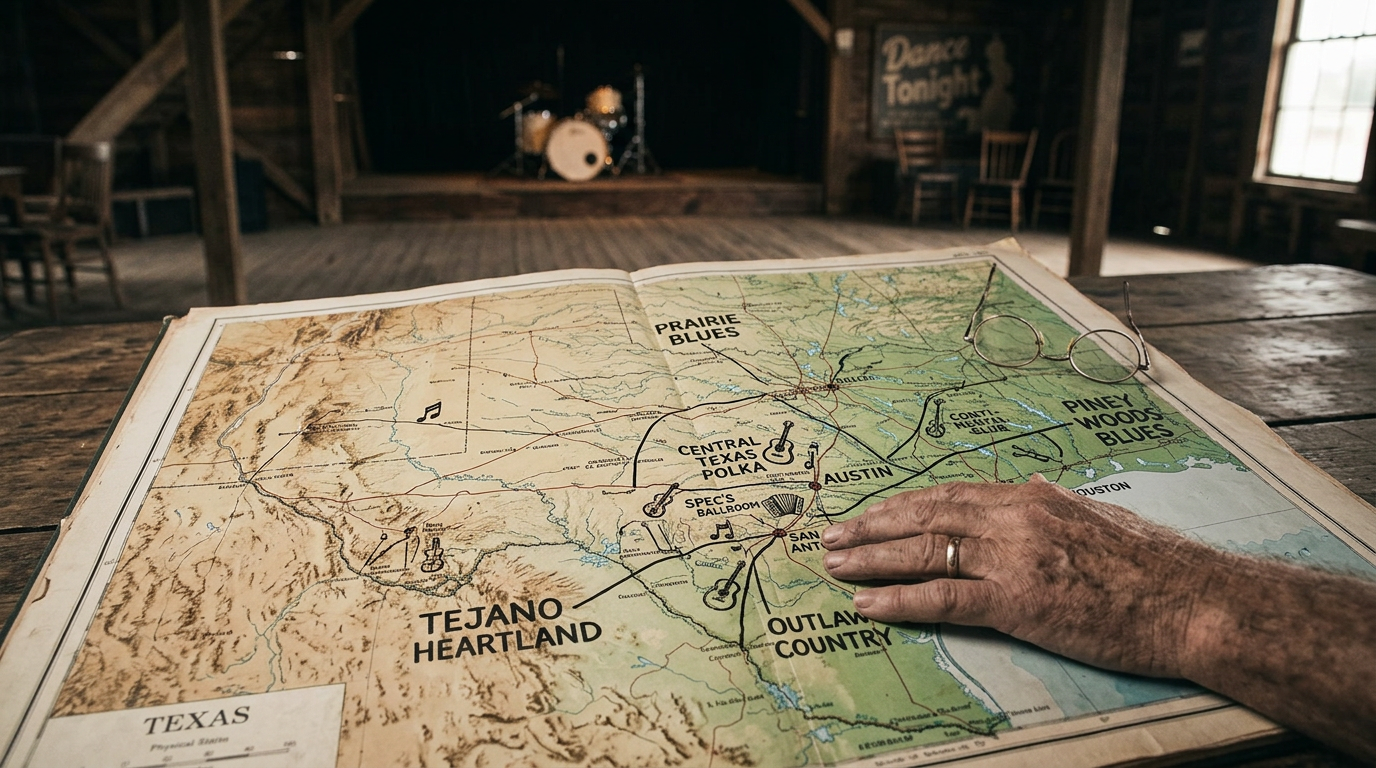
Texas has long served as a spiritual and creative headquarters for several of the world's most influential musical genres, ranging from outlaw country and western swing to Tejano and contemporary pop. The state's vast geography has fostered distinct regional sounds, such as the blues tradition of the Piney Woods and the brassy polkas of Central Texas. These localized scenes eventually coalesced into a multi-billion dollar industry that attracts millions of visitors to the state annually. Understanding the progression of Texas music requires looking at the specific moments where local talent collided with national trends, creating a legacy that remains a vital part of the Texas economy and social fabric. Historically, Texas musicians have been characterized by a fierce independence, often rejecting the polished production of Nashville or Los Angeles in favor of authentic, raw expressions of life in the Southwest. The evolution of the state's sonic landscape is marked by specific events where the boundaries of genre were pushed or completely rewritten. From the birth of the Austin music scene in the 1970s to the global dominance of Texas artists in the 1990s, these milestones demonstrate how the state’s diversity translates into rhythmic innovation. These chapters of history are not merely about entertainment; they represent the shifting demographics and political climate of the state over the last several decades. Each major musical shift in Texas has reflected broader societal changes, such as the merging of hippie and cowboy cultures in the Hill Country or the rise of bilingual media through the success of Tejano stars. By examining these pivotal instances, we gain insight into how Texas exports its culture to the rest of the world.
Texas relevance
The music industry is a cornerstone of the Texas economy, supporting over 200,000 jobs and contributing billions to the state's gross domestic product. In cities like Austin, known as the Live Music Capital of the World, the heritage of local venues is directly tied to real estate value and tourism strategy. Houston, meanwhile, has become a global powerhouse for hip-hop and R&B, influencing fashion and language far beyond the city limits. This historical context provides the foundation for current legislative efforts in Texas to protect Small Business venues through various grant programs and tax incentives, ensuring that the next generation of Texas artists has a stage on which to develop their craft.
The Rise of the Outlaw Movement in Austin
In the early 1970s, a seismic shift occurred in the Central Texas music scene that would permanently alter the landscape of country music. Tired of the over-produced sounds coming out of major label studios, artists like Willie Nelson and Waylon Jennings returned to Austin to craft a sound that was more reflective of the gritty, honest reality of Texas life. This movement, later dubbed 'Outlaw Country,' successfully bridged the gap between traditional country fans and the burgeoning counterculture movement in Austin. It created a unique coalition of listeners that had never been seen before in the South.
The impact of this era extended far beyond the jukebox. It led to the founding of legendary institutions like the Armadillo World Headquarters and eventually the long-running PBS series 'Austin City Limits.' These venues and platforms provided a launchpad for Texas talent to reach a global audience without ever having to leave the state. The success of the Outlaw movement proved that Texas could be a self-sustaining ecosystem for world-class music, independent of the major industry hubs. This period established Austin as a legitimate cultural center, setting the stage for the massive technology and festival boom that would follow decades later.
The Global Impact of the Queen of Tejano
One of the most profound moments in Texas history occurred in the 1990s as Selena Quintanilla-Pérez rose to unprecedented fame. Based in Corpus Christi, Selena became a cultural icon who demonstrated the massive commercial potential of Tejano music, a genre that blends traditional Mexican sounds with American pop and rock influences. Her ability to navigate both English and Spanish markets broke down racial and linguistic barriers that had previously restricted minority artists in the American mainstream. Her sold-out performances, particularly her final televised concert at the Houston Astrodome, became legendary benchmarks for the industry.
Selena’s legacy continues to be a driving force for representation and economic activity within the Texas music scene. Even decades after her passing, her influence can be seen in the success of modern bilingual artists and the continued growth of Latin music as a dominant force in global charts. For Texas, Selena represented the bridge between the state’s deep Hispanic heritage and its future as a diverse, modern powerhouse. Her story remains a constant reminder of how a localized, regional sound can capture the imagination of millions when paired with undeniable charisma and talent.
Houston’s Hip-Hop Revolution
While Austin was carving out its niche in country and blues, Houston was undergoing a creative explosion in the world of hip-hop. In the late 1980s and early 1990s, the city became the epicenter of a unique sound characterized by slowed-down beats and deep lyrical storytelling. Figures like DJ Screw and the Geto Boys helped establish a 'Third Coast' identity that challenged the dominance of East Coast and West Coast rap. This movement was entirely organic, growing out of local neighborhoods and independent record labels that bypassed conventional distribution channels.
The Houston hip-hop scene was notable for its extreme entrepreneurship. Artists would sell tapes directly from their cars and build massive local followings before ever receiving national radio play. This DIY spirit eventually led to global superstardom for artists like Beyoncé and Travis Scott, who have never shied away from referencing their Houston roots. The sound of the city today is a testament to the innovation that can occur when local communities are given the space to develop their own artistic language without outside interference.
The Evolution of Western Swing and Traditionalism
No discussion of Texas music is complete without acknowledging the foundation laid by Bob Wills and the Texas Playboys. In the mid-20th century, Wills popularized Western Swing, a high-energy fusion of jazz, swing, and traditional fiddling. This genre captured the optimism and pioneering spirit of the Texas working class during a time of immense national growth. It was music designed for dance halls, establishing the tradition of the Texas 'honky tonk' as a central community gathering place.
The commitment to traditionalism continued with the rise of George Strait in the early 1980s. At a time when country music was becoming increasingly pop-oriented, Strait’s dedication to a clean, traditional sound resonated deeply with Texas audiences. His massive career, including dozens of number-one hits, reinforced the idea that there will always be a market for authentic storytelling and skilled musicianship. Strait’s influence helped preserve the heritage of the Texas cowboy, ensuring that the state's traditional roots remained relevant even in a rapidly changing modern world.
Contemporary Innovation and the Future Scene
In the 21st century, Texas has continued to be a breeding ground for genre-defying artists who refuse to be pigeonholed. The burgeoning 'Red Dirt' scene, centered around the Panhandle and North Texas, has created a loyal subculture of music fans who prioritize live performance over studio gloss. At the same time, the state's major cities have become hubs for electronic, indie rock, and experimental music, reflecting the influx of new residents from across the globe. The Texas sound is no longer just one thing; it is a collection of various cultural threads woven together.
Looking ahead, the future of Texas music depends on the state's ability to maintain its creative infrastructure. As urban areas grow and the cost of living rises, protecting affordable spaces for artists to live and work has become a primary concern for cultural advocates. However, if history is any indication, the Texas music scene will continue to adapt and thrive. The state’s history is full of examples where adversity led to the creation of entirely new genres, proving that the resilient spirit of Texas musicians is the most powerful resource the industry has.
Analysis
The historical trajectory of Texas music reveals a recurring theme of rebellion against the status quo, a trait that aligns perfectly with the broader Texas identity. Whether it was Willie Nelson abandoning the rigid constraints of the Tennessee music machine to find freedom in Austin, or the DIY ethos of 1990s Houston rap, Texas artists have consistently prioritized creative autonomy over corporate approval. This 'outlaw' spirit is more than just a marketing gimmick; it is a fundamental aspect of the state's cultural infrastructure. By documenting these moments, we can see that the state’s greatest successes often come when artists lean into their Texan roots rather than trying to mimic the sounds of the coastal elites.
Source attribution
This story was reported using a public release from the Texas Standard. Keep TX Red rewrote the coverage independently and links to the official statement for verification.
Frequently Asked Questions
- Why is Austin considered the 'Live Music Capital of the World'?
- Austin earned this title because it traditionally has more live music venues per capita than anywhere else in the nation. This reputation was built over decades, starting with the folk and outlaw country movements of the 1970s and solidified by massive annual events like South by Southwest (SXSW) and Austin City Limits Music Festival.
- What is the significance of Tejano music in Texas history?
- Tejano music is a foundational element of Texas culture, representing the fusion of Mexican folk traditions with European instruments brought by 19th-century immigrants. It serves as a vital expression of the state's bilingual identity and has achieved significant commercial success on a global scale.
- How did Houston influence the hip-hop industry?
- Houston introduced the 'Chopped and Screwed' technique and a specific brand of southern storytelling that provided an alternative to the sounds of New York and Los Angeles. Its independent production model allowed Texas artists to find success on their own terms, eventually influencing mainstream pop and rap worldwide.
Official Sources
Take the next step
Browse the Newsroom →Read more about Keep Texas Red → Our full guide to what Keep Texas Red means and why Texans support it.
Related Articles

Get Texas updates delivered weekly.
Independent Texas reporting on politics, policy, and daily life. One email a week. Unsubscribe anytime.
Keep TX Red Newsroom
The Keep Texas Red Editorial Staff produces nonpartisan explainers, policy breakdowns, and educational resources to help Texans understand how their government works. All content is reviewed for accuracy and updated regularly.
About Keep TX Red →