Crossroads History Unveiled: Texas A&M-Victoria Launches Monumental 250-Year Heritage Exhibition
Texas A&M-Victoria debuts a massive historical exhibit tracing 250 years of regional legacy from the colonial era to the modern Crossroads.
Editorial disclaimer: Opinions and analysis on Keep TX Red are editorial content — not statements of fact. See our editorial standards.
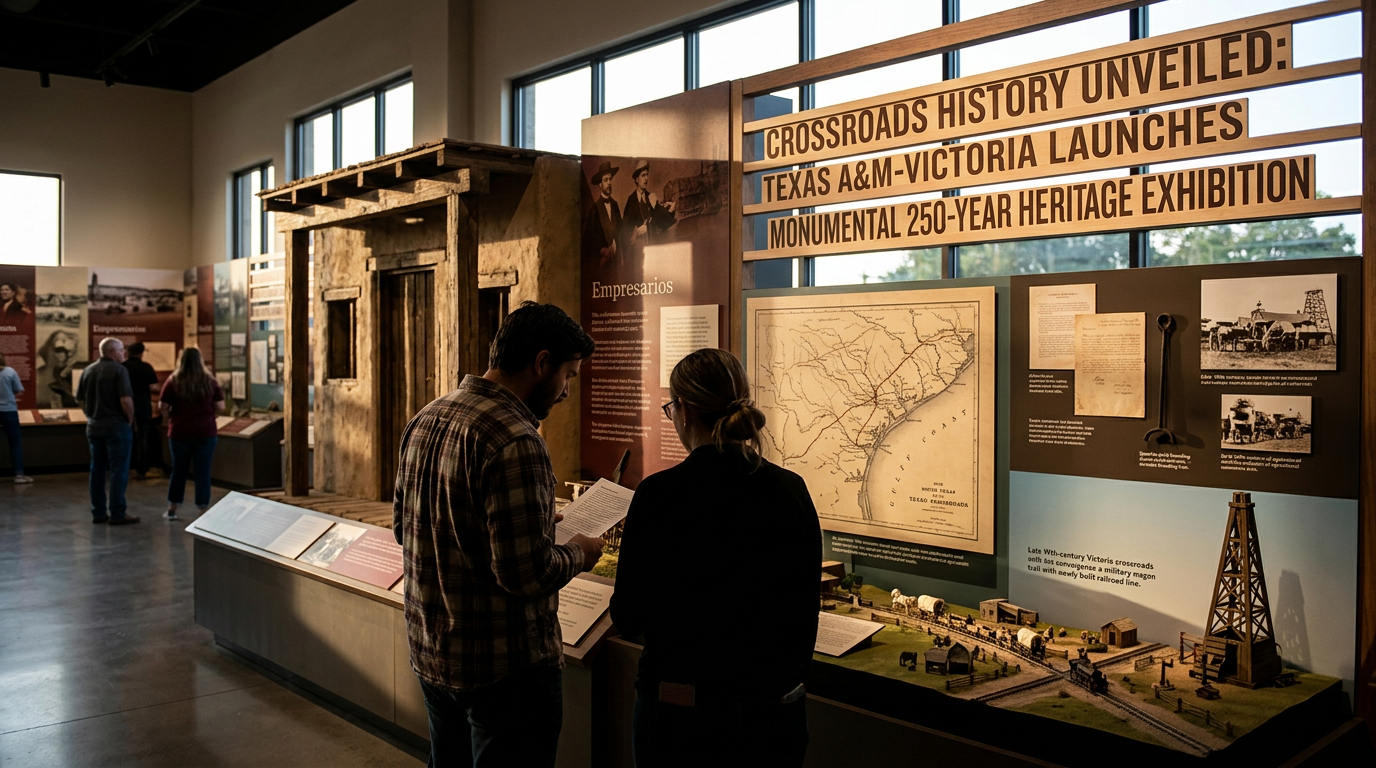
Texas A&M-Victoria (UHV) has launched an expansive dual-collection historical exhibition designed to bridge the gap between regional 18th-century origins and modern-day identity. This project, which recently opened to the public, serves as a significant cultural milestone for the Crossroads region by contextualizing two and a half centuries of societal evolution. Historically, Victoria has served as a pivotal junction for military movements, agricultural commerce, and colonial settlement, making it a unique micro-study of the broader Texas story. By utilizing rare artifacts, documented oral histories, and physical relics, the university aims to illustrate how the local landscape was shaped by diverse influxes of people and shifting political allegiances during the formation of the Republic. This specific initiative follows a long tradition of Texas universities acting as the primary custodians of regional lore, ensuring that rural and mid-sized city narratives are not overshadowed by the histories of major metropolitan hubs like Houston or San Antonio.
Texas relevance
The 'Crossroads' region, centered around Victoria, is historically significant as one of the oldest settled areas in the state. This exhibition matters to Texans because it highlights the specific contributions of the South Texas coastal plains to the state's broader economic and cultural wealth. For decades, Victoria has operated as a critical link between the Rio Grande Valley and the Gulf Coast ports. Understanding this 250-year timeline allows local residents to see their direct lineage to the Empresario system and the early ranching industries that eventually led to the modern Texas cattle and oil empires. Furthermore, the presence of such a high-caliber exhibit at a regional campus like UHV underscores the growing importance of decentralizing historical education, making high-level academic research accessible to the local community rather than siloing it within larger institutional archives in Austin or College Station.
The Evolution of the Crossroads Narrative
The exhibition at UHV is formatted to guide visitors through a chronological journey that begins in the mid-1700s, an era defined by the expansion of missions and the early interactions between European settlers and Indigenous populations. This foundational period set the stage for the region’s development as a strategic military outpost. The 'Crossroads' name itself reflects the geographical reality of the area, which served as a meeting point for trails and roads connecting the southern reaches of New Spain to the eastern frontiers. Visitors can explore how these early pathways eventually became the modern highways and rail lines that fuel Texas's commerce today.
Researchers involved in the curation process emphasized the need to show the 'human' side of these large historical shifts. Rather than focusing solely on dates and names, the exhibit includes personal items and letters that reveal the daily struggles of life on the Texas frontier. This approach makes the 250-year history tangible for modern students, allowing them into the world of early Victorian families who navigated the transition from Mexican rule to the independence of the Republic and eventual statehood. The longevity of the families featured in the exhibit proves the resilience of this specific Texas sub-region.
Academic Integration and Community Impact
One of the primary goals of the Texas A&M-Victoria exhibit is to serve as a living classroom for local students. By hosting the collection on campus, the university encourages interdisciplinary study where history, sociology, and political science students can interact directly with primary source materials. This hands-on access is often difficult to find outside of major state museums, making the UHV display a rare asset for the Crossroads academic community. Faculty members have noted that having such a localized historical resource helps students develop a stronger sense of place and civic responsibility.
Beyond the campus walls, the exhibit is a draw for cultural tourism, attracting historians and genealogists from across the state. The Crossroads region has long been a destination for those tracing their Texas roots, and the 250-year scope of this project provides a comprehensive backdrop for family research. Local business leaders also view such cultural investments as crucial for the revitalization of downtown Victoria and surrounding areas. When a major institution like the Texas A&M system invests in high-quality public displays, it signals a commitment to the long-term cultural health of the host city.
Preserving the Material Culture of South Texas
The physical components of the exhibit are diverse, ranging from agricultural tools used in the 19th century to early 20th-century urban artifacts and mid-century modern memorabilia. This variety ensures that the story told is not just one of politics and war, but of labor, industry, and domestic life. Each item on display has undergone a rigorous verification process to ensure its authenticity and relevance to the regional theme. The university has also utilized modern digital archiving techniques to preserve these items for future generations, ensuring that the physical degradation of old documents does upend the record.
The thematic organization of the exhibit allows visitors to see the technological progression of the Crossroads. For example, comparing the early irrigation techniques of the mission era with the massive industrial refineries of the modern era illustrates the sheer scale of change in Victoria’s landscape. This focus on material culture allows the exhibit to appeal to a broad demographic, from school-aged children fascinated by old machinery to elder residents who may remember the later decades represented in the 250-year timeline. It is a bridge between the physical past and the digital present.
The Role of Philanthropy and Local Support
The creation of such an extensive exhibit did not happen in a vacuum; it was the result of significant cooperation between private collectors, local historical societies, and the university administration. Many of the pieces on display were donated or loaned by families who have resided in the Crossroads for generations. This grassroots involvement is what makes the UHV exhibit unique compared to state-funded museum tours. It is a project by the community, for the community, reflecting a deep-seated desire to see local stories treated with the same prestige as national history.
Institutional support from the Texas A&M system played a key role in the logistics and security required to host rare historical items. However, the intellectual heart of the exhibit remains the local historians who have spent decades documenting the Crossroads' unique trajectory. This partnership between a large state system and local experts serves as a blueprint for how other Texas regions can leverage their specific histories to boost educational engagement and community pride. The success of this exhibit is likely to inspire similar heritage projects in other regional college towns across the state.
Future Outlook: Beyond the Current Exhibition
While the current exhibit focuses on a 250-year retrospective, it also looks forward to how history is being written in the present day. UHV officials have expressed interest in utilizing the momentum from this launch to create a permanent historical archive or a revolving series of exhibits that tackle different aspects of Crossroads life. As the region continues to evolve with new industries and changing demographics, the need to document these shifts becomes even more pressing. The current exhibit acts as a baseline, providing the context necessary to understand future changes in the local economy and social structure.
Historians involved with the project hope that the 250-year narrative will encourage young Texans to take an interest in archival work and museum science. By showcasing the excitement of historical discovery right in their backyard, the university is fostering a new generation of preservationists. The Crossroads has always been a place of transition and movement; this exhibit ensures that as the region moves toward its next 250 years, the lessons and legacies of its past remain firmly in view for those who will lead it next.
Analysis
This exhibition highlights a critical shift in how Texas history is being preserved and presented at the local level. By focusing on a 250-year span, the university is moving beyond the traditional 'Revolution-centric' narrative that often dominates school textbooks. Instead, by including the pre-colonial Spanish influence and the post-WWII industrial boom, the exhibit provides a more nuanced look at longevity and survival in the Crossroads. This editorial view suggests that the investment by Texas A&M-Victoria is as much about regional pride as it is about academic record-keeping. As Texas continues to grow at a rapid pace, preserving the specific landmarks and histories of regions like the Crossroads is essential to maintaining a cohesive state identity. It serves as a reminder that the 'Texas Spirit' was not built overnight in 1836 but was forged through centuries of adaptation and cross-cultural exchange in the very fields and towns that today’s travelers might only view as stops on the way to the coast.
Source attribution
This story was reported using a public release from the Texas History Stories (Google News). Keep TX Red rewrote the coverage independently and links to the official statement for verification.
Frequently Asked Questions
- Where is the exhibit located?
- The 250-year history exhibit is located on the campus of Texas A&M-Victoria (UHV) in the Crossroads region. It is designed to be accessible to both the student body and the general public.
- What time periods does the exhibition cover?
- The exhibit spans two and a half centuries of Texas history, beginning in the mid-1700s during the mission and colonization period and moving through to the present day.
- Is there a cost to view the historical collections?
- Generally, university-hosted exhibits of this nature are open to the public for free or a nominal fee during designated hours, though visitors should check the specific UHV campus calendar for visiting protocols.
- Why is the Victoria region referred to as the 'Crossroads'?
- The Crossroads name stems from the region’s historical and geographical status as a junction for major transportation routes connecting various parts of Texas, including the coast, the valley, and the inland missions.
- Will the exhibit become a permanent fixture?
- While currently featured as a marquee exhibition, the university aims to use the momentum and materials to inform future permanent archives and ongoing regional history research efforts.
Official Sources
Take the next step
Browse the Newsroom →Read more about Keep Texas Red → Our full guide to what Keep Texas Red means and why Texans support it.
Related Articles

Get Texas updates delivered weekly.
Independent Texas reporting on politics, policy, and daily life. One email a week. Unsubscribe anytime.
Keep TX Red Newsroom
The Keep Texas Red Editorial Staff produces nonpartisan explainers, policy breakdowns, and educational resources to help Texans understand how their government works. All content is reviewed for accuracy and updated regularly.
About Keep TX Red →