Austin Author Laekan Zea Kemp Highlights Literacy as Emotional Tool for Texas Youth
Texas novelist Laekan Zea Kemp discusses how her latest book serves as a sanctuary for students navigating high school and cultural identity.
Editorial disclaimer: Opinions and analysis on Keep TX Red are editorial content — not statements of fact. See our editorial standards.
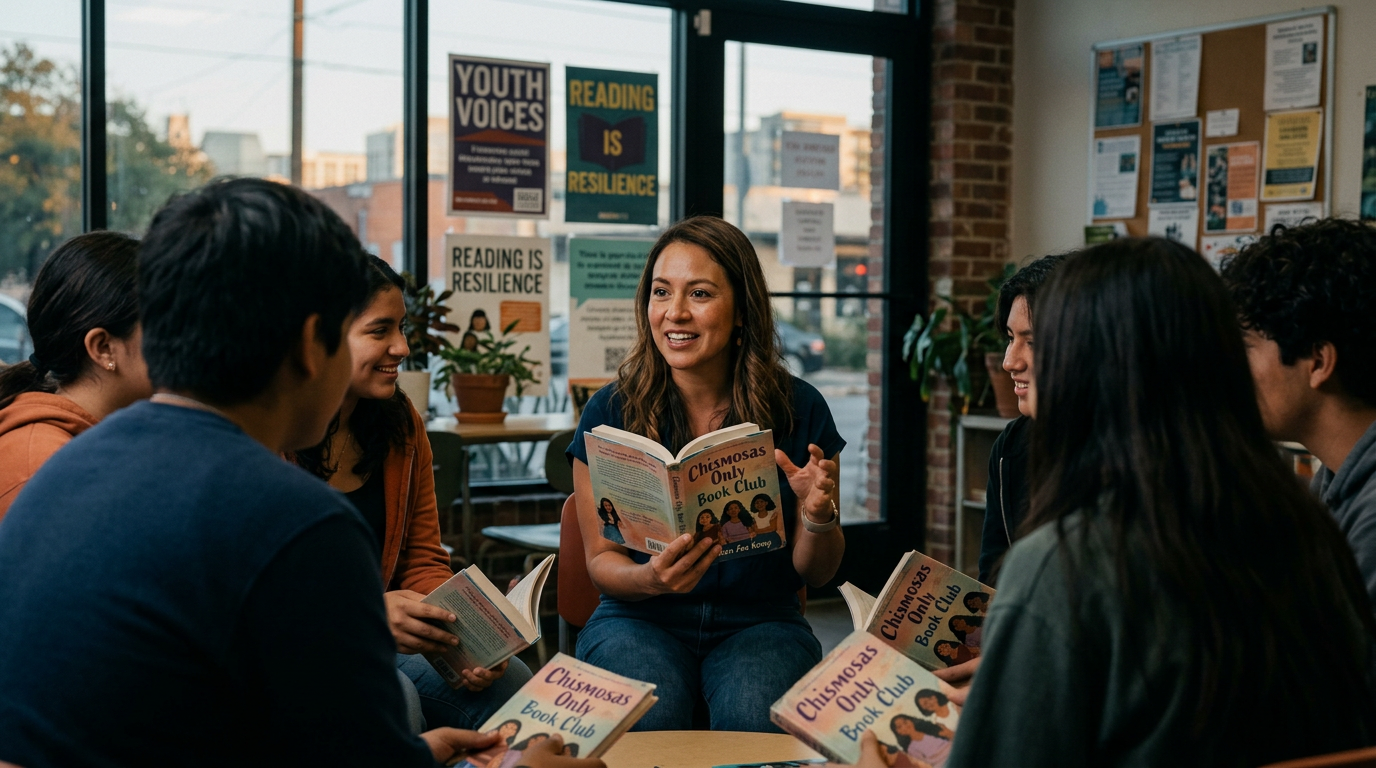
In an era where high school students face unprecedented social and academic pressures, Austin-based author Laekan Zea Kemp is utilizing the power of storytelling to offer a reprieve. Her newest literary project, titled 'Chismosas Only Book Club,' serves as an exploration of how community and shared narratives can foster mental well-being and emotional resilience. Kemp’s work frequently centers on the intersections of heritage, family dynamics, and the specific challenges faced by adolescents in the modern age. By creating a narrative space where young readers can see their own lives reflected back at them, she aims to provide the 'healing magic' that books provided her during her formative years. The novel focuses on the concept of 'chismosas'—traditionally a term for gossip—and flips the script, transforming the act of sharing information into a method of support and bonding among female friends in a Texas setting. Historically, Texas has a rich lineage of writers who draw inspiration from the diverse cultural mosaic of the Southwest. Kemp continues this tradition by embedding her stories in the familiar landscapes of Central Texas, ensuring that the local dialogue and cultural nuances are preserved for a national audience. This new release follows a trend in young adult literature that prioritizes emotional intelligence and the validation of student experiences. As Texas school districts continue to navigate evolving standards for curricula and library materials, authors like Kemp remain focused on the direct relationship between the reader and the text, arguing that the true value of a book lies in its ability to provide a safe space for internal reflection. The narrative does not just tell a story; it acts as a blueprint for how young Texans can build their own support systems through the simple act of reading together.
Texas relevance
This story is deeply rooted in the cultural and educational landscape of Austin, Texas, and the broader Lone Star State. As a local author, Laekan Zea Kemp represents the vibrant literary community centered in the state capital, which serves as a hub for both creative arts and educational innovation. Given that Texas has one of the largest and most diverse student populations in the United States, the availability of literature that speaks to the specific life experiences of young Texans—particularly those from Latino backgrounds—is a matter of significant local interest. The themes explored in her work, such as the blending of traditional family values with modern adolescent independence, mirror the real-world experiences of families across the state, from the Rio Grande Valley to the Metroplex. Furthermore, during a time when literacy rates and student mental health are frequent topics of discussion in the Texas Legislature, the success and impact of local authors provide a grassroots perspective on the role of art in public life.
The Evolution of 'Chismosas' in Modern Narrative
In many Hispanic households across Texas and the greater Southwest, the term 'chismosa' has long been used to describe someone who engages in gossip or idle chatter. It often carried a slightly derogatory weight, implying a lack of productivity or a penchant for stirring up trouble within the neighborhood or family circle. Kemp’s latest work seeks to dismantle this stereotype by showing that the exchange of information is a fundamental part of human connection and social survival.
In the context of the novel, the characters use their 'book club' as a cover for a deeper psychological support network. They are not merely talking about plots and characters; they are talking about their lives, their fears, and their futures. This mirrors real-world social dynamics in Texas communities where informal networks of women have historically served as the primary source of mutual aid and community organizing. By elevating the 'chismosa' to the role of a protagonist, Kemp validates the importance of feminine social spaces.
The shift from gossip to growth is a central theme that resonates with current trends in adolescent development. Educators often find that students are more likely to engage with material that utilizes their own vernacular and acknowledges their social realities. Kemp’s narrative choices reflect a sophisticated understanding of how language evolves within a culture and how those changes can be used to build a more inclusive society right here in Texas.
Navigating the High School Experience in Texas
High school in Texas is often a high-stakes environment, characterized by intense athletic traditions, academic competition, and the social pressures of large campus populations. For many students, the scale of these institutions can lead to a sense of isolation or anonymity. Kemp’s characters navigate these exact pressures, providing a relatable roadmap for young readers who might feel overwhelmed by the 'chaos' of their teenage years.
The author’s focus on providing a 'calm' during these years is timely. Recent studies on Texas youth have shown an increase in anxiety and stress-related issues, often tied to the digital landscape of social media. Books like 'Chismosas Only Book Club' serve as a digital detox, encouraging a slower pace of intake and a deeper level of cognitive engagement. This slow-burn approach to storytelling helps students develop the patience and focus required for both academic success and emotional health.
By setting her stories in a recognizable Texas environment, Kemp also addresses the unique geographic and social layout of the state. Whether it is the heat of a Texas summer or the specific aesthetics of a local high school hallway, these details ground the story in a reality that Texas students recognize as their own. This geographical familiarity helps lower the barrier to entry for reluctant readers, making the act of picking up a book feel less like a chore and more like a conversation with a neighbor.
The Cultural Importance of Reflective Representation
Representation in literature has moved beyond mere appearance; it is now about the authenticity of the experience. For the large Latino population in Texas, seeing regional dialects, culinary traditions, and specific family hierarchies portrayed accurately is essential. Kemp avoids the pitfalls of caricature, instead presenting a nuanced view of what it means to grow up in a bicultural environment in the 21st century.
The dialogue in Kemp's work often reflects the code-switching common in many Texas homes, where English and Spanish blend seamlessly to express concepts that one language alone cannot capture. This linguistic accuracy provides a sense of pride for students who may have previously felt that their household language was 'incorrect' or 'informal.' In the classroom setting, this can lead to higher levels of student engagement and a more positive view of the educational process.
Furthermore, Kemp’s work highlights the diversity within the Latino community itself. By showcasing different personalities, goals, and struggles among her characters, she reinforces the idea that there is no single 'Texas experience.' This diversity is a strength of the state, and literature that reflects it helps to foster empathy and understanding among students of all backgrounds, creating a more cohesive community for the future.
Literature as a Tool for Mental Health and Resilience
There is a growing body of evidence supporting 'bibliotherapy'—the use of books to help individuals deal with psychological or social challenges. Kemp’s narrative intentionally incorporates elements of self-care and emotional regulation. Through the actions of her characters, readers are introduced to healthy ways of processing trauma, managing friendships, and advocating for themselves in a world that often ignores the voices of the young.
The 'healing magic' mentioned in the summary refers to the transformative power of empathy. When a reader connects with a character going through a similar struggle, the feeling of 'being alone' dissipates. For a teenager in a small Texas town or a crowded city suburb, this connection can be life-changing. Kemp’s prose is designed to be accessible yet profound, ensuring that the message of resilience is not lost in overly academic language.
By focusing on the book club model, the novel also promotes the idea of collective healing. It emphasizes that we don't have to face our problems in a vacuum. This communal approach to mental health is particularly relevant in Texas, where community ties and church groups have traditionally played a large role in support systems. Kemp modernizes this concept by placing it within the context of a literary circle, showing that the pursuit of knowledge and the pursuit of wellness are often the same thing.
The Impact on the Texas Literary Market
The success of authors like Laekan Zea Kemp is a testament to the thriving literary market within the state. Texas is home to some of the largest book festivals and most active independent bookstores in the country. This infrastructure supports local creators and ensures that Texas stories reach a wide audience. Kemp’s work contributes to the 'Austin brand' of creativity—one that is bold, inclusive, and deeply connected to its roots.
As Texas continues to grow, so does the demand for stories that reflect its changing demographics. The publishing industry is increasingly looking to Texas for voices that can bridge cultural gaps and provide fresh perspectives on American life. Kemp is at the forefront of this wave, proving that local stories have universal appeal. Her work not only benefits Texas readers but also educates those outside the state about the reality of modern Texan life, moving past outdated Western tropes.
For aspiring writers in the state, Kemp’s career path serves as an inspiration. She demonstrates that it is possible to maintain a strong Texas identity while achieving national recognition. Her commitment to visiting schools and engaging with young readers across the state further solidifies her role as a cultural ambassador, ensuring that the legacy of Texas literature continues with the next generation of storytellers.
Analysis
From an editorial perspective, Kemp’s approach highlights a growing movement among Texas creatives to reclaim cultural terminology that has historically been viewed with a negative lens. By taking the word 'chismosas' and making it the foundation of a supportive book club, she is effectively teaching her audience about the power of rebranding and community-led empowerment. In a political climate where the content of school libraries is under intense scrutiny, Kemp’s focus on the 'calm' and 'healing' aspects of reading offers a neutral, human-centric argument for the importance of diverse storytelling. This isn't just about fiction; it is about providing the next generation of Texans with the psychological tools necessary to navigate a complex world. The emphasis on high school students is particularly poignant, as this demographic often finds itself at the center of cultural debates without having a seat at the table. Kemp’s work suggests that when adults provide the stories, students provide the meaning, creating a collaborative environment that extends far beyond the final page of the book.
Source attribution
This story was reported using a public release from the Texas Standard. Keep TX Red rewrote the coverage independently and links to the official statement for verification.
Frequently Asked Questions
- What does the title 'Chismosas Only Book Club' refer to?
- The title uses the Spanish word 'chismosa,' which means a gossip. In the context of the book, the author reclaims this term to describe a group of friends who share their lives, secrets, and support through a book club, turning a traditionally negative label into a source of community strength.
- How does the author connect her stories to Texas?
- Laekan Zea Kemp is based in Austin and frequently sets her stories in local environments. She incorporates Texas landscapes, linguistic patterns like code-switching, and cultural traditions specific to the Hispanic communities in the state to ensure her stories feel authentic to local readers.
- Why is this book recommended for high school students?
- The book addresses the specific 'chaos' and pressures of the high school years, such as navigating complex friendships, family expectations, and self-identity. It is intended to serve as a 'calm' space where students can see their own struggles mirrored and find healthy ways to cope with them.
- Is the author involved in the Texas community outside of writing?
- Yes, Kemp is an active member of the Austin and broader Texas literary community. She often engages with public schools and local events to promote literacy and discuss the importance of representation in young adult fiction.
Official Sources
Take the next step
Browse the Newsroom →Read more about Keep Texas Red → Our full guide to what Keep Texas Red means and why Texans support it.
Related Articles


Get Texas updates delivered weekly.
Independent Texas reporting on politics, policy, and daily life. One email a week. Unsubscribe anytime.
Keep TX Red Newsroom
The Keep Texas Red Editorial Staff produces nonpartisan explainers, policy breakdowns, and educational resources to help Texans understand how their government works. All content is reviewed for accuracy and updated regularly.
About Keep TX Red →