The Global Expansion of Central Texas Barbecue and its Economic Shadow
Discover how Central Texas barbecue transitioned from local meat markets to a global culinary phenomenon and what this means for the Lone Star State.
Editorial disclaimer: Opinions and analysis on Keep TX Red are editorial content — not statements of fact. See our editorial standards.
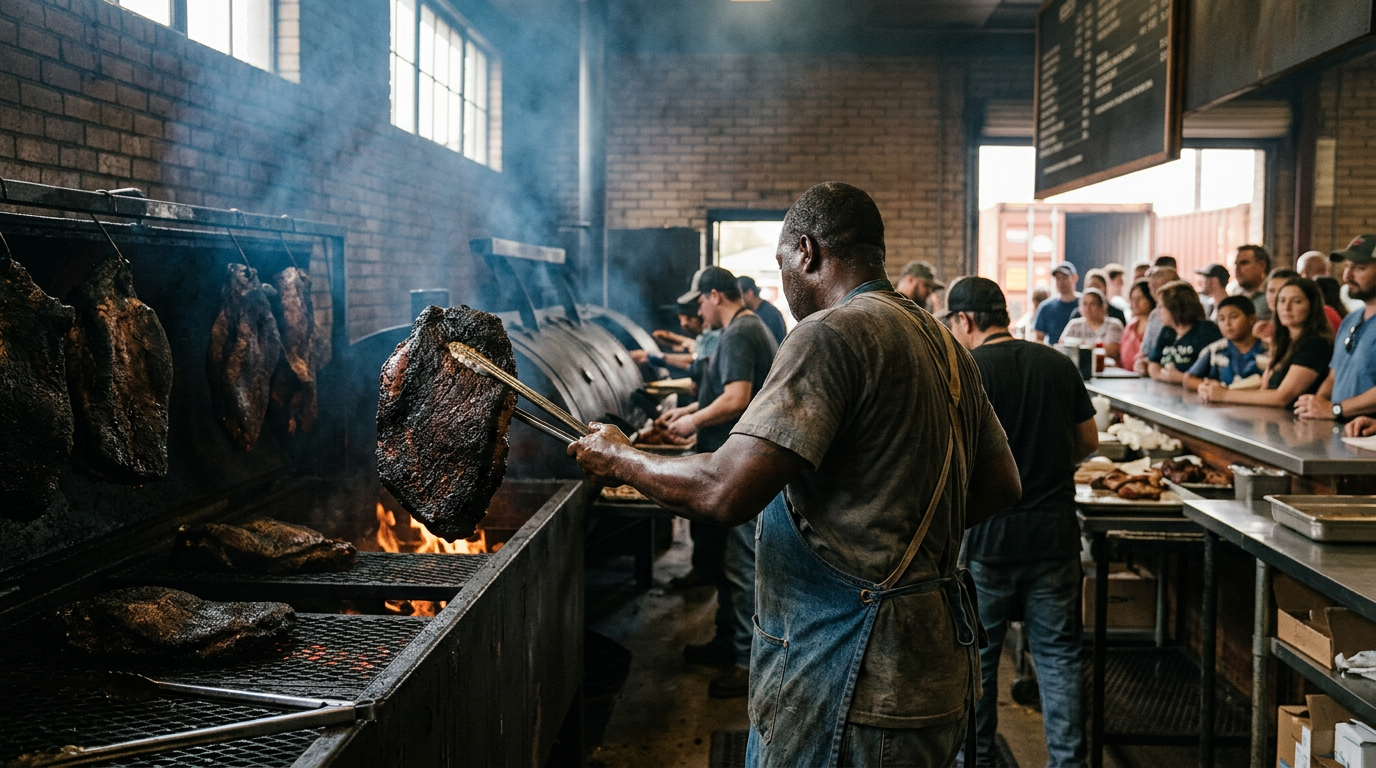
The evolution of Central Texas barbecue represents one of the most significant shifts in American culinary history. What began as a practical solution for European immigrants to preserve unsold meat in the mid-19th century has transformed into a high-demand luxury product exported to every corner of the globe. This transition was not immediate; it required a convergence of cultural heritage, agricultural availability, and a sudden surge in media interest during the early 2010s. The traditional style, defined by seasoning limited mostly to salt and pepper and long cook times over post oak wood, is no longer confined to the small towns of Lockhart, Taylor, or Luling. Instead, it has become a standardized global benchmark for excellence in meat preparation. Historically, the format of the Central Texas meat market was utilitarian. German and Czech butchers utilized smoke to prolong the shelf life of tougher cuts like brisket and shoulder clod. These items were served on butcher paper rather than plates, emphasizing function over form. For over a century, this stayed a regional secret, passed down through families who operated brick pits that rarely saw modifications. However, the rise of digital food culture and high-profile recognition turned these humble smokehouses into international destinations. Today, the 'Central Texas style' is mimicked from London to Tokyo, creating a massive global brand for the Lone Star State while simultaneously altering the local landscape for lifelong residents.
Texas relevance
Texas remains the undisputed epicenter of this movement, but the global popularity of its signature cooking method has direct consequences for the state's economy and cost of living. In cities like Austin, Houston, and Dallas, the influx of 'barbecue tourism' has driven property values up in previously industrial areas where smokehouses traditionally operated. Furthermore, the skyrocketing demand for USDA Prime brisket—the preferred grade for modern Texas pitmasters—has fundamentally altered the beef supply chain within the state. As international enthusiasts flock to the 'Texas Barbecue Belt,' local consumers face higher prices and longer wait times, turning a once-affordable working-class meal into a significant financial investment.
The Butcher Shop Roots of a Culinary Empire
In the late 1800s, the livestock industry in Central Texas was defined by the influx of European immigrants who brought distinct butchery techniques to the region. These settlers faced a recurring problem: in the heat of a Texas summer, fresh meat spoiled quickly. The solution was the smokehouse, where low and slow heat could tenderize tough cuts while the smoke provided preservation. Unlike the saucier styles found in the Carolinas or Kansas City, the Central Texas approach relied on the natural flavor of the beef, accentuated only by simple spices and the specific aroma of seasoned post oak.
Crucially, these early establishments were shops first and restaurants second. Customers would purchase meat by the pound at the counter and receive free crackers, pickles, and onions as accompaniments. This 'no-frills' ethos became the DNA of the regional style. Even as modern technology advanced, the commitment to the offset smoker and the physical labor of fire management remained the gold standard for authenticity. This stubborn adherence to tradition eventually became the primary selling point for the region when the rest of the culinary world began seeking 'slow food' alternatives to industrialized dining.
The Media Catalyst and the Austin Boom
The tipping point for Texas barbecue's global dominance can be traced back to the early 21st century when a new generation of pitmasters began refining the process with scientific precision. By focusing on the quality of the cattle and the flow of air within the smoker, they elevated the result to a gourmet level. National food critics and television personalities began documenting the multi-hour lines forming outside legendary spots, transforming a simple lunch into a bucket-list event. This media exposure turned the act of eating barbecue into a communal experience that fans were willing to travel thousands of miles to participate in.
Austin, in particular, served as the launchpad for this expansion. The city’s fusion of traditional techniques with modern branding allowed the style to transcend its rural origins. As social media platforms flourished, images of perfectly rendered fat caps and 'smoke rings' became viral currency. This digital visibility ensured that when entrepreneurs in Europe or Asia wanted to open a barbecue joint, they didn't look to the South or the Midwest—they looked specifically to the Central Texas model as the pinnacle of the craft.
Economic Pressures on the Traditional Brisket
The global fame of Texas-style brisket has created unprecedented pressure on the beef market. Traditionally, brisket was considered a 'throwaway' cut, priced low because it required so much time to make edible. However, as the Central Texas style peaked in popularity, the price per pound for raw brisket began to climb. Pitmasters today often find themselves competing with international buyers for the highest grades of beef, leading to a situation where the raw product price can fluctuate wildly based on global demand.
For the consumer, this means that the days of the cheap barbecue lunch are largely over. Restaurants must now account for the high cost of premium beef, the rising price of firewood, and the immense labor costs associated with 12-to-16-hour cook times. This has forced many legendary establishments to raise prices significantly, sparking a debate within the state about whether the food remains accessible to the average Texan. Despite these costs, the demand shows no signs of waning, as the prestige associated with the dish continues to grow.
Global Replication and the Authenticity Debate
From London to Paris and Sydney, 'Texas-style' barbecue joints are opening at an accelerating rate. Many of these international outposts go to great lengths to ensure authenticity, importing offset smokers built in Texas and sourcing specific types of wood to mimic the Central Texas flavor profile. This global sprawl has helped solidify Texas as a cultural superpower, exporting a lifestyle and an aesthetic alongside the food. It has turned small towns like Lockhart into international meccas, drawing visitors who contribute millions to the local tourism economy.
However, this global replication raises questions about what constitutes 'authentic' Texas barbecue. As the style is adapted to local tastes and ingredient availability abroad, the definition of the craft begins to stretch. Texas pitmasters often serve as consultants for these international ventures, ensuring that the core principles—patience, smoke, and quality meat—are maintained. This mentorship helps preserve the reputation of the Texas brand even when the food is being cooked thousands of miles away from the home of the Alamo.
The Future of the Lone Star Smokehouse
Looking forward, the Central Texas barbecue scene is entering a phase of diversification. While the classic meat market style remains the foundation, new pitmasters are incorporating diverse cultural influences, including Mexican, Vietnamese, and African flavors, into the smoking process. This 'New School' Texas barbecue keeps the tradition alive by allowing it to evolve with the state’s changing demographics. It ensures that the scene remains vibrant and relevant to a younger generation of diners who value both tradition and innovation.
Sustainability is also becoming a key focus for the industry. As the demand for wood increases, there is a growing conversation around the responsible harvesting of post oak and the environmental impact of large-scale smoking operations. The resilience of the industry will depend on its ability to balance its massive global footprint with the environmental and economic realities of the Texas landscape. Regardless of the changes, the central pillar of the story remains: a simple method of cooking from the Texas countryside has successfully conquered the global culinary imagination.
Analysis
OPINION: While the global adoration of Texas barbecue is a point of immense pride for the state, it presents a double-edged sword for cultural preservation. The commercialization of the craft has led to a 'boutique' era where the raw cost of a three-meat plate can exceed a hundred dollars in certain metropolitan markets. This shift risks alienating the very community that fostered the tradition. The challenge for Texas moving forward will be maintaining the soul of the rural meat market while satisfying an insatiable international appetite that treats pitmasters like rock stars rather than tradespeople. The success of the brand is undeniable, but we must ensure the local tradition doesn't become a caricature of itself for the sake of global trends.
Source attribution
This story was reported using a public release from the Texas Food Stories (Google News). Keep TX Red rewrote the coverage independently and links to the official statement for verification.
Frequently Asked Questions
- What defines the Central Texas style of barbecue?
- Central Texas barbecue is primarily defined by the use of beef (especially brisket), seasoned simply with salt and black pepper. It is cooked 'low and slow' in offset smokers using post oak wood. Traditionally, it is served by the pound on butcher paper with simple sides like white bread, pickles, and onions.
- Why has the price of Texas barbecue increased so much recently?
- Several factors contribute to rising costs, including the global increase in demand for USDA Prime Grade brisket, the rising cost of post oak firewood, and the intensive labor required to manage fires for up to 16 hours at a time. Additionally, as it has become a 'craft' product, the overhead for high-quality restaurants has risen.
- Can you find authentic Texas barbecue outside of the United States?
- Yes, many international pitmasters have trained in Texas or use Texas-made equipment and wood to replicate the style. While fans debate the 'authenticity' of barbecue made outside the state, many shops in cities like London or Tokyo adhere strictly to the Central Texas methodology.
Official Sources
Take the next step
Browse the Newsroom →Read more about Keep Texas Red → Our full guide to what Keep Texas Red means and why Texans support it.
Related Articles
Get Texas updates delivered weekly.
Independent Texas reporting on politics, policy, and daily life. One email a week. Unsubscribe anytime.
Keep TX Red Newsroom
The Keep Texas Red Editorial Staff produces nonpartisan explainers, policy breakdowns, and educational resources to help Texans understand how their government works. All content is reviewed for accuracy and updated regularly.
About Keep TX Red →