The Economic Shift Toward Smoked Chicken in the Texas Barbecue Market
High beef prices are driving Texas barbecue enthusiasts to explore smoked chicken as a flavorful and affordable alternative to traditional brisket.
Editorial disclaimer: Opinions and analysis on Keep TX Red are editorial content — not statements of fact. See our editorial standards.
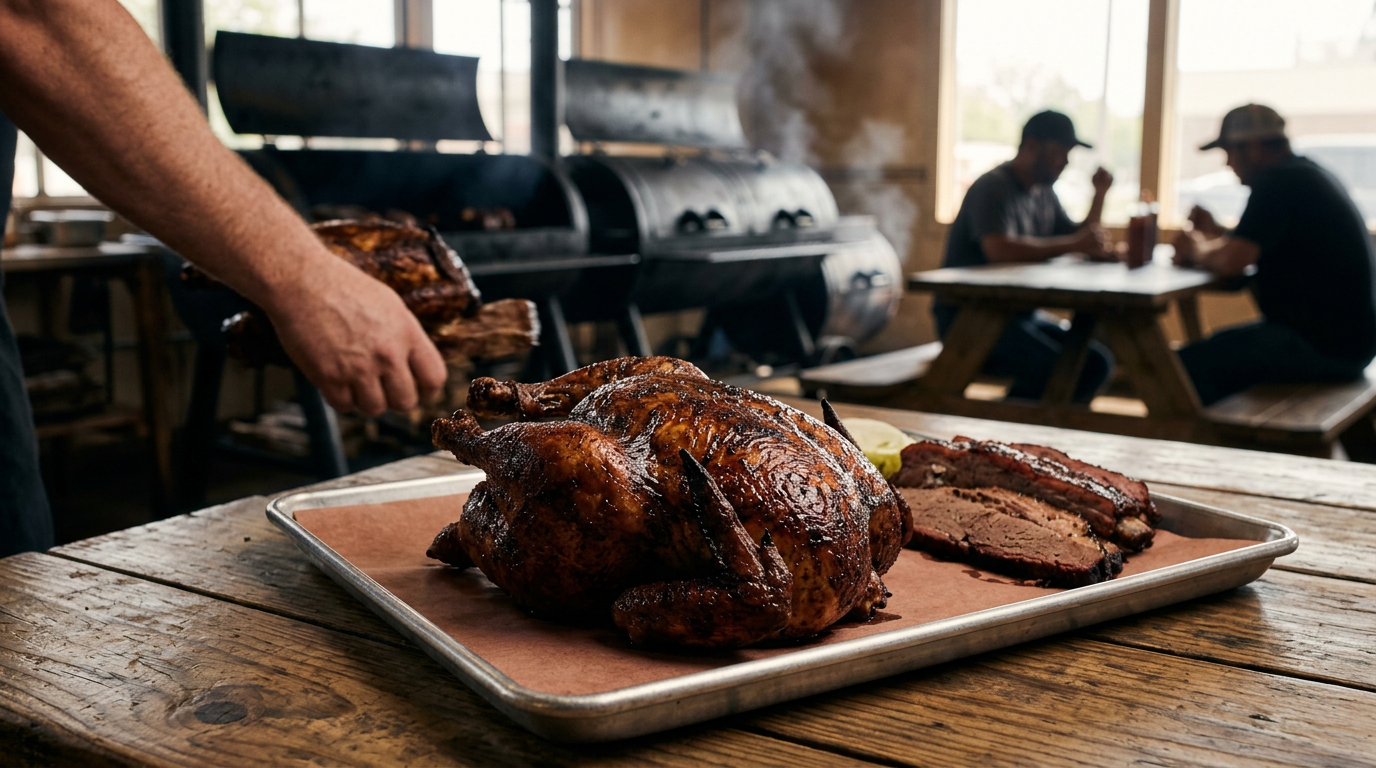
The landscape of Texas barbecue is undergoing a subtle but significant transformation as diners and pitmasters alike grapple with the rising costs of traditional beef products. Historically, the Texas 'holy trinity' of barbecue has revolved around brisket, pork ribs, and sausage, with poultry often relegated to a secondary status or omitted from menus entirely. However, the current economic climate, characterized by fluctuating cattle markets and increased wholesale beef prices, is encouraging a rediscovery of smoked chicken. This shift is not merely a matter of frugality; it represents an evolution in culinary technique where Texas pitmasters are applying the same rigorous standards to poultry that they traditionally reserved for prime cuts of beef. This resurgence is creating a new dynamic in the local smokehouse culture, where the quality of a bird can now significantly impact a restaurant's reputation. Historically, barbecue was born from necessity and the art of making tough, inexpensive cuts of meat palatable through long, slow cooking. In a sense, the pivot toward chicken is a return to those roots of resourcefulness, albeit applied to a lean protein that requires sophisticated moisture management to succeed in the pit. Technological and agricultural shifts in the state have also played a role in this trend. While beef remains king in Texas history, the poultry industry has expanded significantly, offering a steady supply of high-grade birds that provide a consistent baseline for pitmasters. By treating chicken with the same reverence as brisket—using specific wood profiles like post oak or mesquite and meticulous brine solutions—Texas smokehouses are proving that bird meat is no longer just a compromise for the health-conscious or the budget-bound. This movement is gaining traction across the state, from the rural pits of the Hill Country to the high-end urban smokehouses of Houston and Dallas. As consumers become more adventurous, the demand for well-executed smoked chicken is forcing a reevaluation of what constitutes a complete Texas barbecue plate in the modern era.
Texas relevance
For Texans, barbecue is more than just food; it is a primary cultural export and a vital component of the state's communal identity. The shift toward smoked chicken is particularly relevant in cities like Austin, Lockhart, and San Antonio, where the local economy and tourism sectors are heavily influenced by the prestige of their barbecue establishments. Texas leads the nation in cattle production, but the rising operational costs for small business owners mean that diversifying the menu is essential for survival. By embracing chicken, Texas pitmasters are able to maintain their artisanal standards while offering price points that remain accessible to the average Texas family. This adaptation ensures that the state's barbecue traditions can survive economic volatility without sacrificing the quality that has made the Lone Star State a global destination for meat lovers.
The Impact of Beef Inflation on Texas Pitmasters
The primary driver behind the renewed interest in smoked chicken is the undeniable reality of beef inflation. Over the past decade, the price of raw brisket has surged due to a combination of high demand, increased labor costs, and environmental factors affecting cattle herds. For many independent Texas barbecue joints, these overhead costs have forced a difficult choice: pass the astronomical prices onto the customer or find ways to diversify the menu with lower-cost proteins that still carry high perceived value.
Smoked chicken provides the perfect solution to this economic puzzle. While a pound of prime brisket might now retail for upwards of thirty dollars at top-tier establishments, chicken allows for a more approachable entry point. This pricing strategy keeps the pits running and the dining rooms full, even when beef markets are volatile. Furthermore, the faster cook time of poultry compared to the twelve-to-sixteen-hour brisket cycle allows restaurants to manage their inventory and fuel costs more efficiently.
Mastering the Craft: Brining and Wood Profiles
The modern Texas smoked chicken is a far cry from the dry, uninspired birds of the past. Today's pitmasters utilize sophisticated techniques to ensure the meat remains succulent under the harsh conditions of a wood-fired pit. Brining has become a non-negotiable step in the process, with many chefs using custom blends of salt, sugar, and aromatics to deeply hydrate the meat before it ever touches the smoke. This preparation is essential for protecting the lean breast meat from the intense heat of the offset smoker.
The choice of wood is equally critical in defining the Texas profile of the bird. Unlike the heavy, dark barks found on brisket, chicken requires a more nuanced approach. Many Texas pits utilize post oak to provide a clean, mild smoke flavor that complements the poultry without overpowering it. In South Texas, mesquite might be used sparingly for a more aggressive profile, while fruitwoods are often blended in to add a hint of sweetness to the skin. The result is a complex, multi-layered flavor profile that challenges the supremacy of beef.
The Structural Evolution of the Texas Barbecue Plate
Historically, the Texas barbecue plate was defined by its simplicity—meat on butcher paper with white bread, pickles, and onions. As chicken gains a permanent foothold on these plates, the visual and culinary composition of the meal is changing. The golden-brown, crispy skin of a well-smoked half-chicken provides a textural contrast to the soft, rendered fat of a brisket slice. This variety is increasingly sought after by a new generation of Texas foodies who value a diverse tasting experience over sheer volume of a single protein.
This evolution also reflects a broader shift toward inclusive dining. While Texas barbecue will always be meat-centric, the inclusion of high-quality poultry offers a lighter alternative for those who may want to avoid the heavy saturated fats of beef. By perfecting the bird, pitmasters are broadening their demographic reach, ensuring that the local smokehouse remains a gathering place for all Texans, regardless of their dietary preferences or health goals.
Agricultural Stability and Local Sourcing
Texas has a robust poultry industry that provides a localized supply chain for pitmasters. Unlike the global beef market, which can be affected by international trade tensions and massive industrial shifts, the regional poultry market often offers more stability for the small-scale restaurant owner. By sourcing birds from Texas farms, barbecue joints can emphasize the 'farm-to-table' aspect of their operations, a marketing point that resonates strongly with contemporary diners.
Moving toward chicken also reduces the environmental footprint of the barbecue industry. Poultry requires significantly less water and land per pound of meat produced compared to beef. While this is rarely the primary motivation for a traditional Texas pitmaster, it is a secondary benefit that helps characterize the 'New School' of Texas barbecue. This forward-thinking approach ensures that the state's most famous culinary tradition remains sustainable in the face of 21st-century agricultural challenges.
The Cultural Perception of the 'Side-Dish' Protein
For decades, ordering chicken at a Texas barbecue joint was often seen as an afterthought or a mistake. There was a prevailing cultural myth that if a restaurant served chicken, it was only because they had to satisfy a small segment of the market that didn't appreciate 'real' barbecue. That perception is being aggressively dismantled by award-winning pitmasters who are putting chicken at the center of their competition entries and daily specials.
As legendary spots began to receive accolades specifically for their poultry, the rest of the industry took notice. Now, having a 'destination chicken' is a point of pride. When a customer travels hours to a place like Taylor or Luling, they are increasingly likely to add a quarter-chicken to their order just to see how the pitmaster handles the challenge. This cultural shift is turning the 'secret joy' of smoked chicken into a mainstream staple of the Texas dining experience.
The Future of Texas Barbecue Variety
Looking ahead, the success of smoked chicken may pave the way for other proteins to enter the Texas pit rotation more frequently. We are already seeing an increase in smoked turkey, duck, and even quail in some of the more experimental urban markets. This diversification is healthy for the industry, as it prevents the Texas barbecue brand from becoming stagnant or prohibitively expensive.
However, the core of the movement remains the chicken. Its versatility, affordability, and ability to take on smoke make it the ideal companion to the more traditional beef cuts. As long as brisket prices remain high, expect to see the bird taking a more prominent role on menus across the state. The 'Golden Age' of Texas barbecue is not ending; it is simply expanding its horizons to include the humble chicken as a cornerstone of the craft.
Analysis
The rise of smoked chicken in Texas barbecue represents a mature market correction. For years, the 'Brisket Boom' drove prices to levels that threatened to price out the everyday consumer. By elevating chicken to a gourmet status, the industry is creating a more resilient business model. This movement also demonstrates the prowess of Texas pitmasters; it is arguably more difficult to perfectly smoke a lean chicken than it is a fatty brisket. Success in this area signals a mastery of heat control and seasoning that further cements Texas as the epicenter of global barbecue innovation.
Source attribution
This story was reported using a public release from the Texas Monthly. Keep TX Red rewrote the coverage independently and links to the official statement for verification.
Frequently Asked Questions
- Why is smoked chicken becoming more popular in Texas now?
- The primary reason is economic. As the price of brisket and other beef cuts has skyrocketed, both restaurant owners and customers are looking for high-quality alternatives that won't break the bank. Additionally, pitmasters have improved their techniques, making smoked chicken a much more delicious and moist option than it was in previous decades.
- Is smoked chicken considered 'authentic' Texas barbecue?
- While brisket is the undisputed king of Texas barbecue, the tradition has always been about mastering meat and wood smoke. Chicken has been present on Texas pits for a long time, but it is currently enjoying a 'craft' renaissance where it is treated with the same artisanal respect as beef cuts, making it a fully accepted part of the modern Texas barbecue scene.
- How do Texas pitmasters keep smoked chicken from drying out?
- To prevent dryness, many Texas pitmasters use a combination of brining (soaking the meat in a saltwater solution) and precise temperature control. Some also utilize 'spatchcocking' (layering the bird flat) to ensure even cooking, and they often finish the chicken with a light glaze or butter baste to lock in moisture and crisp the skin.
Official Sources
Take the next step
Browse the Newsroom →Read more about Keep Texas Red → Our full guide to what Keep Texas Red means and why Texans support it.
Related Articles



Get Texas updates delivered weekly.
Independent Texas reporting on politics, policy, and daily life. One email a week. Unsubscribe anytime.
Keep TX Red Newsroom
The Keep Texas Red Editorial Staff produces nonpartisan explainers, policy breakdowns, and educational resources to help Texans understand how their government works. All content is reviewed for accuracy and updated regularly.
About Keep TX Red →