San Antonio Military Hub Reinstates Health Safety Measures After Major Flu Spike
Hundreds of trainees at JBSA-Lackland fall ill following a policy shift, leading military officials to reinstate local vaccine mandates.
Editorial disclaimer: Opinions and analysis on Keep TX Red are editorial content — not statements of fact. See our editorial standards.
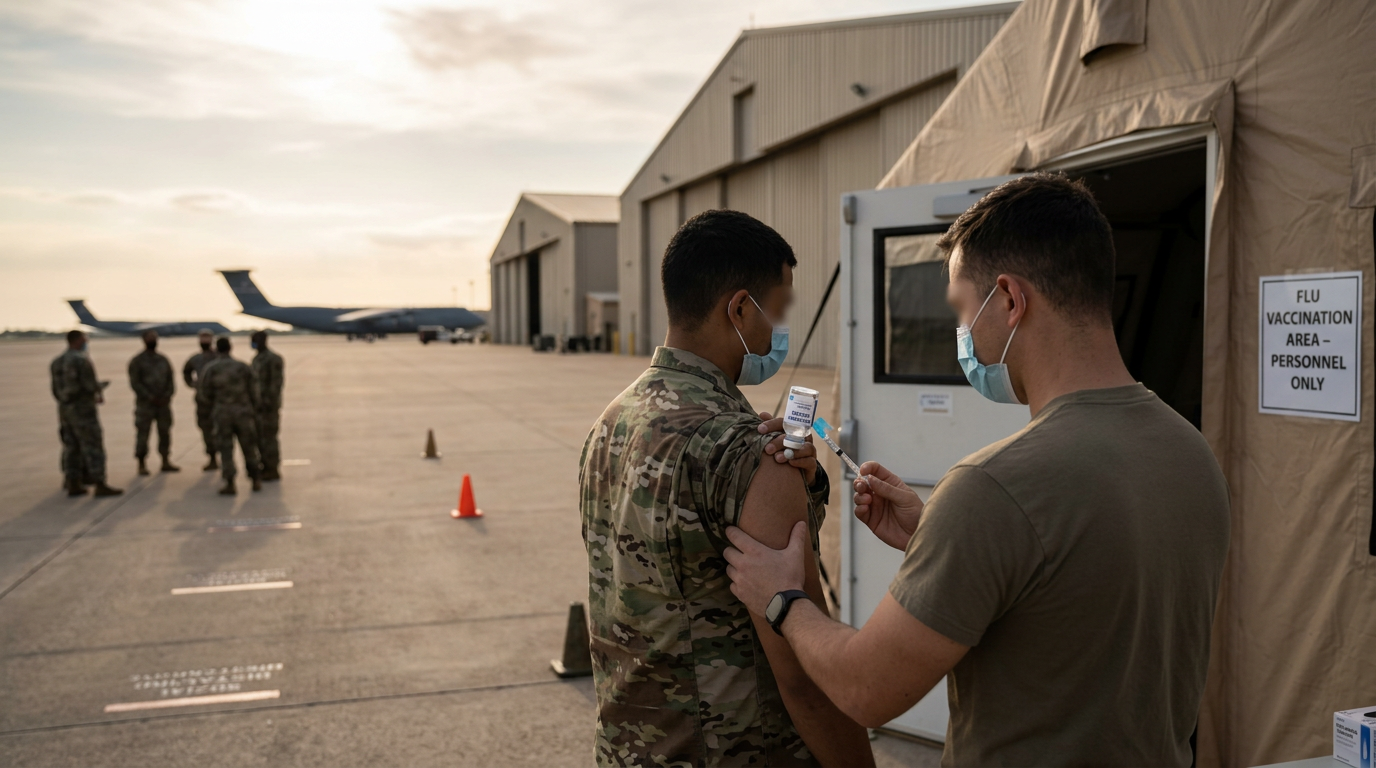
Military leadership at Joint Base San Antonio-Lackland has officially reinstated mandatory influenza vaccinations for personnel following a significant viral outbreak that compromised readiness among hundreds of new trainees. This policy reversal comes only weeks after the Department of Defense moved to loosen medical requirements, heavily weight medical autonomy, and expand religious exemptions for service members. The rapid spread of the illness within the congregative living environments of the training base necessitated a localized shift back to stricter health protocols to prevent further degradation of the mission. Texas has a storied history as a primary hub for military training, with San Antonio often referred to as 'Military City, USA,' making any internal health crisis at these installations a matter of significant regional interest. Historically, the U.S. military has utilized mandatory immunization programs to ensure the deployability of its forces. Since the revolutionary era, when George Washington mandated smallpox inoculations for the Continental Army, the tension between individual liberty and collective military readiness has been a recurring theme in American history. In the modern context, the recent focus on medical freedom and religious objections led to the initial suspension of certain vaccine requirements. However, the operational reality of housing thousands of young adults in close quarters during the flu season proved to be a catalyst for the current return to traditional health mandates at the San Antonio installation.
Texas relevance
Texas serves as the primary gateway for every enlisted member of the United States Air Force through JBSA-Lackland. This means that health policies enacted at this facility have an immediate and direct impact on the local San Antonio economy, healthcare infrastructure, and the thousands of Texas-based civilian contractors who support the base operations. Furthermore, the interplay between state-level views on medical mandates and federal military jurisdiction often creates a unique friction in Texas, where the state government has been vocal about protecting individual medical choices. When an outbreak occurs on a Texas-based federal installation, it tests the limits of local public health coordination and highlights the vulnerability of the state's massive military footprint to infectious diseases.
The Scale of the Outbreak in San Antonio
The influx of illness at Joint Base San Antonio-Lackland caught many by surprise due to the speed at which the virus moved through the barracks. In a matter of days, what began as a few isolated cases of respiratory distress escalated into a full-blown medical crisis, affecting nearly three hundred trainees simultaneously. This volume of sick personnel placed a massive strain on the base’s internal medical facilities and required the isolation of entire training flights to prevent further transmission.
Local health officials noted that the congregate nature of military training—where recruits share dormitories, dining halls, and training fields—makes these environments particularly susceptible to outbreaks. Without the shield of a high vaccination rate, the seasonal flu was able to jump between units with minimal resistance. This not only affected the health of the recruits but also delayed the graduation of several classes, creating a backlog in the Air Force’s personnel pipeline that will take months to resolve.
Policy Shifts and Medical Autonomy
Prior to the outbreak, the push for increased medical autonomy within the armed forces had gained significant traction. New guidelines had been established to allow service members more leeway in requesting exemptions based on religious beliefs or personal medical concerns. This shift was largely seen as a response to the internal and external pressures following the pandemic-era mandates, aiming to improve recruitment and retention by respecting individual choices.
However, the situation at Lackland has reopened the debate regarding the limits of autonomy in a disciplined military environment. Commanders argue that unlike the civilian sector, the military relies on the physical presence and health of every individual to ensure national security. When a significant portion of a unit is incapacitated by a preventable illness, it is viewed as a threat to the mission. The reinstatement of the mandate is being framed as an emergency measure rather than a permanent policy change, though its long-term status remains uncertain.
Impact on Air Force Training Timelines
Lackland is the sole site for Air Force Basic Military Training (BMT). Any disruption here has a ripple effect across the entire branch. When recruits fall ill, they are removed from their training cycles and placed in medical hold units. This means they cannot complete the required curriculum on schedule, which in turn delays their transition to technical schools and their eventual arrival at their first duty stations.
The current flu spike has resulted in what some officials are calling a 'hiccup' in the production of new airmen. For Texas, this means a sustained presence of trainees who are not moving through the system as expected, increasing the temporary population of the base and requiring more resources from the local supply chain. The logistical burden of housing and feeding hundreds of recruits who are in medical isolation is a significant administrative challenge for the 37th Training Wing.
The Role of Religious and Medical Exemptions
Even with the reinstatement of the flu vaccine mandate, the military is navigating complex legal waters regarding exemptions. The initial move to stop the mandate was partly fueled by a desire to avoid the protracted legal battles seen in recent years over other vaccines. Officials must now find a way to enforce the new local order while still providing a fair process for those who have legitimate religious or medical reasons for declining the shot.
Legal experts suggest that the localized nature of this mandate—applying specifically to the training environment at Lackland—may give the military more standing to enforce it. The argument is that the unique conditions of basic training constitute a 'compelling government interest' that outweighs individual preference in the short term. Recruits entering the service now face a different set of expectations than those who joined during the brief window of total medical autonomy earlier this year.
Historical Context of Vaccines in the Military
The U.S. military has long used its personnel as a testing ground for public health initiatives, often out of necessity. During the 20th century, the military led the way in mass vaccination efforts for polio, measles, and various tropical diseases encountered during overseas deployments. Following the 1918 Spanish Flu pandemic, which devastated military camps in the United States, the armed forces prioritized respiratory health as a core component of force protection.
In Texas, bases like Fort Bliss and Fort Cavazos (formerly Fort Hood) have historically managed similar outbreaks by implementing strict hygiene and immunization protocols. The current situation at Lackland is a reminder of the fragility of a large, dense military population. While medical technology has advanced significantly, the basic principles of social distancing and vaccination remain the primary tools for commanders seeking to maintain operational readiness in the face of seasonal pathogens.
Looking Forward: Future Health Protocols
As the flu season continues, other military installations across Texas and the nation are watching the situation at Lackland closely. There is a possibility that this localized mandate could serve as a blueprint for other 'high-density' environments, such as naval vessels or specialized training schools. If the reinstatement successfully curbs the infection rate at Lackland, it will likely be used as evidence to support broader health mandates in the future.
Conversely, there remains a strong contingency of advocates who believe the military should find ways to manage health risks without infringing on personal liberties. Innovations in rapid testing and upgraded ventilation systems in barracks are being discussed as alternative ways to mitigate disease spread. For now, the focus in San Antonio remains on stabilizing the current trainee population and ensuring that the Air Force's 'front door' remains open and functional.
Analysis
The decision to reinstate the mandate at Lackland represents a difficult pivot for military administrators who are currently navigating a sensitive political landscape regarding medical mandates. By citing 'operational necessity,' commanders are prioritizing the immediate functionality of the training pipeline over the broader policy trend toward increased medical autonomy. This suggests that while high-level Pentagon policies may lean toward flexibility, the ground-level reality of maintaining a healthy fighting force often leads back to standardized medical requirements. From a fiscal perspective, the cost of hundreds of stalled training cycles is immense, and the military is clearly choosing the pragmatic path of prevention to avoid a total standstill in recruitment throughput.
Source attribution
This story was reported using a public release from the Texas Standard. Keep TX Red rewrote the coverage independently and links to the official statement for verification.
Frequently Asked Questions
- Why was the vaccine mandate initially removed at Lackland?
- The mandate was softened to align with new Department of Defense policies that prioritized medical autonomy and expanded the process for religious exemptions. This was part of a broader effort to modernize military personnel policies and address concerns regarding individual liberties.
- How many people were affected by the flu outbreak?
- Approximately 300 trainees at Joint Base San Antonio-Lackland were confirmed to be ill, leading to significant disruptions in the Basic Military Training schedule and a massive increase in personnel requiring medical hold.
- Does this change apply to all military bases in Texas?
- Currently, the reinstatement is specifically focused on the training environment at JBSA-Lackland due to the high density of recruits. Other bases, like Fort Cavazos or Dyess AFB, operate under different conditions, though they may evaluate their own protocols based on local health data.
- What happens to recruits who still refuse the vaccine?
- Service members may still apply for exemptions, but the threshold for 'operational necessity' has been raised during this outbreak. Those without approved exemptions may face administrative action or be unable to proceed with their training cycles until the health crisis is resolved.
Official Sources
Take the next step
Browse the Newsroom →Read more about Keep Texas Red → Our full guide to what Keep Texas Red means and why Texans support it.
Related Articles
Get Texas updates delivered weekly.
Independent Texas reporting on politics, policy, and daily life. One email a week. Unsubscribe anytime.
Keep TX Red Newsroom
The Keep Texas Red Editorial Staff produces nonpartisan explainers, policy breakdowns, and educational resources to help Texans understand how their government works. All content is reviewed for accuracy and updated regularly.
About Keep TX Red →