Combating the Resurgence of New World Screwworms: Protecting Texas Livestock Markets
Federal officials and agriculture experts address the return of the flesh-eating screwworm pest and the risks posed to the Texas ranching economy.
Editorial disclaimer: Opinions and analysis on Keep TX Red are editorial content — not statements of fact. See our editorial standards.
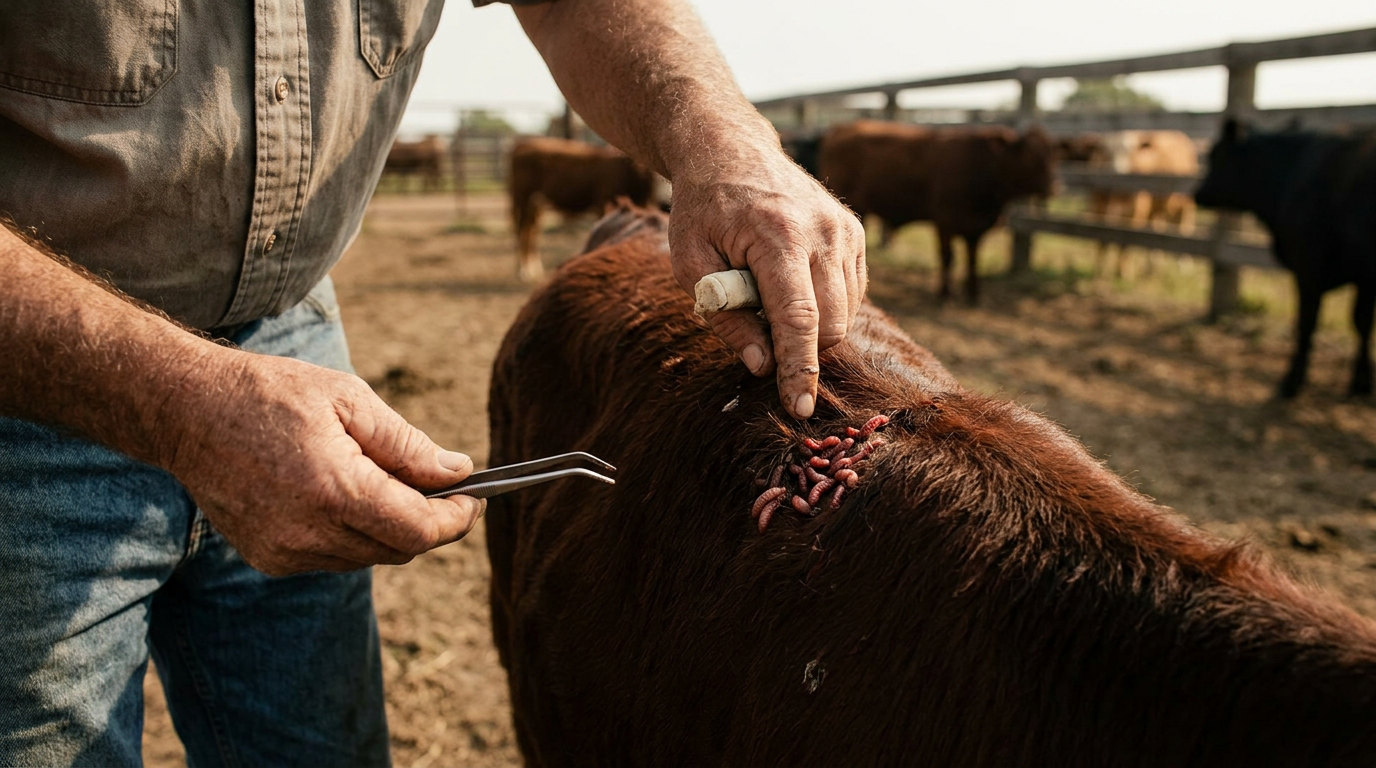
For decades, the New World screwworm was considered a ghost of the past in American agriculture, thanks to a massive binational effort known as COMEXA. This collaboration between the United States and Mexico utilized sterile insect technique (SIT) to effectively wipe out the parasite from North and Central America. Recently, however, instances of the Cochliomyia hominivorax larvae have resurfaced, sparking concerns among biological experts and agricultural leaders. The pest is notorious for laying eggs in the open wounds of warm-blooded animals, where the larvae then consume living tissue, leading to severe infection or death if left untreated. The current resurgence highlights a potential vulnerability in the long-standing biological barrier maintained in Panama, which was designed to prevent the northward migration of the flies from South America. Historically, the screwworm cost the U.S. livestock industry hundreds of millions of dollars annually before the eradication program achieved success in the mid-1960s. The program's cornerstone was the mass release of laboratory-sterilized male flies, which would mate with wild females, resulting in no offspring. This process gradually collapsed the population until the pest was eliminated from Texas and the surrounding states. The recent detection of these pests suggests that the 'biological wall' may be faltering due to environmental changes, funding shifts, or logistical hurdles in the international zone. As authorities monitor the situation, the emphasis has shifted toward rapid detection and the potential reinstatement of aggressive containment measures to ensure the flies do not re-establish a foothold in the American Southwest.
Texas relevance
Texas is the epicenter of the American cattle industry, holding more head of cattle than any other state in the nation. The return of the screwworm represents a direct existential threat to the livelihoods of thousands of Texas ranchers and the stability of the state's multi-billion dollar agricultural economy. In the years prior to the 1960s eradication, Texas ranchers were forced to manually inspect and treat livestock daily, a labor-intensive process that would be even more costly under modern economic conditions. Should the infestation cross the Rio Grande, the impact on the Texas beef and wool markets would be catastrophic, likely leading to strict export quarantines and surging domestic prices. Local veterinary networks and Texas A&M AgriLife Extension offices are already on high alert to identify any suspicious larvae cases in the field.
The Biological Mechanism of the Threat
The New World screwworm operates differently than typical blowflies which feed on necrotic or dead tissue. The female screwworm fly is attracted to any break in the skin of a warm-blooded animal, including minor scratches, tick bites, or the navels of newborn calves. Once she locates a wound, she lays hundreds of eggs that hatch into larvae within hours. These larvae possess sharp, screw-like ridges that allow them to burrow deep into healthy muscle tissue, eating the animal alive from the inside out.
Without human intervention, an infested animal often succumbs to secondary infections or systemic toxicity within a week or two. In the wild, this can decimate deer populations and other native Texas wildlife, but in a domestic setting, it requires constant vigilance from handlers. The cycle is rapid, meaning a small localized outbreak can explode into a regional crisis if not identified and suppressed within a single breeding cycle of the fly.
The biology of the fly was its own undoing during the 20th century. Because females generally mate only once in their lifetime, the introduction of sterile males effectively 'tricks' the population into reproductive failure. However, this strategy requires a continuous and overwhelming numbers advantage. If the production of sterile flies drops or the wild population moves faster than the release zones, the defensive line collapses.
Historical Context: The 1960s Victory
The successful eradication of the screwworm remains one of the greatest achievements in the history of the United States Department of Agriculture (USDA). Before the program, Texas was the primary battleground. Ranchers in the 1930s and 40s reported losses of up to 80 percent of their calf crops in some years due to infestations. The psychological and financial toll on the Texas agricultural community was immense, fostering a culture of constant 'doctoring' of cattle with toxic smears and chemicals.
The breakthrough came when scientists Edward Knipling and Raymond Bushland developed the sterile insect technique. By the early 1960s, a mass-rearing facility was established in Mission, Texas, which produced millions of sterile flies weekly. These were dropped from airplanes across the state and eventually south into Mexico. By 1966, the United States was declared free of the pest, although sporadic outbreaks occurred until the barrier was moved further south to the Isthmus of Tehuantepec and finally to Panama.
This historical victory allowed for the modernization of the Texas ranching industry. It reduced labor costs and allowed for more hands-off herd management. The current generation of ranchers has never had to deal with the primary screwworm, meaning there is a significant 'knowledge gap' that must be filled through modern educational outreach programs and veterinary training.
Failure of the Darién Gap Barrier
The primary defense against the screwworm today is a 'biological barrier' located in the Darién Gap region of Panama. This narrow strip of land is where the USDA and Panamanian authorities release sterile flies to prevent the northward movement of wild flies from South America. For decades, this barrier held firm, but recent reports indicate that wild populations have breached the line and moved into Central American territories that were previously cleared.
Several factors are blamed for this breach, including shifting climate patterns that allow the flies to thrive in new altitudes and higher humidity zones. Additionally, the movement of livestock and humans through the dense jungle regions of the Darién has increased, potentially providing 'mobile hosts' that carry larvae across the fly-free zones. Once a single infested animal moves north of the barrier, the flies can hatch and start a new colony, effectively jumping over the defensive line.
Governmental instability and funding fluctuations in partners south of the border also play a role. Maintaining a high-tech fly production facility requires consistent electricity, specialized food for larvae, and a fleet of aircraft. Any interruption in the supply chain or the flight schedules creates a window of opportunity for the wild screwworms to advance.
Economic Implications for Texas Feedlots
The Texas feedlot industry, concentrated heavily in the High Plains, relies on the efficient movement of healthy cattle. An infestation of screwworms would trigger immediate and life-altering regulations. The USDA would likely impose 'Stop Movement' orders on any region where a fly is detected. For a state that moves millions of cattle annually, even a 48-hour halt in transport could disrupt the entire national beef supply chain.
Furthermore, the cost of treatment and inspection would be borne by the producers. In an era of tight margins and high feed costs, the added expense of 'screwworm kits' and daily animal inspections would drive many smaller operations out of business. There is also the threat to the dairy industry; an infested udder can ruin a cow's production for life, leading to the culling of high-value genetics.
Beyond the cattle, the Texas sheep and goat industry—vital to the Hill Country—is uniquely vulnerable. These animals are often managed in rougher terrain where daily inspection is difficult. A reintroduction of the pest would necessitate a return to intensive management practices that haven't been seen in Texas for over half a century, potentially ending the viability of large-scale range grazing in some counties.
Wildlife and Environmental Fallout
While agriculture is the primary focus, the environmental impact of a screwworm return cannot be ignored. Texas is home to massive populations of white-tailed deer, feral hogs, and endangered species like the ocelot. Historically, screwworms were a major natural regulator of deer populations, often killing the most vulnerable fawns. A resurgence would lead to a dramatic decline in hunting opportunities, which is a billion-dollar industry in Texas.
The impact on pets and urban animals is also a concern. High-density metropolitan areas like Austin, Dallas, and Houston have significant populations of outdoor pets and stray animals. Unlike the 1950s, modern suburbia is highly interconnected. A stray dog in a neighborhood could easily become a host for screwworms, bringing the 'livestock pest' directly into residential backyards and creating a public health nuisance.
Furthermore, the use of pesticides to combat an outbreak carries its own risks. To protect livestock, ranchers might turn to aggressive chemical treatments that could have runoff effects on Texas waterways and beneficial insect populations. The sterile insect technique remains the most environmentally friendly option, but it requires massive infrastructure that must be scaled up immediately to be effective against a new invasion.
Current State and Federal Response
In response to the growing threat in Central America, the USDA's Animal and Plant Health Inspection Service (APHIS) has increased its monitoring at the U.S. border. There are increased inspections of imported animals and a renewed emphasis on public awareness. Texas state officials are working with the Texas Animal Health Commission (TAHC) to develop contingency plans should a case be confirmed within the state.
Educational campaigns are being prepared to teach ranchers and veterinarians how to identify the larvae, which are distinct from common maggots. The state is also looking at its capacity to assist in a mass-rearing effort if the Panama facility cannot handle the load alone. This includes discussions on potential sites for emergency fly release centers and the procurement of necessary transport aviation.
The long-term strategy involves stabilizing the Panama barrier and pushing the wild populations back into South America. This will require significant diplomatic coordination and likely an increase in federal appropriations. For Texas, the goal is clear: ensure the 'biological wall' is rebuilt and reinforced before a single fly manages to cross into the Rio Grande Valley.
Analysis
The return of the screwworm is more than a biological anomaly; it is a wake-up call regarding the maintenance of international agricultural defenses. For years, the success of the COMEXA program led to a dangerous sense of complacency among policymakers. As the memory of the 'flesh-eating fly' faded, the urgency to fund and monitor the Panama barrier likely diminished. From an editorial perspective, this situation underscores the necessity of proactive border biosecurity. Protecting the Texas economy requires more than just reactive measures; it demands a permanent and robust commitment to the international programs that keep these pests at bay. The cost of maintaining a sterile fly facility in the tropics is a fraction of the economic devastation that a full-scale outbreak would inflict on the Texas Panhandle and Hill Country ranching communities.
Source attribution
This story was reported using a public release from the Texas Monthly. Keep TX Red rewrote the coverage independently and links to the official statement for verification.
Frequently Asked Questions
- What exactly is a New World screwworm?
- The New World screwworm is the larva of the fly Cochliomyia hominivorax. Unlike common houseflies, these flies lay eggs in the wounds of living animals. The larvae then eat the living tissue of the host, which can lead to death if the animal is not treated quickly.
- How did they get rid of them in Texas previously?
- Scientists used the Sterile Insect Technique (SIT). They raised millions of male flies in a lab, sterilized them using radiation, and released them into the wild. Because the flies only mate once, the wild females that mated with sterile males produced no offspring, eventually causing the population to collapse.
- Can screwworms affect humans?
- Yes, screwworms are capable of infesting any warm-blooded animal, including humans. While human cases are rare in modern times due to better hygiene and medical access, they can occur in neglected wounds or among vulnerable populations.
- What should I do if I suspect an infestation in my livestock?
- Immediate reporting is essential. If you see unusual larvae in a wound on an animal, contact your veterinarian or the Texas Animal Health Commission. Do not transport the animal, as this could spread the pest to new areas.
Official Sources
Take the next step
Browse the Newsroom →Read more about Keep Texas Red → Our full guide to what Keep Texas Red means and why Texans support it.
Related Articles


Get Texas updates delivered weekly.
Independent Texas reporting on politics, policy, and daily life. One email a week. Unsubscribe anytime.
Keep TX Red Newsroom
The Keep Texas Red Editorial Staff produces nonpartisan explainers, policy breakdowns, and educational resources to help Texans understand how their government works. All content is reviewed for accuracy and updated regularly.
About Keep TX Red →