Why Texans Use the Term Stock Tank Instead of Pond
Discover the unique linguistic history of Texas ranching and why private water sources are called stock tanks across the Lone Star State.
Editorial disclaimer: Opinions and analysis on Keep TX Red are editorial content — not statements of fact. See our editorial standards.
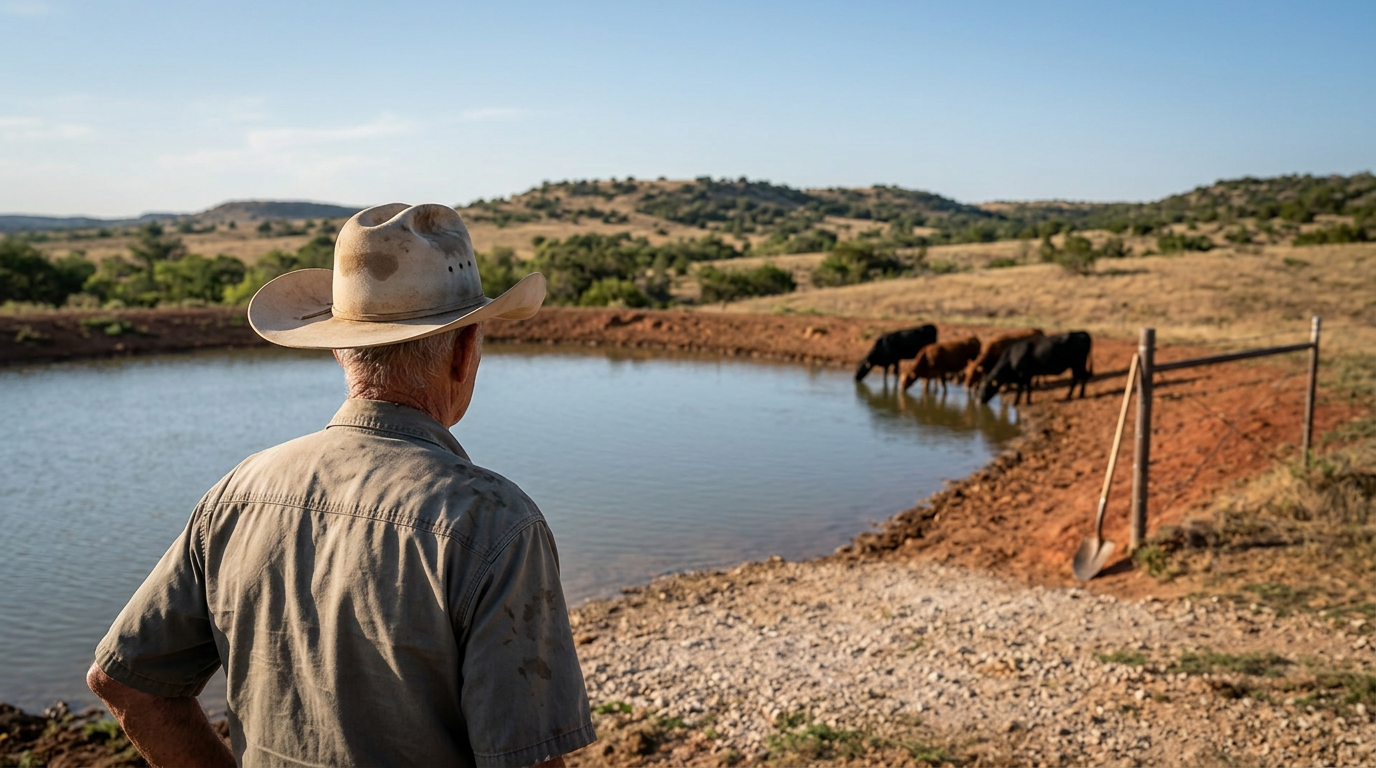
Throughout the vast landscape of Texas, a specific linguistic marker distinguishes locals from newcomers: the use of the term 'stock tank' to describe what most of the country refers to as a pond. This terminology is not merely a regional quirk but is deeply embedded in the state's agricultural heritage and its historical management of water resources. While dictionary definitions often describe a tank as a metal or plastic vessel for holding liquids, Texans have used the word for generations to describe man-made, earthen depressions designed to capture runoff for livestock. This cultural distinction reflects the practical nature of Texas land management where water is the most precious commodity available to a rancher. The history of the term traces back to the mid-19th century when the expansion of the cattle industry into the more arid regions of West Texas and the Hill Country required innovative solutions for watering herds. Unlike the East Coast or the Deep South, where natural ponds and streams are abundant, much of Texas lacks permanent surface water. Consequently, the development of the 'tank'—a hole dug into the ground and lined with clay or compacted earth—became the primary method for sustaining life on the range. This historical precedent established a vocabulary that persists even today, regardless of whether the water body is used for cattle or personal recreation.
Texas relevance
The term 'stock tank' is iconic within the Texas lexicon, serving as a point of pride for rural communities from the Panhandle down to the Rio Grande Valley. Understanding this terminology is essential for anyone involved in Texas real estate, agriculture, or environmental policy, as it defines how private property owners view and manage their water rights. In a state that has faced historic droughts, the 'tank' represents the resilience of the Texas rancher and the necessity of man-made infrastructure to support the state’s massive livestock industry, which contributes billions of dollars annually to the Texas economy.
The Linguistic Roots of the Term
The word 'tank' is believed to have entered the English language via Portuguese or Indian influences, specifically relating to the word 'tanque'. In colonial contexts, it referred to a cistern or a reservoir used to store water for irrigation or drinking. When British and European settlers arrived in the dry climates of the American West, they adapted existing words to fit the new environmental realities they encountered. For Texans, the word 'pond' implied a natural feature that might exist in a lush, rainy environment, which simply did not match the reality of a hand-dug hole in the dusty earth of North Texas.
As the 1800s progressed, 'stock tank' became the standard industry term used by the Texas and Southwestern Cattle Raisers Association and other early governing bodies. It helped differentiate between natural springs, which were rare and often the subject of legal disputes, and artificial improvements made by the landowner. By calling it a tank, the owner was signaling that this was a deliberate piece of agricultural equipment rather than a random geographical feature. This distinction carried legal weight during the early days of water law in the state.
Geology and Construction Methods
A true Texas stock tank is an engineering feat that relies on the specific geology of the region. Most tanks are constructed in areas with high clay content, which allows the bottom of the basin to seal as it becomes saturated, preventing the water from leaching back into the groundwater table. This process, often referred to as 'puddling', involves the movement of livestock through the mud to compact the soil, creating a natural liner. Without this specific soil composition, a tank would simply become a temporary puddle that evaporates within days of a rain event.
Modern construction involves bulldozers and heavy machinery, but the underlying principles remain the same. Local contractors in rural Texas counties specialize specifically in 'tank building', assessing the watershed of a property to find the optimal drainage point. These water bodies are designed to catch 'sheet flow' during heavy Texas thunderstorms. This strategic placement ensures that the tank remains full even during the dry summer months, providing a continuous water source that is vital for the survival of the herd until the next rainy season.
The Symbolic Value of Water in Texas
In the social hierarchy of rural Texas, a full stock tank is a symbol of prosperity and good stewardship. Because the state is so prone to periodic and severe drought, the visibility of water on a property serves as an immediate indicator of a ranch's viability. Neighbors often discuss the levels of their tanks with the same gravity that they discuss commodity prices or local politics. A dry tank is a crisis, leading to the expensive necessity of hauling water or selling off cattle prematurely, which can have a ripple effect through the local economy.
This emotional connection has led to the stock tank becoming a centerpiece of Texas leisure. While they were originally built for utility, many Texans now use their tanks for fishing, swimming, and dove hunting. The 'stock tank pool'—a smaller, galvanized metal version—has even become a trendy backyard staple in suburban areas like Austin and Dallas, showing how the agricultural roots of the term have morphed into a lifestyle brand that celebrates the state’s rugged history.
Impact of the Cattle Industry on Naming Conventions
The influence of the cattle industry on Texas English cannot be overstated. Because ranching was the dominant economic force for the first century of the state’s existence, the technical jargon of the cowboy became the everyday language of the citizen. Terms like 'tank', 'remuda', and 'maverick' transitioned from the corral to the general public. The specific use of 'stock' as a prefix serves as a reminder that these water sources were viewed as working assets, not ornamental features.
Even as Texas has become more urbanized, the cattle industry’s fingerprints remain on the land. Developers often keep existing stock tanks when turning old ranch land into housing subdivisions, rebranding them as 'lakes' or 'ponds' to appeal to buyers. However, long-term residents and those with agricultural backgrounds almost universally resist this change, viewing the word 'pond' as an affectation that ignores the grit and labor required to provide water in a semi-arid environment.
Legal and Regulatory Distinctions
In the eyes of the Texas Commission on Environmental Quality (TCEQ), the distinction between a natural body of water and a stock tank involves specific regulations regarding water rights. Generally, a landowner can build a tank of a certain size on their own property to capture diffused surface water for domestic and livestock use without needing a permit. This 'exempt' status is a significant portion of Texas property law, protecting the right of the individual to sustain their animals.
However, if the tank is used for commercial purposes or exceeds a certain acreage-foot capacity, different rules apply. The nomenclature of 'stock tank' helps reinforce this exempt status in the minds of the public and the legal community. By framing the water body as an agricultural necessity rather than a recreational luxury, the term has historically helped protect ranchers from some of the more stringent water-use regulations that apply to larger reservoirs or municipal supplies.
Conservation and the Environment
Stock tanks also serve an important ecological role in the Texas landscape by providing habitat for local wildlife. While they were built for cattle, they support a wide array of native species including waterfowl, amphibians, and mammals that would otherwise struggle to find water in dry regions. Conservationists in Texas often work with ranchers to manage these tanks in a way that minimizes erosion and promotes biodiversity, ensuring that the tank remains a healthy ecosystem for both the 'stock' and the wild creatures.
As Texas looks toward a future with increasing water scarcity, the role of these small, distributed water storage sites is being re-evaluated. Some experts suggest that modernizing tank design can lead to better groundwater recharge and reduced evaporation. Despite technological advances, the core identity of the stock tank remains unchanged: it is a testament to the Texan spirit of making the best of what the land provides, securing the future of the state one acre-foot at a time.
Source attribution
This story was reported using a public release from the Texas Monthly. Keep TX Red rewrote the coverage independently and links to the official statement for verification.
Frequently Asked Questions
- What is the official difference between a pond and a stock tank in Texas?
- While the terms are often used interchangeably in casual conversation, a 'stock tank' specifically denotes a man-made structure intended for watering livestock. In Texas, a 'pond' might be perceived as a natural feature or a smaller ornamental body of water, whereas a 'tank' implies utility and human construction.
- Is a stock tank always made of dirt?
- Typically, in a ranching context, a stock tank refers to an earthen dam or excavation. However, the term can also apply to 'troughs' or 'metal tanks' which are smaller vessels filled by windmills or wells. In both cases, the word is used to describe the container for the animals' water.
- Do I need a permit to build a stock tank on my Texas property?
- Under the Texas Water Code, landowners can generally build a tank containing up to 200 acre-feet of water for domestic and livestock purposes without a permit. However, it is always recommended to check with the TCEQ and local groundwater conservation districts for specific regional regulations.
Official Sources
Take the next step
Browse the Newsroom →Read more about Keep Texas Red → Our full guide to what Keep Texas Red means and why Texans support it.
Related Articles


Get Texas updates delivered weekly.
Independent Texas reporting on politics, policy, and daily life. One email a week. Unsubscribe anytime.
Keep TX Red Newsroom
The Keep Texas Red Editorial Staff produces nonpartisan explainers, policy breakdowns, and educational resources to help Texans understand how their government works. All content is reviewed for accuracy and updated regularly.
About Keep TX Red →