Navigating Texas Roadways: AAA Predicts Record Travel Volume for Independence Day Weekend
AAA Texas projects record-breaking July 4th travel. Learn the best and worst times to hit the road in Houston, Dallas, and beyond to avoid gridlock.
Editorial disclaimer: Opinions and analysis on Keep TX Red are editorial content — not statements of fact. See our editorial standards.
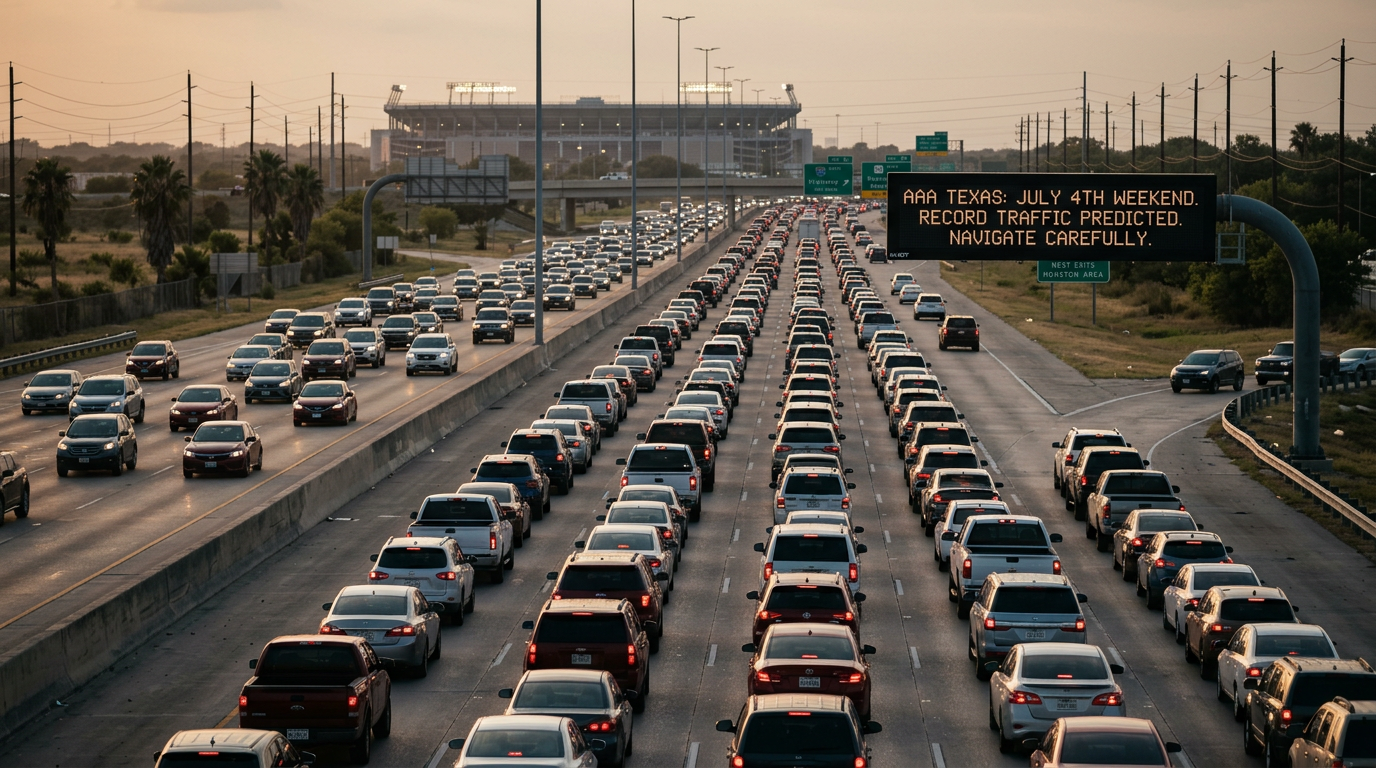
AAA Texas is projecting a historic surge in travel across the Lone Star State for the upcoming Independence Day holiday period. Historical data and current booking trends suggest that more Texans will be on the roads and in the skies than in any previous year on record. This anticipated influx is driven by a combination of stable fuel prices and a strong consumer desire for domestic summer vacations. To assist travelers, AAA has partnered with transportation analytics firms to pinpoint specific windows of peak congestion. Historically, the July 4th holiday serves as the benchmark for peak summer mobility in Texas, often surpassing Memorial Day and Labor Day in total traveler volume. In previous years, the state has seen a steady 3% to 5% year-over-year increase in road users, but the current forecast suggests an even sharper incline as major metro areas continue to see rapid population growth. Understanding the timing of this mass movement is essential for those looking to avoid hours of idling on major arteries like I-35 or I-10.
Texas relevance
Texas continues to be one of the most mobile states in the country, boasting some of the highest vehicle-miles-traveled statistics globally according to the Texas Department of Transportation. Because the state is so geographically vast, road travel is the primary mode of transportation for residents moving between the Texas Triangle of Houston, Dallas-Fort Worth, San Antonio, and Austin. The relevance of this specific AAA report is magnified by the fact that Texas bridge and highway construction projects are currently at an all-time high, meaning bottlenecks are more sensitive to high volumes than in decades past. Every major Texas city is expected to feel the impact, particularly the corridors connecting the coast to the interior, as millions of residents seek out water-based recreation or family gatherings. Additionally, the economic impact of this travel on Texas small businesses and the hospitality sector is substantial, making the success of the holiday travel window a key metric for the state's quarterly tourism revenue.
Peak Congestion Windows Identified
According to the data provided by AAA and its analytics partners, the most significant congestion on Texas roads is expected to occur on the Thursday and Friday leading into the holiday weekend. Travelers can expect journey times to increase by as much as 50% during the late afternoon and early evening windows. Analysts suggest that the convergence of commuters leaving work early and holiday-makers beginning their treks creates a perfect storm of gridlock. Specifically, the window between 2:00 PM and 7:00 PM on the Thursday prior to the Fourth of July is highlighted as the most problematic time to be on the road.
Conversely, those who are able to depart in the early morning hours—specifically before 10:00 AM—will likely encounter significantly fewer delays. For travelers returning home after the holiday, the Sunday afternoon window is projected to be the most congested as the majority of visitors head back to the Texas Triangle. AAA recommends that if travelers cannot leave early in the morning, they should wait until after 8:00 PM once the primary wave of traffic has dissipated. Planning around these specific windows can save travelers several hours of transit time over the course of the weekend.
Regional Impact: The Texas Triangle
The Texas Triangle, which connects the state's four largest metro areas, remains the primary focal point for holiday traffic updates. In Houston, the 610 Loop and I-10 West are expected to see significant slowdowns as residents head toward the Hill Country or San Antonio. Meanwhile, in the Dallas-Fort Worth area, the north-south corridors of I-35E and I-35W are traditionally among the most congested in the nation during holiday breaks. The increased density in these corridors is exacerbated by the sheer number of vehicles passing through the state from neighboring Oklahoma and Louisiana.
Austin remains a unique bottleneck due to the geography of the I-35 corridor and the limited alternative routes through the city. Local officials often warn that cross-town traffic can become nearly stationary during holiday afternoons. Travelers moving through Central Texas are encouraged to utilize toll roads like SH-130 to bypass the urban core, although even these routes are expected to see higher-than-normal volume this year. The regional impact isn't limited to highways; local arteries near popular destinations like Canyon Lake or the Galveston Seawall will also face extreme pressure.
Fuel Trends and Economic Factors
Gasoline prices in Texas remain a major factor in the decision-making process for millions of families. Currently, Texas maintains an average fuel price that is consistently lower than the national average, thanks to its proximity to Gulf Coast refineries and favorable state tax structures. This 'Texas discount' at the pump makes 400-mile round trips more feasible for middle-class families who might otherwise be priced out of air travel during peak summer months. AAA notes that while prices have seen slight seasonal increases, there is no evidence of the spikes seen in previous years of global supply instability.
The economic ripple effect of this travel is felt most strongly in rural Texas counties that sit along these major interstates. Small-town gas stations, diners, and shops rely heavily on the holiday surge to bolster their annual revenue. For many of these communities, the July 4th weekend is the highest-grossing period of the year. This interstate commerce is a vital component of the Texas 'Main Street' economy, showcasing how urban mobility directly supports rural financial health across the state's 254 counties.
Safety and Roadside Assistance Preparedness
With record numbers of vehicles on the road, AAA Texas is preparing for a surge in roadside assistance calls. Historically, the heat of a Texas July leads to a high frequency of battery failures and tire blowouts. The organization expects to respond to thousands of calls for lockout services, flat tires, and engine overheating issues over the holiday period. Drivers are urged to perform a basic maintenance check—covering fluid levels, tire pressure, and battery health—before beginning any long-distance trip to avoid becoming a statistic on the side of a busy highway.
Law enforcement presence will also be heightened across the state. The Texas Department of Public Safety (DPS) typically launches enhanced enforcement campaigns over the Independence Day weekend, focusing on speed, seatbelt compliance, and Driving While Intoxicated (DWI) offenses. Increased patrols are expected on the 'big roads' as well as rural highways where higher speeds often lead to more severe accidents during high-volume periods. The 'Move Over or Slow Down' law remains a primary focus for troopers protecting stranded motorists and emergency responders.
Aviation and Alternative Transit Options
While the vast majority of Texans will drive, the state's major airports in Dallas (DFW and Love Field) and Houston (IAH and Hobby) are also bracing for record passenger counts. Aviation experts suggest arriving at least three hours early for domestic flights, as TSA checkpoints will likely be under extreme pressure. The rise in air travel is attributed to increased capacity from Texas-based carriers like Southwest Airlines and American Airlines, which have added more regional routes to handle the summer demand.
For those seeking to avoid both the highway and the runway, bus services like Vonlane and Greyhound have reported high booking rates for the holiday. These services offer a way to navigate the Texas Triangle without the stress of driving through traffic, though they are still subject to the same road delays as private vehicles. Even Amtrak’s Texas Eagle, which runs through several major cities, often sees a spike in ridership during this period, offering a scenic but slower alternative for holiday transit.
The Changing Landscape of Texas Tourism
The nature of July 4th travel in Texas has evolved over the last decade. While traditional spots like the San Antonio Riverwalk or the Galveston beaches remain top draws, there has been a significant shift toward 'nature-based' tourism in the Piney Woods of East Texas and the Big Bend region. This diversification of destinations helps spread some of the traffic load across a wider array of state highways, though the primary arteries remain the most burdened. This trend highlights the growing desire of Texans to explore the diverse ecological regions within their own state borders.
Furthermore, 'staycations' within metro areas are becoming less common as residents increasingly look to escape the 'urban heat island' effect during the peak of summer. This leads to a massive outward migration from cities on the Friday of the holiday weekend and a synchronized inward migration on Sunday or Monday. This pulse-like movement of the population is what creates the extreme peaks in travel time that AAA monitors so closely each year. As the state's population continues to climb toward 30 million, these travel patterns represent a significant logistical challenge for the future.
Analysis
The sheer volume of expected travelers reflects a robust Texas economy where families still prioritize traditional domestic travel despite broader national inflationary concerns. While the cost of airfare has fluctuated, the predictability of Texas gasoline production and relatively lower pump prices compared to coastal states like California or New York continue to incentivize road trips. From a policy perspective, this surge emphasizes the critical need for continued investment in the Texas highway system, particularly the widening of I-35 through Central Texas, which remains a consistent pain point for holiday travelers. The data suggests that while infrastructure is expanding, it is currently struggling to keep pace with the organic growth of the state's driving population. It is also worth noting that the 'worst travel times' identified by AAA often overlap with peak commuting hours in Texas's largest cities, creating a 'double-peak' effect where local workers and long-distance travelers compete for limited lane space.
Source attribution
This story was reported using a public release from the Texas Travel Stories (Google News). Keep TX Red rewrote the coverage independently and links to the official statement for verification.
Frequently Asked Questions
- When is the absolute worst time to drive in Texas this holiday?
- The peak 'danger zone' for traffic is typically the Thursday afternoon before the holiday, specifically from 2:00 PM to 7:00 PM. During this time, holiday travelers and daily commuters both occupy the road, leading to the highest delays.
- Which Texas highways will be the most crowded?
- The I-35 corridor through Dallas, Austin, and San Antonio, as well as I-10 between Houston and San Antonio, are projected to have the highest vehicle density. US-290 heading toward the Hill Country is also expected to be very slow.
- Are Texas gas prices expected to spike for the holiday?
- While minor fluctuations occur, AAA does not currently predict a massive spike in Texas fuel costs for the weekend. Texas typically enjoys lower prices than most other states due to its massive refining capacity.
- What should I check on my car before leaving?
- Given the extreme Texas heat, you should prioritize checking your tire pressure, as heat causes air to expand and can lead to blowouts. Also, ensure your cooling system is topped off and your battery is tested, as heat is the primary cause of battery failure in the summer.
- How early should I get to a Texas airport?
- National and state trends suggest arriving at least three hours prior to your scheduled departure. Texas hubs like DFW and IAH are among the busiest in the world and will be at capacity during the holiday.
Official Sources
Take the next step
Browse the Newsroom →Read more about Keep Texas Red → Our full guide to what Keep Texas Red means and why Texans support it.
Related Articles

Get Texas updates delivered weekly.
Independent Texas reporting on politics, policy, and daily life. One email a week. Unsubscribe anytime.
Keep TX Red Newsroom
The Keep Texas Red Editorial Staff produces nonpartisan explainers, policy breakdowns, and educational resources to help Texans understand how their government works. All content is reviewed for accuracy and updated regularly.
About Keep TX Red →