Industrial Heart of the Southwest: Exploring the Cultural and Economic Legacy of the Permian Basin
A journey through West Texas reveals how the Interstate 20 corridor fueled global growth and shaped the modern energy landscape.
Editorial disclaimer: Opinions and analysis on Keep TX Red are editorial content — not statements of fact. See our editorial standards.
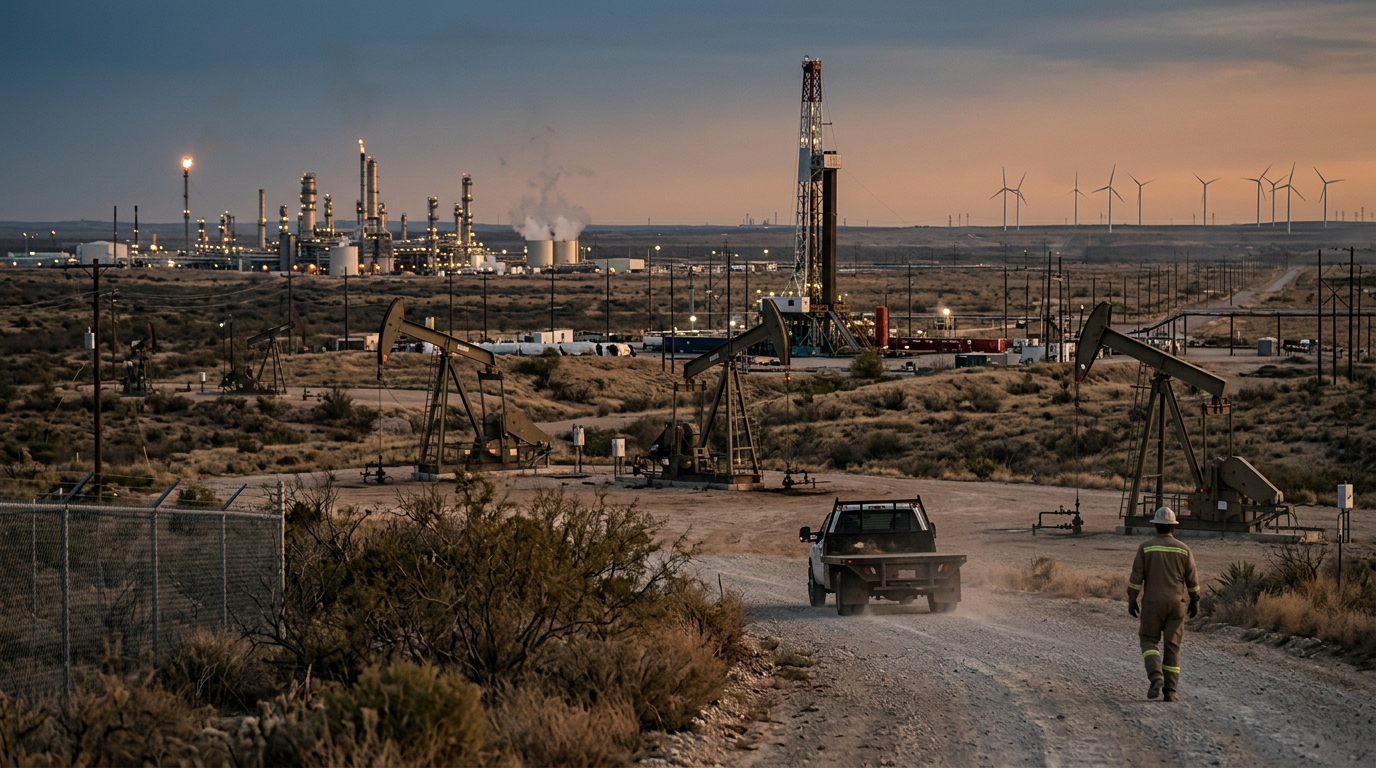
Historically, the stretch of land between Abilene and the New Mexico border has served as the engine of American prosperity. The Permian Basin, a geological marvel once dismissed as a barren wasteland, evolved into the world’s most productive oil field, fundamentally altering the trajectory of the 20th century. For decades, the landscape dominated by pump jacks and drilling rigs has been the backdrop for technological breakthroughs that allowed the United States to achieve energy independence. This region is not merely a collection of industrial sites; it is a sprawling monument to human ingenuity and the physical labor required to power modern civilization. From the early gushers to the advanced shale revolution, the story of this land is the story of Texas's rise to global prominence. Today, the corridor along Interstate 20 offers a unique perspective on the intersection of resource extraction and rural life. While casual travelers might see a flat, repetitive horizon, the region is thick with the history of boom-and-bust cycles that have defined the Texas economy. The infrastructure visible from the highway—the miles of pipeline, the massive storage tanks, and the heavy machinery—represents trillions of dollars in global trade and millions of jobs. Understanding the Permian Basin requires looking past the dust and heat to see the complex social and economic fabric that sustains thousands of families across the South Plains. It is a place where grit meets high finance, and where the future of international energy prices is determined daily on the dusty plains of West Texas.
Texas relevance
The Permian Basin is the singular most important economic driver for the State of Texas, providing the tax revenue that funds the Rainy Day Fund and public education through the Permanent School Fund. Without the production centers in Midland, Odessa, and surrounding counties, the Texas miracle would likely grind to a halt. For residents in cities like Abilene, this region represents a vital supply chain hub, while for those in the Permian proper, it is the center of their entire social and professional universe. The regional stability of West Texas ensures that every Texan enjoys a lower tax burden compared to states without such robust natural resources.
The Evolution of the Permian Landscape
In the early days of Texas settlement, the Permian Basin was largely avoided by pioneers who sought greener pastures for cattle and farming. The discovery of the Santa Rita No. 1 well in 1923 changed everything, signaling that the true wealth of the region lay thousands of feet beneath the surface. This discovery transformed dusty cow towns into bustling industrial hubs almost overnight, creating a culture characterized by rapid expansion and a 'get-to-work' attitude that persists today.
As drilling techniques evolved from simple cable tools to horizontal drilling and hydraulic fracturing, the physical footprint of the basin expanded. The hills around Big Spring and the flats of Midland were soon covered in a dense grid of extraction sites. This transformation created a unique aesthetic—a mix of high-tech machinery and rugged frontier spirit—that defines the visual identity of West Texas for anyone traveling the I-20 corridor.
The infrastructure we see today is the result of a century of trial and error. Every pipeline and compressor station represents a solution to a specific challenge encountered in the field. This iterative process has made the Permian Basin a global classroom for engineering, with experts from all over the world coming to Texas to learn how to manage large-scale resource extraction efficiently and safely.
Economic Hubs: Midland and Odessa
The twin cities of Midland and Odessa serve as the administrative and operational pillars of the region. Midland, often referred to as the 'Tall City' due to its impressive downtown skyline, functions as the white-collar headquarters where the financing and planning of the oil fields occur. Its growth reflects the immense wealth generated by the basin, housing the corporate offices of some of the world's largest energy firms.
In contrast, Odessa has historically been the blue-collar heart of the operation, home to the service companies, supply houses, and specialized labor crews that keep the rigs turning. The synergy between these two cities is what allows the Permian to function as a self-contained ecosystem. While they have distinct personalities and a long-standing high school football rivalry, they are inextricably linked by the common goal of energy production.
In recent years, the growth of these cities has pushed the boundaries of West Texas urban planning. New housing developments, retail centers, and improved municipal services have struggled to keep pace with the influx of workers during boom periods. This growth demonstrates the resilience of the local economy, which has managed to diversify over time while remaining firmly rooted in its primary industry.
The Technological Frontier of West Texas
The modern Permian Basin is a far cry from the wildcatting days of old. Today, the region is a hub of technological innovation, utilizing satellite imagery, real-time data sensors, and automated drilling systems to maximize output while minimizing physical impact. This shift toward 'smart' oil fields has attracted a new generation of tech-savvy workers to the region, changing the demographic makeup of the local workforce.
Innovations in water recycling and carbon capture are also being pioneered in the Permian. Because water is a scarce and precious resource in West Texas, companies have invested heavily in systems that treat and reuse the water produced during the drilling process. These advancements are not only economically beneficial but are also essential for the long-term sustainability of the industry in a semi-arid climate.
The use of big data and artificial intelligence to predict geological formations has turned drilling from a gamble into a precise science. Visitors traveling through the area may not see the invisible networks of fiber optics and wireless communications that monitor every stroke of a pump jack, but these systems are what allow the Permian to compete with international producers on cost and efficiency.
The Social Fabric of the Basin
Life in the Permian Basin is shaped by the rhythmic nature of the energy industry. The community is built on a foundation of hard work and neighborly support, as the challenges of living in a harsh environment naturally foster close-knit bonds. From the Friday night lights of high school stadiums to the local church socials, the culture of the region is deeply rooted in traditional Texas values.
The population of the basin is incredibly diverse, drawing people from across the globe who are seeking opportunity in the energy sector. This influx of people has brought a variety of cultural influences to cities like Midland and Odessa, which is reflected in the local dining, arts, and festivals. Despite the transient nature of some of the workforce, many families have called the Permian home for generations, building a stable middle class.
The resilience of the people in the Permian is most evident during market downturns. When oil prices drop, the entire region feels the pinch, but the spirit of the community remains unbroken. There is a collective understanding that the industry will eventually recover, and this long-term perspective allows residents to navigate the highs and lows of the energy market with a level of stoicism that is uniquely Texan.
Environmental and Geological Stewardship
Managing a resource as vast as the Permian Basin requires a delicate balance between production and land stewardship. Ranching and oil production have coexisted in West Texas for a century, with many landowners balancing the needs of their livestock with the requirements of the mineral developers. This partnership is essential for preserving the wide-open spaces that define the Texas West.
Recent efforts have focused on reducing the environmental footprint of energy production. This includes programs to detect and repair methane leaks, as well as the implementation of more efficient flaring practices. The industry recognizes that maintaining its 'social license' to operate depends on being a responsible neighbor and protecting the air and water quality of the region for future generations.
The geology of the basin itself is a subject of constant study. The multi-layered formations allow for different zones to be tapped at different times, effectively making the Permian a 'gift that keeps on giving.' Understanding these complex underground structures requires a marriage of traditional geology and advanced computer modeling, ensuring that the resources are extracted in the most efficient manner possible.
The Future of the I-20 Corridor
Looking ahead, the Interstate 20 corridor will continue to be a vital artery for the transport of goods, services, and energy products. Infrastructure projects are currently underway to widen the highway and improve safety, reflecting the increased traffic volume associated with the ongoing energy boom. These improvements will facilitate better connectivity between the Permian and the rest of the state.
The transition toward a more diverse energy portfolio is also visible in West Texas. While oil and gas remain king, the region has seen a massive increase in wind and solar farms. The same flat plains and consistent winds that once made the area a challenge for travelers now make it one of the most productive renewable energy hubs in the nation. This 'all-of-the-above' energy strategy ensures that Texas will remain a leader in the global power market.
Ultimately, the Permian Basin is more than just a place to extract resources; it is a living workshop where the future is being built. The lessons learned here—in technology, economics, and community building—will continue to influence how we power our world for decades to come. For those who take the time to look beyond the surface, the drive through West Texas reveals a story of triumph, innovation, and an unwavering commitment to the American dream.
Analysis
While the Permian Basin is often critiqued for its lack of traditional aesthetic beauty, its 'industrial sublime' offers a different kind of awe. The sheer scale of the operation—thousands of wells pumping in unison—serves as a reminder that comfort in the modern world is not accidental; it is manufactured here. The tension between environmental preservation and energy production remains a focal point of debate, yet the reality remains that the global economy lacks a viable alternative to the output provided by this specific geography. Texas has embraced this role, positioning itself as a leader in both traditional and emerging energy sectors, ensuring the Permian remains relevant well into the 21st century.
Source attribution
This story was reported using a public release from the Texas Monthly. Keep TX Red rewrote the coverage independently and links to the official statement for verification.
Frequently Asked Questions
- What exactly is the Permian Basin?
- The Permian Basin is a large sedimentary basin located in Western Texas and Southeastern New Mexico. It is named for the Permian geological period and contains some of the world's thickest deposits of rocks from that era, which are rich in oil and natural gas.
- Why is the I-20 corridor significant for travelers?
- Interstate 20 is the primary East-West artery through the heart of the Permian Basin. Traveling this route provides a firsthand look at the scale of the energy industry, moving through key cities like Abilene, Sweetwater, Midland, and Odessa.
- Does the Permian Basin only produce oil?
- While it is famous for oil, the Permian is also a massive producer of natural gas. Additionally, the region has become a major hub for wind and solar energy production, making it a diverse energy powerhouse.
- How does the oil industry in West Texas benefit the rest of the state?
- The industry pays billions in royalties and taxes. A significant portion of this money goes into the Permanent School Fund, which helps fund K-12 education across Texas, and the Rainy Day Fund, which provides a safety net for the state budget.
Official Sources
Take the next step
Browse the Newsroom →Read more about Keep Texas Red → Our full guide to what Keep Texas Red means and why Texans support it.
Related Articles
Get Texas updates delivered weekly.
Independent Texas reporting on politics, policy, and daily life. One email a week. Unsubscribe anytime.
Keep TX Red Newsroom
The Keep Texas Red Editorial Staff produces nonpartisan explainers, policy breakdowns, and educational resources to help Texans understand how their government works. All content is reviewed for accuracy and updated regularly.
About Keep TX Red →